Search for the best sandals for knee pain and you will find confident rankings built around words such as orthopedic, alignment, shock absorption, and recovery. Those labels can sound precise while revealing little about whether the sandal fits your heel, where the arch lands, or how it behaves after an hour. This guide ranks decision features and use cases rather than pretending that one model is best for every painful knee.
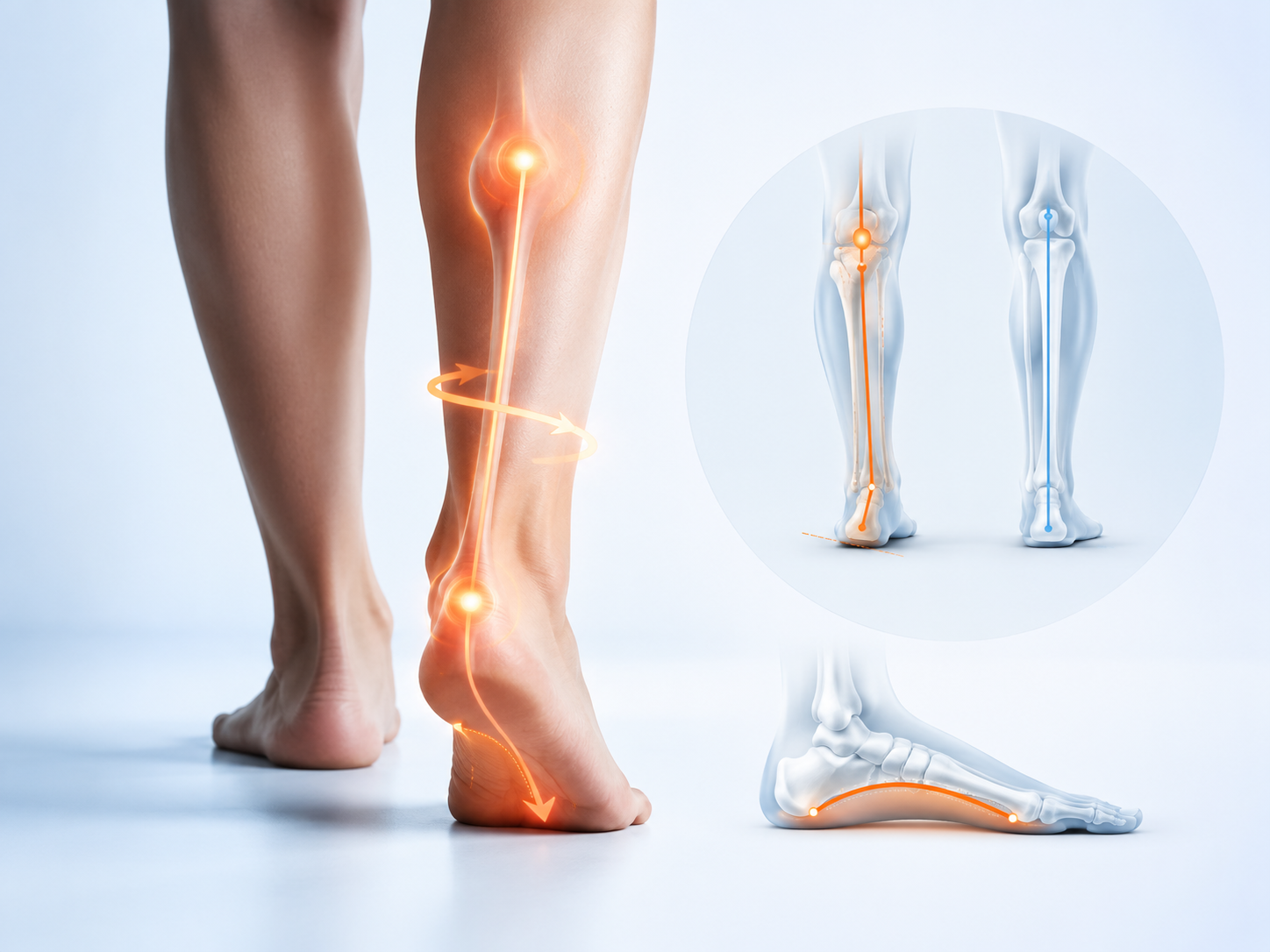
Footwear is only one part of the picture. A person with mild knee osteoarthritis, a runner with patellofemoral pain, and a traveler who doubled daily steps may prefer different designs. If symptoms began mainly after increasing distance, start with the guide to knee pain after long walks. If the feet visibly roll inward or tire first, the flat feet and overpronation guide explains why the solution is not always a higher arch.
Can Sandals Really Affect Knee Pain?
Footwear can change comfort, foot motion, step pattern, and how forces travel through the lower limb. That does not create a straight line from one sandal feature to less pain. The knee responds to the person, surface, pace, walking volume, foot shape, and footwear together. A softer sole may feel better immediately but less stable later. A firm contoured footbed may feel supportive to one person and press painfully into another person's arch.
The most useful clinical trial studied shoes rather than sandals. In 164 adults with moderate to severe medial knee osteoarthritis, stable supportive shoes produced a greater improvement in walking pain over six months than flat flexible shoes. The between-group difference was 1.1 points on an 11-point pain scale. Fewer participants reported adverse events with the stable supportive shoes. This supports taking stability and sustained comfort seriously, but it does not prove that every structured sandal will reproduce the result.
Biomechanics can point in a different direction. A smaller laboratory study found lower peak knee adduction moments in flip-flops, flat walking shoes, and barefoot walking than in clogs or stability shoes. Knee adduction moment is a proxy used in research, not a direct report of pain or a complete measure of knee force. The finding should not be converted into a recommendation that everyone with arthritis walk long distances in flip-flops.
A systematic review of footwear and lower-limb osteoarthritis found too little consistent high-quality evidence for a universal long-term rule. EULAR guidance therefore places footwear within an individualized plan that also includes education, exercise, weight management where relevant, and other supports. The honest buying goal is a sandal that passes a personal fit and walking test, not one that claims to correct the whole body.
Best Sandal Type by Situation
| Situation | A sensible first type to test | Features to prioritize | Common mismatch |
|---|---|---|---|
| All-day city walking | Secure walking sandal | Heel strap, adjustable forefoot, controlled cushioning, pavement traction | Loose slide that requires toe gripping |
| Knee arthritis and stiffness | Stable sandal with easy closures | Secure base, accessible straps, comfortable step-in height | Rigid contour or closure that is difficult to manage |
| Flexible flat feet | Adjustable sandal with a tolerable contour | Heel cup, midfoot security, arch shape that does not create pressure | Buying the highest arch without a walking test |
| High or rigid arches | Neutral cushioned walking sandal | Even contact, room, shock comfort, non-aggressive contour | Hard medial arch that concentrates pressure |
| Travel | Light adjustable walking sandal | Heel security, swelling adjustment, familiar traction, proven comfort | First long wear begins after arrival |
| Pool, shower, or short home use | Water-tolerant slide or simple sandal | Non-slip sole, easy drying, short-task comfort | Treating a recovery slide as an all-day walking shoe |
| Easy maintained trail | Secure sport sandal | Heel and midfoot straps, toe protection if needed, directional tread | Open footwear on loose, cold, steep, or technical ground |
These are starting points, not medical prescriptions. A sandal should be replaced by a closed walking or hiking shoe when the environment demands more protection, the foot cannot remain secure, or a prescribed orthotic cannot be held safely. The guide to hiking with knee pain explains why descents, surface, and route length can matter more than the open or closed label alone.
Seven Features That Matter More Than the Logo
1. Correct length and width
The heel and toes should sit on the footbed rather than hanging over an edge. The widest part of the foot should not spill over the side or be squeezed by a fixed strap. Size names vary between brands, so stand in both sandals and check the actual outline. A half size that prevents sliding may matter more than a famous cushioning technology.
2. Heel security
A back strap can keep the heel connected to the footbed as the leg swings. That may reduce the need to curl the toes to retain a loose sandal. The strap should hold without rubbing the Achilles area or pulling the heel forward. A slide can still work for a short flat task, but it should not win an all-day comparison only because it feels soft while standing still.
3. Useful adjustability
Adjustable forefoot and midfoot straps help accommodate width, instep height, and daily swelling. Place buckles or hook-and-loop sections away from tender joints and skin. Tightening one strap should not force the foot into another edge. People with hand arthritis may also need closures that can be managed without painful pinching.
4. A footbed contour that matches you
Arch support is not a prize awarded to the tallest ridge. The contour should contact the foot without feeling like a hard object under one small spot. A deep heel cup can help center the heel, yet it must be wide enough. If the arch pressure becomes more obvious with every minute, do not assume a painful break-in period is correcting your alignment.
5. Controlled cushioning
Cushioning should reduce harshness without making the platform feel unpredictable. Pressing a thumb into foam does not reveal how the sandal behaves after thousands of steps. Walk, turn, and use a slight slope. If the foot wobbles or the heel sinks unevenly, a firmer or broader base may feel better even though it seems less plush in the hand.
6. Bending and twisting in the right places
A walking sandal generally needs some bend near the forefoot so the toes can roll through a step. A sole that folds at the middle like fabric may provide little structure, while a completely rigid plank may fight the foot. Twist the sandal gently and compare that behavior with how stable it feels while walking. No single stiffness score predicts knee pain, so the test remains practical rather than diagnostic.
7. Traction for the actual surface
A smooth foam sole may be acceptable indoors and poor on wet tile, gravel, or a sloped path. Check tread depth, contact area, and whether the outsole material is intended for water. Stability begins with not slipping. Replace a sandal when the tread is polished smooth, the heel is worn unevenly, the cushioning remains compressed, or straps no longer hold the foot consistently.
What a Supportive Walking Sandal Looks Like

Do not judge the picture alone. A heel strap can still be positioned too high, a contoured footbed can miss the arch, and an aggressive tread can sit on an unstable platform. Put the sandal on the foot it must serve. Check both feet because one may be longer, wider, or more swollen, and size for the foot that needs more room without leaving the other unsecured.
The word orthopedic is a marketing signal unless it is tied to specific features, fit, and a clear clinical purpose. An approval seal may indicate that a product met an organization's criteria, but it cannot identify the cause of your knee pain or guarantee comfort. A transparent return period and a careful home test are often more useful than a long list of proprietary material names.
Sandal Styles That Often Fail on Longer Walks
A flimsy flip-flop can be perfectly adequate for a brief walk from a changing room to a pool. Problems arise when a short-task design is asked to cover city mileage, uneven paths, or repeated days of travel. If the heel repeatedly lifts, the toes grip, or the sandal slaps the ground, compare it with a secure model before blaming the knee alone.
Tall platforms and narrow wedges raise other concerns. A broad low platform may feel stable to one person, but extra height increases the consequence of stepping off an edge. Narrow or uneven bases make turning and rough ground harder to manage. Fashion sandals with fixed thin straps can also concentrate pressure and allow the foot to move independently of the sole.
Extremely soft recovery foam is another common assumption. Softness can be pleasant after activity, but it does not prove better knee mechanics. If the heel sinks to one side, the platform compresses rapidly, or balance feels delayed, reserve the slide for short flat use. Likewise, a hard cork or molded footbed is not automatically superior. Comfort and control should remain repeatable after the novelty wears off.
A Simple In-Store and At-Home Fit Test

- Try both feet late in the day. Feet may be larger after normal standing and walking than first thing in the morning.
- Stand and inspect the outline. Keep toes and heels on the footbed with no strap pressing a joint or skin fold.
- Walk, turn, and use a gentle slope. Notice heel lift, toe gripping, side-to-side movement, rubbing, and confidence.
- Check the arch after several minutes. Support should not become a sharp focal pressure as the foot warms.
- Use the return window indoors. Follow the seller's policy and avoid outdoor wear until the basic fit is convincing.
- Take a short flat walk. Begin below your usual maximum and avoid combining the test with a sudden step-count increase.
- Recheck the next morning. Compare feet, calves, knees, hips, and ordinary stairs with your normal response.
Add distance gradually when the first walk is uneventful. A useful progression might move from a short neighborhood loop to a familiar errand, then a longer day. Do not introduce a brand-new sandal on the first morning of a walking vacation. Pack a proven alternative so that one rubbing strap does not become the only footwear choice for the rest of the trip.
Match the Sandal to Your Foot and Symptom Pattern
Flexible flat feet may feel better with secure midfoot contact and a heel cup, but an aggressive arch can be uncomfortable and does not automatically stop pronation. High or rigid arches may value even cushioning and room more than strong medial posting. A wide forefoot needs a platform and straps that accommodate width without allowing the heel to wander. Swelling may require adjustability rather than a larger sandal that is loose everywhere.
Knee symptoms also differ. Pain around the kneecap after stairs and sitting is not the same as focal joint-line pain after a twist or a hot swollen arthritic flare. Use the knee arthritis pain guide when stiffness, swelling, and load tolerance are central. The comparison of osteoarthritis and rheumatoid arthritis explains why footwear cannot distinguish inflammatory from mechanical patterns.
Prescribed orthotics create a practical limit. Most open sandals cannot hold a separate insole securely. Some designs have a removable footbed or deeper enclosure, while others require support built into the sandal. The insoles for knee pain guide explains the evidence and limits, but do not place a loose insert on a smooth open footbed where it can shift.
What Sandals Cannot Fix
A good sandal can remove an avoidable source of rubbing, slipping, or discomfort. It cannot reverse arthritis, repair a meniscus, restore a torn ligament, or build the strength needed for a large increase in walking. If a comfortable pair helps you stay active, use that opportunity to progress walking and exercise sensibly rather than crediting the footwear with tissue repair.
Do not keep buying firmer arches or softer foam when every pair produces the same escalating knee pain. Review walking volume, route, pace, recovery, strength, and the symptom pattern. A podiatrist can assess foot fit and prescribed devices. A physical therapist or other qualified clinician can assess the broader lower-limb problem. OARSI emphasizes that osteoarthritis care benefits from an individualized team approach rather than one product.
Closed footwear may simply be the better tool for some jobs. Running demands are covered in the guide to running shoes for knee pain. Technical trails, cold weather, loose stone, heavy carrying, and a need for orthotic retention can all favor an appropriate shoe even when a sandal feels cooler.
When to Get Medical Help
Arrange an assessment when knee pain keeps worsening, limits ordinary walking, repeatedly returns with swelling, or does not improve after reducing the provoking distance and changing an obvious footwear problem. Seek prompt guidance if the knee rapidly swells, locks, repeatedly gives way, looks deformed, or cannot bear weight. A hot red swollen knee with fever, new calf swelling with chest pain or breathing difficulty, or a cold discolored foot needs urgent care.
The Bottom Line
The best sandal for knee pain is not a universal brand or the softest sole. For longer walking, begin with accurate length and width, a secure heel, adjustable straps, a tolerable footbed contour, controlled cushioning, useful forefoot bend, and traction for the route. Most clinical evidence comes from shoes, so keep claims modest. Test the pair indoors, progress through a short familiar walk, and check the next-day response. A sandal earns its place by remaining comfortable and secure in the real task, not by the label printed on the box.
Indoor footwear has different demands from outdoor walking sandals. Compare heel security, floor grip, and fit in the slippers for knee pain guide, including why a very soft or loose house shoe is not automatically the most comfortable choice.
Frequently Asked Questions
What type of sandal is best for knee pain?
There is no universal best type. For longer walks, many people benefit from a secure heel or back strap, adjustable forefoot and midfoot straps, a footbed that matches the arch comfortably, moderate cushioning, and reliable traction. The sandal should fit the actual foot shape and task. Judge it through a short trial and next-day response rather than a brand label.
Are flip-flops bad for your knees?
Flip-flops are not automatically harmful, and a laboratory measure of knee load does not prove that they cause or prevent pain. Loose pairs can make some people grip with the toes and may feel insecure over distance or uneven ground. Keep simple flip-flops for tasks they handle comfortably, and choose a secure walking sandal when fit, traction, or heel control matters.
Is arch support always better for knee pain?
No. Arch height and shape must match the person. A contour that feels supportive to one foot can create focal pressure for another, particularly with very high or very flexible arches. Marketing terms such as orthopedic do not guarantee the right fit. Try the sandal standing and walking, and avoid a forceful arch that becomes more noticeable with time.
Are recovery slides good for bad knees?
A recovery slide may feel comfortable for short, flat, low-demand use, but soft foam and a backless design do not automatically make it suitable for all-day walking. Check whether the heel lifts, the toes grip, or the platform feels unstable. A sandal with a secure heel is usually a more practical trial for long distances or uneven surfaces.
Is soft cushioning or firm support better for knee pain?
Neither extreme wins for everyone. Very soft foam may feel pleasant but unstable, while a rigid footbed may create uncomfortable pressure. Footwear studies show that simple mechanical assumptions do not always predict pain outcomes. Look for cushioning that remains controlled, then test the whole sandal for comfort, stability, and the response after normal walking.
Should walking sandals have a back strap?
A back strap is not mandatory for every short task, but it can help keep the heel connected to the sandal during longer walking. The goal is a secure fit without rubbing or excessive tension. If a backless sandal makes you curl the toes to keep it on, shifts on slopes, or slips when turning, a heel strap is worth testing.
Can sandals cause knee pain?
A sandal can contribute to an uncomfortable walking pattern when it is too small, loose, unstable, worn out, or poorly matched to the foot and task. That does not mean footwear is the only possible cause of knee pain. Training load, arthritis, injury, strength, walking distance, and other factors may overlap, so persistent symptoms need a broader review.
Can I wear orthotics in sandals?
Most ordinary open sandals do not securely hold a separate insole. A removable footbed and enough enclosure may be needed, or the support must be built into the sandal. Do not place a loose orthotic on top of a slippery footbed. If a prescribed device is important, ask the podiatrist which sandal designs can hold it safely.