What basketball players mean by jumper's knee
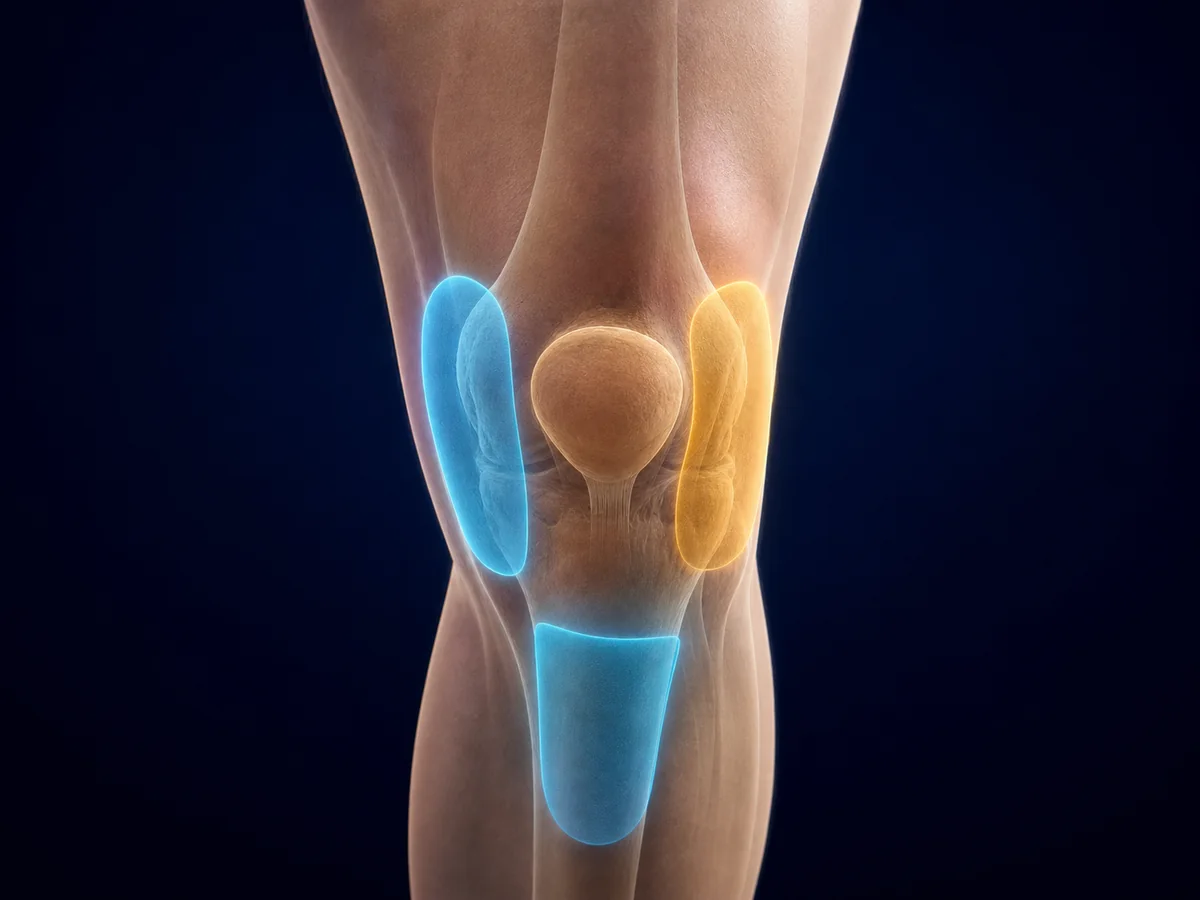
Jumper's knee commonly refers to patellar tendinopathy. The patellar tendon connects the kneecap to the upper shin and participates in the mechanism that straightens the knee. Basketball repeatedly asks this system to handle takeoffs, landings, acceleration, and braking. The useful question is not whether jumping is inherently bad, but whether the current demands match the player's capacity.
The word tendonitis is still widely used in searches and everyday conversation. Tendinopathy is often a more suitable description for a persistent load-related tendon problem because it does not reduce the explanation to inflammation alone. Neither word should be assigned simply because a player points below the kneecap. Several nearby structures can produce symptoms in a similar area.
This guide focuses on the basketball decisions that follow assessment: organizing jump exposure, understanding a progressive exercise plan, and rebuilding court participation. For a broader first look at timing and warning signs, use knee pain after basketball. For exact strap placement or one exercise technique, follow the linked specialist guides rather than treating this page as a duplicate instruction manual.
Pain below the kneecap is a clue, not proof
Players may describe a small painful spot at the lower edge of the kneecap, discomfort along the tendon, or pain during repeated knee-loading tasks. That description can support the clinical history, but a self-palpation test is not enough to identify tendinopathy. Pressing harder on the tender area does not make the conclusion more reliable.
Pain behind or around the kneecap may instead fit a patellofemoral presentation. A growing adolescent with pain near the tibial bump needs a different discussion from an adult with a long history of tendon symptoms. Joint-line pain, locking, or symptoms after a twist can raise other questions. Several conditions can also coexist, which is another reason to avoid choosing rehabilitation from location alone.
Tell the clinician what happens during a rebound, a jump shot, a defensive slide, and the first steps after sitting. Also mention whether symptoms become less noticeable during warm-up and return afterward. That sequence is useful information, but it is not a permission slip to keep increasing jumps. Later symptoms and daily function remain part of the picture.
When this is not a routine tendon-loading problem
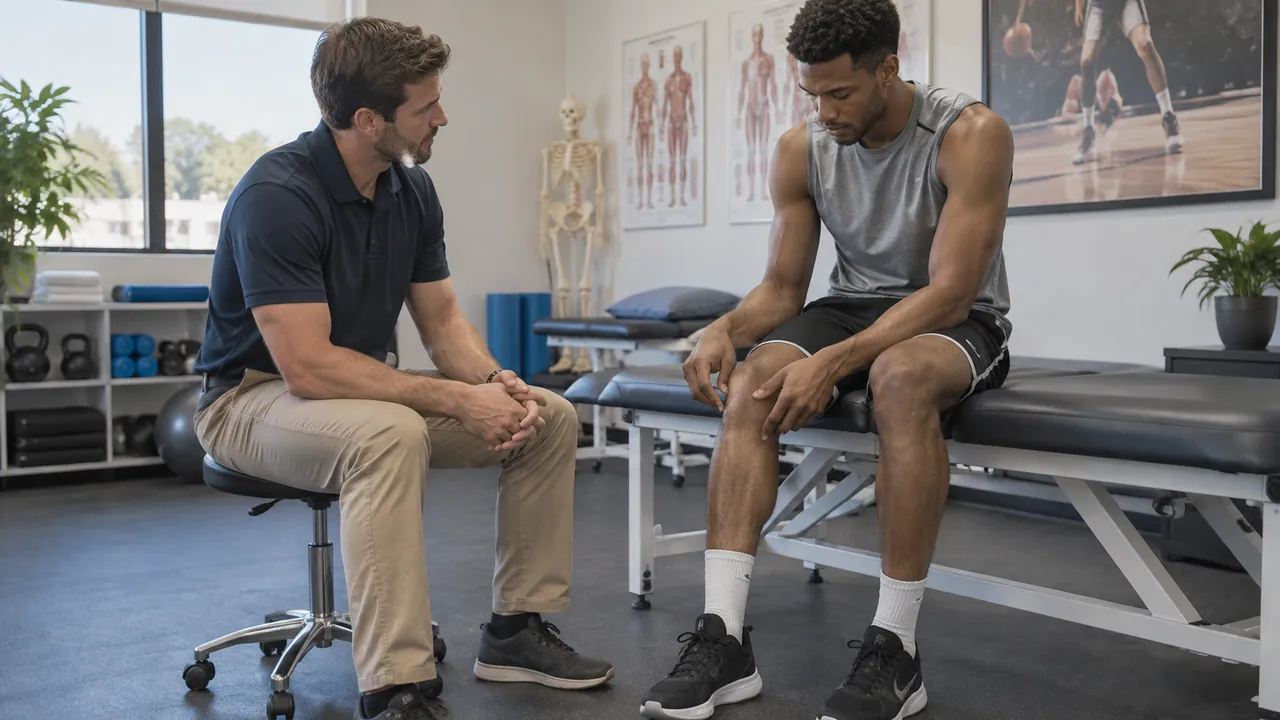
A sudden pop during a jump, major swelling, or inability to actively straighten the knee requires prompt assessment. A tendon tear is not managed by trying another set of squats. Likewise, inability to bear weight, a visibly changed knee shape, or new instability after an injury should interrupt the session and the self-help plan.
A hot red knee with fever, or a rapidly worsening condition without a clear training explanation, needs urgent medical advice. Do not use pain-relieving strategies to keep a player on court while those signs are present. This applies even if the player has previously been told they have jumper's knee: an old diagnosis does not explain every new event.
Count demanding jumps, not just time in the gym
Two practices of the same length can place very different demands on a symptomatic knee. One might include relaxed shooting and long coaching breaks; the other might involve repeated maximal rebounds, closeouts, and fast-break finishes. A diary that only records sixty minutes of basketball misses the distinction that matters most to the next training decision.
Separate court exposure into shooting, running, repeated jumping, cutting, and live play. You do not need a laboratory-quality jump count. A practical description such as light set shots versus repeated contested rebounds gives the therapist and coach something concrete to adjust. Include extra shooting after practice, because those repetitions are easy to forget when discussing the official session.
Gym work also contributes to the total plan. Loaded squats, leg presses, and plyometrics are not invisible just because they happen away from the court. Their place may be useful within rehabilitation, but the dose should be coordinated with basketball. Adding every exercise found online to an unchanged practice schedule is not a progressive program.
Reduce the provoking demand without losing the whole routine
Depending on your assessment, modified participation may preserve useful skills while reducing the tasks that consistently aggravate symptoms. A player might work on passing, stationary ball handling, or another agreed activity rather than complete repeated jump drills. The alternatives should be selected for actual tolerability, not because they sound low impact in theory.
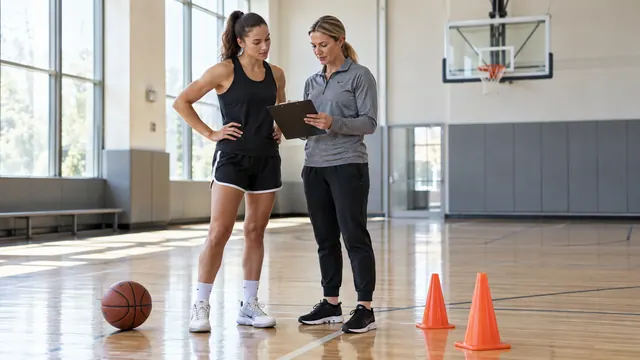
Discuss the plan with the coach before practice. Specify which drill is modified, what replaces it, and what should happen if symptoms change. Without this conversation, a player can begin with a sensible plan and gradually get pulled into full scrimmaging. Clear boundaries make modification a training decision rather than an argument during competition.
| Exposure | Possible adjustment | What to review |
|---|---|---|
| Repeated maximal rebounds | Reduce or temporarily replace the jump drill | Symptoms during practice and the following morning |
| Long live scrimmages | Agree shorter, defined participation blocks | Movement quality and ability to stop as planned |
| Extra plyometrics after training | Coordinate them with the rehabilitation session | Total knee-loading exposure across the week |
| Unplanned pickup games | Choose predictable practice while rebuilding capacity | Whether the agreed level is repeatable |
What progressive tendon loading means
Progressive loading is not simply doing more repetitions every day. It means selecting an appropriate exercise demand and advancing it according to the person's response and goals. A clinician may use different contraction types, ranges, resistance levels, and eventually faster tasks. The order and dosage should reflect the assessed condition rather than a universal internet schedule.
A randomized trial compared progressive tendon-loading exercise therapy with eccentric exercise therapy in people with patellar tendinopathy. The progressive program produced better improvement in the study's tendon-related symptom and function score at twenty-four weeks. This supports a structured approach; it does not prove that one isolated exercise, a product, or an unsupervised routine will reproduce the same result for every basketball player.
Exercises that involve holding a position and exercises that move through a range have different practical roles. Later, basketball requires storing and releasing energy through faster actions. An athlete who tolerates slow strength work may still need a carefully planned transition to repeated jumping. Do not treat success in the weight room as automatic clearance for a game.
Where Spanish squats fit, and where they do not
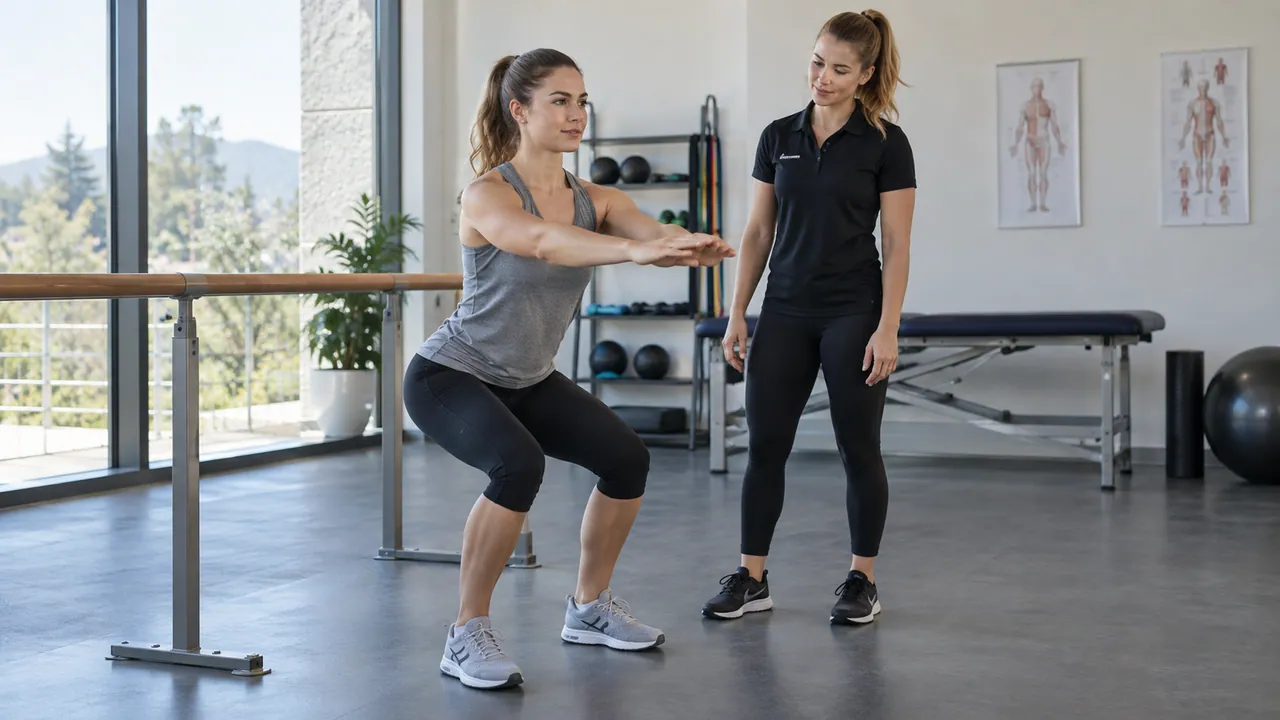
A Spanish squat is one exercise option that may appear in a patellar tendon program. It is not a diagnosis test, a compulsory exercise for every painful knee, or a complete basketball rehabilitation system. The setup must be secure, and the position and effort should be appropriate to the individual.
Our Spanish squat guide covers the specific setup and its limitations. Keep those technique details in one place, then use this basketball guide to consider the rest of the week. The exercise only makes sense when it fits with strength work, practice exposure, and the later symptom response.
If an exercise reliably worsens your symptoms or changes normal walking, do not assume that more pain means more tendon benefit. Ask for an adjustment to the load, range, exercise choice, or schedule. A supervised plan can include explicit symptom-monitoring rules; those rules should not be copied from another player's diagnosis without discussion.
Straps and sleeves: comfort is not tissue repair
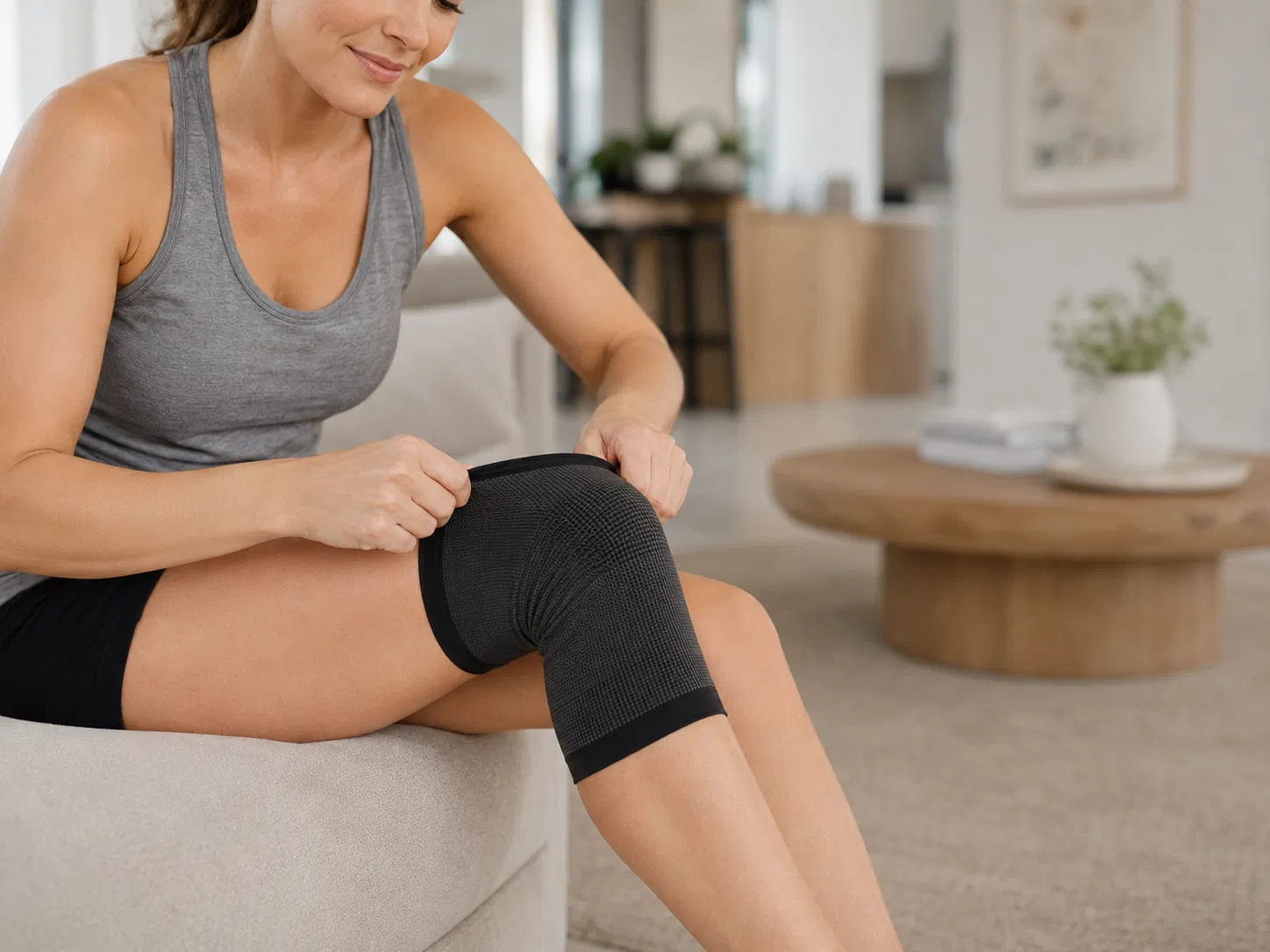
A patellar tendon strap applies localized pressure near the tendon, whereas a soft sleeve covers a wider area. A padded basketball sleeve adds a different function again: protection from some direct contact and floor abrasion. These are not interchangeable devices. Choose according to purpose, fit, and professional advice rather than the most dramatic product description.
Some players find a strap or sleeve more comfortable during selected tasks, but that feeling does not prove the tendon has recovered. Neither a narrow strap nor ordinary compression provides the control of a prescribed brace for instability. Numbness, tingling, skin irritation, or a change in foot color means the fit is not acceptable and the device should be removed.
Use the patellar tendon strap placement guide for fit details and the basketball sleeve comparison for equipment differences. This site sells comfort products, but no product recommendation here should be read as a claim to heal tendinopathy or prevent a tendon tear.
Cold and heat do not replace the loading plan
A short comfort routine may help you settle after an appropriate activity, but it is separate from rebuilding capacity. Follow cold-pack instructions, protect the skin, and avoid using it to numb the knee so you can immediately resume demanding jumps. Seek advice first if you have reduced sensation or circulation problems.
Do not put heat on a newly injured, swollen, red, or unusually warm knee. Even when warmth is suitable for ordinary stiffness, the result is not evidence that the tendon can manage basketball. Avoid combining several symptom-relieving products and then judging readiness only while their effects are present. Review your underlying function and the response to the actual training demand.
Build the bridge from exercise back to basketball
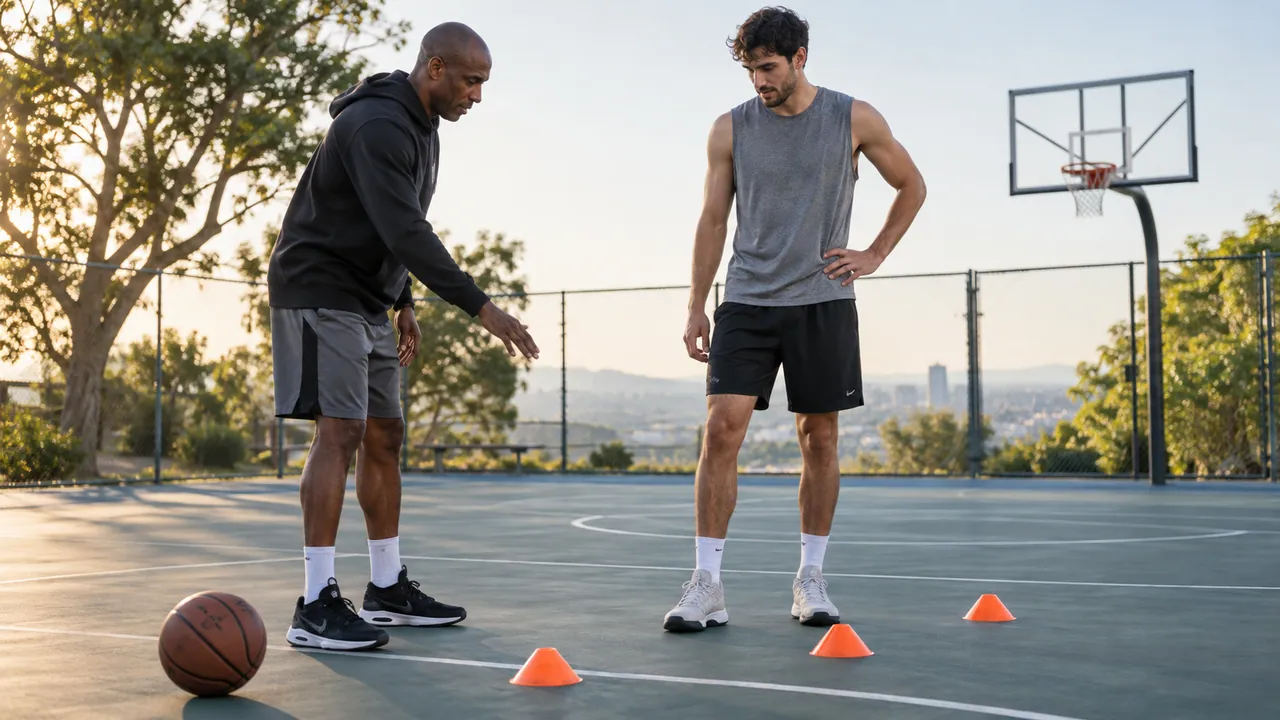
Return is more than one successful jump. Basketball asks you to repeat landings, brake unexpectedly, react to another player, and maintain control while tired. A progression may move from controlled individual tasks toward planned drills, reactive drills, modified practice, and eventually the demands of your usual game. The precise steps belong to your clinical and coaching plan.
Define the target clearly. Shooting alone, joining a casual half-court game, and playing a full competitive schedule are different goals. It is reasonable for someone to choose a lower-demand version of the sport rather than chase their previous workload immediately. A good plan reflects what the player wants to return to, not only what an exercise test allows.
Questions to bring to a sports appointment
Ask what findings support a tendon diagnosis and what other causes have been considered. Ask which court tasks you may continue, which should change, and what response would trigger reassessment. A clear answer is more useful than a broad instruction to rest until it feels better or to strengthen the knee without a defined plan.
- Which exercise is the current priority, and how should its dose change?
- How should gym work and basketball be arranged across the week?
- What should I record later that day and the next morning?
- What criteria matter before adding repeated jumps or live play?
- When should the plan be reviewed if improvement stalls?
Also discuss practical barriers. A school team schedule, a tournament, a physically demanding job, or limited equipment can make a theoretically sound plan difficult to follow. Explain those constraints early. The most useful program is one you understand and can carry out consistently, with a route back to the clinician when the knee does not respond as expected.
Make the rehabilitation instructions usable at your gym
A plan can sound clear in an appointment and become vague once you reach the court. Ask how the exercise work connects to your normal basketball visit. If you are allowed modified practice, clarify whether that includes jumping shots, rebounding, defensive slides or only selected skills. Each adds a different demand, and the phrase take it easy does not reliably communicate a tendon-loading plan to teammates.
Tell the clinician about equipment and time constraints too. A program that assumes access to a particular machine may need an appropriate alternative if your community gym does not have one. Do not replace it with the hardest exercise you can find online. The purpose of an alternative is to preserve the intended training demand within your situation, not to make the session look similar in a photograph.
Keep the agreed exercise dose and court exposure together in your notes. If you complete the rehabilitation session and then stay for unplanned games, the tendon has experienced both. That extra basketball should be visible when discussing why symptoms changed. Conversely, if work or travel prevented part of the plan, say so without embarrassment. Accurate feedback helps adjust the program; pretending every session happened as prescribed makes the review less useful.
Finally, ask what improvement should look like beyond a brief reduction in pain. It might involve more reliable tolerance of selected tasks, better strength on the measures your clinician uses, or the ability to repeat a suitable practice without an unwanted later response. Those goals keep the process connected to basketball while avoiding an unrealistic promise that one exercise, strap or recovery product will make every rebound comfortable immediately.
Judge progress by repeatability, not one good day
A better session is encouraging, but one comfortable evening does not establish a durable change. Look for a pattern: the agreed exercises are manageable, ordinary activities are stable, and selected court tasks can be repeated without an accumulating reaction. If symptoms return every time the same demand is added, that is information for the next adjustment.
Keep the focus on a sustainable return rather than a promised recovery deadline. The return-to-basketball progression guide expands the court stages. A strap can be optional equipment and an exercise can be a useful tool, but coordinated assessment, load management, and progression are the framework that gives those tools a purpose.
Frequently Asked Questions
Is jumper's knee the same as patellar tendonitis?
People often use the terms interchangeably. Patellar tendinopathy is commonly used for persistent load-related patellar tendon pain; it does not assume that inflammation alone explains the problem. An examination is needed to distinguish it from other causes of front-of-knee pain.
Can I play basketball with jumper's knee?
The answer depends on diagnosis, symptoms, function and your rehabilitation plan. Some players use modified practice under professional guidance. Repeatedly playing through worsening pain, swelling or altered movement is not a safe default.
How long does jumper's knee take to recover?
There is no reliable universal return date. Persistent symptoms can require a sustained rehabilitation process, and progression should reflect strength, jumping tolerance, later symptom response and the demands of your game.
Does a patellar tendon strap heal the tendon?
A strap may change short-term symptoms for some people, but it does not rebuild tendon capacity or establish readiness to compete. Fit and suitability should be considered alongside the rehabilitation plan.
Are Spanish squats enough for jumper's knee?
No single exercise covers every stage or every patient. A Spanish squat may be one selected loading option, but basketball also requires strength through movement and tolerance of repeated jumping, braking and changing direction.
Should I stretch through pain below the kneecap?
Do not force a painful stretch as a way to fix the tendon. Ask your clinician which movements are appropriate and how to adjust load if symptoms increase. A new traumatic injury needs assessment before exercise experimentation.