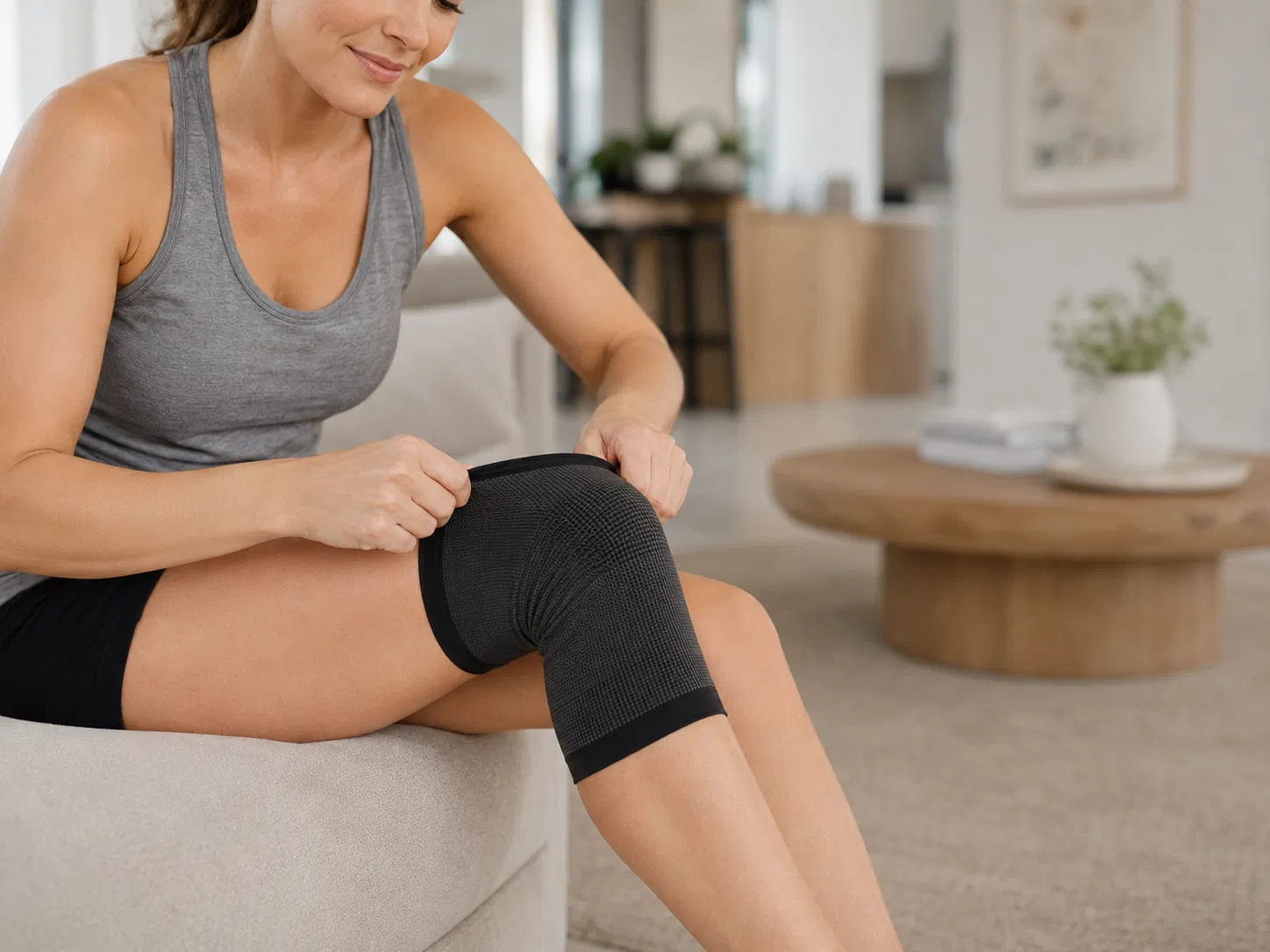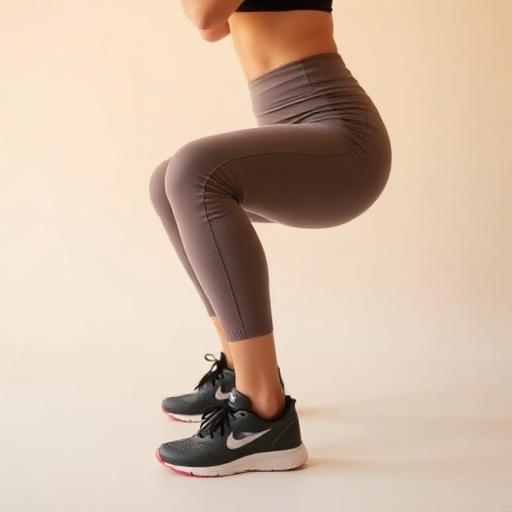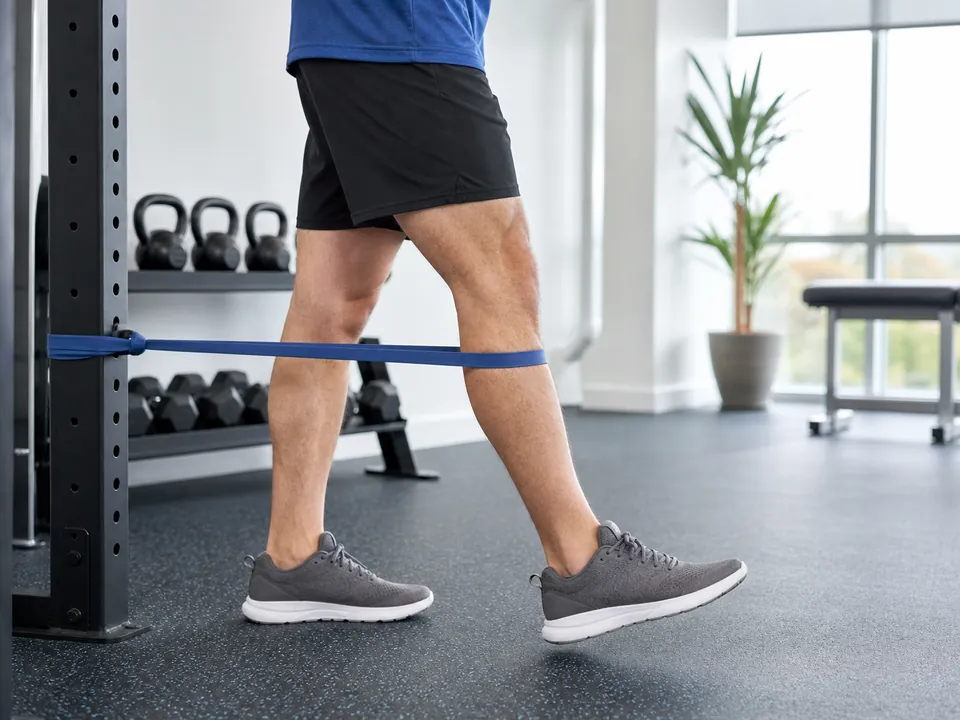
The name creates some search confusion. Spanish squat can refer to translated instructions for an ordinary squat, but in rehabilitation it usually means the band-supported exercise described here. The defining feature is not nationality, depth, or a special foot angle. It is the strong forward pull of a band or rigid strap positioned behind the knees while the hips sit backward.
This page addresses Spanish squats for a suspected or diagnosed load-related patellar tendon pattern. It does not replace the broader knee pain when squatting guide, which covers kneecap, joint-line, tendon, mobility, and technique possibilities. The distinction matters because an exercise that suits one source of anterior knee pain may irritate another.
First Check Whether the Pain Pattern Fits the Patellar Tendon
Patellar tendinopathy commonly produces localized load-related pain near the lower edge of the kneecap or along the tendon between the kneecap and upper shin. Jumping, landing, accelerating, and repeated knee-extensor work may provoke it. Tenderness at one point can support the history, but location alone does not confirm the diagnosis. Imaging findings may also exist in people without symptoms.
If you are deciding whether to use a narrow band during activity, the patellar tendon strap guide covers placement, fit, short-term evidence, and the difference between a strap, sleeve, and structured brace.
Diffuse pain around or behind the kneecap, discomfort after prolonged sitting, and pain across stairs may fit a patellofemoral pattern. Pain directly over the hard tibial bump, a swollen bursa, a recent direct impact, or joint-line locking raises other questions. Use the pain behind the kneecap guide and the knee pain location map to describe the pattern, then seek assessment when it persists or limits activity.
This distinction also explains why the Spanish squat is not a generic pain-free squat trick. It can create meaningful patellar tendon force and quadriceps demand. That may be useful when the goal is progressive tendon loading, but it may be too much during an irritable flare or inappropriate when pain comes from a different structure.
What the Spanish Squat Is Designed to Do
The band supports the lower legs from behind, allowing the person to sit backward while keeping the shins relatively upright and the torso more upright than in a hip-dominant squat. The quadriceps must work to hold or reverse the knee-bent position. Because the exercise can be held still, it is easy to create time under tension without repeated jumping or rapid direction changes.
Biomechanical research places the Spanish squat in an intermediate patellar tendon loading range compared with easier early-stage tasks and high-demand jumping activities. That does not establish one ideal depth or dose. Tendon force changes with knee angle, external weight, band tension, trunk position, and the person's proportions. A deeper hold is not automatically a better hold.
Direct Spanish squat evidence is limited. A small case series measured patellar tendon strain during a Basas Spanish squat with and without electrical stimulation, but a case series cannot establish clinical effectiveness. Stronger treatment evidence concerns progressive tendon loading more broadly, including isometric, isotonic, heavy slow resistance, and sport-specific stages. The Spanish squat can occupy one place in that sequence.
Spanish Squat Band Setup

Use a strong, broad resistance band or a strap specifically intended for this exercise. The anchor has to resist the combined band tension and body weight shift. A heavy rack post can be suitable in a gym. A loose door handle, light furniture, portable pole, or improvised hook is not a safe substitute. Inspect the band for cuts, thinning, or surface damage before every session.
- Anchor around knee height. The line of pull should be mostly horizontal rather than sharply upward or downward.
- Place the band behind both knees. Use a broad section of material and prevent it from crossing the kneecaps or rolling onto the calves.
- Step backward to build tension. The band should feel secure before you lower. Keep a stable support within reach while learning.
- Set the feet about hip to shoulder width. Choose a comfortable toe angle and keep the whole foot in contact with the floor.
- Sit the hips backward. Let the knees bend as the band supports the shins. Keep the torso mostly upright without forcing a rigid military posture.
- Stop at a tolerable depth. Hold with steady breathing or rise slowly by driving the feet into the floor.
Start higher than the familiar right-angle demonstration if needed. A quarter or half squat can teach the setup with less demand. You should feel substantial thigh effort. Stop if the band pinches, causes numbness, rolls dangerously, or pulls the knees into a position you cannot control.
Isometric Holds: Useful, but Not a Magic Number
Isometric means the muscles produce force while the joint position remains nearly still. Research in athletes with patellar tendinopathy has found short-term pain improvement after some isometric knee-extension protocols. One small crossover study reported an immediate effect lasting at least 45 minutes, while another randomized crossover trial did not reproduce a meaningful acute pain change. This mixed evidence is why a Spanish squat hold should not be promised as an instant painkiller.
The popular five sets of 45 seconds comes from isometric loading research and clinical practice, but it is not an entry requirement. A more irritable tendon may tolerate a higher position, lighter effort, and 10 to 20 seconds. Someone already accustomed to heavy quadriceps work may need more external load or a different exercise to create an adequate stimulus. The useful dose is challenging enough to train while remaining repeatable and compatible with the rest of the week.
Rest for roughly one to two minutes when holds are demanding, and stop a set when posture or breathing becomes strained. Record depth, hold time, sets, added weight, discomfort during the hold, and the response later that day and the next morning. That log is more informative than copying the set count of an athlete in a video.
How to Progress a Spanish Squat

Progression can start by improving setup and reaching the same comfortable position on every set. Next, add a small amount of hold time, one additional set, or slightly more depth. Change only one of those variables. When isometric work is well tolerated, controlled repetitions introduce shortening and lengthening muscle actions. A slow lower, brief pause, and steady rise is more useful than bouncing against the band.
External weight can be held close to the chest, but it should come after reliable bodyweight form and secure anchoring. Eventually, a tendon program often needs heavier slow resistance and then faster energy-storage tasks such as running, jumping, landing, or changing direction. A randomized trial found better 24-week outcomes from a staged progressive tendon-loading program than from pain-provoking eccentric exercise alone. The lesson is broader than one exercise: match loading to the current stage and progress toward the person's sport.
| Option | Main feature | Possible place in a plan | Limitation |
|---|---|---|---|
| Spanish squat hold | Band-supported isometric knee bend | Quadriceps and tendon loading without repeated motion | Needs a secure anchor and may still provoke anterior pain |
| Wall sit | Trunk supported against a wall | Simple bilateral isometric option | Friction and joint angles differ from a Spanish squat |
| Banded TKE | Short-range standing extension | Lower-range quadriceps control or warm-up | Does not provide the same tendon demand or squat capacity |
| Heavy slow squat or leg press | Progressive resistance through more range | Later strength and tendon-capacity stage | Requires equipment, dosage planning, and adequate tolerance |
| Jump and landing drills | Fast energy storage and release | Late return to jumping sport | Too demanding as an early pain-relief exercise |
The banded TKE guide explains the short-range option. It is not a substitute for the Spanish squat; it answers a different search and loading need. Likewise, the general squat page addresses pain during the movement, while this article remains focused on patellar tendon loading after the diagnosis is reasonably clear.
Common Spanish Squat Mistakes
- Using an unsafe anchor: the greatest setup risk is an object or band failing under tension. Test the system conservatively and keep the face away from the recoil path.
- Letting the band become a thin cord: rolled material can pinch the back of the knees and create numbness. Reset it before continuing.
- Dropping immediately to 90 degrees: depth is a loading variable, not a pass-fail standard. Start where symptoms and control allow.
- Leaning far back like a trust fall: sit the hips backward while keeping pressure through the whole foot. The band supports the shins, not the entire body.
- Holding the breath: steady breathing helps keep effort appropriate. People with cardiovascular or blood-pressure concerns should get individualized exercise advice.
- Using temporary relief to justify more jumping: feeling better after a hold does not prove the tendon is ready for an abrupt increase in sport load.
Monitor the Tendon and the Total Training Week
Tendon rehabilitation cannot be separated from jumping, sprinting, matches, leg training, and recovery. A Spanish squat adds load even when it temporarily reduces symptoms. If you add it without adjusting a sudden spike in court sessions or plyometrics, total demand may still exceed capacity. Track the exercise alongside sport rather than treating it as recovery that does not count.
Some clinicians use a pain-monitoring model that allows low, stable familiar discomfort during loading when it settles afterward. That threshold is not universal. The pattern should not escalate across sets, change movement, create new swelling, or be clearly worse the next morning. The post-exercise knee pain guide can help organize delayed symptoms, but persistent focal tendon pain still deserves a sports medicine or physical therapy assessment.
When to Get Medical Help
Do not begin Spanish squats after a new traumatic pop, rapid swelling, an inability to straighten the knee, a visible change in the tendon or kneecap, or an inability to bear weight. Those signs can require prompt assessment and follow a different path from gradual load-related tendinopathy. Arrange a clinical review when pain is not clearly localized, keeps worsening, limits ordinary walking or stairs, or does not improve after a sensible adjustment in training. A clinician can assess tendon loading, quadriceps strength, knee motion, and alternative sources of anterior pain before deciding whether a Spanish squat belongs in the plan.
The Bottom Line
The Spanish squat is a band-supported quadriceps and patellar tendon exercise that can be used as an isometric hold or controlled repetition. Its strongest role is as one adjustable step within progressive loading. Use a secure anchor, keep the band broad behind both knees, choose a tolerable depth, and judge the later response. Do not confuse short-term comfort with full tendon recovery, and do not let one popular exercise replace diagnosis, heavier strength progression, or return-to-sport loading.
If your goal is returning to rebounds and repeated jumps, see basketball-specific tendon load management and the court return progression. One exercise does not cover every sporting demand.
Frequently Asked Questions
What is a Spanish squat exercise?
A Spanish squat uses a strong band or strap behind both knees, anchored in front of the body. The band pulls the lower legs forward while the person sits backward, usually with a relatively upright trunk. It can be performed as a stationary isometric hold or as controlled repetitions and creates substantial quadriceps and patellar tendon demand.
Do Spanish squats help patellar tendon pain?
They may provide a tolerable way to load the quadriceps and patellar tendon, and Spanish squats appear in clinical rehabilitation frameworks. However, direct trials isolating this exact exercise are limited. Better evidence supports progressive tendon-loading programs overall. Improvement cannot be promised from Spanish squats alone, and the diagnosis and dose still matter.
How long should I hold a Spanish squat?
Some research protocols for patellar tendinopathy use multiple isometric holds lasting about 30 to 60 seconds, but that does not make 5 sets of 45 seconds mandatory. A beginner may use a higher position and shorter 10- to 20-second holds. Total effort, symptoms, training schedule, and next-day response should guide progression.
Where should the band go for a Spanish squat?
Use a broad band behind both knees at approximately knee-joint height. It should not cross the kneecaps, sit on the upper calves, or roll into a narrow painful edge. The anchor must be designed to withstand the load. Clothing or a folded towel can reduce skin pinching, but numbness means the setup should stop.
Is a Spanish squat the same as a wall sit?
No. A wall sit uses friction and contact with the wall to support the trunk, while a Spanish squat uses forward band tension behind the knees to support the shins. Both can be isometric quadriceps exercises, but their joint positions, balance demands, setup risks, and loading are different. Neither is automatically better for every knee.
Should Spanish squats hurt the patellar tendon?
A rehabilitation plan may permit a low, stable level of familiar tendon discomfort, but sharp pain, escalating pain across sets, altered movement, swelling, or a worse response the next morning suggests the dose or exercise is not appropriate. Pain rules should be individualized, particularly after surgery, a new injury, or when the diagnosis is uncertain.