What the warm-up is supposed to accomplish
The transition from a car seat or desk to a full-court game is a large change in demand. A warm-up gives you a gradual way into movement and an opportunity to notice how you feel before play becomes unpredictable. It is not a test of toughness and should not be used to make concerning symptoms disappear long enough to compete.
For basketball, preparation should eventually resemble basketball. That means more than moving forward: you will also decelerate, step sideways, control a landing and react to another player. The sequence below organizes those demands from simpler to more complex. It is an illustrative framework for players already able to exercise, not an individualized rehabilitation prescription or an exact program tested in a clinical trial.
What the basketball research supports, and what it does not
A systematic review found support for multicomponent neuromuscular warm-ups in reducing lower-extremity injuries in basketball, while noting variation between programs and more limited evidence for some specific injury outcomes. A basketball cluster-randomized trial also reported benefits from a multicomponent program. These findings support consistent, structured preparation rather than a promise that one stretch or one set of squats prevents knee injury.
It would be misleading to attach a study's injury-reduction percentage to the example routine on this page. The participants, coaching, exercises and adherence matter. Use the research as a reason to take preparation seriously, and use a qualified coach or clinician to adapt it when needed. No warm-up removes risks from contact, an unexpected landing, a slippery surface or an unresolved injury.
Before you begin: space, shoes and a symptom check
Choose a clear area that does not cut across another group's active drill. Check for moisture, loose balls and bags near your path. Lace your shoes and arrange any permitted support so that it does not require repeated adjustment. If you are returning from an injury, the restrictions and preparation agreed with your clinician take priority over any general sequence here.
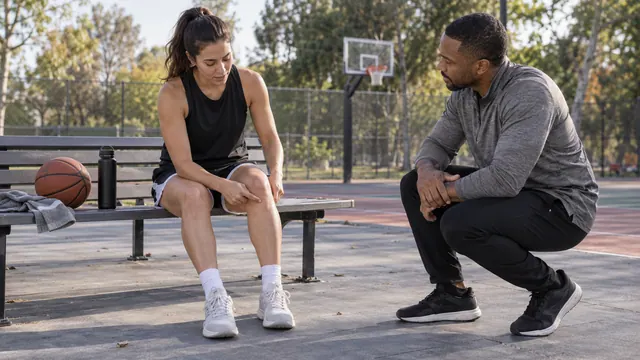
Ask whether today's knee feels similar to the knee you used in your last tolerated session. New swelling, locking, giving way or pain that changes walking is not simply stiffness to work through. Stop and seek appropriate advice. Our basketball knee pain guide covers symptom patterns, while this article focuses on preparation for a knee that is suitable for the planned activity.
A progressive basketball knee warm-up at a glance
| Stage | Example options | What you are checking |
|---|---|---|
| Easy movement | Walk, march, then an easy jog if already tolerated | Comfortable rhythm without limping |
| Controlled lower-body movement | Comfortable squats, calf raises and small step patterns | Smooth movement rather than maximal depth |
| Balance and positioning | Brief supported balance and controlled weight shifts | Control without rushing or forcing symmetry |
| Landing and braking | Low-demand landing rehearsal and gradual stops | Ability to settle and slow down comfortably |
| Lateral and basketball skills | Easy shuffles, planned direction changes and ball work | Readiness for the specific session ahead |
Move through these stages according to comfort and familiarity, not pressure to finish a checklist. A player who has not been cleared for jumping should not add hops because they appear later in a warm-up. A healthy regular player may progress more quickly than someone returning after a break. The order is a way to organize demand, not permission to skip the boundaries of your current ability.
Stage one: start with movement you can control easily
Begin with walking around the court or marching in place when space is limited. Let the arms move naturally and keep the steps comfortable. If easy jogging is already part of your tolerated activity, build toward it gradually. There is no need to start with high knees performed as fast as possible, especially when you have just arrived after sitting for a long time.
Use this stage to notice differences that may be hidden once the game becomes distracting. Are you shortening one step? Does turning feel awkward? Is a shoe rubbing? Address practical issues now. If symptoms are new or worsening, do not assume a later stage will solve them. A warm-up provides information as well as preparation, and sometimes the useful information is that today's plan needs changing.
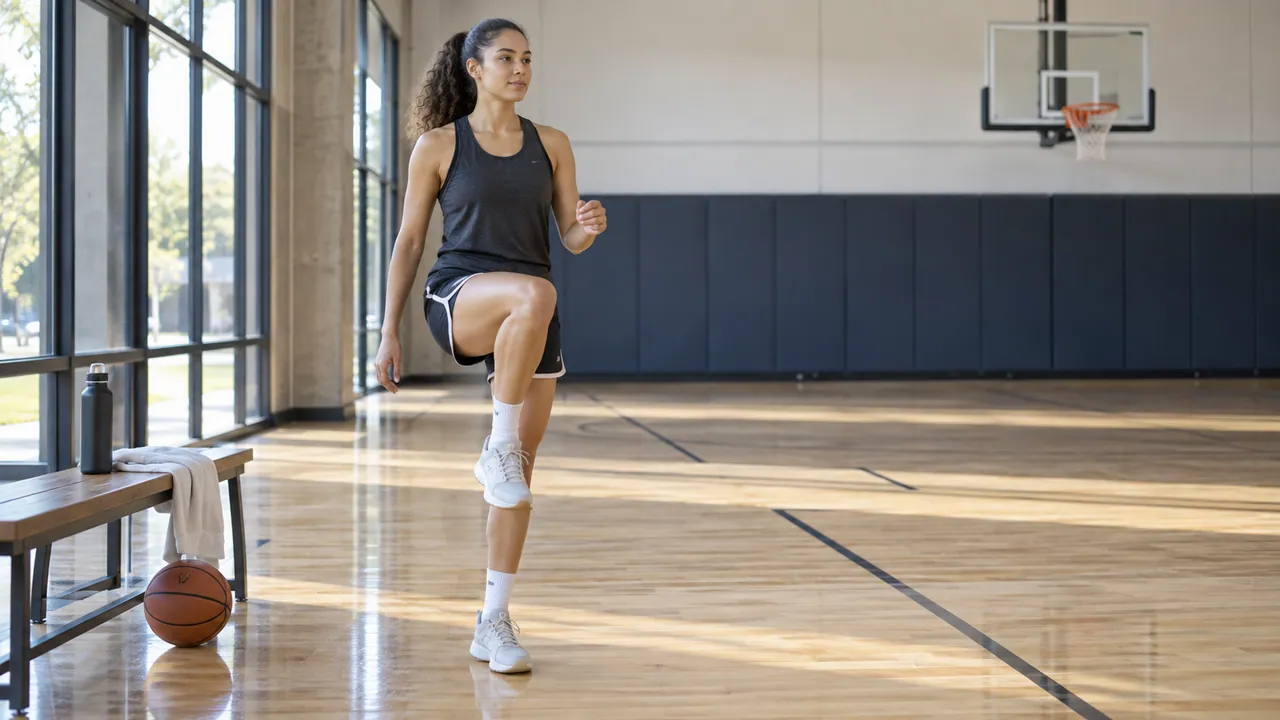
Stage two: rehearse lower-body control, not a strength workout
Use a comfortable squat range, a controlled calf raise or a small step pattern that you already know. The aim is to move through positions smoothly, not to achieve your deepest squat or heaviest effort. Keep a stable support nearby if balance is uncertain. Stop a movement that causes sharp pain, a catching sensation or a clear loss of control.
For a calf raise, a rail or wall can provide light balance support while you rise and lower in a controlled way. For a squat, select a range that feels manageable and avoid bouncing into the bottom. The exact choices can vary with your coach's program. What should remain consistent is that this stage prepares you rather than leaving your legs shaking before play.
Long-term strength development belongs elsewhere in the week. Our knee strengthening guide addresses that broader subject. Putting an exhausting strength session into the last few minutes before tip-off is not the same as becoming better prepared. Think of warm-up movements as rehearsal; the separate training plan is where capacity is progressively developed.
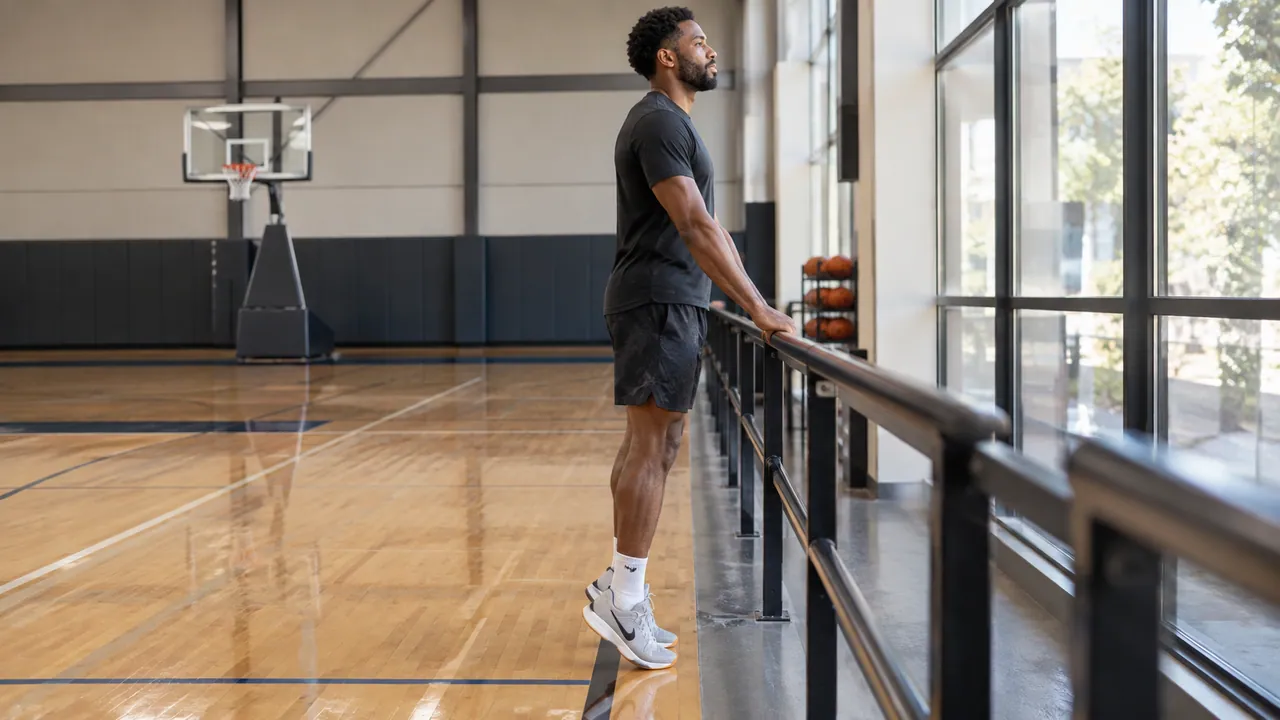
Stage three: add balance and comfortable weight shifts
Basketball rarely leaves you evenly planted in one position for long. A brief balance task or controlled weight shift can bridge the gap between simple movement and court footwork. Stay close to support if needed, and choose a version you can perform without straining. The goal is not to win a balancing contest or stand on an unstable object for extra difficulty.
For example, shift weight gently from one foot to the other, then practice settling into a comfortable athletic stance. If your established program includes single-leg balance, use it within that program's limits. Do not interpret wobbling as a diagnosis or force the painful side to match the other through repeated attempts. Difficulty that is new, pronounced or accompanied by symptoms deserves a separate assessment.
Stage four: prepare for landing and stopping
Only add landing tasks if jumping is already appropriate for you. Begin with a low-demand rehearsal selected by your coach, such as settling into a controlled position after a small movement rather than reaching for a maximal rebound. Emphasize a manageable landing space and the ability to finish balanced. An exaggerated deep squat is not required to prove that you landed softly.
For braking, start at an easy speed with enough space to slow down gradually. Then progress within your normal ability. A rushed sprint followed by an abrupt stop is not the logical first repetition. If a landing or stop produces pain, do not repeat it over and over to see whether the knee warms out of it. The landing pain guide explains when to stop experimenting.
Technique cues should be simple enough to use: control the approach, give yourself room, and settle before adding speed or another task. No single visual alignment rule captures every safe basketball movement. Coaching should consider the whole action and your current capacity, rather than making you obsess over one frame of your knee position.
Stage five: lateral steps, planned cuts and ball skills
Introduce easy defensive shuffles over a short clear distance. Keep the initial pace low enough to notice whether the shoes hold comfortably and whether either knee feels different. Add planned changes of direction before reactive drills. Knowing where you will go reduces complexity; responding to a teammate or defender adds another layer and belongs later when appropriate.
Then connect the movement with familiar basketball skills: controlled dribbling, passing, close-range shooting and the progression your team uses. Increase demand gradually toward the practice or game ahead. Avoid finishing a careful warm-up with a sudden challenge to dunk, race or make a maximal cut just because a teammate suggests it. The final stage should still make sense as part of the same progression.
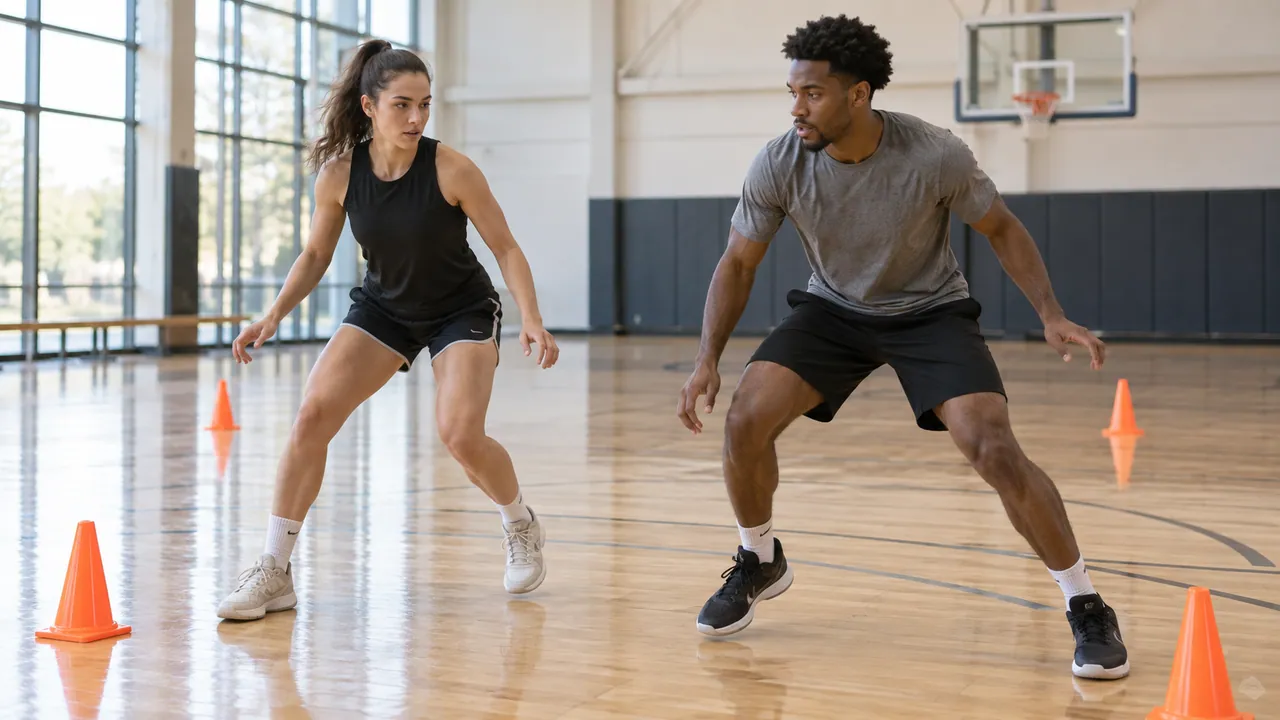
How to adapt when time or space is limited
If the court is occupied, use a safe adjacent area for easy marching and controlled movements that do not require travel. Save the court-specific stages for when there is space. Do not weave between active players to complete a warm-up on schedule. It is better to tell teammates you need a short preparation period than to arrive late and jump directly into the hardest possession.
If you regularly have too little time, change the arrival plan rather than deleting the same stages every week. Put shoes, water and equipment together beforehand. Decide which familiar movements you will use so that you do not spend the warm-up searching for an exercise video. Consistency is easier when preparation is a repeatable part of the basketball session, not an optional task squeezed into leftover minutes.
Bench breaks, halftime and a second game
A long period sitting after the initial warm-up changes the immediate context. When safe and permitted, use some easy movement before returning to harder play rather than assuming you are in exactly the same state as before tip-off. Follow the coach's substitution arrangements and keep clear of active play. The aim is a brief reintroduction, not an extra conditioning session on the sideline.
Before a second game, consider fatigue and the response to the first one as well as warmth. Repeating a warm-up does not erase the workload already completed. If control is deteriorating or symptoms are increasing, the right adjustment may be fewer minutes or stopping for the day. Our basketball recovery between games discusses planning across sessions rather than only preparing for one.
Do sleeves, heat or stretching replace any of this?
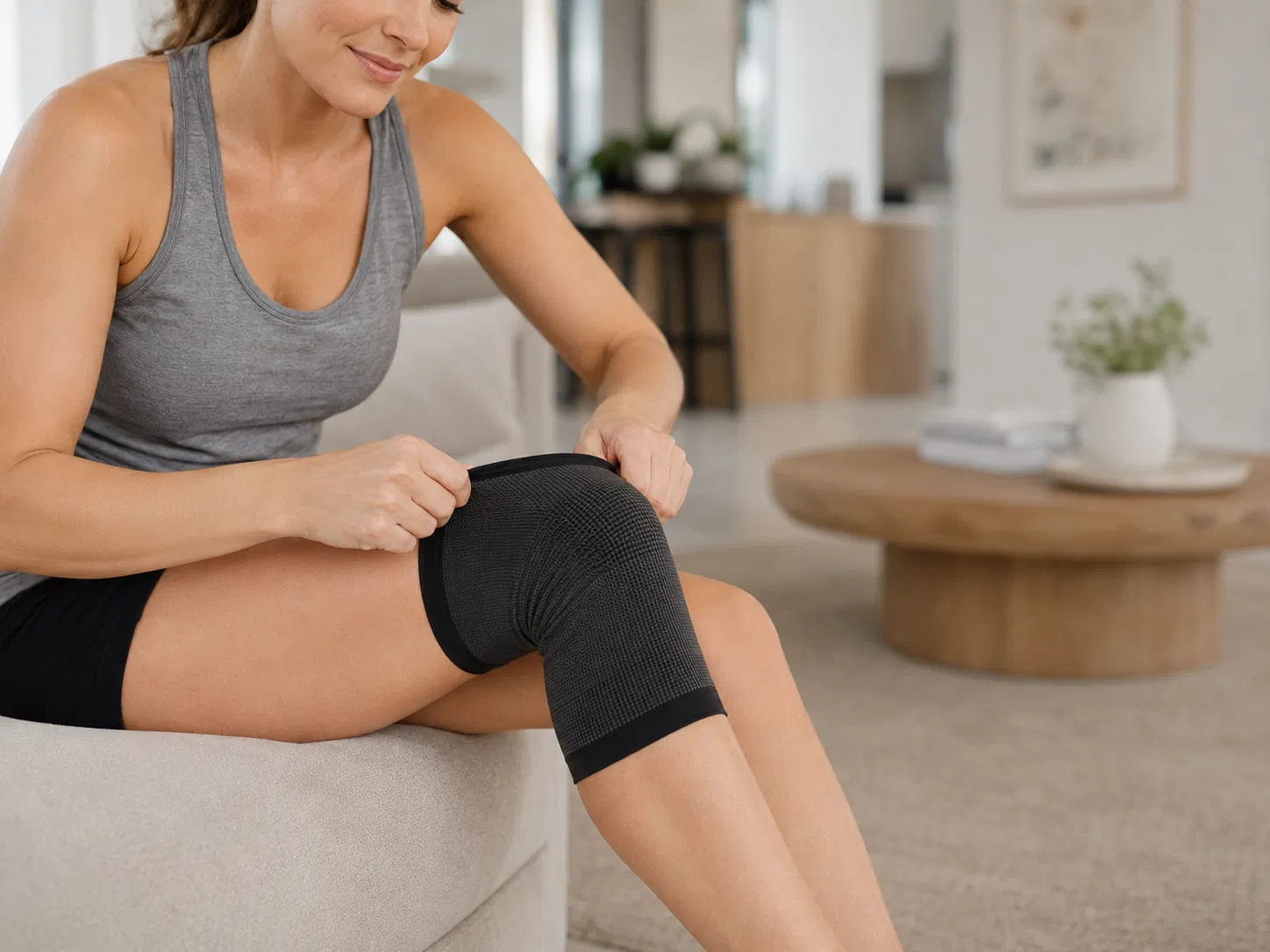
A comfortable basketball knee sleeve can be optional equipment, but it does not rehearse landing or direction changes. Likewise, feeling warm from an external heat source is not the same as preparing through movement. Do not use a heated device on a new swollen or unusually warm knee, and do not rely on temporary comfort as evidence that an injury is ready for sport.
Stretching may have a place in an individualized routine, but forcing a painful range is not a shortcut. Keep any prescribed exercises and limitations intact. If you have diagnosed tendon pain, use the preparation chosen within your rehabilitation plan rather than adding demanding exercises from several internet routines. The jumper's knee article explains why loading decisions require more context than a warm-up list provides.
Make the routine repeatable with a teammate
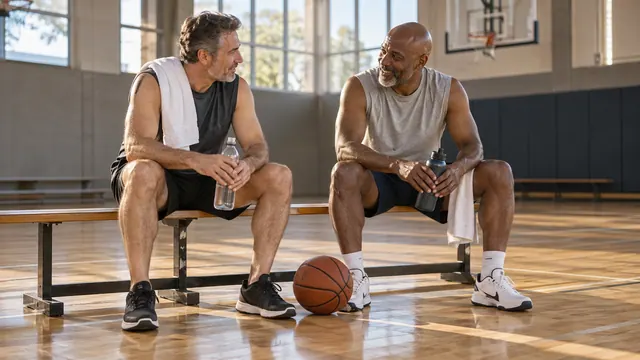
A shared routine can make preparation easier to maintain, provided it does not turn into a competition. Agree the order beforehand and let each player use an appropriate range and pace. One person can watch the space while the other moves, then switch. The useful feedback is simple and observable: the sleeve keeps sliding, there is a wet patch nearby, or a drill is becoming rushed.
Keep coaching comments focused on the task rather than diagnosing each other. A teammate can notice that you are avoiding one side, but cannot determine the tissue involved from that observation. If something is new or painful, stop and decide whether the session should change. Encouragement should support sensible preparation, not pressure someone to prove that the knee is fine by completing the hardest version.
For a recreational group, appointing a regular start time can matter more than adding another sophisticated drill. Players who arrive after the routine should still have a chance to prepare rather than being pulled straight into play because the teams are uneven. Build that expectation into the group's habits. A warm-up that exists only when everyone arrives early is unlikely to remain consistent across a busy season.
Review the routine periodically with a qualified coach, particularly if the group's demands change or several players are returning after problems. Keep the core sequence familiar while making appropriate individual modifications. This is different from replacing the entire routine every week with a new online challenge. Repetition helps players understand the tasks and notice meaningful changes in how they feel before the game starts.
Leave the warm-up ready, not exhausted
A good finish is being able to move comfortably through the demands you are about to meet, with equipment settled and attention on the court. It is not a personal record in repetitions, sweating or jump height. Keep track of which sequence works reliably for you and discuss recurring difficulties with a coach or clinician. Preparation should become familiar enough to repeat without turning mechanical.
Most importantly, let the warm-up inform the session. If today feels different in a concerning way, change the plan. If you are rebuilding after knee pain, use the return-to-basketball progression alongside professional guidance. The warm-up is the start of sensible basketball participation, not a waiver that makes every amount of play appropriate.
Frequently Asked Questions
How should I warm up my knees before basketball?
Begin with easy whole-body movement, add comfortable lower-body control, then gradually rehearse the stopping, landing and lateral tasks you already tolerate. Finish with basketball skills at increasing intensity rather than going directly from sitting to hard play.
Is shooting around enough of a basketball warm-up?
Easy shooting can be part of it, but standing jump shots do not cover every demand of defense, braking and direction changes. Include progressive movement preparation, not only shots at the basket.
How long should a basketball knee warm-up take?
There is no universal duration that guarantees readiness. Allow enough time to progress from easy movement to sport-specific tasks without rushing or becoming fatigued. The sample sequence is a framework, not a medically validated timer.
Should I stretch a painful knee before playing?
Do not force painful ranges or assume stretching can clear an injury. New swelling, giving way, locking or an altered walking pattern needs assessment. Any clinician-prescribed preparation takes priority over a general warm-up.
Can a knee sleeve replace warming up?
No. A sleeve may provide preferred coverage or a snug feeling, but it does not rehearse balance, stopping, landing or court movement. Treat it as optional equipment rather than movement preparation.
What should I do after sitting on the bench?
When permitted and safe, use a brief reintroduction of easy movement before returning to harder play. Do not assume the preparation before tip-off remains identical after a long inactive period.