First separate one painful landing from repeated landing pain
The most useful opening question is whether you can point to a particular moment. A collision, twist, awkward step onto another player's foot or sudden painful landing belongs in the incident category. Pain that gradually appears after many jumps belongs in a different pattern. Both can matter, but the first should not be managed by assuming it is the same soreness you have occasionally felt after training.
Also separate what happened from what you think it means. I landed after a rebound, felt pain and could not continue is a useful description. I tore my meniscus because the pain is on the inside is an unconfirmed conclusion. Clear observations help a clinician assess the problem; a confident internet label can make you overlook signs that do not fit it.
When to stop play and get assessed
End the activity after a concerning painful incident rather than taking another possession to test it. Seek prompt assessment for a painful pop with rapid swelling, a knee that gives way or locks, inability to bear weight, or inability to straighten the leg normally. A visibly deformed knee or a cold, numb foot after injury needs emergency care. Severe symptoms should not wait for an equipment order or a scheduled workout.
Fever with a hot, red, swollen knee is another reason for urgent medical advice, even if basketball happened earlier that day. Do not explain every symptom by the game simply because it was the latest activity. If you are unsure how urgent the situation is, contact a local urgent-care service and describe the symptoms and incident. Avoid repeatedly manipulating the knee to reproduce a sound or movement.
A landing-pattern table, not a self-diagnosis chart
| What you notice | Useful context | Next step |
|---|---|---|
| Sudden pain during one landing | Twist, contact, pop, swelling and ability to continue | Stop and assess the injury rather than retrying the jump |
| Repeated pain below the kneecap | Jump volume, takeoff pain and later response | Discuss a tendon-related assessment and load plan |
| Ache around or behind the kneecap | Squatting, stairs and prolonged bending symptoms | Assess the broader front-of-knee pattern |
| Joint-line pain with catching | Twisting incident, swelling and loss of movement | Seek assessment; location alone does not identify a tear |
| Discomfort only after many repetitions | Fatigue, session changes and next-day function | Reduce the provoking exposure and review the pattern |
This table organizes information rather than assigning a diagnosis. Several conditions overlap in location and timing, and a person can have more than one contributing factor. Use the knee injury symptom chart for a broader overview, but let an examination determine which structures and functions need attention when symptoms are persistent or concerning.
Why location matters, but does not settle the answer
Pain just below the kneecap during repeated jumping often leads people to search for jumper's knee. That can be a useful topic to discuss, but it is not interchangeable with every front-of-knee problem. A sudden loss of the ability to straighten the knee after an incident is especially different from a gradual history of load-related discomfort and needs prompt evaluation.
Pain around the kneecap, at the inner or outer joint line, or behind the knee creates a different set of questions. Describe the spot with a finger and explain whether it feels superficial or deep, but avoid pressing repeatedly until the area becomes more sore. Our knee pain location guide can help with vocabulary; it cannot replace the history and examination.
When the pattern is gradual and focused below the kneecap, use the basketball jumper's knee guide for the tendon-loading discussion. This landing article deliberately keeps that rehabilitation topic separate. The immediate priority here is deciding whether you are dealing with a new incident, a recurring task-specific symptom or a broader response to basketball workload.
Single-leg versus two-leg landings
A basketball game includes both single-leg and two-leg landings, often without time to choose the ideal position. A layup, rebound and contested shot do not present identical demands. If one type hurts and another does not, that is useful information about the task, not proof that one technique is universally safe or that a particular ligament must be damaged.
Do not switch repeatedly between landing styles to perform your own diagnostic comparison after an injury. Once a clinician or coach considers landing practice appropriate, they can choose a starting task that matches your capacity. The progression may begin with predictable movement in open space before adding direction, speed, repetition or reaction. The exercise should answer a training question, not provoke pain to prove a theory.
The approach and the space around you matter too
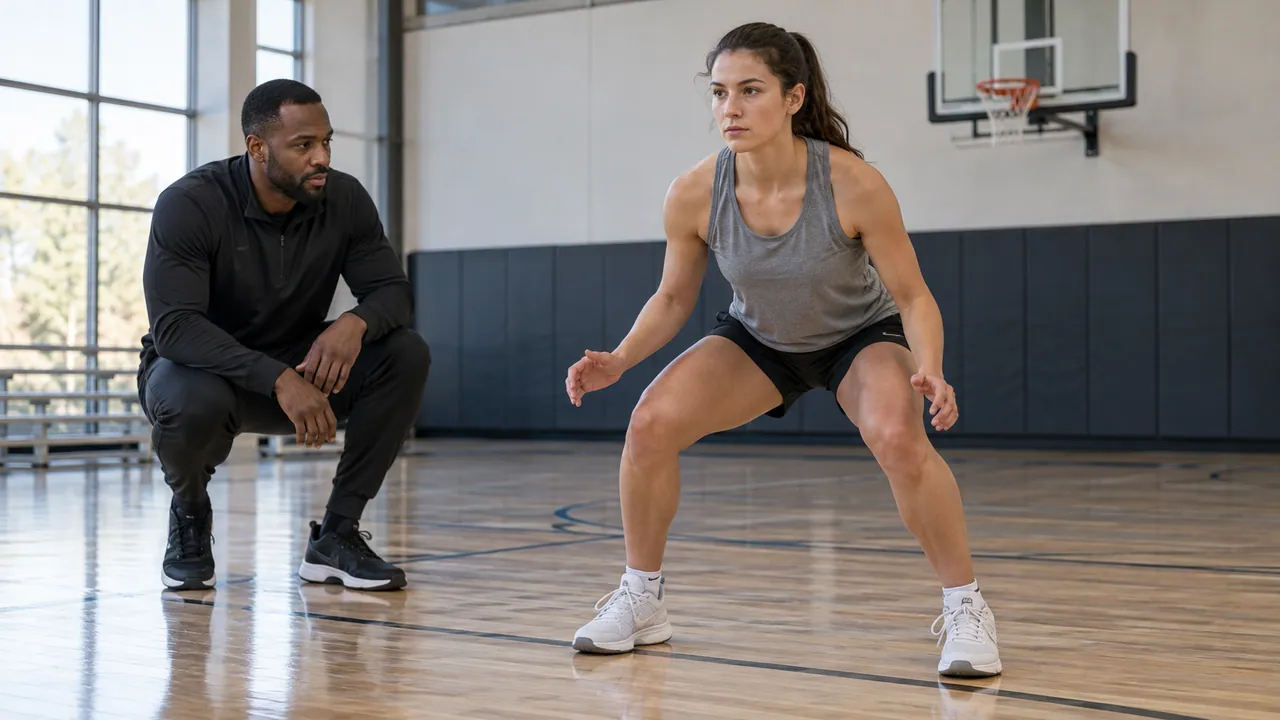
A landing is the end of a larger action. The speed of the approach, direction of travel, contact in the air and the space available on the floor all change the situation. Looking only at the knee after the feet touch down can miss those details. When discussing the event, include whether another player was close, whether you were reaching for the ball and whether the landing area was obstructed.
This is not about blaming yourself or another player from a short clip. Basketball is dynamic, and not every awkward event is preventable. The practical value is identifying conditions that can be managed during practice: clear drill lanes, sensible spacing, a dry court and progressions that do not add every challenge at once. A coach can help change the practice setup without pretending it eliminates all injury risk.
Repeated jumping and the fatigue question
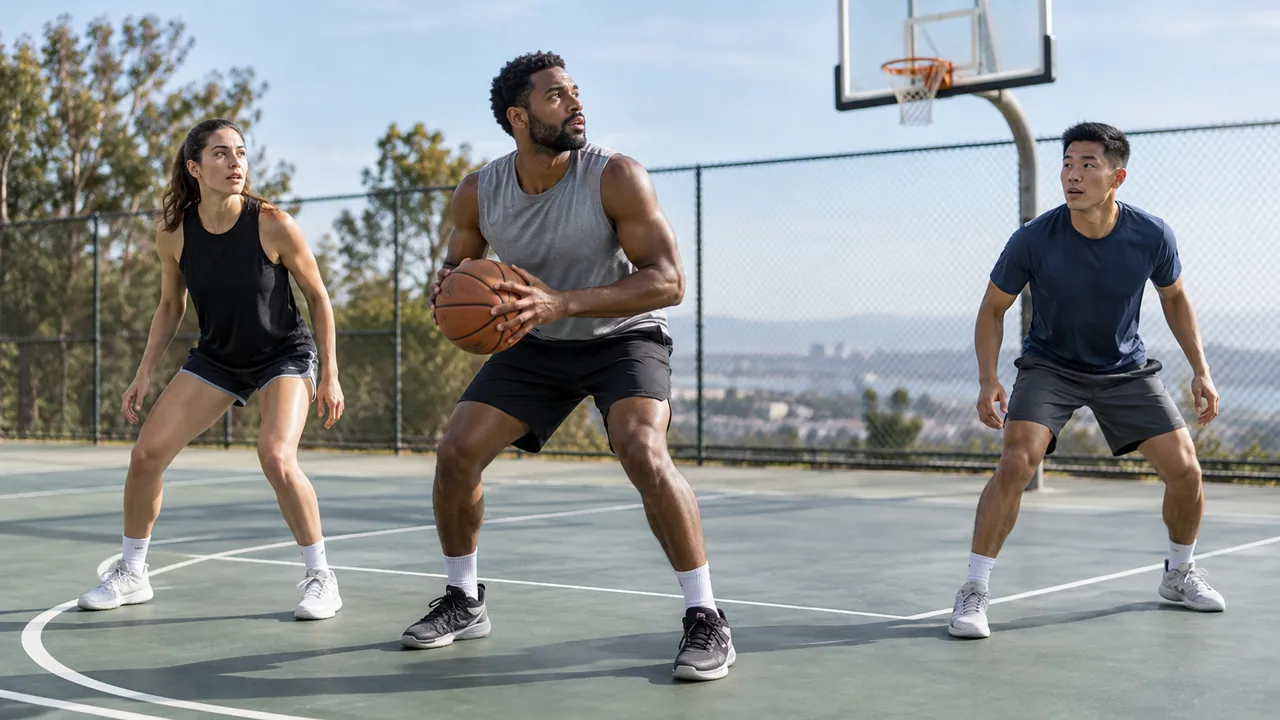
If the first few jumps are comfortable but symptoms emerge later, record what the session involved. Extra shooting practice can add many takeoffs and landings even without a formal game. Full-court play, rebound drills and conditioning may also be stacked into the same evening. Counting only game minutes can therefore underestimate the basketball exposure you are trying to understand.
Notice what changes as the session continues: shorter rests, more demanding opponents, less controlled stops or a tendency to avoid one leg. These observations help guide a workload discussion. They do not mean that fatigue alone explains every painful knee. If pain recurs despite reducing the provoking activity, seek assessment rather than repeatedly finding a slightly lower number of jumps that still produces the same problem.
A practical adjustment is to reduce the specific task that triggers symptoms while arranging appropriate advice, instead of replacing all exercise with inactivity or continuing the entire session unchanged. Which alternatives are suitable depends on the problem. Comfortable upper-body activity or another approved task may remain possible, but the aim is not to invent a workaround that keeps stressing an undiagnosed injury.
What to note immediately and later
Write a brief account while the details are fresh: the movement, contact or twist, where pain appeared, whether a sound occurred, and what you could do afterwards. Note visible swelling and any change over the following hours. If someone filmed the game, preserve the existing clip for a clinician if useful. Do not recreate the painful event for a better recording.
Later, describe ordinary function: walking, getting up, using stairs and bending or straightening comfortably. Include whether you are compensating rather than only assigning a pain score. A knee that hurts less because you avoid using it normally is not necessarily ready for the next game. The combination of symptoms and function is more informative than one number taken while sitting still.
Cold packs, sleeves and shoes: supportive roles only
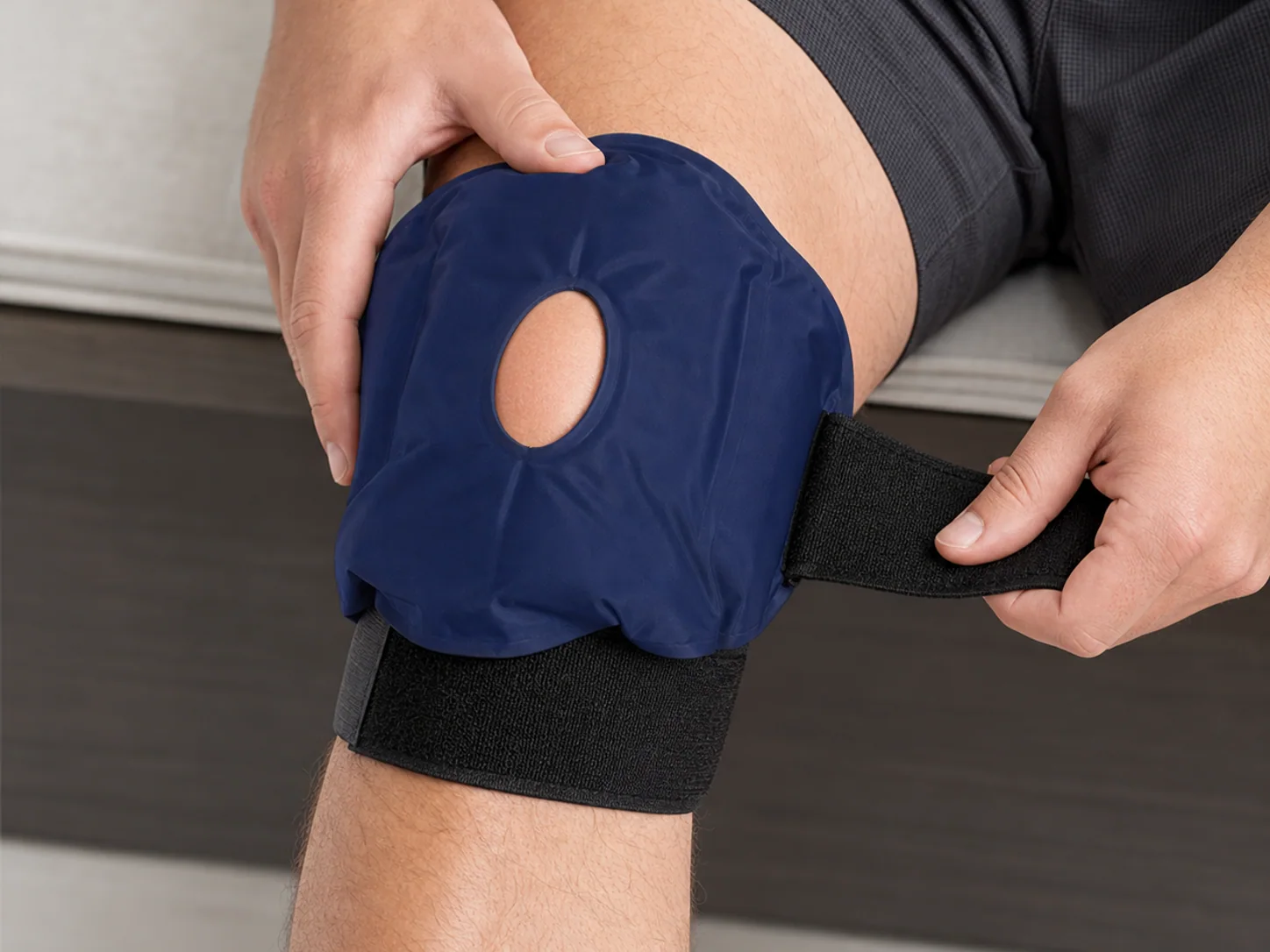
A wrapped cold pack may be used for short-term comfort when suitable, following its instructions and protecting the skin. Do not apply extreme cold directly or use it where sensation or circulation is impaired without clinical advice. Temporary symptom relief does not show that the knee can safely jump again. An ice wrap is a comfort tool, not a ligament test or a treatment for every possible landing injury.
A compression sleeve and a change of basketball shoes have similarly limited roles. They may change comfort or fit, but should not be used to make a concerning knee feel secure enough for another game. Avoid heat on a newly injured, swollen or unusually warm knee, and do not massage an area simply because the pain appears muscular from the outside.
Questions to bring to an assessment
- Does the incident and examination suggest an acute injury or a load-related problem?
- Which movements should I avoid for now, and which activities can I continue?
- Do I need imaging, or is the next step based on the clinical examination?
- What changes in swelling, movement or function should prompt earlier review?
- What criteria will guide a return to jumping, cutting and contact?
Ask for the plan in terms you can use on court. Modified activity is more useful when it specifies whether you can shoot without jumping, perform individual ball work or join a particular drill. Also ask how to judge the later response. A clear plan prevents the common misunderstanding that permission to do one activity means permission to resume an entire basketball session.
From pain assessment back to landing practice
Once the knee is suitable for progression, the return should connect physical capacity with basketball tasks. Walking comfortably is an earlier milestone, not the final one. Predictable landing drills, controlled braking and planned direction changes may come before reactive play. The specific order, tests and restrictions depend on the diagnosis and any treatment, especially after a ligament injury or operation.
Use the step-by-step return-to-basketball guide to understand that framework, not to override professional clearance. A structured warm-up can remain part of practice when appropriate. Neither page supplies a fixed return date, because the ability to tolerate repeated basketball demands cannot be inferred from the calendar alone.
A coach's observation checklist after a painful incident
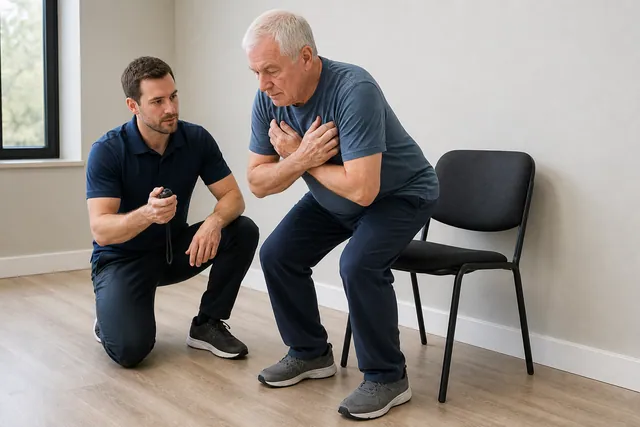
If you are helping a teammate, begin by stopping the drill and making the area safe. Ask what happened and what they feel rather than immediately suggesting a diagnosis. Do not pull the leg through a range of motion, perform twisting tests or ask them to hop to prove they can continue. Help arrange appropriate medical assessment when the symptoms or mechanism are concerning.
Write down the sequence in plain language: approach, takeoff, any contact, where the feet landed and what happened next. Include whether the player stopped immediately or tried to continue, without treating either choice as proof of injury severity. Adrenaline, uncertainty and team pressure can affect what someone does in the first moments. The later symptom pattern still matters even if they initially remained on court.
If there is an existing recording, keep the original context instead of sharing a tightly cropped slow-motion clip as a public diagnosis. The few steps before the landing may be useful to the treating professional. Respect the player's privacy and ask before sharing footage. A clip can document an event, but it cannot replace an examination or tell the group exactly how long recovery will take.
When the player returns, follow the agreed activity limits rather than testing them informally during practice. Avoid surprise contact, competitive challenges or extra repetitions that were not part of the plan. A supportive team makes it easier to complete the appropriate stage and stop on time. The most useful coaching contribution is often a clear environment and good communication, not a clever correction offered in the minutes after pain begins.
The useful conclusion is a next step, not a label
Landing pain becomes easier to act on when you separate the event, symptoms and demands. One sudden painful rebound with swelling calls for a different response from a gradual ache after a large increase in jump volume. In both cases, the objective is to understand the pattern and preserve function, not to keep repeating the movement until you can guess the tissue involved.
Stop when warning signs appear, record what happened and use an appropriate assessment to guide the next stage. Once suitable for training, rebuild the task in a controlled setting before asking it to survive an unpredictable game. That approach respects how basketball is actually played while avoiding the false reassurance of a new sleeve, a softer shoe or one temporarily comfortable landing.
Frequently Asked Questions
Why does my knee hurt when I land from a jump?
Landing loads the knee and surrounding tissues, so several conditions can produce pain during that task. The timing, location, presence of an incident, swelling and changes in function help guide assessment. The movement alone does not identify the injured structure.
Does a pop during a basketball landing mean an ACL tear?
A pop is not a diagnosis, but a painful pop with rapid swelling, instability or difficulty continuing warrants prompt assessment. Do not repeat jumps or twisting tests to determine the answer yourself.
Is pain below the kneecap after landing jumper's knee?
It can fit a patellar tendon-related pattern, especially with repeated jumping, but other conditions can cause pain nearby. A sudden traumatic event, marked swelling or inability to straighten the knee should not be treated as ordinary tendinopathy.
Should I practice landing on two feet instead?
Changing landing style is not a substitute for assessing pain. A coach or clinician can select appropriate drills once the knee is suitable for them. Basketball eventually includes varied landings, so forcing every situation into one technique is not a complete solution.
Will softer basketball shoes fix landing pain?
Footwear may affect comfort and movement, but softer cushioning does not establish a diagnosis or guarantee relief. Consider fit, court conditions and workload alongside professional assessment when symptoms persist.
Can I return once walking feels normal?
Comfortable walking is useful, but it does not demonstrate readiness for repeated jumping, cutting or contact. Return should follow an appropriate progression and any injury-specific clinical advice.