Prepare for the person you are now, not your old running history
Perhaps you ran regularly years ago, walk most weekends or have only recently started moving more. Those backgrounds do not lead to the same first session. The useful baseline is what you have been doing recently and can repeat without a worsening knee response. An old race time can be motivating, but it does not measure your current readiness for a Thanksgiving 5K.
Before building a plan, confirm the event details. A permitted walking option, a shorter route and a realistic cutoff can make your goal more flexible. Our beginner Turkey Trot guide explains those choices. This article focuses on the weeks before the event, not race-morning warm-ups or how to manage a new injury afterward.
If you have new or unexplained knee symptoms, establish what activity is appropriate before adding running. A clinician may recommend a different starting point or an individualized progression. The advice here is a planning framework for suitable activity, not a rehabilitation prescription and not a promise that a particular number of weeks will make every knee ready.
Make walking capacity visible first
Start by describing your ordinary walking. How long is a comfortable continuous outing? Is the route level or hilly? Do you stop frequently? Does your knee feel different later that evening or the next morning? These questions help distinguish a familiar activity from a proposed increase. You do not need an expensive watch to answer them; a route description and a rough duration are enough.
A long shopping trip is not necessarily the same as continuous course walking. It may include sitting, browsing and many pauses. Conversely, a job that keeps you on your feet can contribute substantial load even when you do not log exercise. Include both in the picture rather than counting only formal training sessions and assuming the rest of the week is rest.
When walking itself is difficult or progressively painful, adding short runs is not the obvious next step. Review the problem and get advice. When walking is manageable and running is appropriate, choose a starting session that leaves room to finish without chasing a distance target. The first outing should give you useful information, not prove that you can tolerate a challenge once.
| Current situation | Planning focus | Avoid |
|---|---|---|
| Short walks only | Establish repeatable walking appropriate to your health | Jumping directly to a full 5K rehearsal |
| Comfortable regular walking | Consider brief easy run-walk intervals if suitable | Using someone else's pace as your target |
| Already run-walking consistently | Refine an existing manageable routine | Changing distance, speed and hills together |
| New pain or altered walking | Assessment and an appropriate activity plan | Using the race date to override symptoms |
What a run-walk session is trying to achieve
Planned walking breaks divide the session into manageable pieces. They are not a penalty for failing to run continuously. For a suitable beginner, a brief easy running interval followed by walking can make the transition less abrupt than setting out to run the entire distance. The ratio is a tool, however, not a universal safety formula.
The NHS beginner plan provides one recognizable example: early sessions alternate short running periods with walking and include rest days between runs. It explicitly allows taking longer than the nominal program length. That is a useful principle to carry into a Turkey Trot goal. Do not begin halfway through a published program solely because its final date matches Thanksgiving.
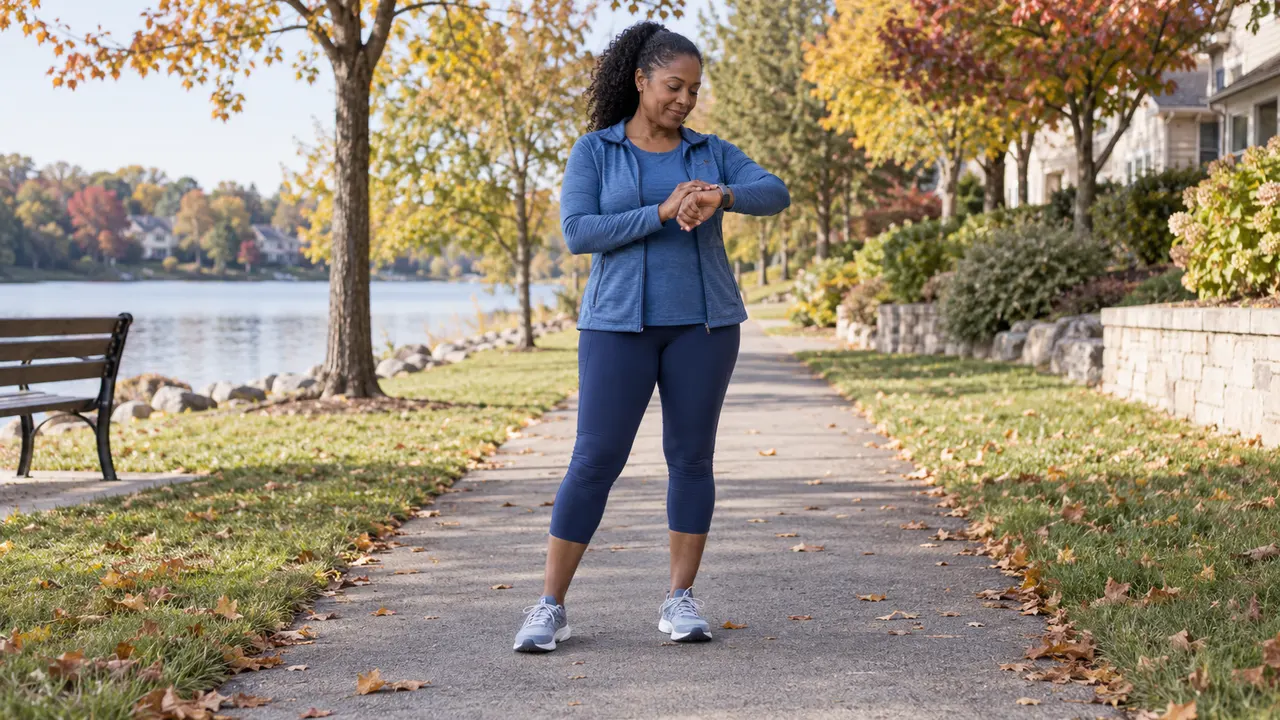
Keep the running easy enough that you are not turning each interval into a sprint. A watch alert can help you switch without repeatedly looking down. If you prefer not to use a device, use a simple familiar route and another manageable way to structure the session. What matters is that the plan stays clear enough to repeat and review.
Change one main variable before changing the whole session
Running time, total session duration, pace, hills and weekly frequency can all change the experience. Increasing several together makes the response harder to interpret. If a session felt manageable, that does not automatically mean the next one should be longer and faster on a hillier route. Keep enough of the setup familiar to understand what the next change actually does.
There is no percentage rule that guarantees an injury-free progression. Rules of thumb can help organize a conversation, but they cannot account for your diagnosis, sleep, other activity or response. A small-looking increase on paper may still be too much for one person, while another needs a different plan. Repeating a manageable session is a valid choice, not evidence that training has failed.
Record the session in ordinary language: level loop, short running intervals, comfortable during the outing, knee unchanged later. If symptoms occur, note when and whether they affected movement. Avoid interpreting every minor sensation as damage, but do not dismiss a repeated deterioration because the program told you to advance to the next week.
Protect recovery days from becoming hidden workouts
A day without running may still include a long standing shift, a strenuous gym session, gardening or a large family outing. Look at the combined week. The aim is not to avoid all movement between sessions; it is to stop pretending that unlogged activity has no effect on how you feel. This is particularly relevant as holiday errands increase.
If you already strength train or participate in another sport, consider where the new run-walk sessions fit. Adding them on top of every existing hard session can create a very different week. You do not need to abandon enjoyable activities, but you may need to reduce or rearrange something while learning how the new routine feels.
Leave practical room for sleep and normal meals too. A schedule that requires waking unusually early every day, skipping lunch and running late at night may look committed but be difficult to maintain. The most useful preparation plan is one that fits your actual life well enough to repeat, not the most impressive calendar you can draw.

Review the later response, not only the session itself
A session can feel comfortable while you are moving and be followed by an unhelpful change later. Ask whether walking, necessary stairs and ordinary daily tasks remain at your usual level. Notice swelling or a changed gait. These observations do not diagnose the cause, but they help you decide whether to repeat, reduce, pause or seek advice instead of automatically progressing.
Use your own baseline rather than comparing yourself with a friend. Someone who runs every week may recover differently from someone who is beginning again. Likewise, a pain scale without context can be misleading. The same number can describe a familiar mild sensation for one person and a new focal problem for another. Function and the overall pattern belong in the discussion.
If symptoms repeatedly follow the workouts, use the knee pain after exercise guide and consider an assessment. Do not rely on a sleeve or pain medication to make the next session appear successful. A temporary change in how something feels does not establish that the training progression suits you.
Choose routes that make a sensible session easy
A level, familiar route with a convenient return point is often easier to manage than a distant point-to-point outing. You can shorten it without a long walk home if something changes. Check lighting and surface conditions, especially as autumn evenings get darker. Wet leaves, uneven edges and busy crossings can add challenges unrelated to your running fitness.
Do not assume the softest surface is automatically the best for every knee. A grass route may be uneven, while a smooth paved path may be predictable. Choose the setting that suits your movement and circumstances rather than a simple marketing rule about surfaces. If the event has hills, discuss how and whether to introduce that demand after a manageable base is established.
For persistent issues linked to footwear changes, see whether running shoes can contribute to knee pain. Resist replacing shoes, adding insoles and changing your running style all in the same week. Each change should have a reason beyond the hope that a new purchase will solve an unexplained symptom.
What to do when you miss a week
Illness, work and family responsibilities happen. A missed week is not a debt that must be repaid with extra sessions. First ask why the gap occurred and how you feel now. Returning after an illness or a painful knee episode is different from returning after a busy but otherwise ordinary week. The cause of the interruption can change the appropriate next step.
Resume at a level that makes sense, even if it means repeating earlier work. Do not combine two planned sessions into one or remove every recovery day to get back on schedule. If the event is approaching, revisit the participation options. A walking entry, shorter route or later event may preserve the long-term activity habit better than one rushed attempt at the original target.
| Situation | More useful response | Unhelpful shortcut |
|---|---|---|
| Missed sessions | Resume from an appropriate recent level | Stacking several runs together |
| New knee symptoms | Reassess activity and seek advice when needed | Buying tighter support and continuing unchanged |
| Event is close | Confirm a manageable walking or shorter option | Attempting a full-distance test every day |
| Weather disrupts routes | Use a safe familiar alternative or adjust the session | Running on an unsafe surface to preserve the calendar |
The final week is for familiarity, not proving fitness
As the event approaches, resolve logistics: shoes, layers, arrival time, walking rules and the plan with your group. This is not the ideal moment to introduce a demanding new workout or a product you have never used. A successful dress rehearsal can simply mean checking familiar clothing and a manageable outing, not completing the full course at a faster pace.
Decide what will make you change the plan on the morning. A new limp, significant swelling or illness should matter more than the entry fee. Agree on this beforehand so you are not making the decision while friends are urging you toward the start. Seek medical advice for worrying symptoms rather than asking the event crowd to judge them.
Our Turkey Trot warm-up guide covers the transition from waiting to walking or running. Keep that routine familiar too. Race morning is not the time to test a complicated sequence of jumps, stretches or deep knee bends that never appeared in your preparation.

Two realistic goals can both be successful
One beginner may build a consistent run-walk routine and use it throughout the event. Another may find that walking is the appropriate goal this year. Both can finish with a useful habit and a clearer understanding of their current capacity. The difference is not determination; it may reflect starting fitness, symptoms, available time and the demands of the chosen event.
For an illustrative example, imagine a regular walker adding short easy runs while maintaining rest between sessions. After a busy work week, the knee feels less settled during ordinary stairs. Instead of increasing intervals to meet the calendar, they reduce the training demand and seek advice if the pattern persists. The event goal remains flexible while the longer-term aim, sustainable activity, stays intact.
Your preparation has worked when it helps you make better decisions, not only when it produces a particular finish time. Arrive with a manageable plan, permission to walk and a willingness to stop if circumstances change. Thanksgiving is one morning; the ability to keep moving afterward is the more valuable outcome.
Keep a preparation note that you can actually use
A useful log can be brief: what you did, whether the route was familiar, how the knee felt during ordinary activities afterward, and what else loaded your legs that day. Include a long work shift or a demanding household task rather than treating the run-walk session as the only activity that counts. Avoid turning the log into a competition for more minutes each time.
Review the pattern before changing the next session. If the same manageable outing repeatedly leaves daily function unchanged, that is different from a session followed by increasing symptoms. The notes do not diagnose an injury, but they make a conversation with a clinician more specific when needed. Bring the record instead of trying to remember several weeks of details at once.
Frequently Asked Questions
Can I prepare for a Turkey Trot in a few weeks?
It depends on your current activity and chosen event. A few weeks may allow a regular walker to prepare familiar logistics, but it does not guarantee that a new runner can safely build to running a 5K. Adjust the goal rather than compressing a longer plan.
What run-walk ratio should I use?
There is no knee-safe ratio for everyone. A beginner framework can be a starting point when running is appropriate, but intervals should match your capacity and response. A rehabilitation plan takes priority over a generic running program.
Should I run every day before Thanksgiving?
Not as a last-minute preparation strategy. Beginner running programs commonly include recovery days. Extra sessions can add fatigue without solving the problem of insufficient preparation time.
Can I walk the Turkey Trot if training does not go to plan?
If your chosen event permits walking and the route is manageable for you, that may be an appropriate alternative. Check cutoffs and distance-change rules before assuming you can switch.
Does a knee sleeve let me increase training faster?
No. A sleeve may provide optional snug coverage, but it does not establish how much running you can tolerate or make a painful progression appropriate.
Should I make up a missed training session?
Usually the better planning decision is to resume from an appropriate level rather than stacking missed sessions. If illness, injury or symptoms caused the gap, reassess readiness and seek advice when needed.