A warm-up is a transition, not another race
The start area can create an odd combination: you have been standing still in cold air, yet everyone around you seems ready to accelerate. A useful warm-up bridges that gap gradually. It should connect with the walking or running you actually prepared for, not with the fastest people nearby. The aim is to begin the event feeling organized and ready for your own effort.
This guide is for the morning of a community Turkey Trot. It does not replace preparation in the preceding weeks. If you are still choosing the event, begin with our Turkey Trot guide for sensitive knees. If you want to build running into your routine, use the separate run-walk preparation guide before deciding what race-morning activity is familiar.
A warm-up is also not a test that clears an injured knee. Feeling temporarily looser does not rule out a problem. If you have been given a rehabilitation routine or activity restrictions, those take priority. New pain that changes your walking is a reason to reconsider participation, not a challenge to overcome with a more vigorous series of exercises.
Give yourself enough space and time
Before moving, find out where you need to be and when. Complete bib collection and necessary errands early enough that you are not alternating between hurried walking and long anxious queues. Look for a clear, level area away from moving vehicles, toilets and dense pedestrian traffic. You need enough room for ordinary steps without surprising someone behind you.
Check the ground rather than assuming a patch beside the road is suitable. Wet leaves, a sloping verge or uneven grass can make a simple routine awkward. Do not balance on a curb, use a temporary barrier as reliable support or step into the course while faster runners are warming up. A plain paved stretch is often more useful than a picturesque but unstable spot.
Keep your belongings organized too. Secure keys and your phone, tie laces and decide what to do with an extra layer. Fixing a loose pocket or sliding sleeve now is easier than doing it in a moving crowd. The purpose is not to create a perfect ritual; it is to remove avoidable distractions before the start.
Begin with ordinary walking
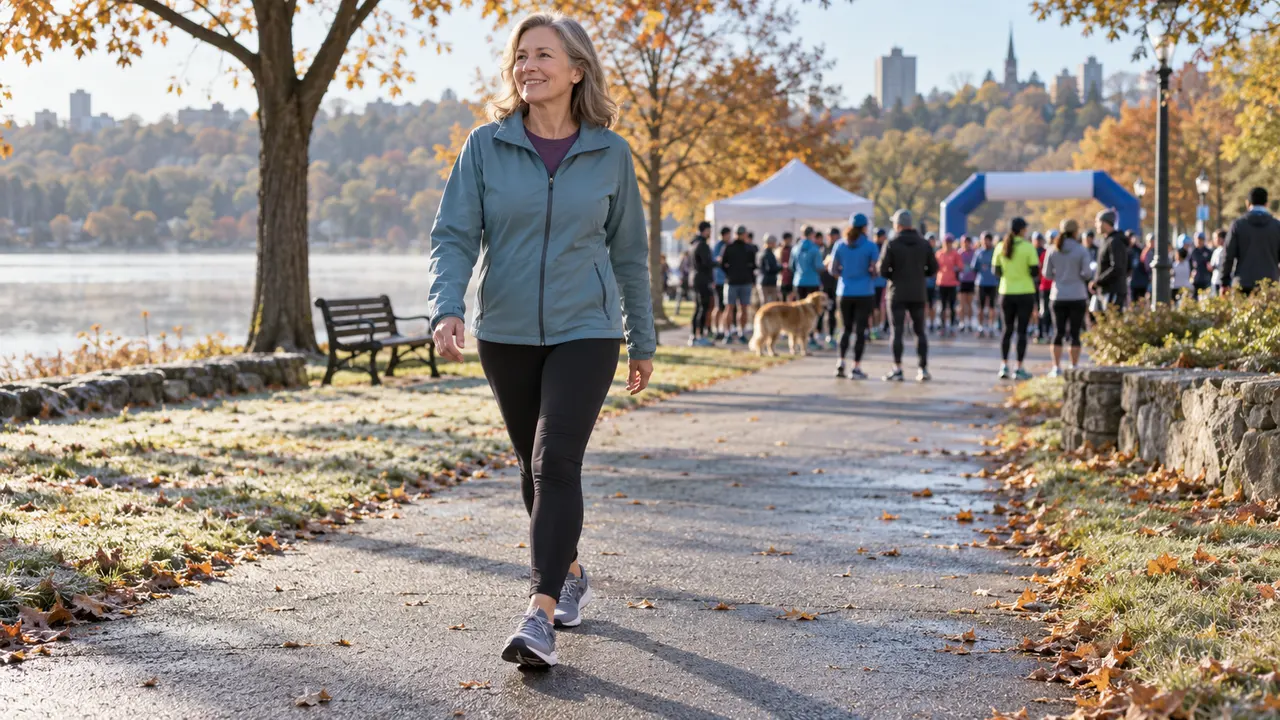
Easy walking is a straightforward opening when walking is appropriate for you. Start below your intended event pace and allow the movement to become more purposeful gradually. Pay attention to the whole experience: breathing, balance, shoe comfort and whether your normal stride is available. Do not lengthen every step dramatically or swing the arms forcefully to make it look like a formal drill.
The American Heart Association describes warming up through a gradual increase in activity, often over roughly five to ten minutes. That is broad exercise guidance, not a Turkey Trot-specific guarantee or a required dose for every knee. Cold conditions, individual health needs and the activity ahead can change the approach. Follow your own clinician's instructions where applicable.
If you are walking the event, this transition may form most of what you need. If you are run-walking, you can include a brief familiar easy jogging interval only if it is already part of your preparation and feels appropriate. There is no requirement to run before a walking event or to perform a faster interval because someone beside you does.
Add familiar movements, not a new mobility challenge
Some people like a few comfortable marching steps, small heel raises or gentle changes in knee bend after walking. Choose movements you have used before and can perform without forcing the range. A stable support may help with a familiar balance-demanding movement, but a crowded roadside is not the place to discover whether you need one.
Do not chase maximum depth, height or repetition count. A deep lunge or exaggerated high-knee drill can be more demanding than the activity you are about to undertake. If a particular movement is uncomfortable, omit it rather than repeatedly trying to make it work. A shorter familiar routine can be more appropriate than a long sequence assembled from social-media clips.
The examples below are options for suitable participants, not a universal exercise prescription. They are deliberately simple and do not contain injury-prevention percentages. No combination of these movements can guarantee that a race will be pain-free. The important skill is choosing what fits your current ability and recognizing when the plan should change.
| Stage | Possible option | What to notice |
|---|---|---|
| Start gently | Easy walking on a clear, level surface | Normal comfortable movement rather than a limp |
| Build gradually | A slightly more purposeful walking pace | Breathing and effort remain manageable |
| Optional familiar movement | Small marching steps or supported heel raises | Balance, comfort and space around you |
| Match the event plan | Continue walking, or a brief easy jog if already prepared | No need to sprint or demonstrate fitness |
| Move to the start | Keep a layer on as appropriate and follow instructions | A controlled transition rather than another workout |
What about stretching?
Stretching and warming up are not identical terms. Standing still and pulling hard on a muscle does not reproduce the gradual movement of walking or running. If you have a familiar flexibility routine that has been recommended for you, keep it comfortable and appropriate. Do not ask a friend to push a joint farther or use pain as proof that a stretch is effective.
Race morning is especially unsuitable for experimenting with an unfamiliar position. A long kneeling stretch may be awkward on cold pavement, and balancing on one leg in a crowd may create an unnecessary fall risk. You do not have to complete every movement from a generic checklist to earn the right to start your planned walk.
If you routinely need an elaborate stretching sequence just to tolerate ordinary activity, that is worth discussing separately rather than accepting it as an unavoidable entry fee for every event. A clinician can help assess the recurring problem. The Turkey Trot start area is not the setting for diagnosing why a particular movement repeatedly hurts.
Cold-weather waiting changes the logistics
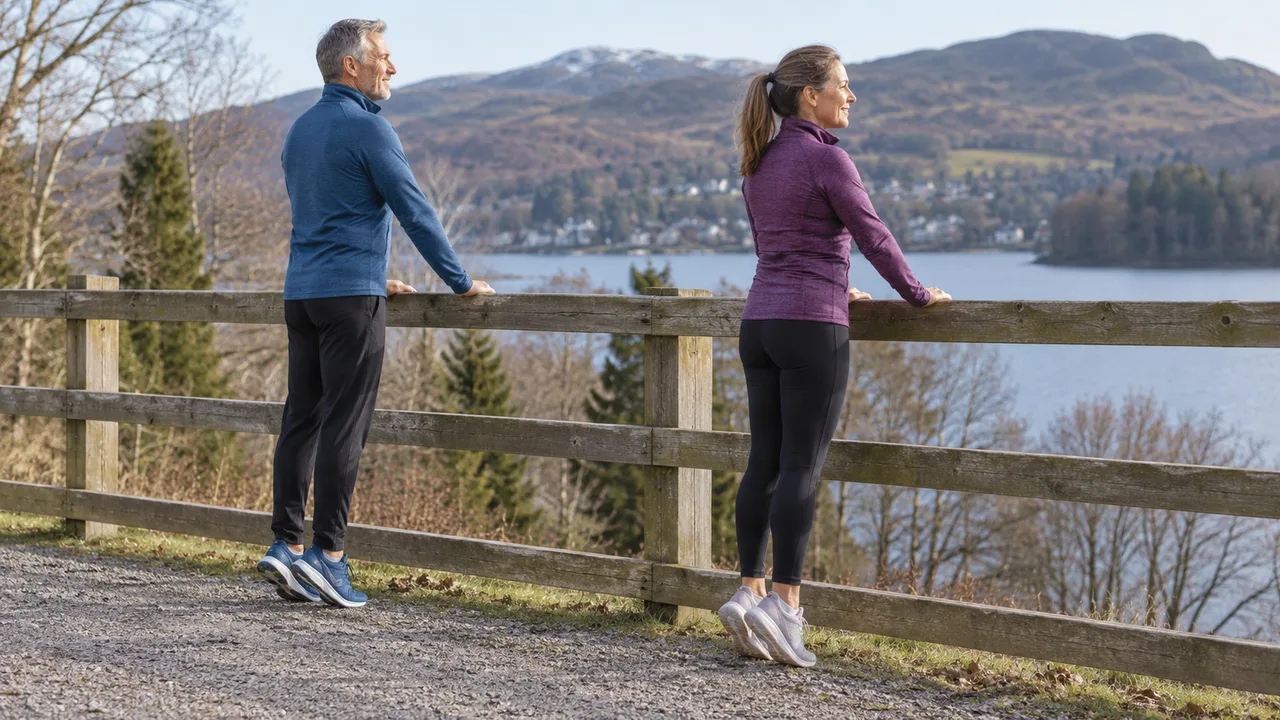
The forecast matters, but so does the time you will spend waiting. Clothing that feels comfortable while moving may be insufficient during a long queue. Arrange a practical layer strategy that follows event rules. If a bag drop is available, check its location and timing beforehand rather than discovering at the start that it is far away.
A delayed start does not mean repeating a full warm-up until your legs are tired. When space and organizer instructions permit, use small comfortable position changes or a little easy walking. Keep an appropriate layer on rather than trying to stay warm through constant hard movement. Do not block the route or step into traffic to maintain a routine.
Cold conditions are not a reason to ignore a knee that is unusually hot, swollen or painful. Nor is every cold-weather ache proof of joint damage. Our cold-weather knee pain guide explores that broader subject. For this morning, focus on practical clothing, safe footing and whether participation still matches your condition.
Walkers and runners do not need identical routines
A walker can rehearse the pace and movement they intend to use. A prepared runner may gradually include easy running. A run-walk participant can use the same kind of transition practiced in training. These are related but different plans, and none needs to copy an experienced racer's strides or sprint drills to be legitimate.
The mismatch often starts when a mixed-ability family group warms up together. One person suggests a hill jog or a set of deep lunges because that is normal for them. It is fine to stay nearby while doing your own comfortable preparation. Agreeing that everyone can use a different routine removes pressure without spoiling the shared event.
If someone is new to exercise or has a health condition affecting activity, a general article cannot personalize the routine. Discuss concerns with a healthcare professional before the event. Preparation should increase confidence through familiarity, not create false reassurance from completing a fixed list of movements.
The first part of the course belongs in the plan
An appropriate warm-up can be undone as a practical strategy if you sprint away with the crowd. Start where the organizer directs your pace group, leave room around others and settle into the effort you prepared for. A crowded opening is not an invitation to weave rapidly between participants or jump onto curbs to get ahead.
If walking breaks are part of your plan, take them predictably. Be aware of people behind you and move safely rather than stopping abruptly in the middle of the flow. Discuss this with companions before the start. A clear plan is particularly useful when excitement makes it tempting to run longer than you have practiced.
Do not use the opening section to prove that your knees have warmed up enough to tolerate a faster event. If pain changes your stride or the knee feels unstable, slow or stop safely and seek appropriate help. Event staff can assist with practical next steps; a finish medal is not worth treating a warning sign as a pacing inconvenience.
What a sleeve or heated device cannot do
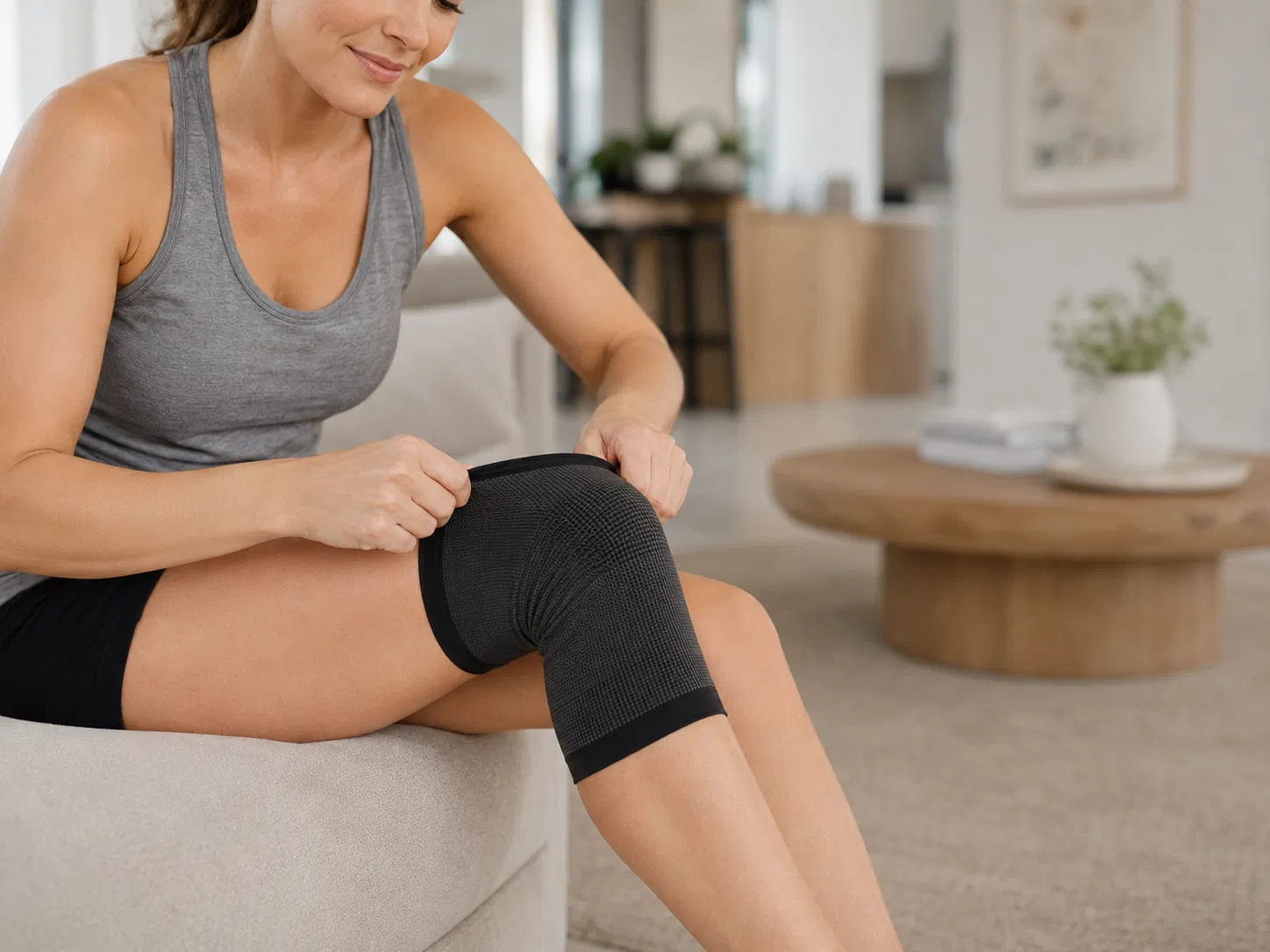
A sleeve may provide optional snug coverage if it is suitable and familiar, but it is not a substitute for an appropriate activity plan. Check its fit before the crowd starts moving. If it rolls, restricts motion or causes skin irritation, do not keep tightening it to make the sensation more reassuring. Refer to the product's measurements rather than choosing by appearance.
A heated knee device is also different from an active warm-up. Feeling warm while seated does not prepare you for every demand of walking or running, and it does not establish that a painful knee is safe to load. Avoid using warmth to conceal new injury symptoms. Keep home comfort products separate from the decision about whether to start.
For help distinguishing products, see our brace versus compression sleeve guide. Neither the most expensive support nor the longest preparation ritual can guarantee a symptom-free event. Familiar equipment and sensible decisions are a better basis for the morning than last-minute product experiments.
A short checklist before joining the start
| Check | Practical question |
|---|---|
| Movement | Does ordinary walking feel appropriate today? |
| Equipment | Are laces, layers and any familiar support comfortable? |
| Pace | Have you agreed on walking breaks and whether the group stays together? |
| Conditions | Do the surface and weather still fit your plan? |
| Flexibility | Can you change the goal or stop without pressure? |
For example, a participant who planned a walk may arrive to find a delayed start and a colder morning than expected. The sensible adjustment could be keeping a jacket on longer, doing occasional easy walking and beginning conservatively when the route opens. It does not require adding running drills or forcing deeper stretches to compensate for the wait.
After the finish, allow a calm transition and review how you feel before committing to the rest of the day. If symptoms develop, our post-Turkey Trot knee pain guide separates an unfamiliar effort from warning signs. The morning routine is successful when it supports thoughtful participation, not when it persuades you to ignore your body's response.
Prepare for delays without turning waiting into training
Race mornings do not always follow the published timetable. A parking queue, toilet line or delayed start can separate your initial preparation from the actual event. Keep an easy way to stay comfortably covered while waiting, and listen for organizer instructions. Do not keep repeating a full exercise sequence simply because the start has not happened yet.
If there is room and movement is comfortable, gentle familiar walking can be more practical than standing rigidly in one position. Respect the people around you and avoid lunges or swinging movements in a crowded corral. When the group starts, allow space and settle into the planned easy pace rather than treating the first few steps as a race to escape the crowd.
The purpose remains readiness for the event you chose. You should not reach the start tired from trying to perfect a warm-up or worried that a small delay has invalidated the whole routine.
Frequently Asked Questions
How long should a Turkey Trot warm-up take?
General guidance often uses about five to ten minutes of gradual activity, but your needs, weather and clinical plan may differ. Treat that as a broad starting framework, not a countdown that guarantees readiness.
Do I need to warm up if I am walking the event?
A gradual transition from standing to your intended walking pace is still useful. You do not need to copy a runner's drills or add jogging if the plan is to walk.
Should I do deep lunges before the start?
Not simply because other runners do them. Use familiar movements that are comfortable and appropriate for you. Race morning is a poor time to introduce demanding knee bends or new mobility challenges.
What if the start is delayed?
Stay appropriately layered and use small comfortable position changes or walking when space permits. Do not keep repeating a demanding warm-up until you are tired, and follow organizer instructions.
Does a heated knee device replace a warm-up?
No. Passive warmth is not the same as gradually moving into the activity. A comfort device does not establish readiness to walk or run and should not be used to mask an injury.
What if my knee hurts during the warm-up?
Do not force the routine to make symptoms disappear. Reconsider participation and seek advice for new, worsening or concerning symptoms, especially swelling, instability or altered walking.