What a Turkey Trot is, and what the name does not tell you
A Turkey Trot is a Thanksgiving-season community event built around running, walking or both. Some participants race seriously; others walk with friends, wear a festive hat or make it a family tradition. The friendly name does not mean every course is short, flat or suitable for every participant. Treat it as the name of an event category, then look carefully at the actual event you are considering.
A common option is a 5K, approximately 3.1 miles. Other organizers offer a short family route, a longer road race or several distances. In 2026, US Thanksgiving falls on November 26, but your local event may use a different nearby date. Read the organizer's current listing rather than relying on an old social post or a previous year's registration page.
If your knees are sensitive, the useful goal is an enjoyable, manageable morning that fits your current abilities. It does not have to be a nonstop run. There is no nutritional debt to pay before Thanksgiving dinner and no need to earn a meal through exercise. Removing that pressure makes it easier to choose an event and pace for sensible reasons.
Choose the experience before choosing the distance
Ask what you want from the event. Is it time with family, a first organized walk, a manageable run-walk challenge or a chance to support a local charity? Those goals lead to different choices. A shorter untimed route might deliver everything you want, while a longer race could add unnecessary pressure without improving the experience that originally appealed to you.
Discuss the plan with the people who invited you. A regular runner may call a 5K easy because it is short relative to their weekly training. That does not describe the experience of someone whose usual outing is a brief walk. Agree whether you will stay together, meet afterward or enter different distances. Clarifying this before registration avoids negotiating pace in a crowded starting area.
Also distinguish an ambition from a deadline. An event can motivate preparation, but it cannot determine the rate at which your body adapts. If you have insufficient time to build the required activity comfortably, choose another participation option. The calendar does not make a sudden jump in walking or running load less substantial.
Seven details to check on the official event page
| Detail | Question to ask | Why it matters |
|---|---|---|
| Distance | Is there a shorter walk or family route? | The event name does not establish the distance |
| Walking rules | Are full-course walkers welcome? | Run-walk and walking policies vary |
| Cutoff | What happens when roads reopen? | Your comfortable pace must fit the logistics |
| Surface | Pavement, grass, gravel or mixed terrain? | Conditions may differ from your usual route |
| Elevation | Are there sustained climbs or descents? | A flat training loop is not every course |
| Access | How far are parking, toilets and packet pickup? | The morning involves more than the measured route |
| Changes | Can distance or participation be changed? | A flexible option reduces pressure to push through |
Not every website answers all seven questions clearly. Email the organizer with one specific question rather than filling a gap with an assumption. For example, ask whether a walker maintaining your usual comfortable pace can complete the course within the supported period. Do not infer permission for strollers, dogs or mobility aids simply because another Turkey Trot allows them.
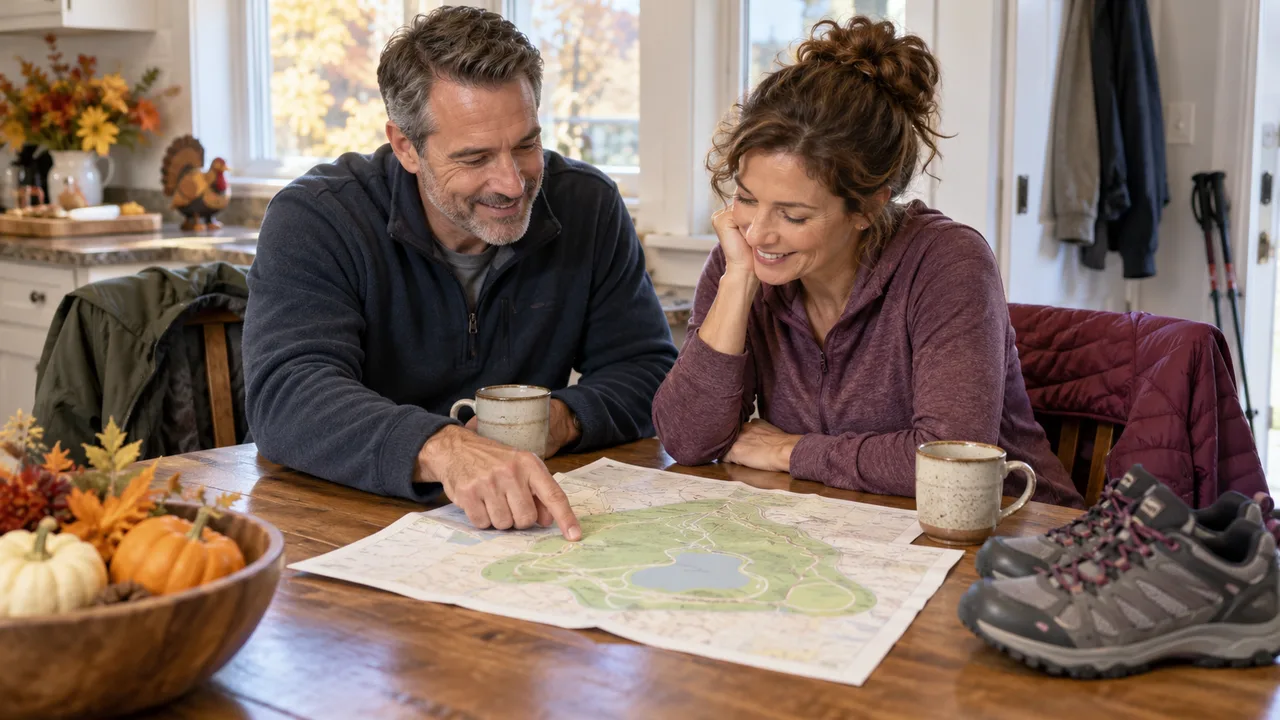
A course map helps, but a line on a map does not show every practical difficulty. Look for an elevation profile, surface description and start-area information. If you already know the park or neighborhood, think about the conditions there in late November. A pleasant summer path may include wet leaves, low light or exposed sections on event morning.
Can you walk instead of running?
At an event that explicitly welcomes walkers, walking the entire route can be a complete plan, not a failed attempt at running. You can also use planned walking breaks if the rules and your preparation support that choice. Timing chips and finish results do not necessarily mean running is mandatory. What matters is the actual participation policy and supported course time.
Consider the difference between your everyday walking and the proposed event. Shopping includes pauses. A dog walk may involve frequent stops. A continuous course, especially with hills or a crowded start, may feel different even if the total distance sounds familiar. Use your recent activity as a starting point rather than assuming all forms of walking are equivalent.
If a full 5K does not currently fit, a shorter family event may still be worthwhile. Volunteering, cheering or meeting relatives at the finish are also legitimate ways to join the tradition. Choosing a role that suits you is better than entering a distance that requires ignoring symptoms before the event has even begun.
Use your current knee situation to shape the plan
The phrase sensitive knees covers many situations. You might have familiar stiffness, a diagnosed condition with an established activity plan, or new pain that has not been assessed. Those starting points should not receive identical advice. New swelling, instability or difficulty walking is a reason to pause the event decision and seek appropriate medical guidance, not to shop for equipment that makes participation feel more reassuring.
If you already have a rehabilitation or arthritis management plan, use it when discussing the event with your clinician. Bring concrete information: proposed distance, surface, hills and your recent walking or running. Asking whether a specific outing fits your plan is more useful than asking whether Turkey Trots in general are good or bad for knees.
For symptoms that repeatedly follow ordinary outings, our knee pain after long walks guide addresses the underlying activity pattern. This event guide does not replace that assessment. A festive atmosphere may change your motivation, but it does not explain the cause of recurring pain.
Preparation: build a bridge, not a crash program
Once the event is suitable, preparation should connect your current activity with the expected demands. A beginner who already walks comfortably has a different starting point from someone returning after a long period of inactivity. Avoid copying the final weeks of a running plan simply because the race is close. You need a starting point that makes sense for you.
The NHS Couch to 5K program illustrates gradual run-walk preparation with rest days and permission to take longer than the headline schedule. It is a general beginner framework, not a knee-injury rehabilitation prescription. If you want to add running, our Turkey Trot run-walk preparation guide focuses on starting capacity, progression decisions and avoiding last-minute catch-up sessions.
Do not add several new things at once. A longer route, unfamiliar shoes, a weighted vest and faster pace can make it difficult to understand why an outing felt different. Keep your preparation simple enough to evaluate. The target is not merely completing one demanding practice session; it is arriving with a repeatable level of activity that has remained manageable.
What you need to wear, and what you can skip
Start with familiar footwear that fits securely and clothing suited to the forecast. A race morning can involve standing outside before movement begins, so think about that waiting period as well as the activity itself. Work out where an extra layer can go. A jacket tied awkwardly around your legs or a bag swinging against your knee is avoidable clutter.
You do not need a new support device to qualify as prepared. If you already use an appropriate knee sleeve, check it during ordinary activity and make sure it does not roll, slide or irritate your skin. A sleeve does not prevent all injuries or compensate for insufficient preparation. Our compression sleeve sizing guide explains measurement and fit without treating tighter as better.
Leave complicated costumes, new shoes and unfamiliar equipment out of your first event if they interfere with movement or visibility. A small festive detail can provide the fun without creating an extra physical problem to solve. If you need an aid or specific equipment, confirm the event policy and follow the advice of the professional who recommended it.
Plan the whole morning, not only the start time
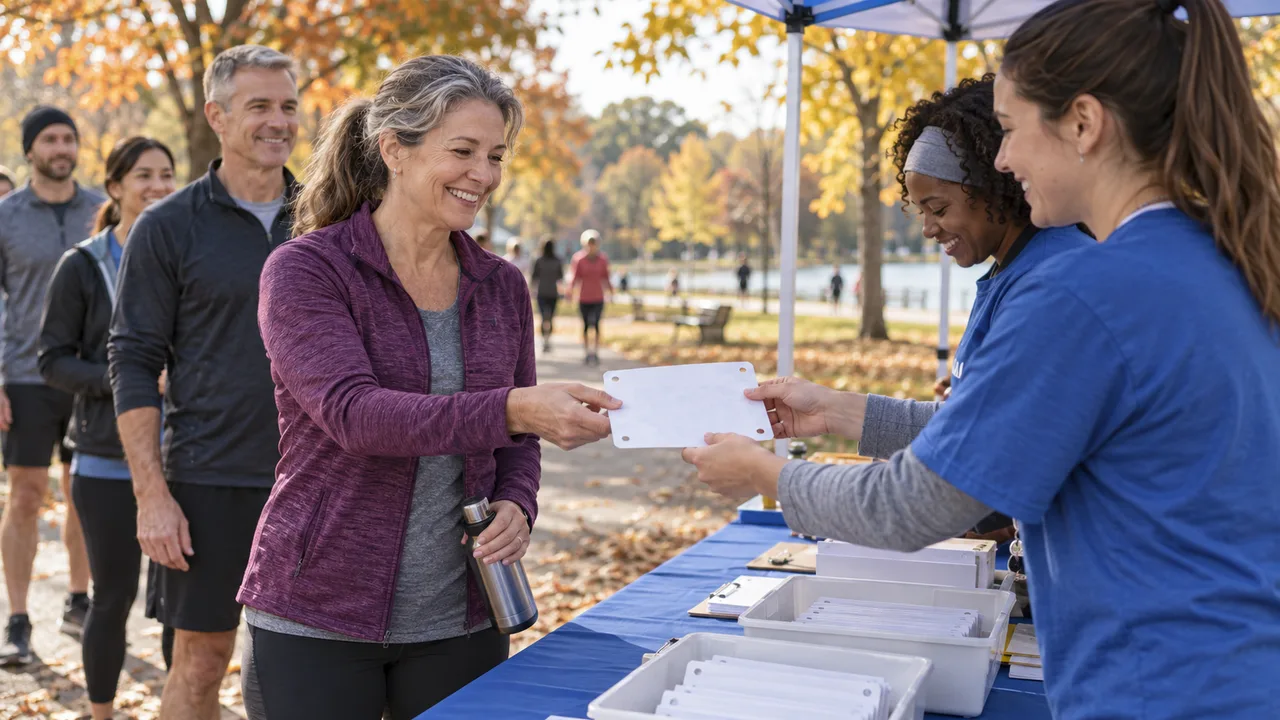
Work backward from the organizer's arrival guidance. Include travel, parking, packet collection, toilets and the time needed to reach your start area without rushing. Check whether you can collect the bib beforehand. A relaxed start is easier to organize when you have not spent the previous half hour hurrying across a large parking area or standing in the wrong queue.
Agree on a meeting point that does not depend on everyone finishing together. Make sure you can contact your group and have a plan if you decide not to start or need to stop. None of this is pessimistic. It is the same practical planning you would use for a family day out, with the additional complication of road closures and a large crowd.
Think about the rest of Thanksgiving too. Long kitchen shifts, driving and hosting can add to a morning event. If your knees are already sensitive, sharing some of those tasks may be more useful than adding another recovery accessory. The route is only one part of the day's activity.
Use the right guide for each stage
| Stage | Main question | Dedicated guide |
|---|---|---|
| Before registration | Which event suits me? | This overview and the organizer's current rules |
| Weeks before | How do I prepare without cramming? | Run-walk preparation |
| Event morning | How do I move from waiting to starting? | Turkey Trot warm-up |
| After the finish | What if my knees hurt? | Post-5K soreness and warning signs |
These stages are separated because they answer different decisions. A warm-up cannot replace weeks of preparation, and an evening comfort routine cannot make an unsuitable race-day effort appropriate. You do not need to read every related article at once. Start with the decision in front of you, then use the next guide when it becomes relevant.
A workable first-event example
Consider an adult who walks regularly but has not run for several years. Their family chooses a local Turkey Trot with both a shorter walk and a 5K. Instead of promising to run the longer route, they check walking rules and course access, then choose the option that matches their recent activity. This is an illustrative planning example, not a clinical case or a guarantee of a comfortable finish.
The family agrees to meet afterward, so nobody has to rush to maintain another person's pace. Shoes and clothing are familiar, packet collection is arranged early, and the afternoon schedule leaves room to rest if needed. The plan remains flexible if symptoms or weather change. That combination may be less dramatic than a last-minute training challenge, but it supports the actual reason for joining: a positive shared morning.
A successful first Turkey Trot can be a walk, a measured run-walk or a decision to volunteer this year and prepare for another event later. Choose a version you can participate in thoughtfully, without turning the holiday into a test of how much discomfort you can ignore.
Make one event information sheet
Before registration, put the practical answers in one place: the official distance, start time, walking policy, route surface, cutoff, parking arrangement and contact details. Save the organizer's latest instructions rather than relying on an old social post. An event with the same name may change its course or start area from one year to the next.
Add your own meeting point, transport plan and a way to leave early if needed. If you are attending with children or a mixed-pace group, decide who stays with whom before the start. Do not assume everyone will be able to find each other immediately in a crowded finish area.
This small preparation keeps race morning from becoming a sequence of avoidable decisions. It also gives you a clear reason to choose another event if the logistics do not suit your current needs. A shorter accessible route that you enjoy is a better match than a famous event whose practical demands you already know will be difficult.
Frequently Asked Questions
What is a Turkey Trot?
It is a running or walking event held around Thanksgiving. Distances, competitive elements and participation rules differ between organizers; the name does not guarantee a 5K or a particular course.
Can you walk the whole Turkey Trot?
Many events welcome walkers, but check your chosen event's official rules, start arrangements and cutoff. A timed race may still permit walking; the word timed does not answer that question by itself.
How far is a Turkey Trot?
A 5K is about 3.1 miles, but Turkey Trots can offer shorter family routes, longer races or several options. Confirm the exact distance rather than assuming every event is the same.
Can I join if I have knee arthritis?
The decision depends on your symptoms, function and personal care plan, not only the diagnosis. Seek advice when activity is uncertain, and consider a suitable walking route or a non-course role rather than forcing a running goal.
Do I need a knee sleeve for my first Turkey Trot?
No. A sleeve is optional and does not replace preparation or make an unsuitable event safe. If you already use one appropriately, check its fit during familiar activity before event day.
When is Thanksgiving in 2026?
US Thanksgiving is November 26, 2026. Individual Turkey Trots may take place on that day or nearby dates, so use the organizer's current event listing.