Start with a diagnosis and a practical goal
This guide is for people who have been told they have knee osteoarthritis, not for diagnosing every knee ache that occurs on a bicycle. Symptoms can have more than one explanation, even when arthritis is already present. A sudden new problem deserves attention on its own terms rather than being automatically attributed to a familiar diagnosis.
Choose a goal that matters outside the exercise app. You might want to ride to a nearby shop, enjoy an easy path with a friend, or use a stationary bike when walking is difficult. These are different tasks. A plan built around your actual goal is easier to adapt than a generic target copied from an endurance cyclist.
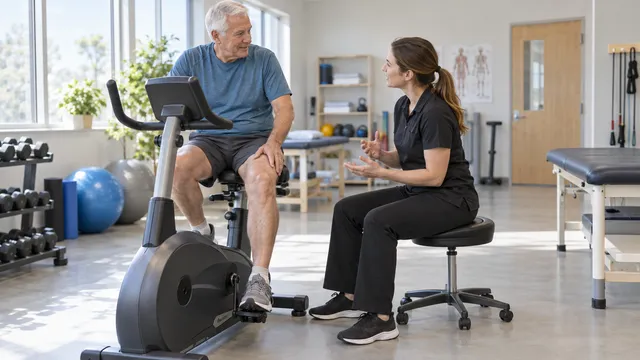
NICE recommends therapeutic exercise tailored to the person, including local muscle strengthening and general aerobic fitness. Cycling can contribute to the aerobic part of that plan, but it need not carry the whole program. Your clinician or physical therapist can help connect riding with appropriate strength work and other activities you want to maintain.
Low impact does not mean no load
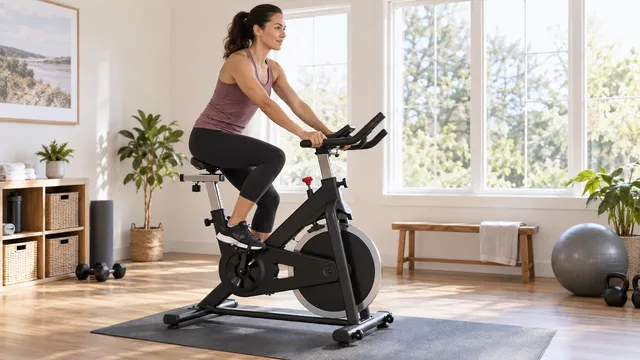
On a bike, the saddle supports some body weight and there is no repeated foot strike like running. However, the legs still produce force against the pedals and the knee repeatedly bends and straightens. Resistance, time, terrain and riding position all shape the task. Calling an activity low impact does not make every version of it equally manageable.
Consider two rides of identical duration. One is a steady indoor session at a comfortable setting; the other includes steep hills, repeated starts and a headwind. The clock alone describes neither adequately. When comparing your own sessions, include what the legs had to do, not just how long the activity lasted or how far the display says you traveled.
Exercise can help people manage function and symptoms without repairing every structural change seen on an image. Avoid promises that pedaling rebuilds cartilage or reverses arthritis. Equally, a scan showing osteoarthritis does not by itself define the only activity you can do. Decisions should connect your symptoms, health, examination and goals rather than rely on frightening or reassuring slogans.
Choose access and control before performance features
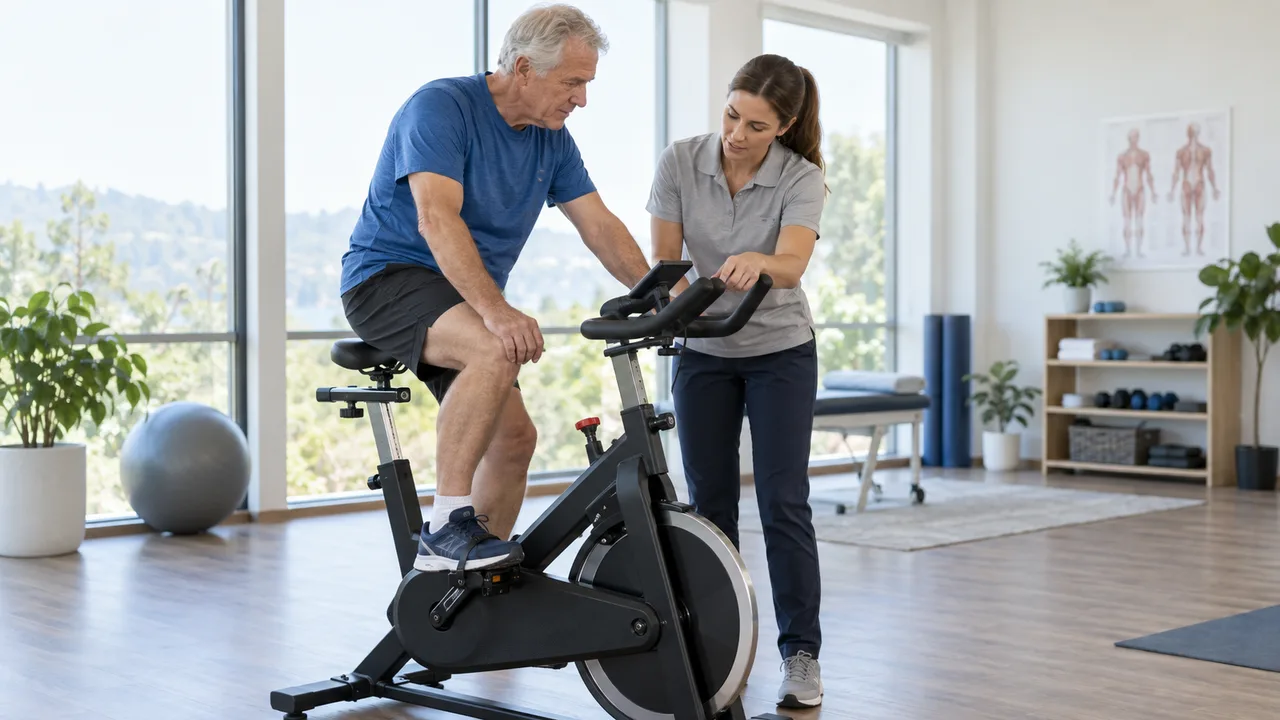
Before comparing screens or resistance programs, try getting on and off the bike. Can you step across the frame, sit securely and place your feet without an awkward twist? Can you stop and stand safely? These ordinary transitions may determine whether the equipment is usable more than a long list of training modes.
A stationary bike removes traffic and makes it easier to finish a session immediately. A recumbent design may offer useful back support or access for some riders, but not every model is easy to enter. An upright design may feel more familiar. Our recumbent versus upright comparison explores those equipment differences separately.
Outdoor cycling adds balance, braking, obstacles and weather. Discuss these demands with your care team if you have balance difficulties, other medical conditions or medication effects that could affect riding. The appropriate starting environment may be a controlled indoor setting, even when your eventual goal is an outdoor route.
Find a baseline you can describe and repeat
A baseline is not your longest possible ride. It is a manageable session that gives you useful information without consuming your entire capacity for the day. Note the bike, approximate resistance, riding time and any breaks. Include how walking, stairs and routine tasks feel afterward, because success should extend beyond the minutes spent in the saddle.
If you are new to exercise or returning after a substantial interruption, ask your clinician what starting approach fits your situation. A short initial trial may be more informative than a long commitment. The purpose is to discover a repeatable starting point, not to prove toughness or immediately reach someone else's weekly exercise total.
Do not turn a single good day into a large automatic increase. Sleep, recent activity and how the knee was behaving before the ride can change your response. Several comparable observations are more useful than one unusually comfortable session. Keep the record simple enough that you will actually use it rather than building a complicated spreadsheet that becomes another burden.
| Record | Example detail | Why it helps |
|---|---|---|
| Starting condition | Usual stiffness or a change from normal | Provides context for the response |
| Time and breaks | Actual pedaling, not time spent setting up | Makes sessions comparable |
| Resistance or terrain | Comfortable indoor setting or a flat route | Distinguishes duration from demand |
| Later function | Walking and stairs later that day | Checks whether the ride fits daily life |
| Next morning | Usual pattern or a clear worsening | Informs whether to repeat or review |
Adjust duration and resistance separately
Increasing riding time and resistance together makes it difficult to know which change mattered. When your current plan is tolerated and progression is appropriate, choose one demand to adjust while keeping the others familiar. This is an observation strategy, not a fixed rehabilitation formula. Your health professional may recommend a different progression for a specific reason.
Resistance should allow controlled pedaling without struggling to force each revolution. A displayed number is specific to the machine and should not be treated as a medical dose. Setting five on one bike can feel nothing like setting five on another. Record the machine and how the effort felt rather than assuming numbers transfer between gyms or brands.
Do not chase an arbitrary cadence target when it makes movement rushed or uncomfortable. Nor should you grind a difficult gear because the session is labeled low impact. If you cannot find a comfortable combination of movement and resistance, stop the experiment and seek help with the equipment and activity plan instead of repeatedly forcing the same pattern.
A flare-up needs a decision, not a punishment
People use flare-up to describe different things. It may mean familiar symptoms temporarily becoming more noticeable, or it may conceal a new injury or illness. Agree with your care team what your usual pattern looks like and what changes should prompt contact. That distinction is more useful than a blanket rule to always rest completely or always keep pedaling.
When an agreed flare plan allows activity modification, the adjustment might involve a shorter session, an easier setting or a different activity. Do not make up missed distance the next day. A training debt mindset can turn a temporary interruption into repeated overload. The goal is to return to a manageable routine, not recover every number that disappeared from the calendar.
New marked swelling, inability to bear weight, a locked knee or a hot red joint with fever needs prompt medical advice. These are not signals to test a different saddle setting. Persistent worsening that interferes with daily activity also deserves review. Your known diagnosis should not prevent you from seeking help when the character of the problem changes.
Plan an outdoor route around exits, not just distance
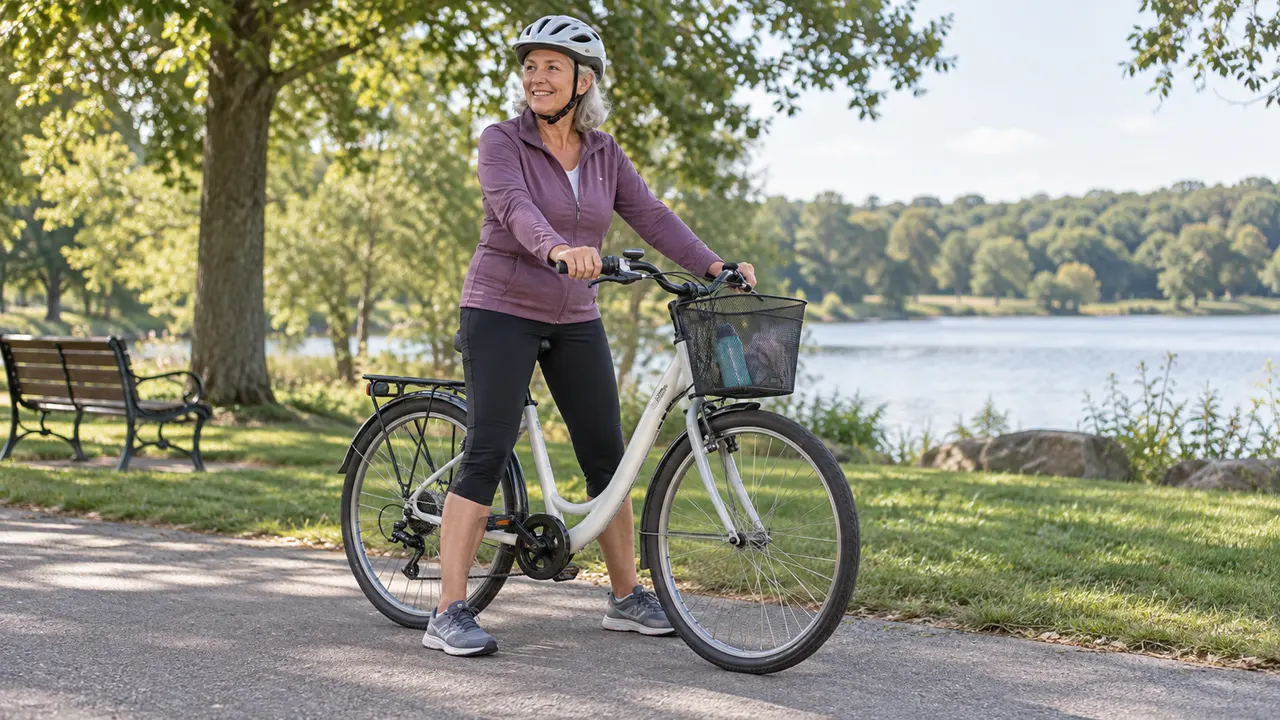
A circular route can look reassuringly short on a map while still leaving you far from help at its midpoint. Consider surfaces, junctions, gradients and places to stop. A familiar route with several ways to shorten the outing can be more useful than an ambitious destination. Tell a companion that turning back is part of the plan, not a failure.
Think about what happens after the ride as well. Carrying a bike upstairs or lifting it onto a rack adds work that the cycling app does not count. If those tasks are difficult, consider storage and transport changes before increasing mileage. A manageable ride followed by an awkward heavy lift may still leave the day poorly matched to your current capacity.
An electric bike can provide assistance, but it introduces its own handling and weight considerations. Our e-bike guide for sensitive knees focuses on assistance, gears and safe access. It does not assume that buying a motor automatically solves an arthritis problem or makes every route appropriate.
Use strength work to support a broader activity plan
Riding and strengthening are related but not identical tasks. Pedaling more is not always the answer when a therapist has identified a need for targeted strength work. Ask how the exercises fit around your rides and how to adjust the combined workload. The relevant total includes walking, household tasks and recreational activity, not just formal training sessions.
Our off-bike strength guide explains how to organize movement patterns and riding days without prescribing one exercise to everyone. If an exercise is already part of your care plan, follow the instructions you were given. An online routine should not silently replace the range, load or precautions chosen for you.
Progress can also mean greater confidence getting on the bike, easier daily tasks or a more consistent routine. These outcomes may matter even when speed stays the same. Keep the success measure aligned with your original goal so that a helpful activity does not become discouraging merely because you are comparing yourself with a competitive cyclist.
After the ride, separate comfort from clearance
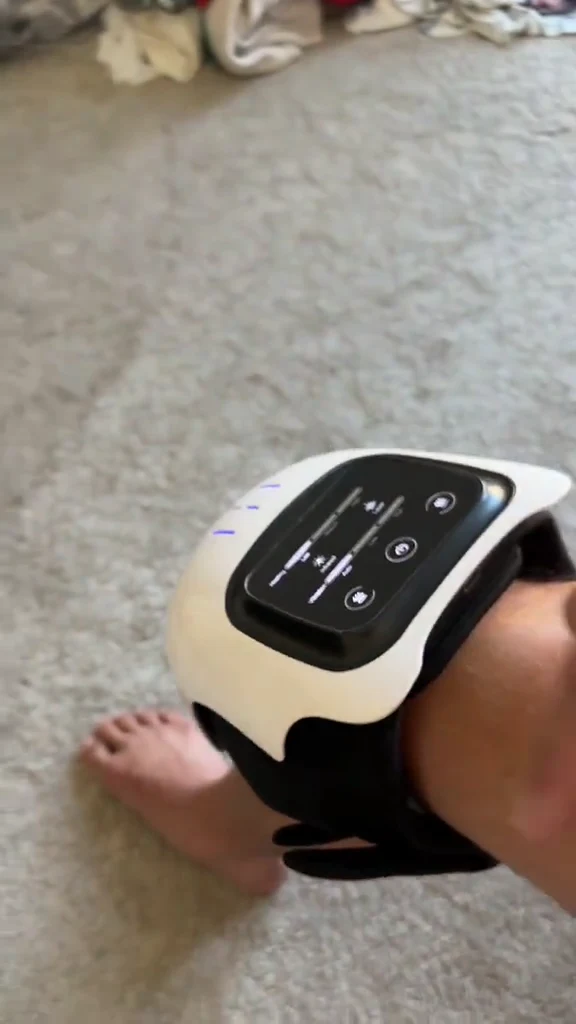
A pleasant evening routine can make activity feel more sustainable, but feeling soothed is not the same as being ready for a harder session. If you use warmth as part of your established self-care, follow the product instructions and your clinician's advice. Do not use heat on a newly injured, unusually hot or swollen knee, or where reduced sensation makes temperature difficult to judge.
A home comfort device is optional. It does not change the diagnosis, replace therapeutic exercise or prove that a flare has resolved. Avoid making a purchase the entrance fee to starting appropriate activity. The practical foundations remain suitable equipment, manageable demand and a clear response plan. Any accessory should have a limited purpose within that framework.

Three common planning mistakes to avoid
First, do not treat every uncomfortable day as proof that cycling is harmful. Review the complete situation with appropriate help: the starting symptoms, recent workload, equipment and how the problem evolved. A useful adjustment is specific. Repeatedly abandoning and restarting all activity without understanding the pattern can make it harder to establish a consistent baseline.
Second, do not use pain relief to justify a ride that your current plan does not support. Medication questions belong with your clinician or pharmacist, especially if other conditions or medicines are involved. Third, avoid changing several purchases at once. A new saddle, sleeve and crankset together may be expensive while leaving you no clearer about what actually improved the experience.
What to discuss at your next appointment
Bring a short description of the rides you want to do, the bike you have and what happens afterward. Ask which symptoms should stop the session, what an appropriate flare response looks like and how strengthening should fit alongside cycling. Mention any problems mounting, balancing or transporting the bike, because these can be addressed as part of the practical plan.
You do not need a perfect week before asking for help. A few honest observations are enough to start a useful conversation. The long-term aim is not a flawless training graph. It is a form of movement that fits your health, remains adaptable and helps you keep doing the things you value.
A practical example: preserve the activity, adjust the task
Imagine someone whose usual indoor ride is manageable but whose weekend outing now includes a steep hill to meet a friend. If symptoms increase afterward, it is useful to separate the social goal from that particular route. Meeting on a flatter path might preserve the valued activity while reducing one demand. The example does not establish what caused the symptoms or replace advice about a flare.
The rider can bring this comparison to a clinician: the familiar session, the changed terrain and the later effect on walking. That is more informative than saying all cycling is good or all cycling is bad for arthritis. It also creates practical options beyond abandoning exercise or purchasing a different bicycle immediately.
If the knee is behaving differently from its usual pattern, the priority remains assessment. If the care plan allows a modified ride, judge success by whether it is manageable and repeatable, not by whether the original hill was eventually conquered. A flexible plan can keep the goal intact while changing how it is reached.
Frequently Asked Questions
Is cycling good for knee osteoarthritis?
It can be a useful low-impact form of aerobic exercise when matched to your health, movement and symptoms. It is not a cure, and the appropriate amount differs between people.
How long should I cycle with knee arthritis?
There is no duration that suits everyone. Start from your current tolerated activity and your clinician's advice, then review how you feel during the session and afterward before increasing it.
Is low resistance always best?
Manageable resistance can make an initial session easier to control, but zero resistance is not a universal treatment. The setting should permit controlled movement without provoking escalating symptoms.
Should I cycle through an arthritis flare-up?
Use the flare plan agreed with your care team. Some people can adapt activity, while new swelling, marked pain or worsening function needs assessment. Do not force a ride to meet a schedule.
Is a recumbent bike better than an upright bike?
Neither is best for every knee. Compare access, back support, movement comfort, balance and space. Trying both is more useful than choosing from the label alone.
Does cycling rebuild knee cartilage?
Do not interpret exercise benefits as proof that cycling regrows cartilage. The practical goals are appropriate activity, fitness, strength, function and symptom management.