What do you want assistance to make easier?
The phrase bad knees can describe arthritis, a past injury, unfamiliar exercise soreness or an unexplained new symptom. Those situations should not be treated as one condition. Before shopping, decide whether cycling is currently appropriate and identify the practical difficulty you want to address. A motor may help with effort, but not every difficulty is an effort problem.
You might struggle with a hill on the way home, keeping a comfortable pace into wind, or restarting repeatedly on a commuting route. Alternatively, the main problem might be lifting the leg over a frame or holding a heavy bike upright. Listing the actual tasks prevents a purchase based only on battery size or an advertisement promising effortless riding.
If you have diagnosed osteoarthritis, our cycling and knee osteoarthritis guide covers activity planning and flare-ups. If you have had surgery, use the knee replacement cycling guide and your care team's advice. The equipment discussion here does not provide clearance to ride.
Pedal assistance changes effort, not the need to control the bike
A pedal-assist system adds motor support while you pedal. How it responds depends on the bicycle, sensors and selected mode. Some systems vary assistance with your input; others feel different when starting or changing pace. The name printed on a mode is not a standardized medical setting and should not be compared directly across brands.
Bosch, for example, documents several modes intended for different applications, with availability depending on the bicycle and system. That illustrates why the exact model matters. A broad label such as touring mode cannot tell you how a particular bike will feel to your knees or how confidently you will handle it in a crowded path.
Additional assistance can make a task feel easier, but you still steer, brake and respond to other people. Do not confuse less pedaling effort with less need for skill. Learn the controls in a suitable safe setting, follow the manufacturer's instructions and ask a dealer to demonstrate how the system behaves during starts and stops.
Gears still matter when the bike has a motor
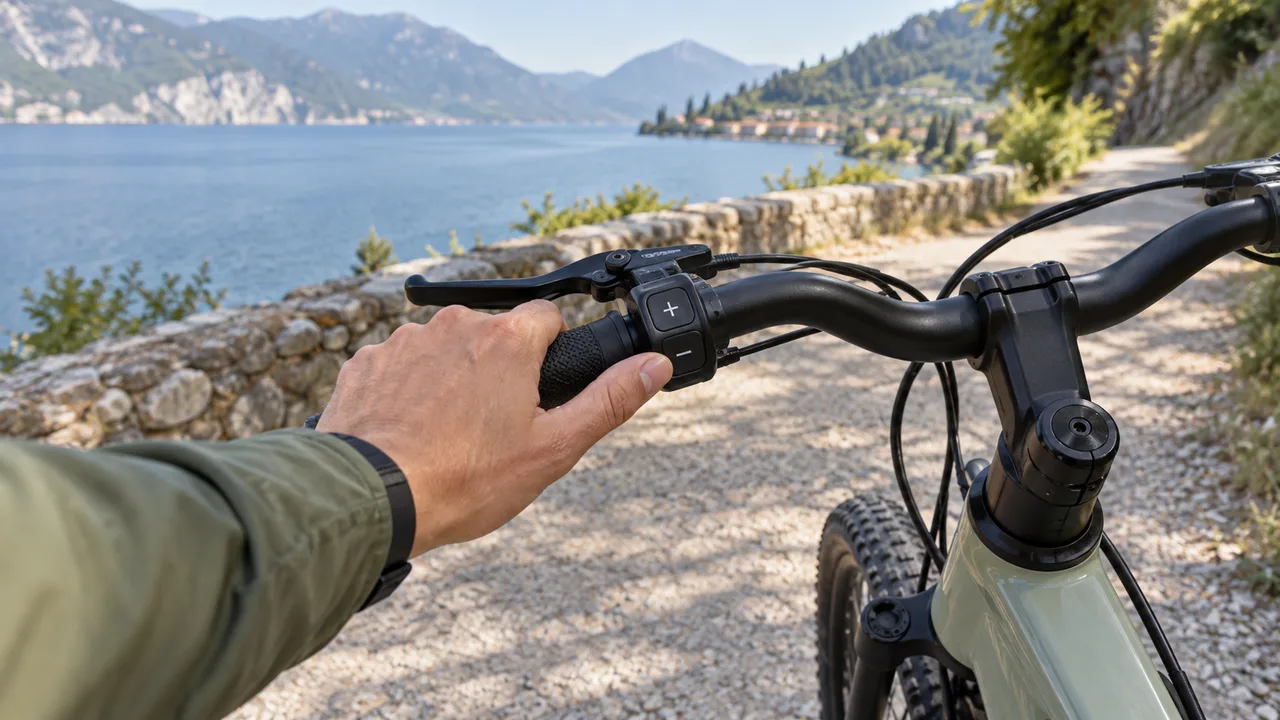
Assistance and gearing are related choices, not substitutes. A difficult gear can make starting or maintaining a comfortable pedal rhythm awkward even when a motor is available. Learn how the particular drivetrain should be shifted and practice on an appropriate route. Manufacturer instructions take priority, especially where electronic shifting or special hub systems are involved.
Plan ahead for a stop or incline rather than discovering the gear is unsuitable after you have already lost momentum. A dealer or cycling instructor can help you practice this safely. Do not attempt abrupt changes under heavy load unless the system is designed for them. Mechanical sympathy and predictable handling are part of a comfortable ride.
There is no single cadence that protects every knee. Choose a manageable combination of gear, assistance and pace rather than chasing a number that makes you bounce or struggle. If the available settings never allow comfortable controlled movement, review the bike and your activity plan rather than assuming you simply need a more powerful motor.
Try mounting and dismounting before a full test ride
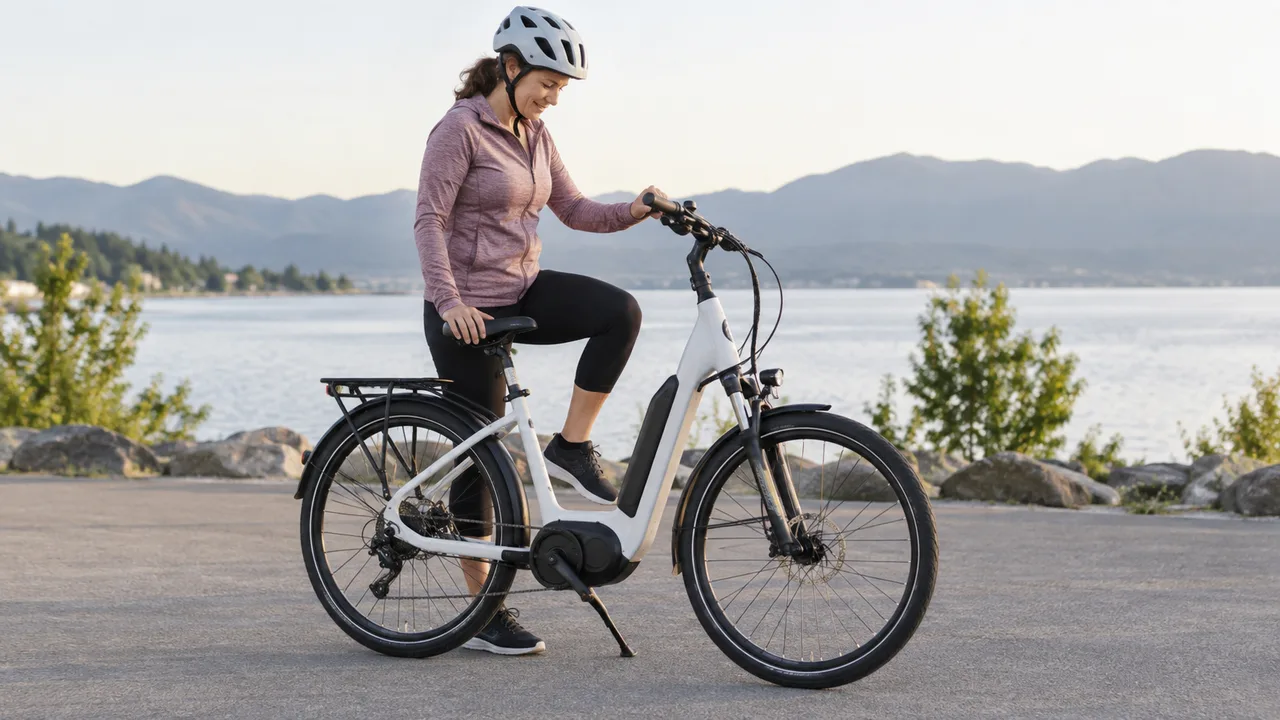
A step-through frame can reduce the need to swing a leg over a high tube, but the label does not guarantee easy access. Opening height, saddle position, handlebar shape and the way the bike balances all matter. Try the actual sequence of approaching, holding, mounting and getting off the bicycle with suitable assistance at the shop.
Consider both sides and the places where you will normally stop. A curb, sloping driveway or narrow storage area can change the task. You should not need to make a painful twist or rely on a precarious lean to reach the ground. Ask for professional fitting advice rather than lowering the saddle arbitrarily until another part of the pedal stroke becomes uncomfortable.
Do not use the motor to solve a mounting problem. Keep the system in the appropriate safe state specified by the manufacturer while handling the bike. If you cannot manage the bicycle securely before riding, that issue needs solving first. Extra range and attractive styling will not make an awkward daily transition disappear.
Weight matters most when the motor cannot help
Compare how the bike feels when walking it, turning it in a narrow space and positioning it for storage. You may also need to lift it over a threshold or load it onto a rack. Those tasks can be more demanding than the assisted ride. A test that ignores them may lead to a bicycle you enjoy outside but struggle to use at home.
Some bikes offer walk assistance, but the feature has operating requirements and does not replace secure handling. Ask for a demonstration on the exact model and do not assume every motor system includes the same function. If a battery is removable, learn the safe procedure and whether removing it meaningfully helps with your particular transport task.
Include the accessories you will actually carry. A lock, shopping bag or child seat can change balance and total weight. Do not evaluate an unloaded showroom bike and assume the same experience with a full commuting setup. Staying within the manufacturer's limits and using appropriate racks and transport equipment are essential parts of the purchase decision.
| Feature | Try or verify | Why it matters |
|---|---|---|
| Frame access | Mount and dismount without an awkward twist | Determines everyday usability |
| Assistance response | Controlled starts and changes of pace | Confidence matters as much as power |
| Gearing | A manageable start and comfortable pedaling | The motor does not replace gear selection |
| Weight and storage | Walking, parking and necessary lifting | Off-bike tasks count too |
| Brakes and controls | Comfortable reach and clear operation | Supports predictable stopping |
| Service and fit | Local support and suitable adjustment options | Helps maintain a usable setup |
Make the test ride answer real questions
Tell the dealer what kind of riding you plan and what currently feels difficult. Ask for a safe test environment that lets you practice starts, turns and stops before considering hills or traffic. Bring the footwear you expect to use. A brief straight-line ride at a comfortable speed may not reveal the tasks that matter most in daily use.
Compare seated comfort, control reach and confidence rather than only how quickly the bike accelerates. If possible, test more than one appropriate design with professional guidance. Do not feel obliged to choose the most powerful or expensive option. The useful comparison is which bicycle you can operate comfortably and consistently for your intended trips.
Notice the response after the test as well as during it. A pleasant first few minutes is encouraging but not a guarantee for a much longer route. If symptoms change or you need to compensate while pedaling, record that and discuss it. Do not allow the excitement of a purchase to override a problem that deserves attention.
Use extra range carefully
Assistance can make distance feel deceptively easy at the beginning of a ride. The knee still repeats the pedal movement, and a longer outing may add more total exposure than you expected. Start with a familiar route and a clear option to shorten it. Avoid turning the first comfortable ride into a personal-distance record.
Plan the return journey, including hills, wind and battery uncertainty. Range estimates depend on many conditions and are not promises. A route that becomes unmanageable if assistance stops is a poor first experiment. Keep a practical backup plan and follow the manufacturer's guidance on battery use, charging and maintenance.
A companion should understand that the purpose is a manageable outing, not keeping up at all costs. Agree stopping points and a turnaround decision before leaving. The social benefit of riding together is more likely to last when the route suits the person with the least available capacity rather than the person with the largest battery.
Outdoor safety remains a separate requirement
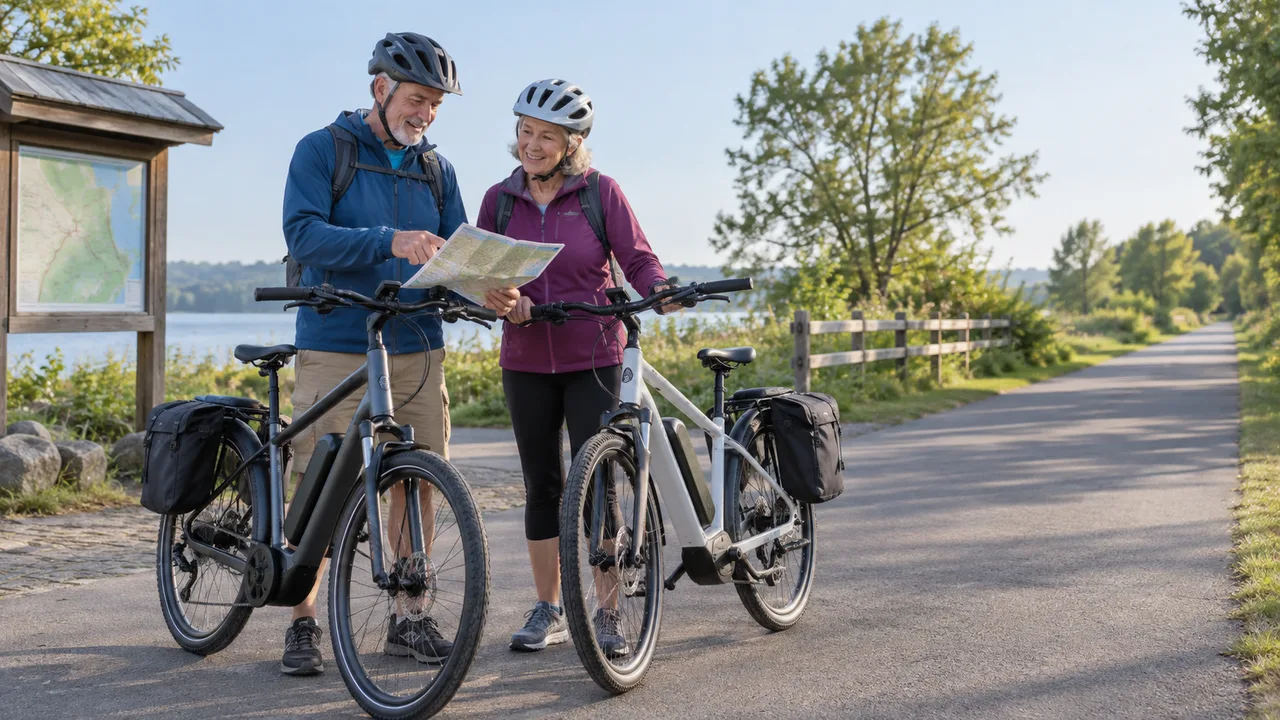
Wear an appropriate helmet, make yourself visible and choose routes compatible with your skills and the bicycle's permitted use. Check the current local rules for the exact type of e-bike and route. Motor power, assistance limits and throttle arrangements can fall into different categories; this guide does not assume that one country's rules apply everywhere.
If balance, vision, reaction time or medication effects are concerns, discuss them with a qualified health professional before riding outdoors. A motor does not remove those demands. Some people may prefer an indoor option or additional instruction while they build confidence. That is a practical decision, not a lesser form of cycling.
Do not adjust controls or inspect a phone while moving. Stop safely before checking navigation or changing unfamiliar settings. Keep clothing and bags clear of moving parts. These habits may sound basic, but they are more relevant to a safe return to riding than buying an accessory that promises to protect every painful knee.
Assistance does not replace a suitable riding position
If the knee feels cramped or stretched through the pedal stroke, review the complete setup. Our cycling fit guide discusses the broader assessment, while the crank-length guide covers one possible component decision. Do not change several settings randomly because the bike is electric and you expect it to feel effortless.
A qualified fitter can help identify whether the frame and adjustment range suit you. Some problems cannot be solved by moving the saddle farther in one direction. Check that any proposed component changes are compatible with the e-bike system. Electrical assistance adds complexity, so avoid improvised modifications or unsupported parts substitutions.
Keep the post-ride routine proportionate
After riding, notice how ordinary walking and the rest of the day feel. Use our post-ride recovery guide to organize that check. A ride can be enjoyable and still need a smaller dose next time. Adjusting early is more useful than repeatedly waiting for a difficult response and then trying to soothe it afterward.
An optional warmth routine may be pleasant when appropriate, but it does not make an e-bike ride medically suitable or erase excessive load. Follow device instructions and avoid heating a new injury or a hot swollen knee. If you have reduced sensation, circulation concerns or postoperative restrictions, ask your care team before using a comfort product.
Know when to seek advice before buying
New severe pain, substantial swelling, inability to bear weight, locking or a hot red knee with fever should prompt medical advice rather than a showroom visit. Persistent symptoms also deserve assessment. A bicycle can be a useful part of an activity plan, but it is not a diagnostic tool and should not be purchased as a guaranteed treatment.
For an appropriate rider, the best e-bike choice is often the one that makes ordinary tasks manageable: easy access, predictable assistance, usable gears and practical storage. Start from those requirements, test them carefully and build the riding plan around your response. The motor should expand your options without encouraging you to ignore the limits that still matter.
Worked example: the best bike is not always the strongest motor
Imagine two suitable e-bikes in a shop. One offers greater headline power but is difficult for a rider to maneuver through the narrow entrance at home. The other provides adequate assistance for the intended flat route and is easier to mount and store. A specification-only comparison might favor the first, while an everyday task comparison could favor the second.
The rider should test the relevant transitions with the dealer, ask about fit and service, and account for the actual luggage carried. If a medical condition affects balance or movement, professional health advice remains separate from the dealer's equipment advice. This is a hypothetical purchasing example, not a recommendation of a particular model or motor size.
Also compare the first realistic journey, not the longest trip the battery might permit. Can the rider start, stop, turn, park and return home comfortably? Does the route have an easy exit if symptoms change? Those questions connect the purchase to a sustainable activity plan. A more impressive motor cannot compensate for a bike that is awkward to use every day or a route that exceeds current ability.
Frequently Asked Questions
Are e-bikes good for bad knees?
Assistance may make an appropriate ride more manageable, but bad knees is not a diagnosis. The benefit depends on your condition, the bike, your skills and the route. An e-bike does not replace medical advice.
Does pedal assist mean I do not need to pedal?
Pedal-assist systems add motor support while you pedal. Other drive controls vary by model and local rules, so check the exact bicycle rather than assuming every e-bike works the same way.
Is a step-through e-bike easier on the knees?
A low frame opening may make mounting easier for some people, but you still need to check balance, saddle access, bike weight and safe stopping on the actual model.
Can an e-bike still cause knee discomfort?
Yes. An unsuitable position, difficult gear, excessive distance or an underlying condition can still matter. Electric assistance does not eliminate the repeated movement of cycling.
Should I use maximum assistance all the time?
Choose a mode you can control comfortably and follow the manufacturer's instructions. More assistance changes handling and battery use; it is not a universal knee treatment or a reason to choose a harder route.
Can I use an e-bike after knee replacement?
Only when your surgical and rehabilitation team clears the relevant activity. Outdoor balance, emergency stopping and bike handling must be considered separately from being able to pedal a stationary bike.