Crank length is a dimension, not a rider category
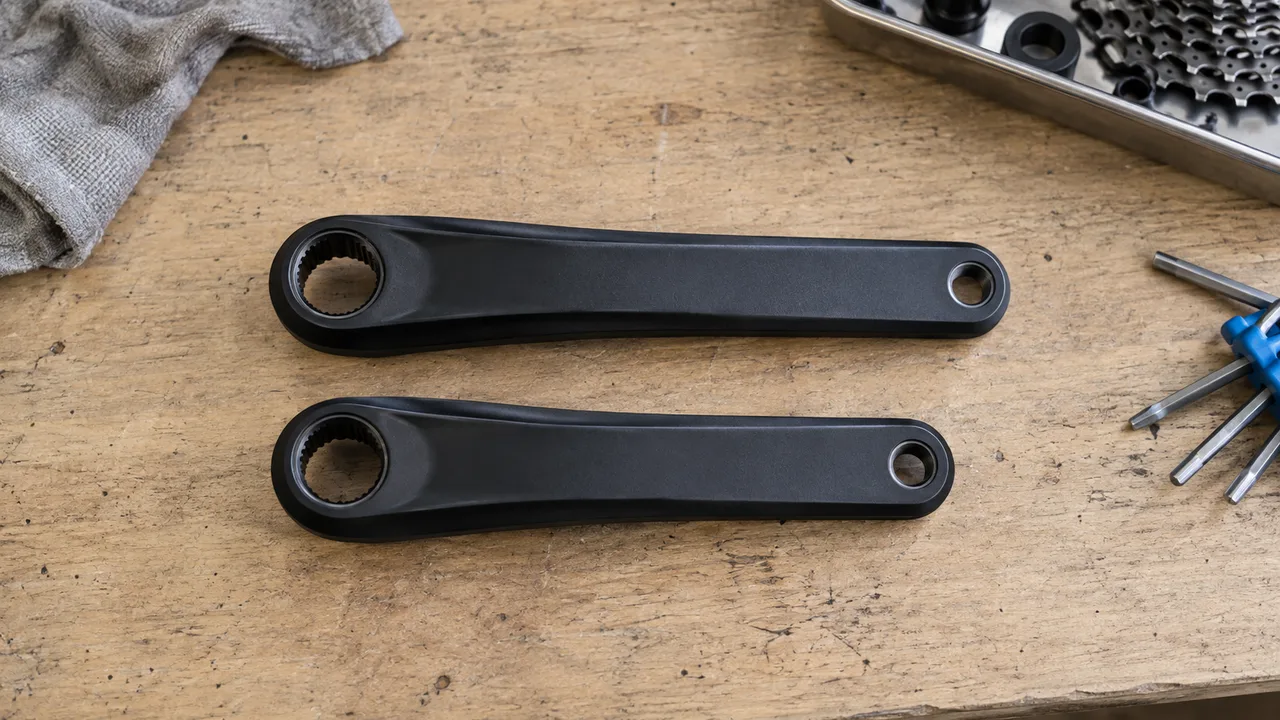
The crank arm connects the bottom-bracket spindle to the pedal spindle. Its length sets the radius of the circle traced by the pedal. Labels such as short, standard and long depend on what you are comparing. A rider moving from 175 to 170 millimeters has made a shorter-crank change even though another rider might already consider 170 millimeters too long for their preferred position.
Neither a professional rider's setup nor the size printed on a bicycle frame determines your ideal crank. Body proportions, available movement, saddle position, handlebar reach and the intended task all contribute to how a bike feels. The goal is not to collect the fashionable dimension. It is to understand whether this particular change addresses a specific problem in your riding position.
Keep the question narrow. This page explains a component decision, while our main cycling knee pain guide considers the broader picture. If you have pain during ordinary walking, swelling or a recent injury, a component purchase should not replace assessment. A perfectly assembled bicycle cannot tell you whether exercise is currently appropriate.
What physically changes when the arm gets shorter?
With the bottom bracket in the same place, a shorter crank brings the top of the pedal circle down and the bottom up. It also reduces the forward and backward reach of that circle. The foot therefore follows a smaller path. What happens at your knee depends on how the rest of your body and bike are positioned around that path.
For example, changing from a 170-millimeter arm to a 165-millimeter arm reduces the radius by five millimeters and the circle's diameter by ten millimeters. That is geometry, not a prediction of how many degrees your knee will change or how much pain will improve. Joint angles depend on several dimensions and cannot be read directly from the crank-length difference.
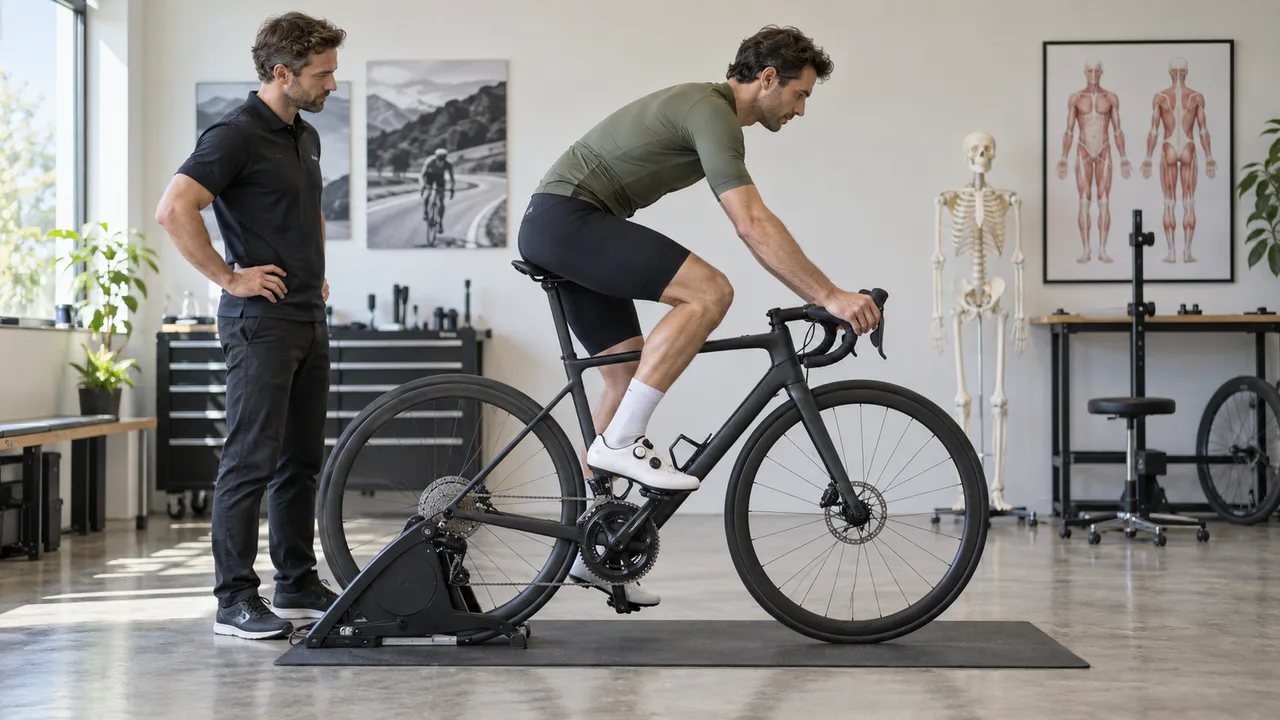
Keeping the saddle untouched is one way to compare pedal paths, but it is not necessarily the finished fit. A fitter may change the saddle relationship to retain a suitable extension at the bottom of the stroke. That adjustment also changes what happens at the top. Assess the combined position rather than treating the crank and saddle as unrelated components.
What the research can and cannot establish
Studies of crank length have measured changes in joint angles, movement and pedaling mechanics. A recent study of small adjustments found that shorter lengths could reduce hip and knee flexion in the tested setup. That helps explain why a fitter might consider the change when a rider feels compressed near the top of the stroke.
However, a laboratory measurement is not the same as a trial showing that a particular crank cures a particular knee condition. Research populations, exercise intensities and adjustment methods differ. A broader systematic review of cycling biomechanics noted limited direct evidence connecting individual setup parameters with injury risk. Avoid converting a plausible mechanical explanation into a guaranteed medical outcome.
Useful evidence-informed language is conditional: this change may alter the movement requirement and could be worth evaluating for this rider. Unhelpful language promises that everybody should shorten their cranks or that a certain length protects cartilage. No component removes the need to manage training load, investigate persistent symptoms and choose activity that suits the person's health.
Measure the current crank before comparing options
Look for a length marking on the crank arm, often on its inner surface. Confirm the exact model and specification because a used bicycle may no longer have its original parts. If the marking is unclear, a shop can identify the assembly. Record both the length and the component family before searching for a replacement.
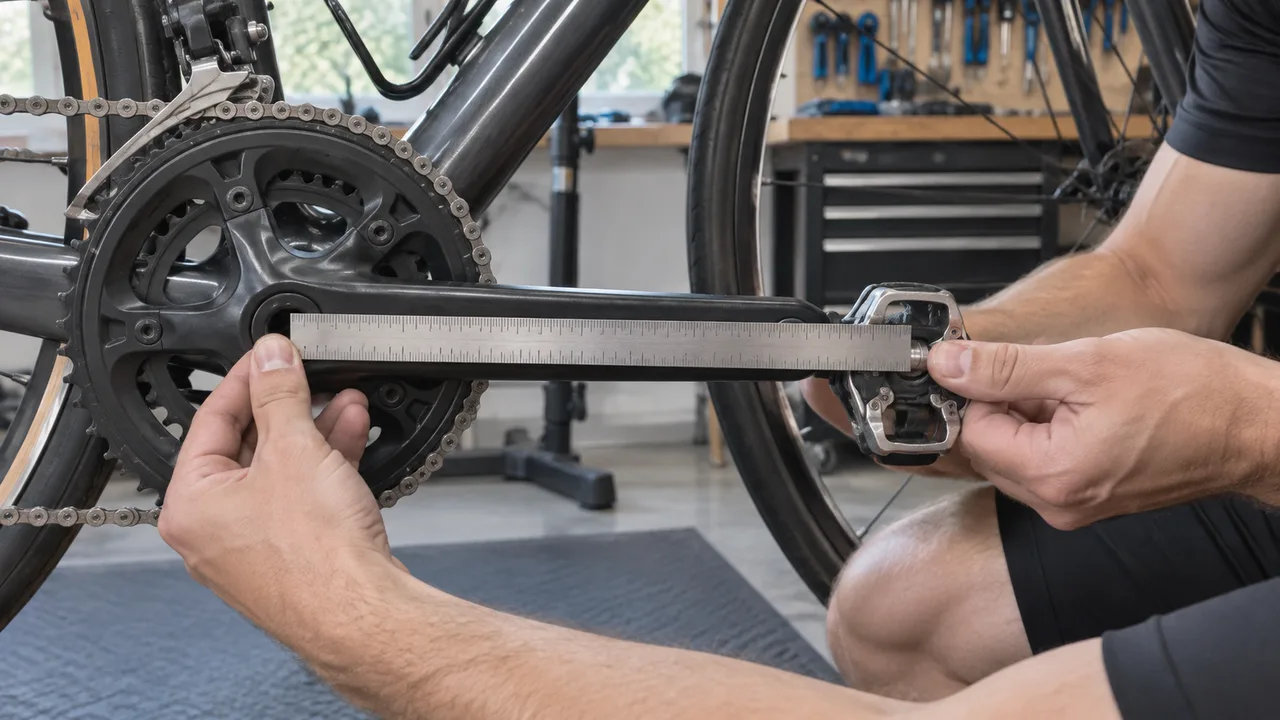
If measuring, use the center of the bottom-bracket spindle and the center of the pedal spindle as the reference points. Measuring from one outside edge of the metal arm to the other includes material beyond those centers and gives the wrong dimension. Keep the bike stable and avoid placing fingers near a moving chain or chainring.
Photographs can help you document the current setup, but perspective makes them poor substitutes for a direct measurement. A phone image taken at an angle can make one crank appear longer than another. Use the manufacturer's specification and a physical check rather than trying to estimate millimeters from a social-media picture.
165 versus 170 versus 172.5: ask a better question
A comparison between common lengths is useful only when connected to a goal. Are you trying to reduce a cramped feeling in a lower riding position, improve pedal clearance, or adapt a bicycle after a professionally assessed movement limitation? These goals may lead to different decisions. A chart based only on height cannot consider all of them.
| Question | What to examine | Limit of the conclusion |
|---|---|---|
| Do I feel cramped at the top? | Hip and knee movement within the whole riding position | Crank length is not the only possible contributor |
| Do my pedals strike obstacles? | Terrain, technique, suspension and component clearance | Extra clearance does not establish a knee benefit |
| Am I copying another rider? | Different proportions, goals and equipment | Another person's success is not a fitting prescription |
| Do I have diagnosed restrictions? | Clinical advice and a fitting assessment | A general comparison cannot clear you to ride |
The cheapest useful step may be a fitting consultation rather than an immediate purchase. Ask whether a trial setup is available and what observations would justify the change. You should leave with a reasoned hypothesis, not merely a shorter shopping list. If nobody can explain which problem the new crank is meant to address, the purchase may be premature.
Compatibility matters as much as the nominal length
Two cranksets with the same arm length may use different spindle standards, bottom brackets, chainring mounts and chainlines. The number on the arm does not establish compatibility with your frame or drivetrain. Check the exact manufacturer documentation and ask a competent mechanic when uncertain. This is especially important when changing only one component within an existing system.
Consider the full cost: parts, required tools, installation, possible bottom-bracket work and any power-meter implications. Some meters or applications require a crank-length setting; others use a different measurement approach. Follow the documentation for your specific model rather than assuming that every meter behaves the same way. Incorrect configuration can also confuse before-and-after performance comparisons.
Do not improvise spacers, drill components or combine unmatched left and right arms to obtain a preferred length. A suspected leg-length difference or unusual movement pattern needs professional evaluation. Mechanical safety and clinical reasoning are separate requirements. Both must be satisfied before a setup change becomes an appropriate riding experiment.
What about leverage, cadence and power?
A longer lever can produce more torque from the same tangential pedal force, but that isolated statement does not predict cycling performance. Riders also change how quickly they pedal, how much force they apply and which gear they use. Power, torque and angular speed are related, so comparing only leverage leaves out much of the actual task.
At the same cadence, a smaller pedal circle also means the foot travels a shorter distance each revolution. The experience may feel different even when the display shows the same revolutions per minute. Allow an appropriate period of familiar riding rather than declaring success or failure after one maximal sprint. Do not test a painful knee with repeated all-out efforts.
Performance promises deserve the same caution as pain promises. This article does not claim that shorter cranks automatically add watts, preserve every rider's power or make longer cranks obsolete. A practical decision balances comfort, suitable movement, compatibility, cost and the demands of your riding. An enjoyable repeatable position can matter more than winning a debate about a universal optimum.
Keep a before-and-after record that is actually comparable
Record the original crank length, saddle position, shoes, pedals and the type of ride that usually exposes the problem. Note when symptoms appear and whether they affect ordinary activity afterward. If a professional changes several fit variables together, document that honestly. You may be evaluating a better overall setup rather than isolating one component's effect.
Choose a familiar, manageable comparison session when riding is appropriate. Do not combine the new crank with a first mountain ride, new shoes and a personal-distance record. Weather, fatigue and different terrain can overwhelm a small mechanical change. The aim is not a perfect scientific experiment, but a clear enough record to support a sensible follow-up conversation.
Review both immediate comfort and later function. A setup may feel novel or pleasantly different on the stand but less suitable over time. Conversely, an unfamiliar sensation is not automatically a fault. Escalating pain, swelling or altered movement is not something to push through for adaptation. Stop and seek advice when the response suggests more than ordinary unfamiliarity.
Do not overlook other changes made at the same time
New crank discussions often happen during a larger equipment refresh. Perhaps you also fitted cleats, changed saddle shape or started riding indoors. Each change can affect the experience. Our cleat and pedal guide helps separate rotational freedom from release tension, while the indoor cycling guide examines the training environment.
A sudden increase in climbing or total ride time can still matter even if the equipment change was reasonable. Do not interpret every subsequent ache as proof that the new parts are wrong, or every improvement as proof that they were the only solution. Maintain a realistic view of the entire week, including strength work and recovery opportunities.
Comfort accessories cannot validate a bike fit
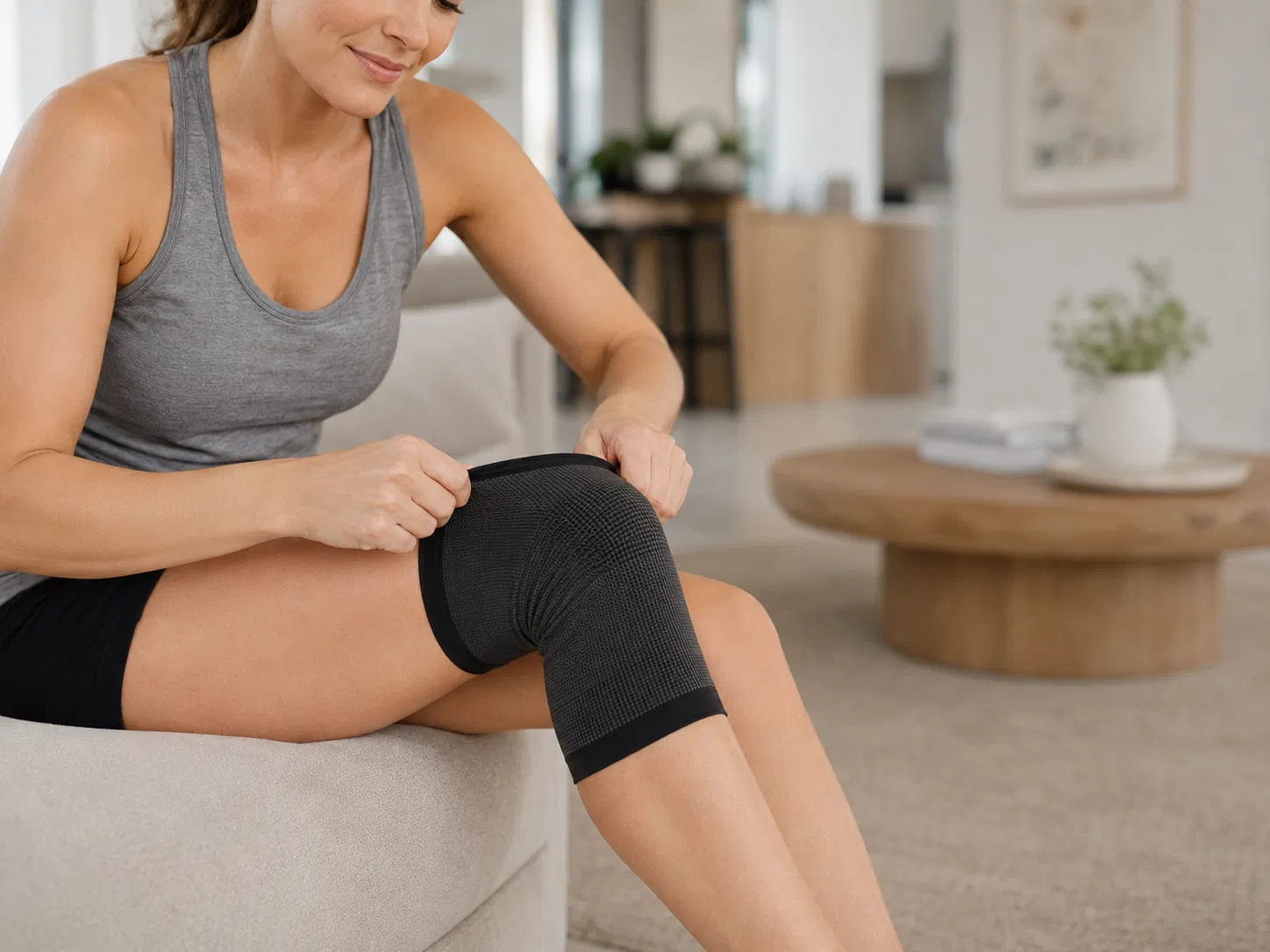
A sleeve may provide a sensation of coverage, and a suitable off-bike routine may feel pleasant, but neither establishes whether your crank choice is correct. Do not tighten a sleeve to force the knee to follow a line, or use a comfort device to suppress the symptoms you intended to monitor. Compare equipment honestly and keep its purpose limited.
If you are considering optional compression, read the cycling sleeve, warmer and brace comparison before assuming the products are interchangeable. None makes incompatible bicycle components safe. New symptoms should lead to a reassessment of the plan rather than a growing collection of accessories layered over the same unresolved problem.
Questions to take to a fitter or clinician
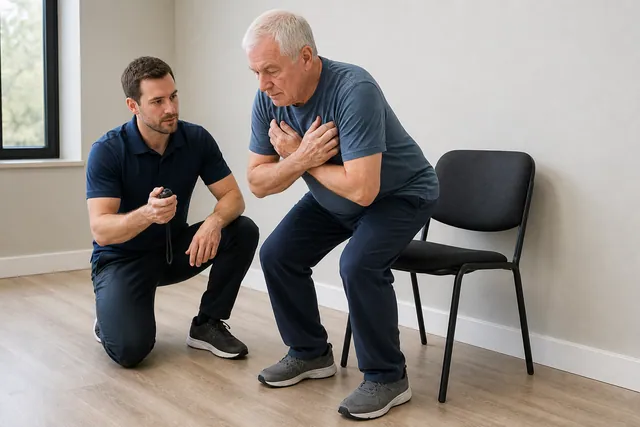
Ask what movement limitation or riding complaint the crank change is intended to address. Ask how saddle position will be reassessed, whether your drivetrain and meter are compatible, and what signs should prompt a follow-up. Explain any diagnosis, operation or current rehabilitation restriction. Bring the shoes and pedals you actually use rather than planning the fit around imagined future equipment.
Finally, agree how success will be judged. A sensible outcome might be improved comfort in a suitable position during familiar riding, without a worse later response. It is not a promise that you will never have knee pain again. Shorter cranks are one adjustable part of a complex activity, useful when they answer a real question and disappointing when asked to solve every problem.
Worked example: comparing a change without overselling it
Imagine a rider whose fitter proposes moving from 170 to 165 millimeters because the current position feels cramped near the top of the stroke. The proposal should state what is being evaluated, which compatible parts are required and how the saddle relationship will be checked. It should not promise that five millimeters will remove a particular amount of pain.
Before the change, the rider records the existing setup and a familiar manageable session. After installation and a safety check, the comparison uses the same shoes, similar conditions and an appropriate workload. If the fitter also changes saddle height, the record says so. Any improvement then belongs to the revised setup as a whole, not necessarily to crank length in isolation.
The follow-up includes later walking and next-day symptoms, not just how the bike felt on the stand. If the original problem remains, the next step is to review the hypothesis rather than automatically buy an even shorter pair. This example is a decision framework, not a recommended size change for readers. The useful outcome is a clearer, safer equipment decision with realistic expectations and a route back to professional advice.
Frequently Asked Questions
Do shorter cranks help knee pain?
They can alter joint movement and may suit some riders, but a mechanical change is not a guaranteed treatment. The cause of symptoms, complete fit and training load need consideration.
Should I choose 165 or 170 mm cranks?
There is no universal winner. Consider your current length, movement comfort, position, intended riding and compatible equipment with a qualified fitter rather than choosing from height alone.
How do I measure crank length?
Check the marked specification or measure between the center of the bottom-bracket spindle and the center of the pedal spindle. Do not measure the arm's entire outside length.
Do I need to change saddle height after shorter cranks?
The new pedal path changes the relationship between foot and saddle. A fitter may adjust saddle height and other settings, but applying a single formula without checking the whole position is not enough.
Will shorter cranks make me lose power?
The outcome depends on the rider, task and adaptation. A shorter lever changes the relationship between force and torque, but that alone does not predict your sustainable power or performance.
Can I use different crank lengths on each side?
Do not improvise asymmetrical lengths to treat pain or a suspected leg-length difference. Specialized adaptations require professional assessment and compatible components.