Choose the purpose before choosing the product
If you search for cycling knee support, the results may include thin clothing, elastic sleeves and substantial hinged braces. The products share a body location, not a single job. Start by asking what you want to change: feeling cold, wanting comfortable coverage, or following a clinician's plan for a specific condition. Those questions lead to different purchases.
A recreational cyclist who wants a removable layer on a cool morning does not necessarily need compression. Someone with an unstable or recently injured knee should not assume that a soft sleeve supplies the support their condition requires. A clear purpose makes it easier to ignore vague promises and compare the features that actually matter.
This guide focuses on pedaling-specific garment choices. Our general brace versus sleeve guide explains the broader categories, while the sleeve sizing guide covers measurement in more detail. Use those pages for their separate questions instead of treating every support product as one interchangeable solution.
Compression sleeve, warmer and brace are different categories
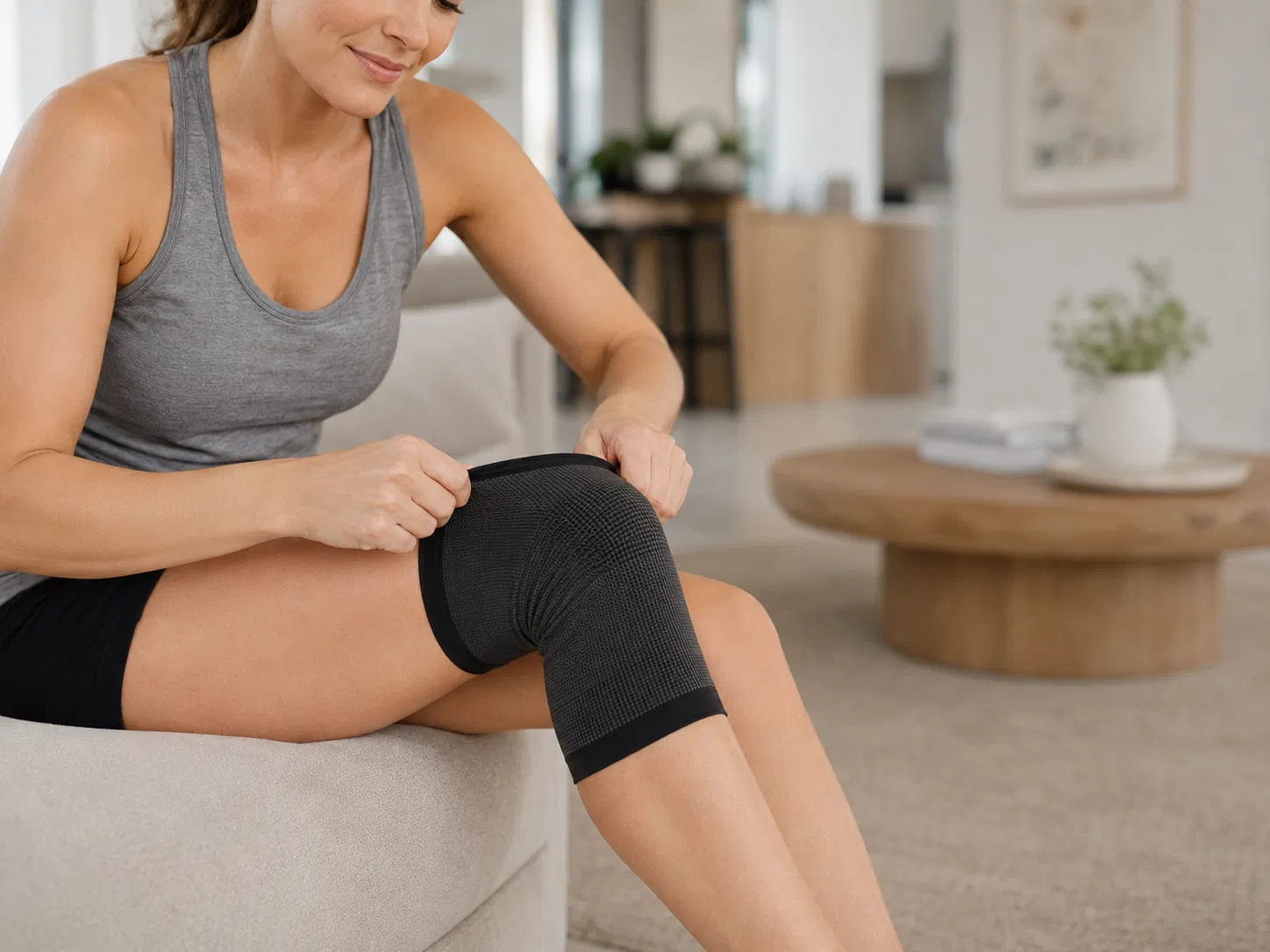
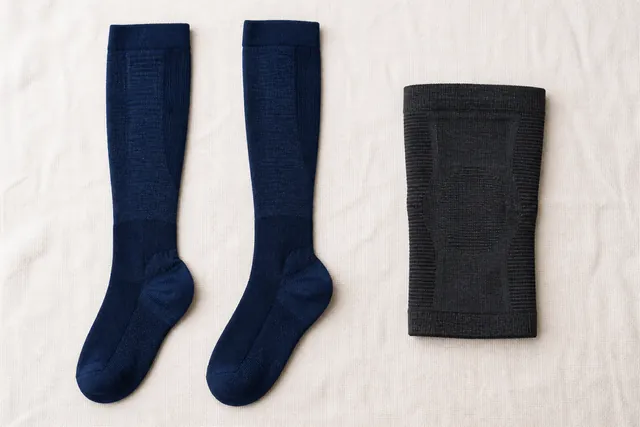
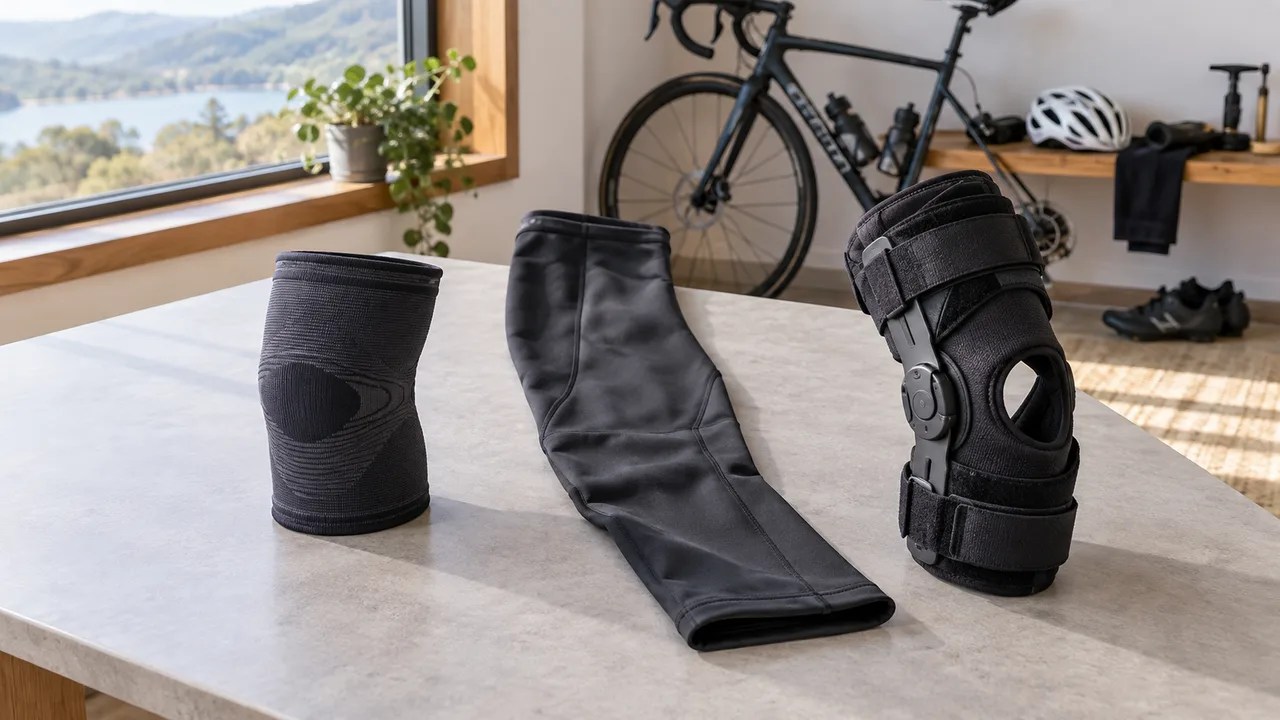
A soft sleeve wraps the knee with elastic fabric and may provide a snug or supported feeling. A warmer is primarily a piece of clothing intended to retain warmth in cool conditions. A brace can incorporate straps, rigid elements or hinges for a particular mechanical purpose. The word support on a package does not tell you which category you are looking at.
These boundaries can overlap in appearance. A thermal warmer may fit closely, while a sleeve may also feel warm because it covers the skin. Neither observation proves a specific compression pressure or clinical effect. Read the actual specification rather than inferring function from thickness, color, marketing photographs or the number of straps.
| Item | Main reason to consider it | Important limitation |
|---|---|---|
| Soft compression sleeve | Optional snug coverage during suitable activity | Not a substitute for prescribed mechanical support |
| Cycling knee warmer | Removable clothing insulation for cool conditions | Not automatically a medical compression garment |
| Condition-specific brace | A defined support role agreed with a clinician | Needs appropriate fit, clearance and activity advice |
| Impact pad | Protection designed for a particular riding discipline | Not the same as an ordinary fabric sleeve |
Test the fit with the knee bent, not only standing
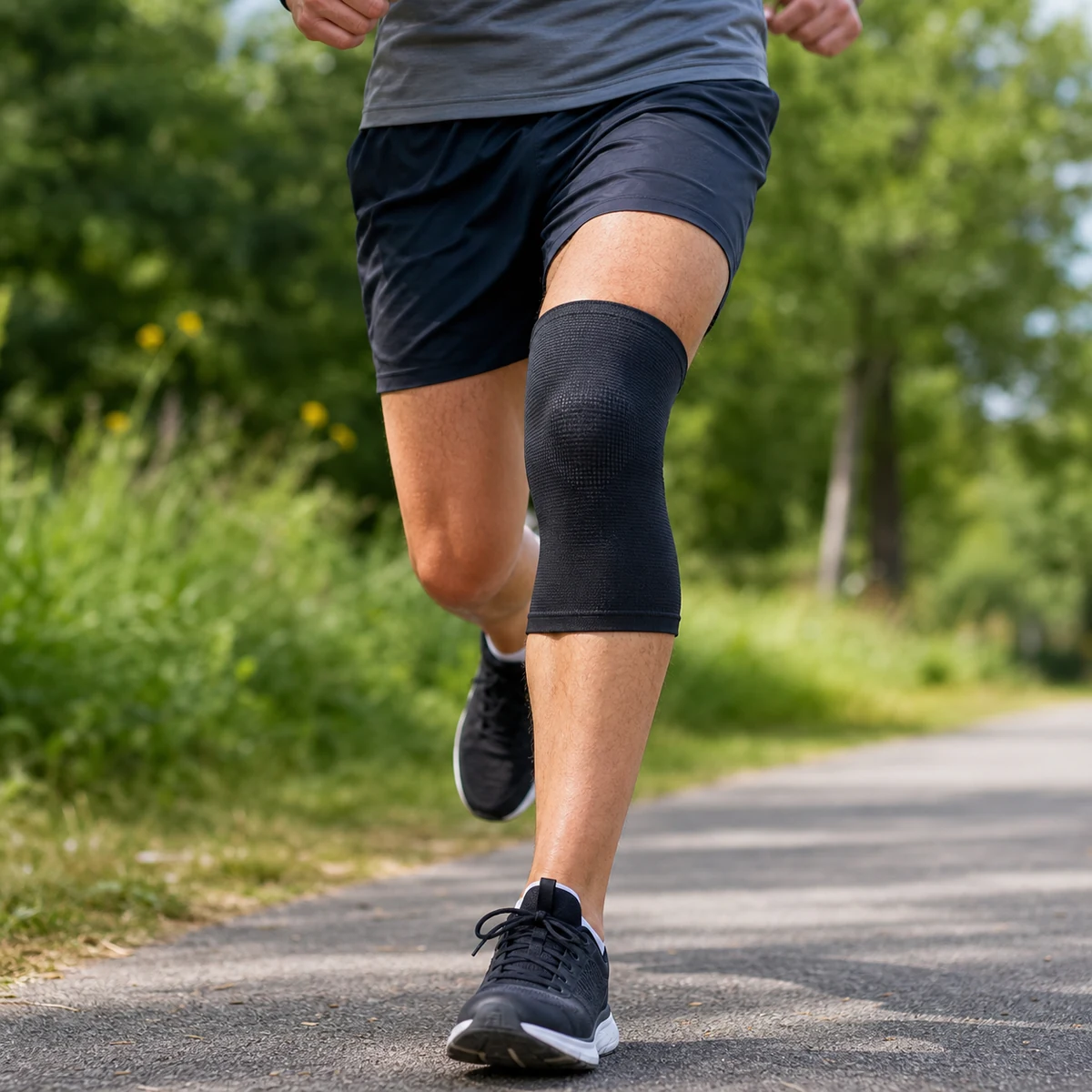
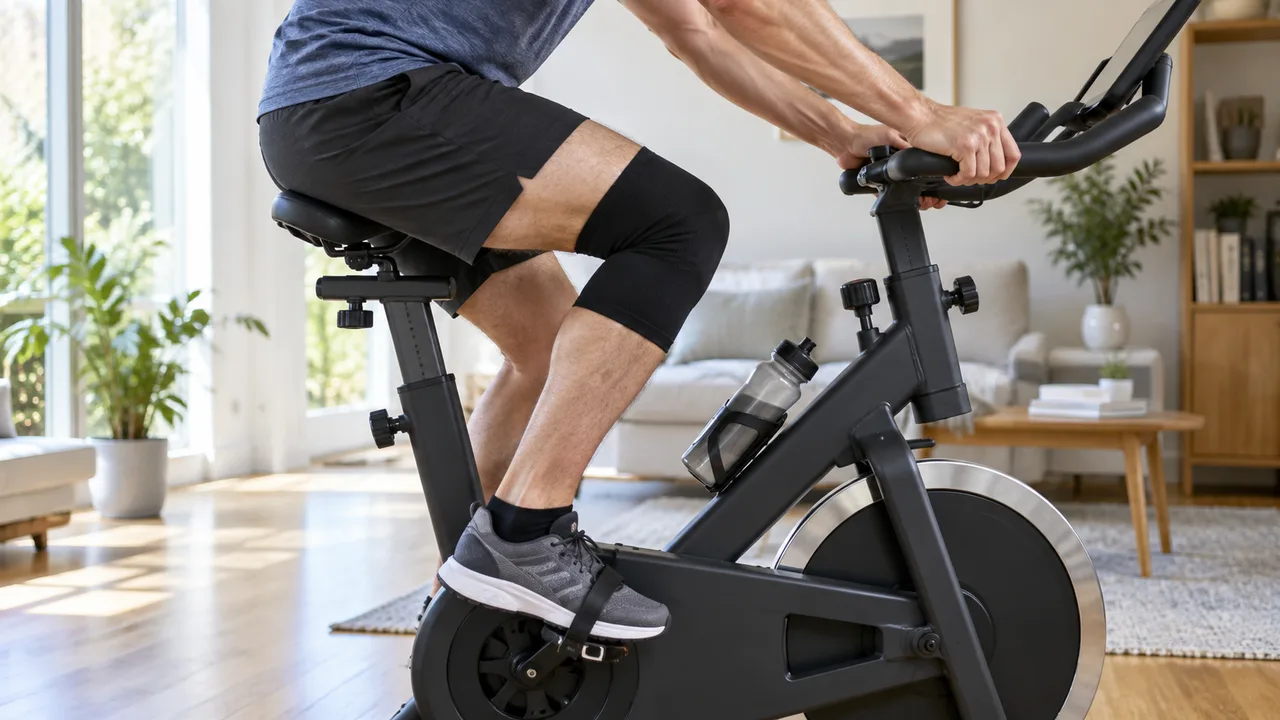
A garment can look smooth while you stand and form an uncomfortable fold when the knee bends. Cycling repeats that bend many times. Check the sleeve in a seated riding position before committing to a long outing. If it already presses behind the knee during a short test, more riding is unlikely to make the problem easier to interpret.
Look at the whole garment rather than only the opening over the kneecap. The upper and lower edges should remain appropriately positioned, seams should not create concentrated rubbing, and the fabric should permit the movement required by the bike. Follow the product's orientation instructions when there is a defined front, back, top or bottom.
Do not force the sleeve to compensate for a bike that requires an uncomfortable range of movement. Saddle position and other setup questions belong in the bike-fit guide. A garment test and a fitting assessment are different tasks, and success in one does not establish that the other has been addressed.
Use the manufacturer's measurement points
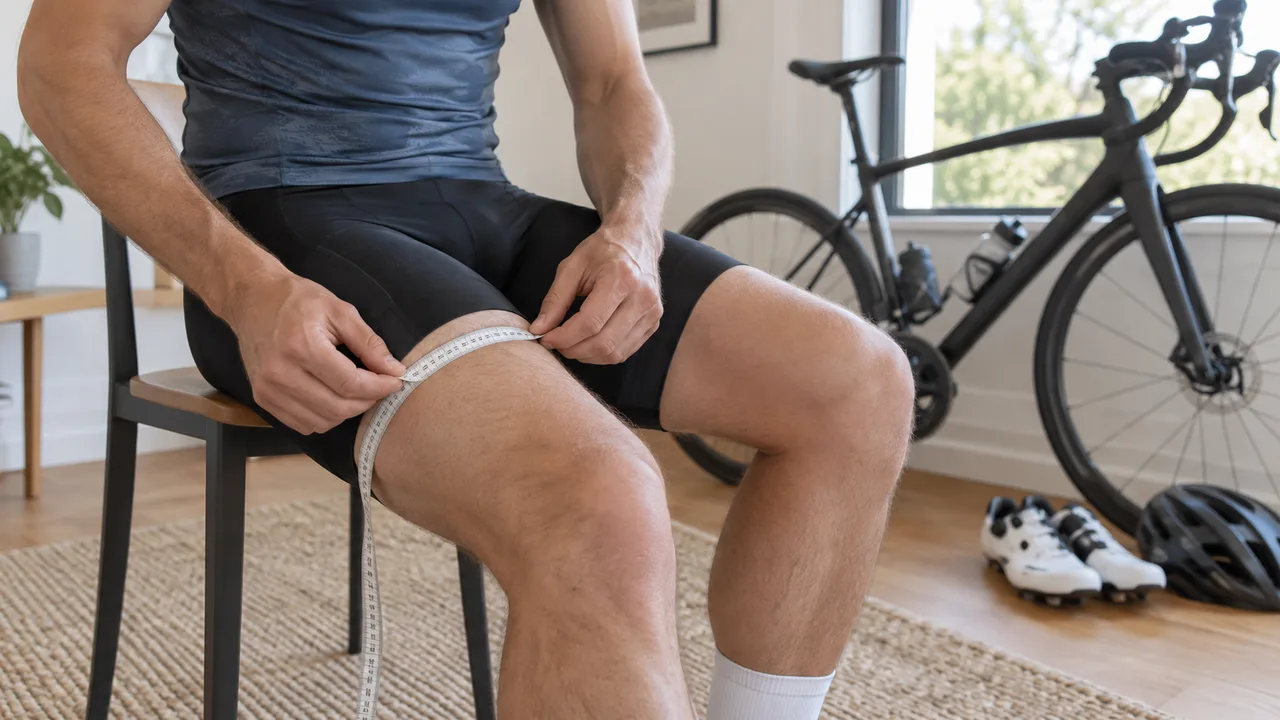
Size labels such as medium or large are not standardized across products. One brand may ask for a measurement at the kneecap, another above it, and another at more than one point. Use the exact locations and units shown in the relevant chart. Measuring somewhere else and selecting the nearest familiar clothing size can produce an unsuitable fit.
Keep the tape level and follow any instructions about posture and tape tension. Record the measurement rather than relying on memory when comparing products. If your result falls between sizes, use the manufacturer's guidance or contact the seller. Choosing the smaller size by default is not a reliable way to obtain better support.
A leg whose size is changing because of swelling needs a different conversation from ordinary clothing selection. Do not use a consumer size chart to manage unexplained swelling or a diagnosed circulation problem. Ask a clinician whether compression is appropriate and whether a medical garment with a specified pressure and fitting process is required.
Tighter does not automatically mean more useful
A sleeve should not need to be painfully tight to stay in place. If it creates numbness, tingling, increasing pain, unusual coldness or color change, remove it and seek advice as appropriate. Clinical compression guidance emphasizes fit and monitoring, but that guidance should not be mistaken for evidence that an ordinary sports sleeve treats a vascular condition.
Do not fold the top down into a narrow band or add tight tape to stop slipping. Those workarounds can concentrate pressure while leaving the original sizing or shape problem unresolved. If a product only works after several improvised modifications, it may not be a suitable match for your leg or the repeated movement of cycling.
People with reduced sensation, known circulation problems, damaged skin or a recent operation should ask their care team before using compression. The ability to notice an uncomfortable fit matters. A sleeve is optional equipment, not something you must tolerate to complete a ride or prove commitment to recovery.
Slipping and bunching are fit problems worth solving early
A sleeve may migrate because it is the wrong size, too long for the available space, worn out or poorly positioned. Sweat and interaction with shorts can also change how it behaves. Check the product on clean dry skin as instructed, then observe it during familiar movement. Do not assume that every slipping problem means you should buy a tighter version.
When fabric gathers behind the knee, note whether the fold appears immediately or develops over time. A seam, an edge or excess length may be involved. Smooth the garment according to its instructions, but stop using it if the issue persists. Repeated rubbing during a ride is not a useful adaptation process.
| Problem | Check first | Avoid |
|---|---|---|
| Slides down | Size, orientation, fabric condition and shorts overlap | Adding a tight tape band |
| Bunches behind the knee | Length, seams and bent-knee fit | Folding excess material into a thick ridge |
| Feels hot and damp | Fabric and suitability for the conditions | Assuming thicker always means better |
| Skin becomes irritated | Cleanliness, seams and material sensitivity | Repeatedly covering damaged skin |
| Knee still hurts | Symptoms, riding load and need for assessment | Buying progressively tighter products as treatment |
Warmers solve a clothing problem, not every pain problem
A removable warmer can be useful when a ride begins cool and becomes warmer later. Compare insulation, breathability, length and how easily you can remove it safely when stopped. A warmer that stays comfortable through the pedal stroke may be a better clothing choice than a thick support product bought only because both cover the knee.
There is no universal outdoor temperature at which every cyclist must wear knee warmers. Weather, wind, rain, ride intensity and personal comfort all affect clothing choices. Avoid rules that turn a clothing preference into a medical claim about joint damage. If cold conditions reliably accompany pain, discuss the pattern rather than relying on a garment rule alone.
Plan where removed clothing will go. Do not leave loose fabric near moving bicycle parts or try to remove a tight item while riding. Stop somewhere safe, make the change and check that the remaining layers sit comfortably. Simple handling decisions can matter as much as the material specification during a real outing.
A prescribed brace needs a cycling-specific check
If a clinician has prescribed a brace, ask whether cycling is currently allowed and whether the brace should be worn for it. Check that the required movement is possible and that the device does not contact the frame, crank or other moving parts. Do not remove a prescribed support just because a soft sleeve fits more neatly under shorts.
Equally, do not buy a substantial hinged brace to manage unexplained pain without guidance. Extra hardware can introduce bulk, pressure and movement restrictions. A device designed for one injury or activity may be unsuitable for another. Its appearance and price do not establish that it provides the type of support your situation needs.
Mountain-bike impact protection is another separate category. Ordinary fabric coverage should not be described as crash protection. If your riding discipline requires protective equipment, compare products designed and specified for that role. Knee comfort, clinical support and impact protection are different decisions even when they all involve something worn over the joint.
Check shoes and pedals separately from the sleeve
A sleeve cannot correct a restrictive shoe-pedal interface. If symptoms began after new cleats or shoes, document that change and review it separately. Our cleat guide explains float, foot angle and compatibility. Do not tighten fabric around the knee to force it to follow a line that looks straighter.
The same applies to a sudden increase in hills or indoor class intensity. Coverage may change how the knee feels, but it does not erase the underlying workload. If the garment makes you confident enough to do much more than usual, keep track of that increase. Feeling supported should not become a reason to ignore the response later in the day.
Care and replacement affect the fit you bought
Follow the garment's washing and drying instructions. Heat, harsh treatment or accumulated residue can affect materials, while a dirty garment can make skin irritation harder to understand. Do not assume that care instructions for medical stockings apply unchanged to every sports sleeve. The relevant label is the one supplied with your exact product.
Inspect stretched edges, damaged seams and areas that no longer sit as they did when new. If the garment has changed shape, repeated adjustment may not restore its original fit. Also recheck sizing if your measurements have changed. A sleeve that was comfortable last season does not automatically remain the right size indefinitely.
Compare products with a practical purchase checklist
Before buying, confirm the measurement chart, material, garment length, care instructions and return conditions. Ask whether the listing describes ordinary elastic support or a specified medical compression product. Look for clear photographs of the back and edges, not just the front panel, because those areas are relevant to repeated knee bending.
Read reviews for practical patterns such as slipping or seam irritation, but remember that reviewers have different legs, bikes and expectations. A high rating is not clinical evidence or a guarantee of fit. Prefer a product you can evaluate against your actual purpose rather than one with the most dramatic promise about pain relief.
Know when no accessory is the right next purchase
If the knee is newly swollen, unstable, locking or increasingly painful, assessment may be more useful than another item of equipment. Seek urgent advice for severe symptoms, inability to bear weight or a hot red knee with fever. A sleeve should never delay that decision or conceal a problem you need to describe clearly.
For a comfortable rider seeking optional coverage, a well-fitting sleeve can be a straightforward choice. For cold conditions, a warmer may answer the real question. For a diagnosed support need, follow the prescribed plan. The best decision is the one that matches the purpose and remains comfortable while pedaling, not the tightest or most heavily marketed product.
Worked example: choosing between coverage and insulation
Imagine a rider who is comfortable indoors but dislikes the cold on an early outdoor commute. There is no new swelling or injury, and the main complaint is exposed skin feeling cold. A cycling warmer may answer that clothing need more directly than a thick compression sleeve. The decision can focus on weather protection, bent-knee comfort and easy removal when stopped.
Now imagine a different rider who wants the sensation of a soft sleeve during an already appropriate ride. That person should compare sizing and movement comfort rather than insulation alone. Neither example proves a medical benefit, and neither is a reason to prescribe a brace. The same search phrase, knee support for cycling, can conceal quite different needs.
Write your purpose in one sentence before buying. Then check whether the product actually addresses it and whether you can evaluate the fit under the seller's return conditions. If the purpose is instead to stop unexplained pain or prevent the knee giving way, pause the shopping comparison and seek the assessment needed to make a meaningful choice.
Frequently Asked Questions
Do knee sleeves help with cycling?
Some riders like the feeling of snug coverage, but a sleeve does not establish the cause of pain or guarantee injury prevention. Its fit and purpose matter more than a broad support claim.
Are cycling knee warmers compression sleeves?
Not necessarily. Warmers mainly provide clothing insulation. A close fit does not mean they deliver a specified medical compression level or the same function as a support sleeve.
Should a cycling knee sleeve be very tight?
It should follow the product size guidance and remain comfortable during movement. Pain, numbness, tingling, color change or a deep constricting fold are reasons to remove it and reassess.
Can I wear a brace while cycling?
Some prescribed braces may be compatible with an approved cycling plan, but clearance, range and fit need checking. Follow the instructions from your clinician and the brace manufacturer.
Why does my sleeve bunch behind the knee?
Length, size, fabric, seams and positioning can contribute. Test it in a cycling position. Do not solve persistent bunching by folding the garment into a tighter band.
Will a sleeve fix cycling knee pain caused by cleats?
No. A sleeve cannot correct the shoe-pedal interface or an unsuitable riding position. Review the equipment and symptoms separately.