Your operation and rehabilitation plan come first
People return to activity after knee replacement through different paths. The operation, previous function, other health conditions and any complications can all change the plan. Advice given to a friend may not apply to you, even if both operations were called total knee replacement. Keep your surgeon's restrictions and your physical therapist's instructions as the controlling guidance.
Ask what cycling is intended to do at your current stage. It might be a supervised way to practice movement, later become an aerobic exercise, and eventually support a return to outdoor recreation. Those are different goals. Treating them as one activity can lead to adding resistance or duration before the original purpose has been achieved.
This article helps you prepare questions and understand the transition. It does not prescribe a postoperative timeline or provide clearance. If you have not yet had surgery and are considering cycling with arthritis, our osteoarthritis cycling guide addresses that separate situation. Do not mix a general exercise plan with the specific requirements of healing after an operation.
Why a stationary bike may appear in rehabilitation
AAOS patient guidance describes exercise cycling as one activity that may help restore movement and strength within a recovery program. A stationary bike offers a controlled setting without traffic or the need to balance a moving bicycle. Your therapist can observe the task, adjust the machine and decide whether it fits the current rehabilitation goal.
That does not mean every stationary bike is suitable or that every patient should begin at the same time. Seat adjustment, access, pedal path and the machine's resistance behavior matter. A familiar fitness-class bike may demand a different position from the rehabilitation bike you used in clinic. Do not transfer settings or expectations without checking the differences.
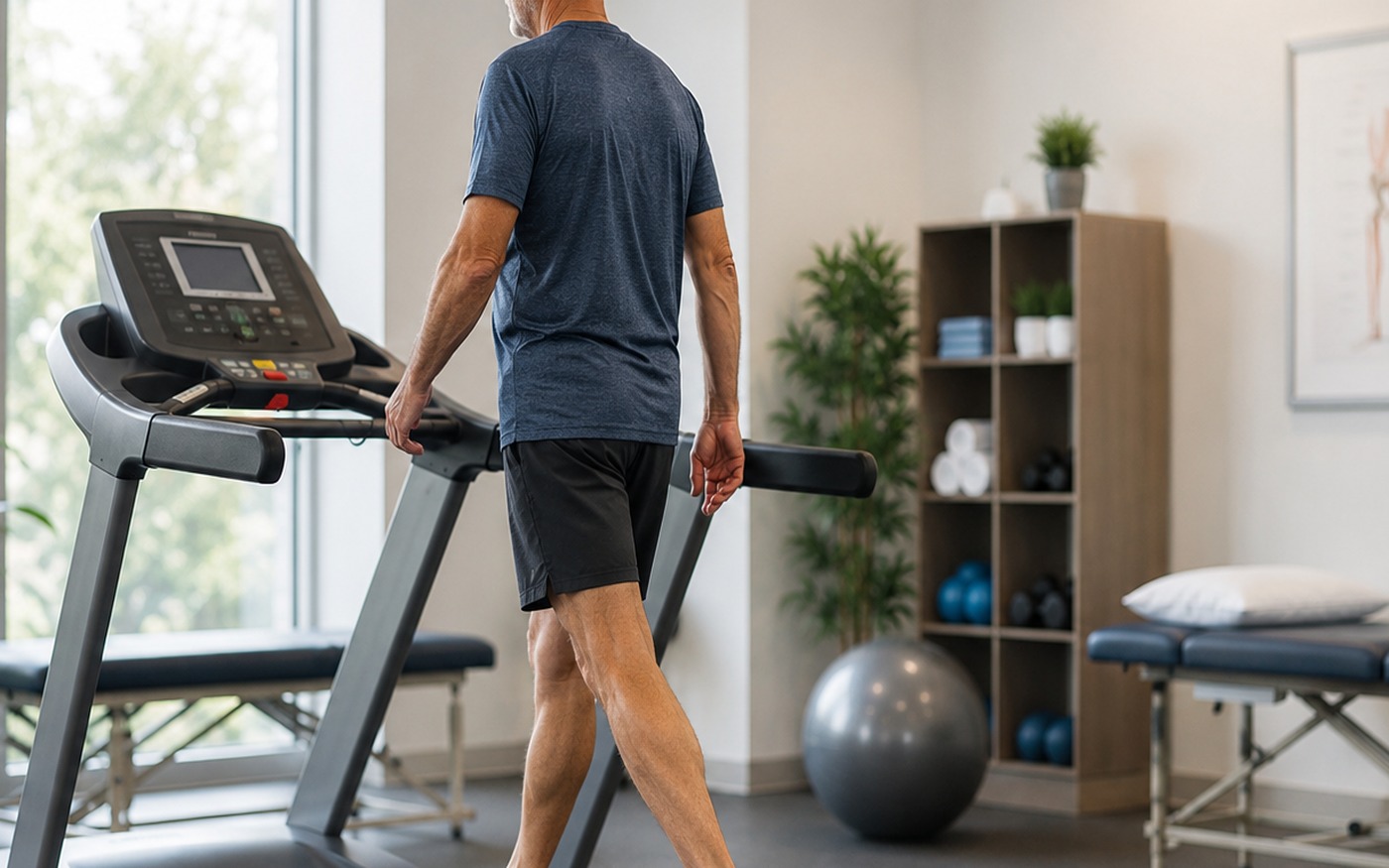
Progress should be interpreted alongside walking, prescribed exercises, swelling and daily function. A longer session is not necessarily a better session if it leaves the rest of the program harder to complete. Ask your therapist how cycling fits into the total daily workload, including the activities that do not appear on an exercise log.
Get on and off safely before thinking about revolutions
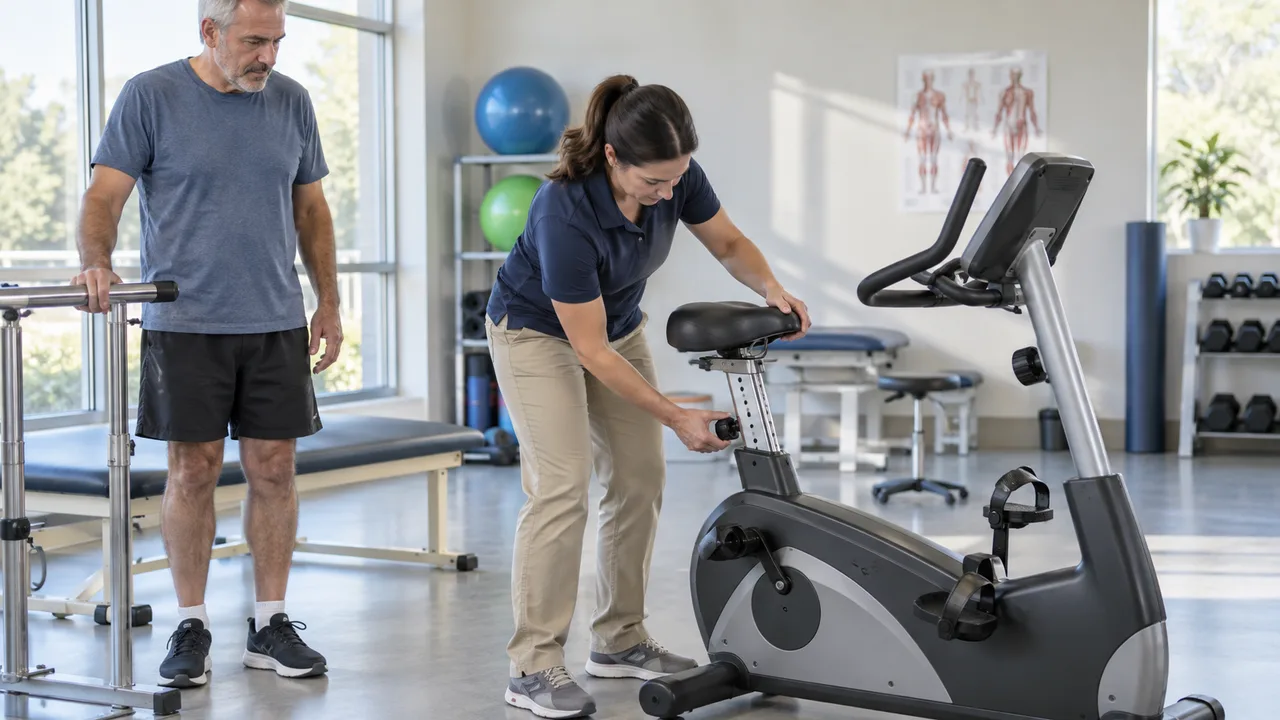
Mounting requires its own plan. The machine should be stable, the route to it clear and any needed assistance available. Do not climb over a high frame or twist awkwardly because you are eager to start pedaling. A therapist can help decide whether a different machine, seat arrangement or access method is more appropriate.
Check how you will stop and leave the bike before beginning. If you use a walking aid, ask where it should be placed so it can be reached safely without creating a trip hazard. Home arrangements may differ from a clinic with staff nearby. Reproduce the safe setup, not merely the resistance number shown on the display.
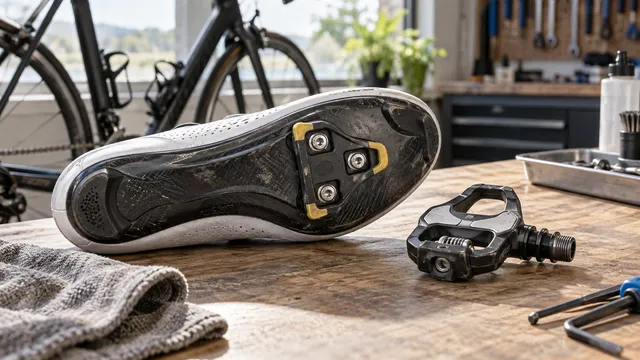
Wear suitable footwear and follow the instructions for any pedal straps or foot supports. Do not introduce a difficult clipping mechanism as an extra challenge during early rehabilitation. The priority is a secure, manageable task within your plan. Equipment that complicates a safe exit should be reviewed before more time is spent using it.
Do not force the pedal over the top
The amount of knee movement required depends on the machine and your position. Your therapist may use an appropriate movement progression, but you should not improvise one by forcing the pedal through a difficult point. Momentum, an assisting hand or a hard push from the other leg can turn a movement exercise into an uncontrolled stretch.
If a full revolution is not comfortable within the permitted plan, tell your therapist rather than treating it as a test you must pass that day. The setup may need review, or the current task may be different from continuous cycling. A video showing someone else's first revolution does not establish what your knee should be doing.
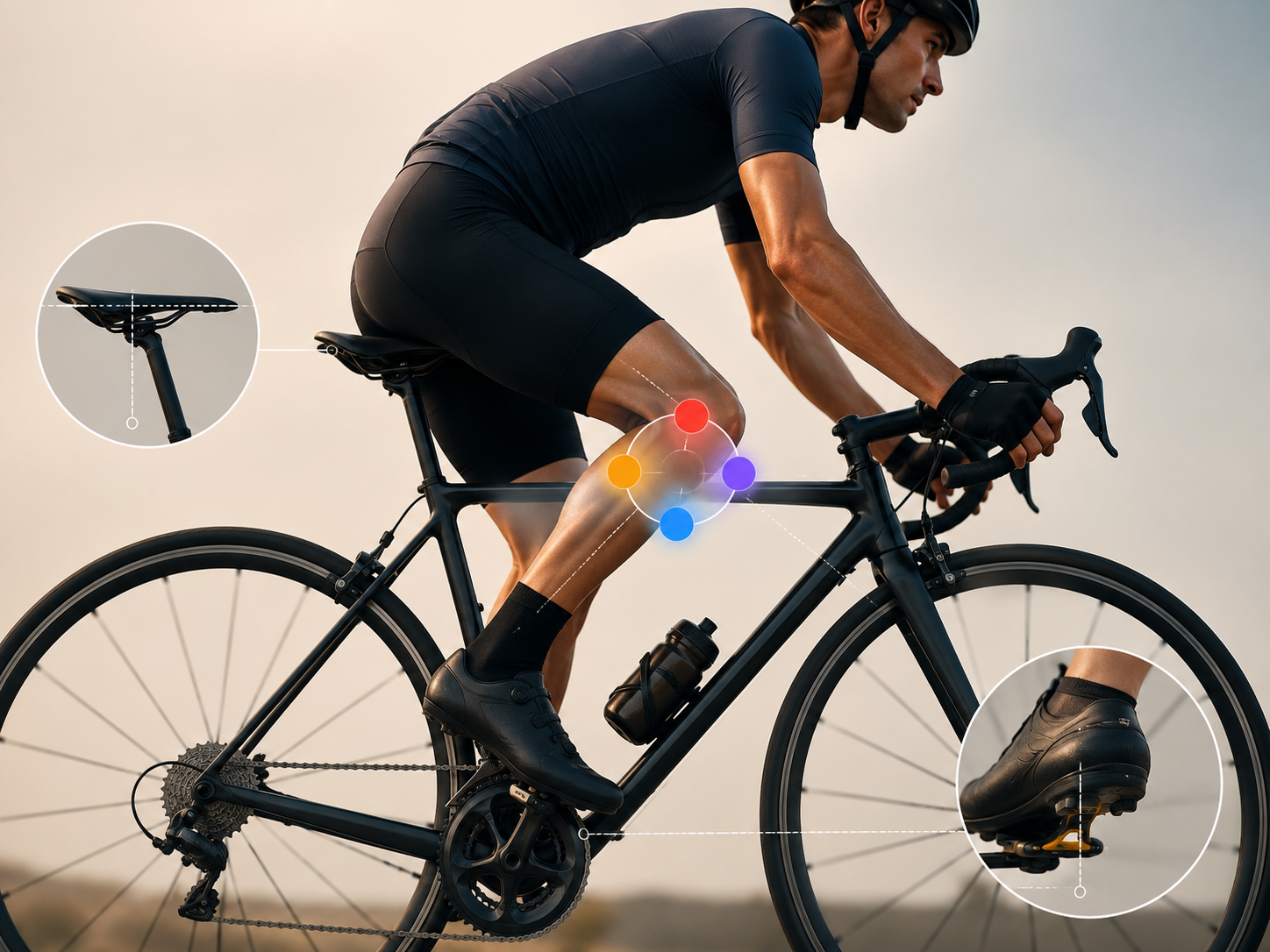
Do not lower the seat simply because it resembles your old riding position. Nor should you raise it so far that you rock or struggle to reach the pedal. Ask the professional supervising your recovery to set the relationship for your current needs. The correct adjustment is an individualized decision, not a universal number copied from an online chart.
Separate movement, duration and resistance
Once the permitted movement is manageable, the next question may concern how long to continue or whether resistance should change. These are separate demands. Follow the agreed progression and avoid increasing all of them together. A smooth short session can provide better information than a longer effort whose difficult ending obscures what was initially working.
Machine settings are not standardized doses. A low number on one exercise bike can feel different from the same number elsewhere. Tell your therapist if you change machines, including moving from clinic equipment to a home trainer. Ask how to identify a comparable task rather than assuming the display alone makes the sessions equivalent.
Keep a short note of the session and your response. Include relevant changes in swelling, comfort and ordinary movement, using the monitoring instructions from your care team. This record should support their decisions, not become a self-issued license to progress. If the response differs from what you were told to expect, contact the team rather than guessing.
| Part of the task | Question to ask | Avoid assuming |
|---|---|---|
| Getting on and off | What access method and assistance should I use? | Being able to pedal means mounting is safe |
| Movement | What range and pedal motion are appropriate now? | A full revolution must happen by a fixed date |
| Duration | How does this fit with the rest of today's rehabilitation? | More minutes always produce faster recovery |
| Resistance | When and how should the effort change? | Settings transfer between machines |
| Later response | Which changes should make me contact you? | Every increase in pain is normal adaptation |
Upright and recumbent bikes need individual trials
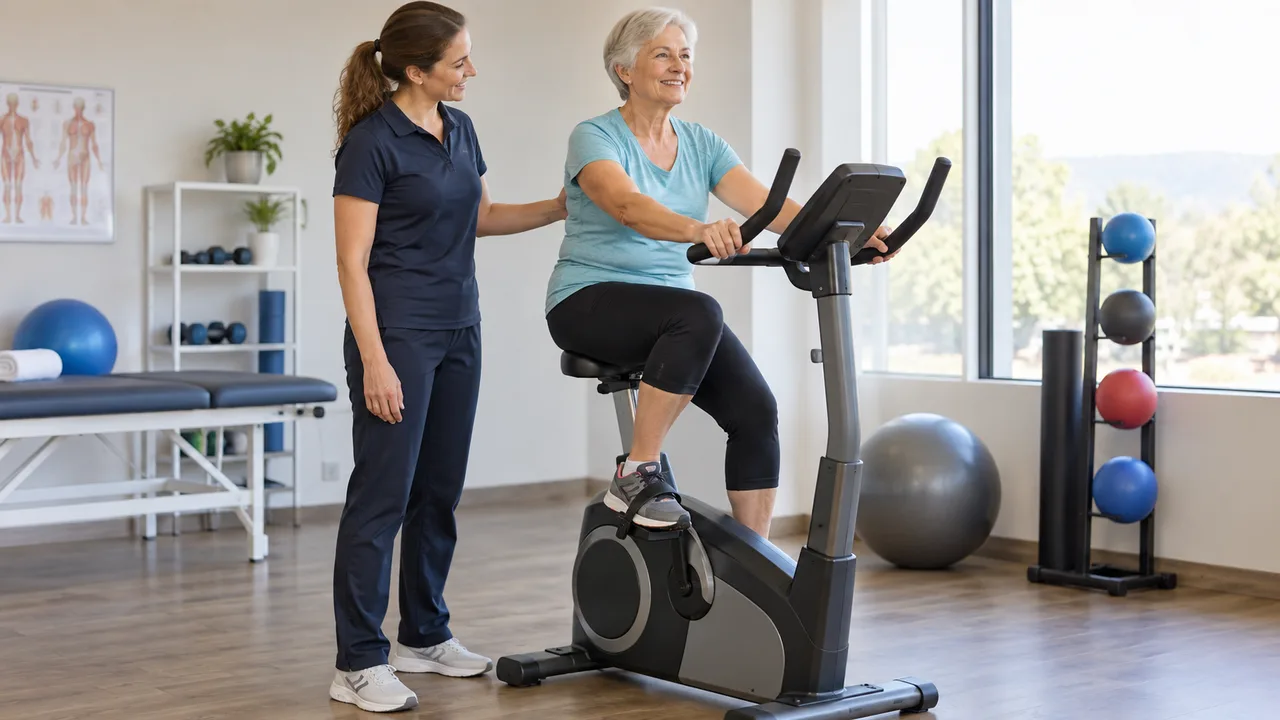
A recumbent seat may provide useful support, but some designs still have awkward access or limited adjustment. An upright machine may be familiar but require a different mounting sequence. The category name cannot decide which is better for your current recovery. If possible, try the relevant machine with your therapist before buying it for home use.
Our upright and recumbent bike comparison covers general equipment differences. After surgery, those considerations sit underneath your rehabilitation requirements. Ask whether the machine can provide the position and movement your team wants, whether you can use it safely at home and whether another option would better meet the immediate goal.
A compact pedal exerciser is also not automatically equivalent to a full stationary bike. Chair stability, foot position and the tendency of the device to move can change the task. Do not buy solely because it takes less space. Show the intended equipment to your therapist and ask whether it can be used safely within your plan.
Outdoor cycling requires a separate readiness discussion
A stationary bike stays upright and does not require an emergency stop. Outdoors, you must mount, start, steer, brake, look around and respond to unexpected events. You may need to put a foot down quickly or handle an uneven surface. Those demands explain why indoor pedaling alone cannot establish readiness for the road.
Ask your surgical team specifically about outdoor riding, not simply whether cycling is allowed. Explain the bicycle, terrain and kind of route you have in mind. A quiet level path, a busy commute and a mountain-bike trail are substantially different activities. An answer about one should not be stretched to cover all three.
Medication effects, balance, confidence and the condition of the other leg can also matter. Be honest about any difficulty rather than focusing only on the operated knee. The aim is a safe, repeatable return, not a single successful outing that depends on unusually favorable circumstances or a companion handling every difficult transition.
Plan the first approved outdoor outings around control
Once cleared, discuss a suitable environment for practicing the necessary skills. A familiar level location with safe stopping options may be more useful than immediately returning to an old route. Arrange appropriate company if advised, wear a helmet and ensure the bike is mechanically sound. Keep the first outing within the scope your team approved.
Include the tasks before and after riding. Lifting the bicycle into a car, carrying it down steps and walking it through a narrow gate all count. A route may be manageable while its transport arrangements are not. Solve those practical details in advance so that a successful ride does not end with an avoidable difficult lift or twist.
Do not make up for missed months by adding distance rapidly. The return should fit your current capacity and response, not your former training identity. Record what you did and discuss progression at follow-up. A deliberately modest start can provide useful information without making every outing a test of the operation's success.

An e-bike changes assistance, not clearance
Electric assistance may eventually help with an appropriate route, but it does not remove balance, braking or handling demands. The bike may also be heavier than your previous bicycle. Discuss the actual model and intended use with your care team rather than assuming the motor makes an earlier return safe.
Our e-bike guide explains gears, assistance and mounting considerations for suitable riders. After replacement, those equipment choices come after clinical clearance. Do not use maximum assistance to attempt a route beyond the agreed plan, and do not interpret the absence of hard pedaling as the absence of knee movement or fall risk.
Keep postoperative comfort products inside the care plan
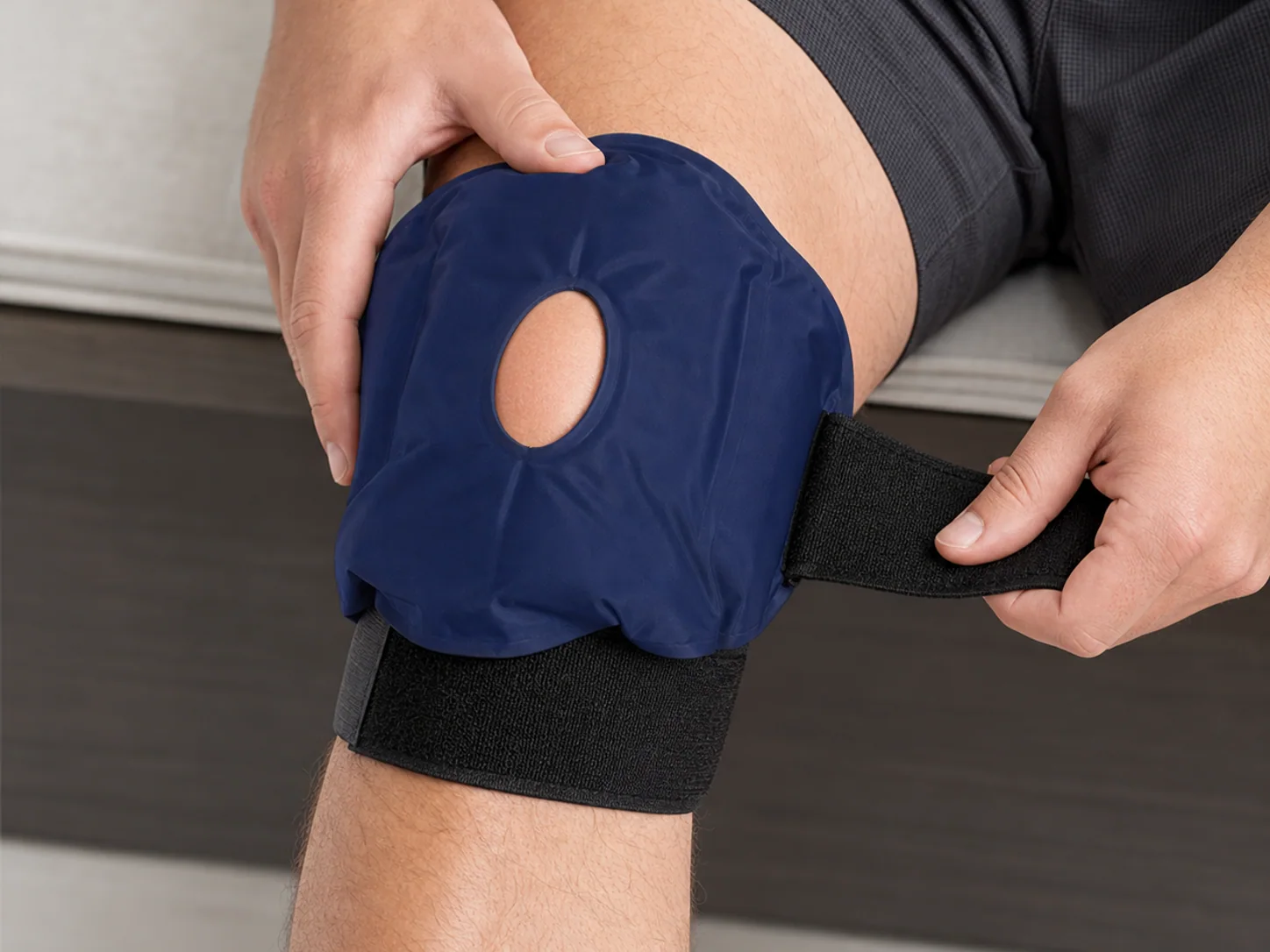
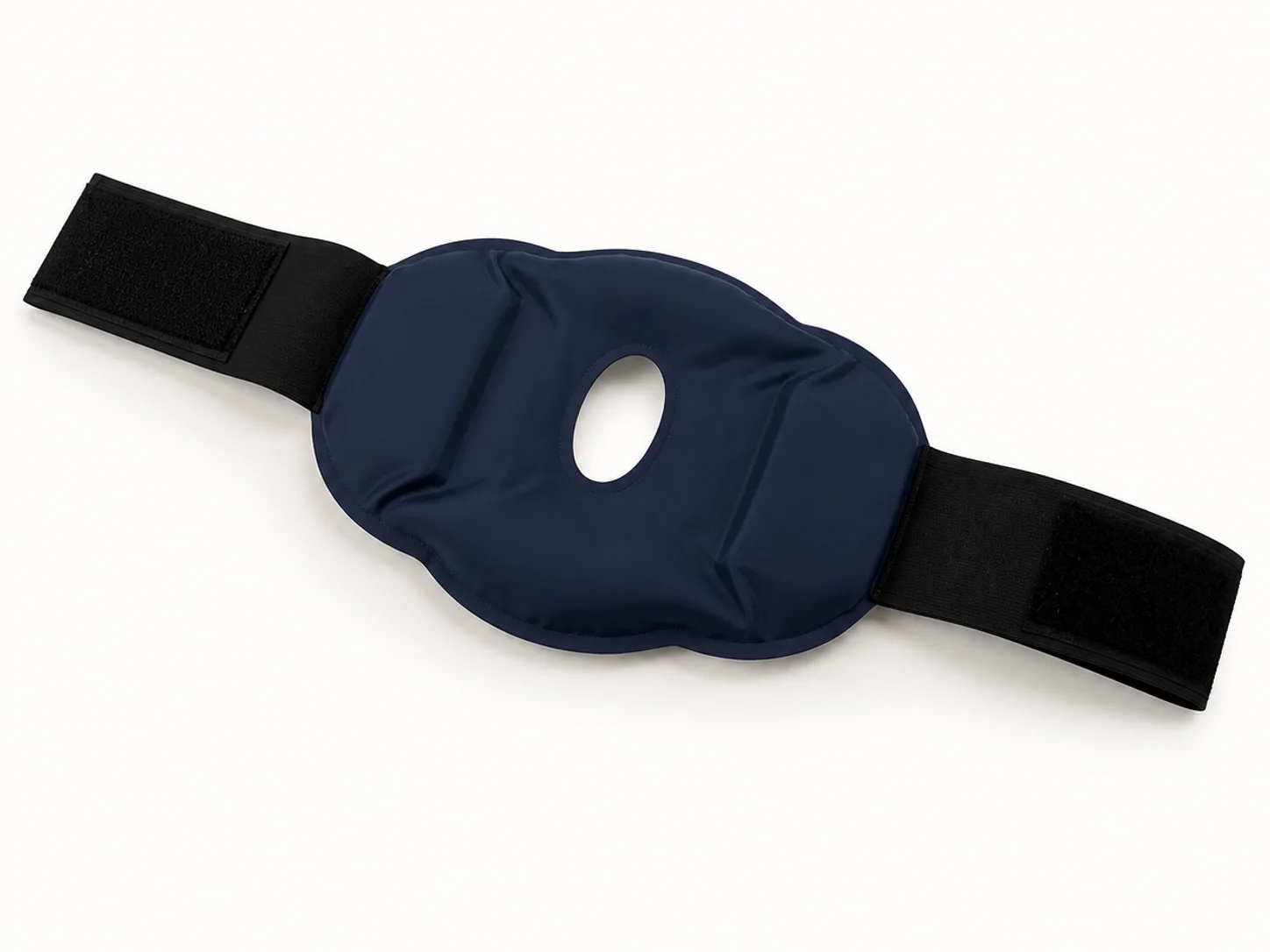
Follow the instructions you were given about wound care, swelling management and any cold therapy. If your team approves a reusable cold wrap, ask how it should be positioned, how the skin should be protected and how it fits around exercise. Do not replace a prescribed system or change the instructions because another product looks simpler.
A consumer knee massager is not a rehabilitation requirement. Do not add heat, vibration or pressure over a recently operated area without explicit approval. This guide therefore does not present a heated massager demonstration as part of postoperative care. Any product information shown is optional and cannot establish whether it is appropriate for your wound, sensation or recovery stage.
Know the warning signs and the contact plan
Keep your discharge contact details available. Increasing wound redness or drainage, fever, worsening pain or new calf pain and swelling need prompt medical contact according to your team's instructions. Some postoperative warmth or swelling can occur, but a change should be judged in context by the people responsible for your care, not dismissed through an online comparison.
Sudden shortness of breath or chest pain requires emergency help. Do not get on the exercise bike to see whether the symptoms settle. If you are uncertain about a non-emergency change, contact your care team before continuing the activity. Clear communication is more useful than repeatedly testing a symptom to make it easier to describe.
A return-to-cycling appointment checklist
Bring the details of your current machine, any setup measurements your therapist requested and a short session record. Ask what the next goal is, which variable may change and what response should trigger a call. If outdoor cycling is your aim, discuss the specific skills and circumstances that need review before that transition.
Keep the long-term goal personal. It may be comfortable neighborhood riding, family outings or a return to a familiar hobby. Recovery is not a competition against someone else's timeline. The most useful progression is one that your team can explain, you can perform safely and your daily function can support.
Keep the handover from clinic to home explicit
Before using a home bike independently, ask your therapist to explain which parts of the clinic session you should reproduce and which should not be copied without supervision. Write down the agreed setup, assistance needs and contact instructions. A photograph of the machine can help identify differences, but it cannot replace an assessment of how you use it.
Clarify what to do if the planned session is not manageable on a particular day. Do not compensate by forcing the movement, adding another session later or changing medication yourself. A clear handover reduces the pressure to improvise. It also gives you a useful way to report a problem: what was planned, what actually happened and how the knee and daily function responded afterward.
Frequently Asked Questions
When can I cycle after knee replacement?
Your surgical and rehabilitation team must decide. The timing depends on your operation, recovery, movement, symptoms and the type of cycling. A calendar date alone is not clearance.
Should I force a full revolution on an exercise bike?
No. Follow your therapist's instructions for setup and permitted movement. Do not use momentum, another person or a difficult resistance setting to force the knee through a restricted range.
Is an upright or recumbent bike better after surgery?
The useful choice depends on access, support, adjustment range and your rehabilitation plan. Try the actual machine with your therapist rather than choosing by category alone.
Does stationary cycling mean I am ready to ride outdoors?
No. Outdoor riding also requires safe mounting, balance, steering, braking, stopping and responses to unexpected events. Those demands need separate review and clearance.
Can I use a knee massager after replacement?
Do not add heat, vibration or pressure around a recently operated knee without explicit approval from your surgical team. A consumer device is not a postoperative rehabilitation treatment.
What symptoms need urgent advice after surgery?
Follow your discharge instructions. New calf pain or swelling, increasing wound redness or drainage, fever or worsening pain needs prompt medical contact. Sudden breathlessness or chest pain requires emergency help.