The seat position changes the experience, not the basic requirement to pedal
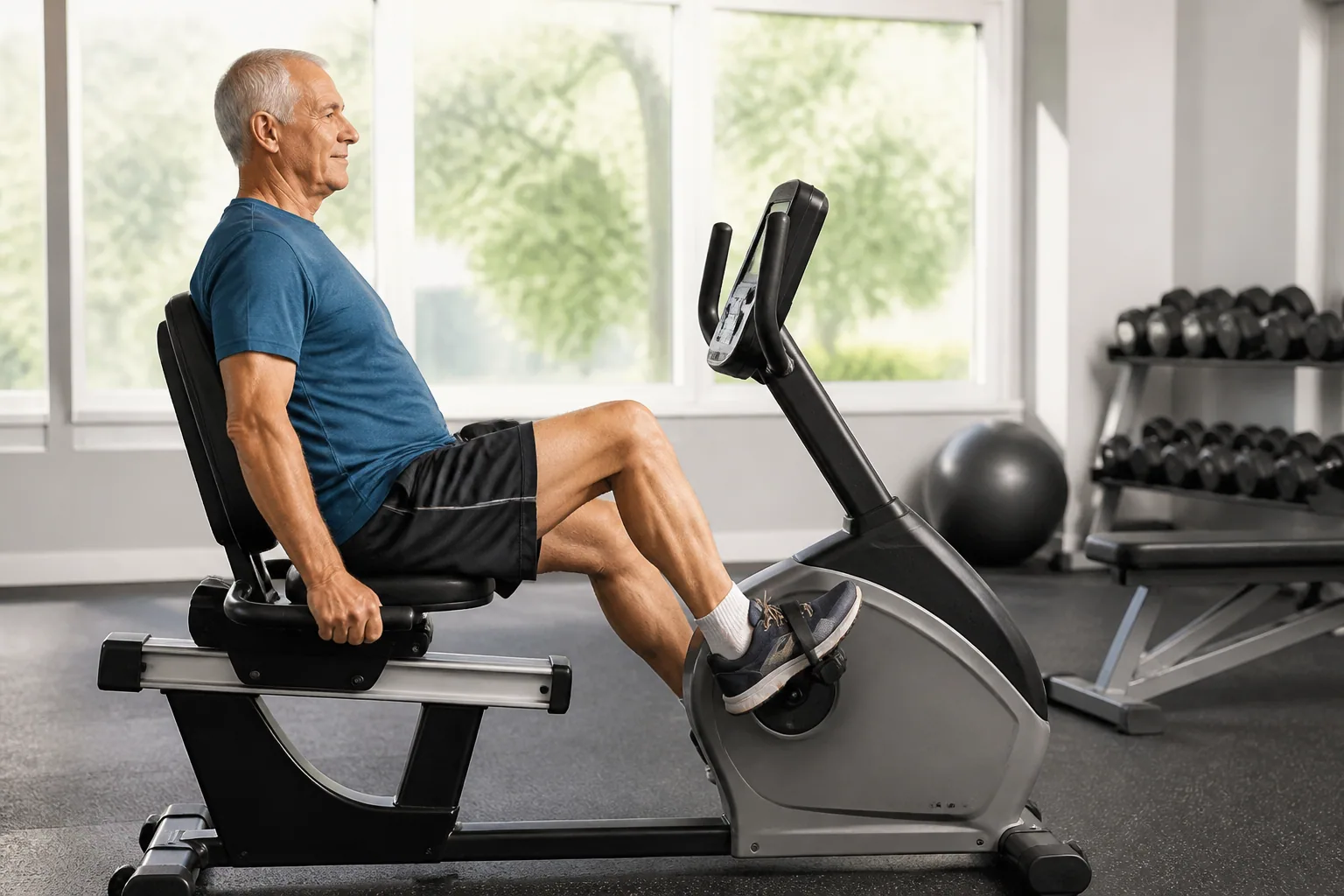
On a recumbent exercise bike, you sit against a backrest with the pedals in front of you. On an upright model, the saddle is positioned higher relative to the pedals, closer to a conventional bicycle arrangement. Both ask the knees to bend and straighten repeatedly. Neither removes the need for suitable range of motion and a manageable workload.
These categories contain very different machines. One recumbent bike may have a low open entry and a seat that slides easily; another may have a bulky console or difficult adjustment lever. An upright exercise bike may offer an easy neutral position, while a spin-style model may feel more forward-leaning. Compare actual equipment rather than a category photograph.
This guide helps you choose a format. If you already own a bicycle and need to troubleshoot saddle position or cleats, use the more specific cycling knee pain and bike-fit guide. Repeating those detailed outdoor-fitting instructions would miss the purchasing and accessibility questions here.
What exercise research can tell you
Stationary cycling has been studied as one exercise option for people with knee osteoarthritis. Trials have measured pain, walking, chair-rise performance, fitness, and quality of life. Those outcomes are more meaningful than simply labeling a bike low impact, but results vary across participants, programme design, and follow-up time.
A trial in older adults compared lower- and higher-intensity cycling programmes over ten weeks. Both groups improved on several outcomes, without a clear difference between the intensities. That finding does not mean everyone should copy the study session length. It does suggest that pushing harder is not automatically necessary to make exercise worthwhile.
A community group-cycling trial and a later study comparing strength training, cycling, and usual care also examined functional outcomes. The later trial did not find a statistically significant advantage in its primary quality-of-life outcome at one year. A balanced guide should acknowledge that a bike is not a guaranteed solution, even when exercise is part of recommended care.
These studies do not establish one universal winner between every recumbent and upright model. A decision about your bike must also consider whether you can enter it, fit it, control it, and use it consistently. An impressive console does not compensate for an uncomfortable seat or an inaccessible pedal.
When a recumbent format may be practical
A backrest and broad seat may feel reassuring if a narrow saddle is uncomfortable or maintaining a forward cycling posture is difficult. Side handles can provide a place to rest the hands. Some models also allow entry without lifting the leg across a high central frame. These are practical accessibility features, not proof that the knee receives no stress.
Check how far the seat moves and how the adjustment locks. A seat that is too close can make the upper part of the pedal circle feel cramped; too far away may encourage reaching and pelvic movement. You should not have to slide forward repeatedly or pull on the handles to keep contact with the pedals.
Back support can also be less helpful if the seat shape does not suit you. Notice whether you feel pressure at the lower back, slide on the cushion, or struggle to reach the console. A showroom trial should include several easy revolutions and the stop-and-exit sequence. Comfort while sitting still is only the first check.
When an upright format may suit you
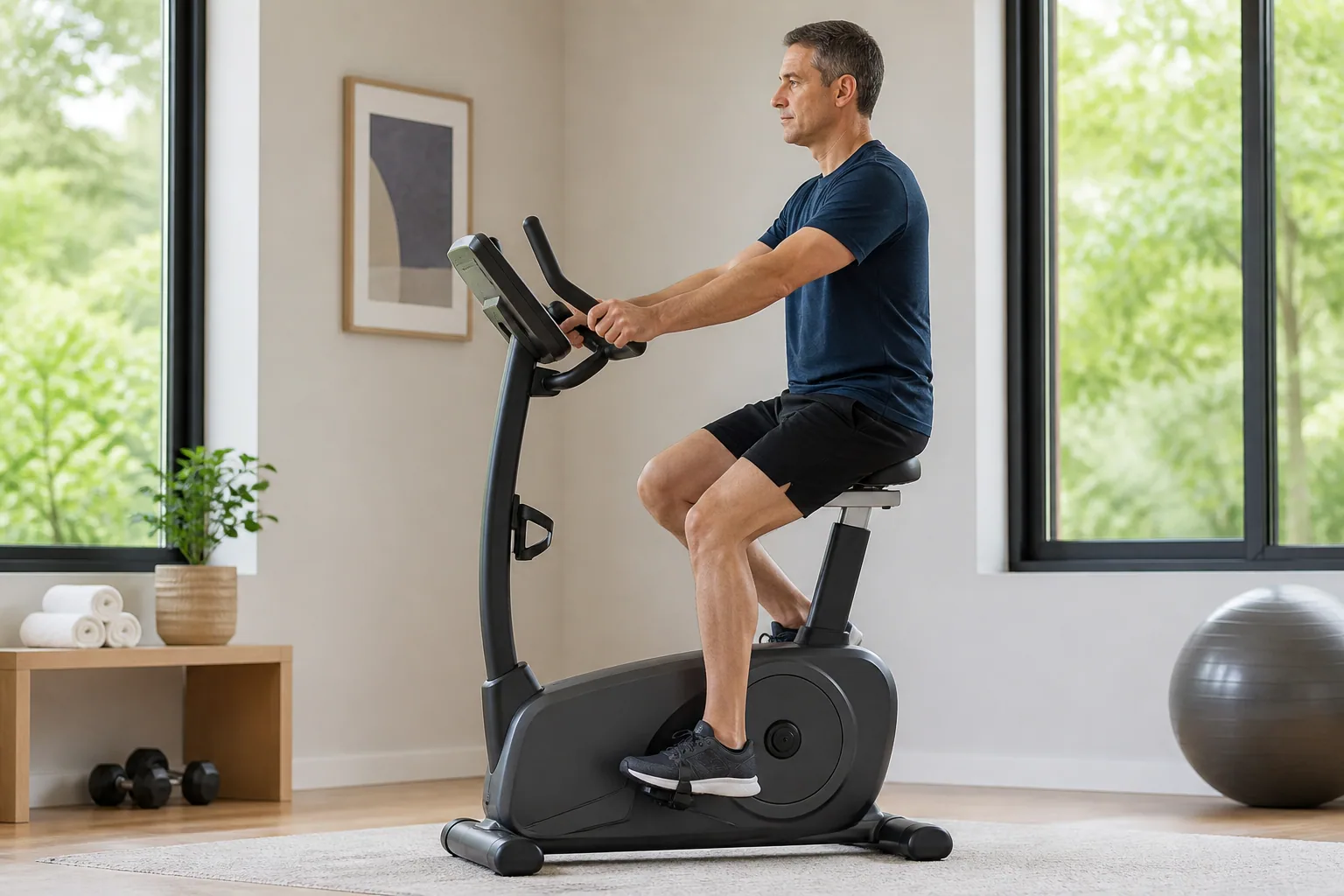
An upright stationary bike can feel familiar if you already enjoy ordinary cycling. Some models take up less floor space and offer a riding position that transfers more naturally to your outdoor routine. A compact footprint may make the difference between equipment you use and equipment stored in a room you rarely enter.
Look at saddle height, fore-and-aft adjustment, handlebar reach, and how you step onto the machine. A seat that adjusts only vertically may not fit everyone equally well. If the handlebars are too far away, you may lean or brace your upper body in a way that makes a gentle ride unnecessarily tiring.
Stay seated during an initial comparison. Standing climbs and hard intervals introduce another set of demands and do not help you judge basic comfort. If the bike uses a fixed flywheel, learn its stopping mechanism before riding. Do not remove your feet or try to dismount while the pedals are still moving.
Compare the features that change daily use
| Decision point | Recumbent format | Upright format |
|---|---|---|
| Seat support | Usually broad seat and backrest | Usually saddle without backrest |
| Pedal reach | Seat-to-pedal distance is central | Saddle height and position are central |
| Entry and exit | Some offer a low open step-through | Check frame height and mounting support |
| Home space | Often a longer floor footprint | Often more compact, model dependent |
| Upper-body position | Back supported, side grips common | Depends on saddle and handlebar reach |
| Knee comfort | Must test fit, range and resistance | Must test fit, range and resistance |
Check the whole pedal circle
Do not judge the setup from one photograph of the leg at its longest reach. The knee also has to tolerate the closest part of the pedal circle. Turn the pedals slowly at easy resistance and notice whether either end feels forced. A setup that looks comfortable at the bottom may still require more bend than you currently have at the top.
Watch for rocking of the pelvis, repeatedly lifting a hip, pointing the toes to reach, or pulling the body forward on each turn. These are reasons to review fit, not to brace harder. If your seat or pedals cannot adjust enough to produce a comfortable circle, the particular machine may not suit you.
After surgery, a therapist may use limited rocking or another progression before full revolutions. That is an individualized rehabilitation decision. Do not force the knee through a complete turn because a general exercise video describes cycling as gentle. The bike's geometry does not override a movement restriction.
Resistance and duration can outweigh the format
A supported seat does not make heavy resistance easy on a sensitive knee. If each pedal stroke feels like pushing a large load, the exercise may be demanding even at a slow pace. Lower the resistance during a first trial so you can judge movement rather than your ability to overcome the machine.
Conversely, an easy resistance setting can still become too much when the session is much longer than usual. A new bike often encourages longer rides because the screen, scenery, or class is engaging. Track actual time and effort instead of assuming low impact means unlimited tolerance.
Change one main variable at a time. If you extend the ride, keep resistance and other leg training relatively stable. If you change the seat, first repeat a short easy ride before adding intensity. The following morning is part of the comparison, especially if symptoms tend to appear after rather than during activity.
A practical shop or gym trial
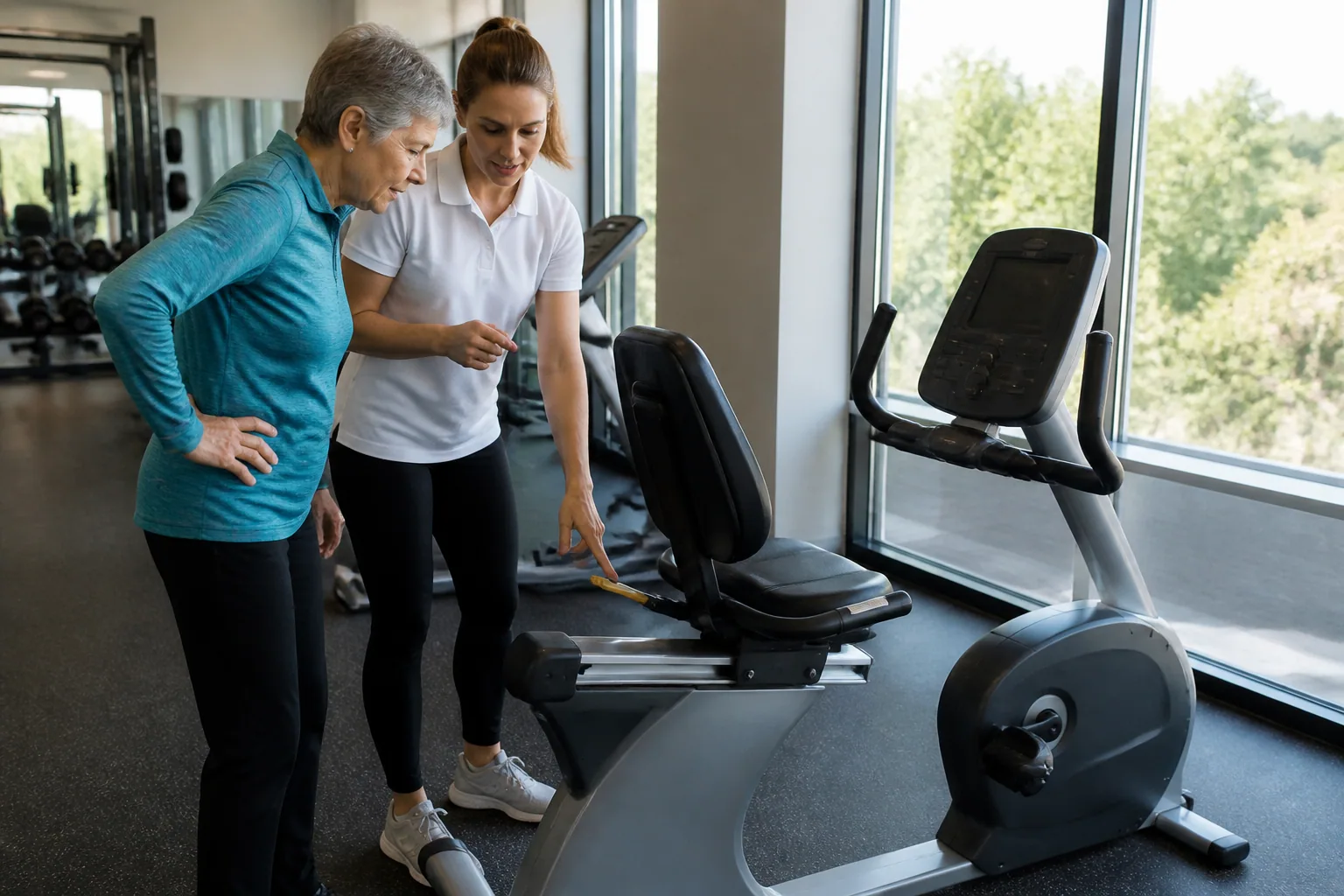
Arrive in the shoes and clothing you would use for exercise. Ask staff to demonstrate the seat lock, pedal straps, resistance controls, emergency stop, and entry path. Make sure the bike is stable before climbing on. If you need assistance, include that in the trial rather than pretending the transfer will be easier at home.
Try an easy session on each format on separate occasions if fatigue would distort a same-day comparison. Note the model and settings. Ask whether you could repeat the same setup without help, see the display without straining, and reach water without twisting awkwardly. These ordinary details influence consistency more than a long list of entertainment features.
Finish by stopping fully and getting off. If the exit is awkward when you are fresh, it may be worse after a tiring session. Avoid judging solely by the first minute of comfort. Include later knee response, confidence, and whether the equipment fits your room without creating a trip hazard.
| During the trial | Record | Reason to reconsider |
|---|---|---|
| Getting seated | Support needed and step-over height | Unsteady or difficult transfer |
| Easy pedaling | Seat setting and comfortable range | Pinching, reaching or hip rocking |
| Stopping | Control location and pedal behavior | Controls hard to reach or understand |
| Later that day and next morning | Walking, swelling and ordinary movement | Meaningful symptom increase |
What about mini pedal exercisers?
A small pedal unit used with an ordinary chair is a third arrangement, not a miniature version of every recumbent bike. Chair movement, unit slipping, desk clearance, and seat height become separate variables. A dining chair and a rolling office chair produce very different starting conditions even with the same pedal unit.
If that is the equipment you are considering, use the pedal-exerciser setup guide. Its portability may be useful, but it should not be selected solely because a full-size bike seems intimidating. Stability and a comfortable pedal path remain essential.
Make the bike part of a broader routine
Pedaling can contribute aerobic activity, but it does not automatically address every strength, balance, or everyday movement goal. Someone who wants to manage stairs may need other work selected for that task. Our low-impact cardio comparison helps place cycling alongside walking and water-based options without making one method mandatory.
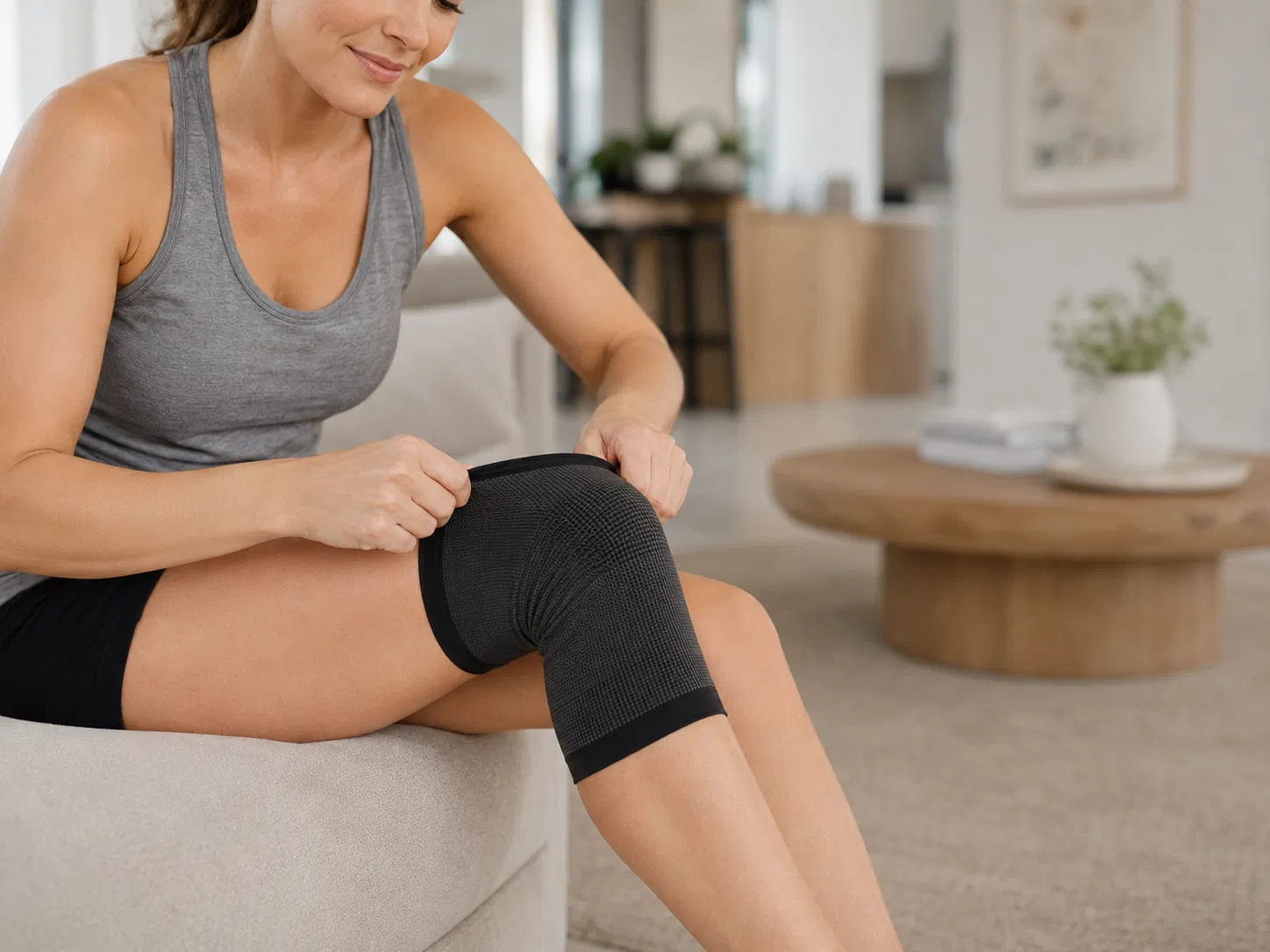
A flexible sleeve may provide a supported feel if you already find it comfortable, but it does not change the bike's geometry. Check for fabric bunching behind the knee and follow appropriate sizing. The sleeve sizing guide is relevant only after the underlying setup works for you.
A short showroom trial can answer practical questions
Test entry, adjustment, pedaling, stopping, and exit as separate steps. A bike can feel comfortable once someone else has helped you into it yet be difficult to use independently at home. Ask to operate the seat lever and resistance controls yourself. If reaching a control changes your balance or forces a painful position, include that in the comparison.
Use a light, manageable workload while learning the machine. A sales demonstration at high resistance is not necessary to judge basic fit. Notice the nearest point of the pedal circle as well as the farthest reach. Can you bend comfortably without feeling crowded, then extend without rocking the pelvis or stretching for the pedal?
Check whether the seat adjustment remains secure and whether the display is readable from your actual position. An attractive screen may sit too far away on a recumbent model, while handlebars may encourage an uncomfortable reach on an upright one. These are usability issues, not minor luxuries, when they determine whether you can complete a relaxed session.
Plan the space around the bike, not just beneath it
The machine's footprint is only part of the required space. Leave room to approach the entry, adjust the seat, get off without twisting around furniture, and reach nearby support if appropriate. Follow the manufacturer's clearance and installation guidance. A tight corner can undermine the accessibility advantage that attracted you to a recumbent bike.
Consider who will move, maintain, and adjust the equipment. A heavy machine may be difficult to reposition on carpet, and shared use may require resetting the seat each time. Record a suitable setting if the manufacturer provides a reliable reference. Do not assume that the previous user's position is close enough, even when you are similar heights.
Finally, compare the practical alternatives before buying. A supervised gym trial or a suitable community programme may let you establish what works before making a large purchase. If you already know a particular machine is comfortable, ask whether the home model has the same adjustment range. A similar name or appearance does not guarantee an identical riding position.
When to Get Medical Help
Stop riding for sharp persistent pain, locking, giving way, or new swelling. A hot red knee with fever, major injury, or inability to bear weight needs urgent advice. Seek a review if easy pedaling remains painful despite reasonable fit changes, and follow your treating team's postoperative plan.
Equipment choice is separate from an activity plan. See cycling with knee osteoarthritis for duration and resistance decisions, or cycling after knee replacement for a care-team-led transition.
The better bike is the one you can fit and use comfortably
Choose the recumbent format when its support and access genuinely help you; choose an upright model when its fit and familiar position work better. In either case, start with a controlled pedal circle and manageable dose. A real trial with your own body is more informative than declaring one category universally knee friendly.
Frequently Asked Questions
Is a recumbent bike better for arthritic knees?
It may be more comfortable if you benefit from back support or easier access, but the format alone does not determine knee load or tolerance. Seat distance, available bend, resistance, and exercise dose still matter.
Can an upright exercise bike be knee friendly?
Yes, when it fits your proportions and you can pedal smoothly at an appropriate workload. A comfortable saddle height and supported riding position matter more than assuming every upright bike is demanding.
Why does a recumbent bike hurt the front of my knee?
Possible contributors include sitting too close, excessive resistance, or a knee problem unrelated to equipment. Reduce the provoking activity and review fit. Pain location alone cannot identify the cause.
Should my leg be completely straight at the farthest pedal?
Avoid reaching by rocking the pelvis or snapping the knee straight. Follow the machine guidance and aim for a comfortable controlled pedal circle. Individual rehabilitation plans may specify a different setup.
Is a spin bike the same as an upright exercise bike?
Not necessarily. Spin-style bikes may have different flywheel behavior, adjustment systems, and stopping procedures. Learn the actual controls and do not assume the pedals stop as soon as you stop pushing.
Which bike is easier to get onto?
A low step-through recumbent model may be easier, but designs vary. Test the entry path, seat stability, hand supports, and exit as carefully as the pedaling position.
How long should my first ride last?
Use a short, easy familiarization trial that lets you assess fit and later symptoms. There is no universal starting duration for every painful knee. Build from your own tolerance and clinical advice.
Can I cycle after knee replacement?
Your surgical or rehabilitation team should decide when, how, and with what range you start. Do not force a full pedal revolution before you have the required comfortable motion and permission.
Will a knee sleeve fix an uncomfortable bike setup?
No. A sleeve may provide a supported feel, but it does not correct seat distance, reach, or resistance. Resolve the equipment problem first and avoid tight fabric bunching behind the knee.