This guide assumes that cold has already been selected as an appropriate comfort measure. If you are still choosing between temperature options, start with the heat or ice for knee pain guide. A machine also cannot explain why a knee is puffy. Recurring swelling after training belongs in the separate guide to knee swelling after exercise, particularly when it keeps returning or affects motion.
Terms such as knee ice machine, cold therapy system, and cryotherapy machine are used loosely in shops and clinics. Two products with similar names may deliver cold in different ways, and only one may add compression. Read the mechanism and instructions rather than relying on the label.
What Is a Cold Therapy Machine for the Knee?
The familiar version is a cooler-like reservoir filled with water and ice or frozen bottles. A small pump sends chilled water through an insulated hose into channels inside a knee pad, then returns it to the reservoir. The pad does not normally place loose ice directly against the body. Its job is to create a broad, repeatable cooling surface while the reservoir stays beside the chair or bed.
Other systems use a gravity-fed cuff, electronically chill the circulating fluid, or combine cooling with air compression. A gel wrap has no pump, but it remains the useful baseline for comparison because it is inexpensive, portable, and supported by much of the same overall cold-therapy evidence. A machine is a delivery tool, not a diagnosis or a treatment for the underlying cause of pain.
Types of Knee Ice Machines Compared

| System | Cooling method | Practical advantage | Tradeoff to check |
|---|---|---|---|
| Ice-water pump | Circulates water chilled by ice or frozen bottles | Broad pad and fewer freezer trips during a session | Ice supply, condensation, noise, hose, and cleaning |
| Programmable pump | Circulating water with cycle or temperature controls | More repeatable settings when prescribed | A timer does not make unattended use safe |
| Iceless electronic | Electrically chills recirculating fluid | No ice refills and steadier operation | Higher cost, power dependence, heat, and fan noise |
| Cold-compression unit | Circulating cold plus static or intermittent pressure | Combines two prescribed functions in one pad | Pressure fit, circulation risks, and added expense |
| Gravity-fed cuff | Elevated cooler fills a shaped cuff | Simple design with no powered pump | Height and refill technique affect the result |
| Reusable knee ice pack wrap | Freezer-cooled gel body held in place by fastening straps | Portable, pump-free, and simple to prepare | Warms sooner and must be re-chilled between uses |
Is an Ice Machine Better Than an Ice Pack?
The honest answer is that a pump is often more convenient, but clinical superiority is not established. A 2025 Cochrane review of 22 trials involving 1,839 people after total knee replacement found that cold therapy may slightly improve early pain, blood loss, range of motion, and short-term swelling compared with placebo or no cold. The certainty was low or very low, and the reviewers noted that the potential gains may be too small to justify routine use in every case.
A 2024 meta-analysis of 31 randomized trials reached a similarly cautious conclusion. Cold had some early benefits compared with no cold, yet continuous cold-flow devices produced pain, opioid use, blood loss, motion, swelling, and hospital-stay results comparable with cold packs. A 2023 meta-analysis of seven trials and 519 patients also found no meaningful advantage for continuous over traditional cryotherapy while noting the extra equipment and resources.
Individual studies do not all point in one direction. A small 40-person trial favored compressive cryotherapy on some outcomes, while another trial of 72 replacements found many outcomes were not significantly different. Earlier knee replacement and arthroscopy studies also found broadly comparable results between devices and simpler icing. This allows for preference and logistics, but not a promise that a premium machine speeds healing.
Cold Therapy Machine vs a Reusable Knee Ice Pack Wrap
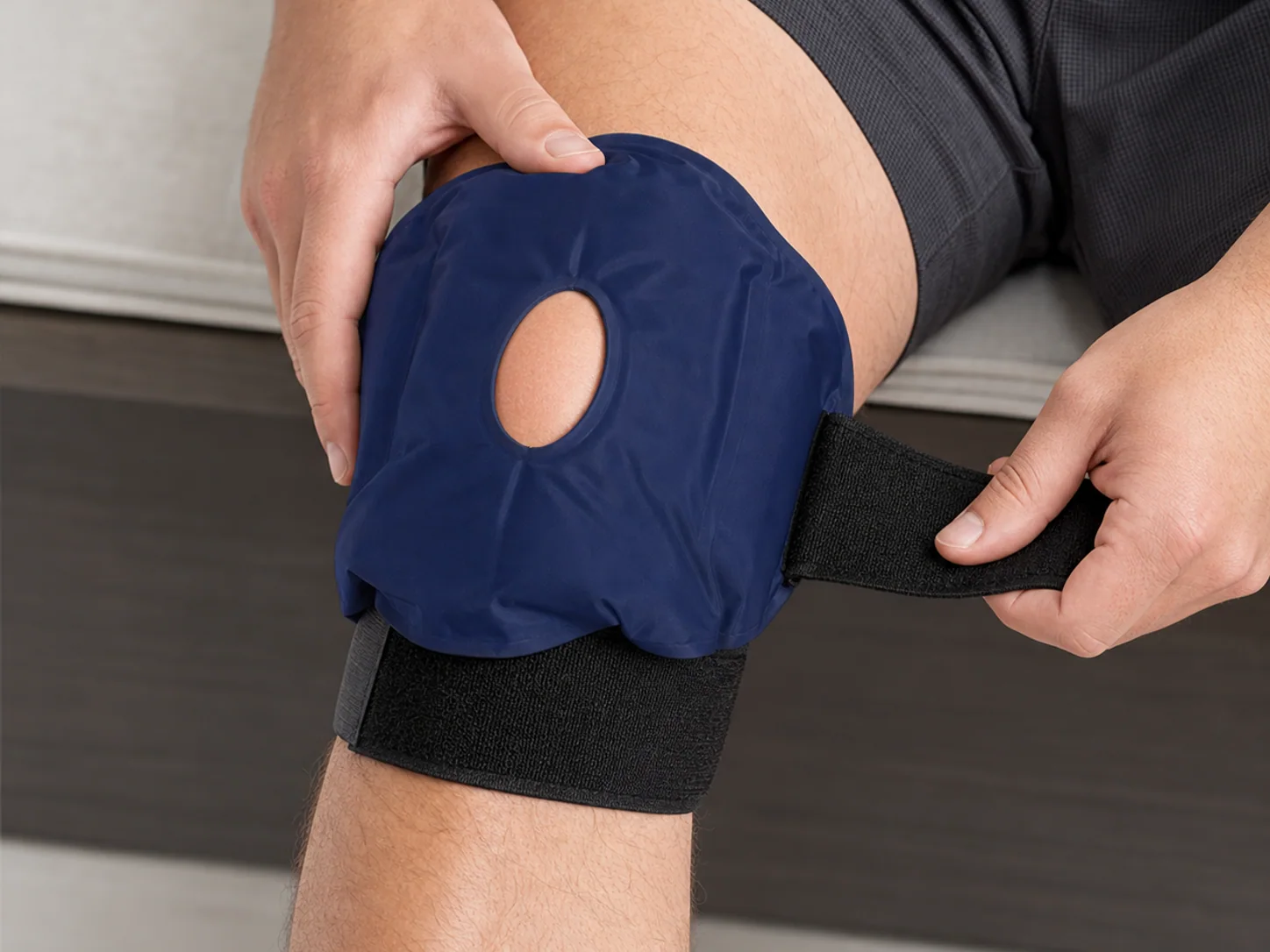
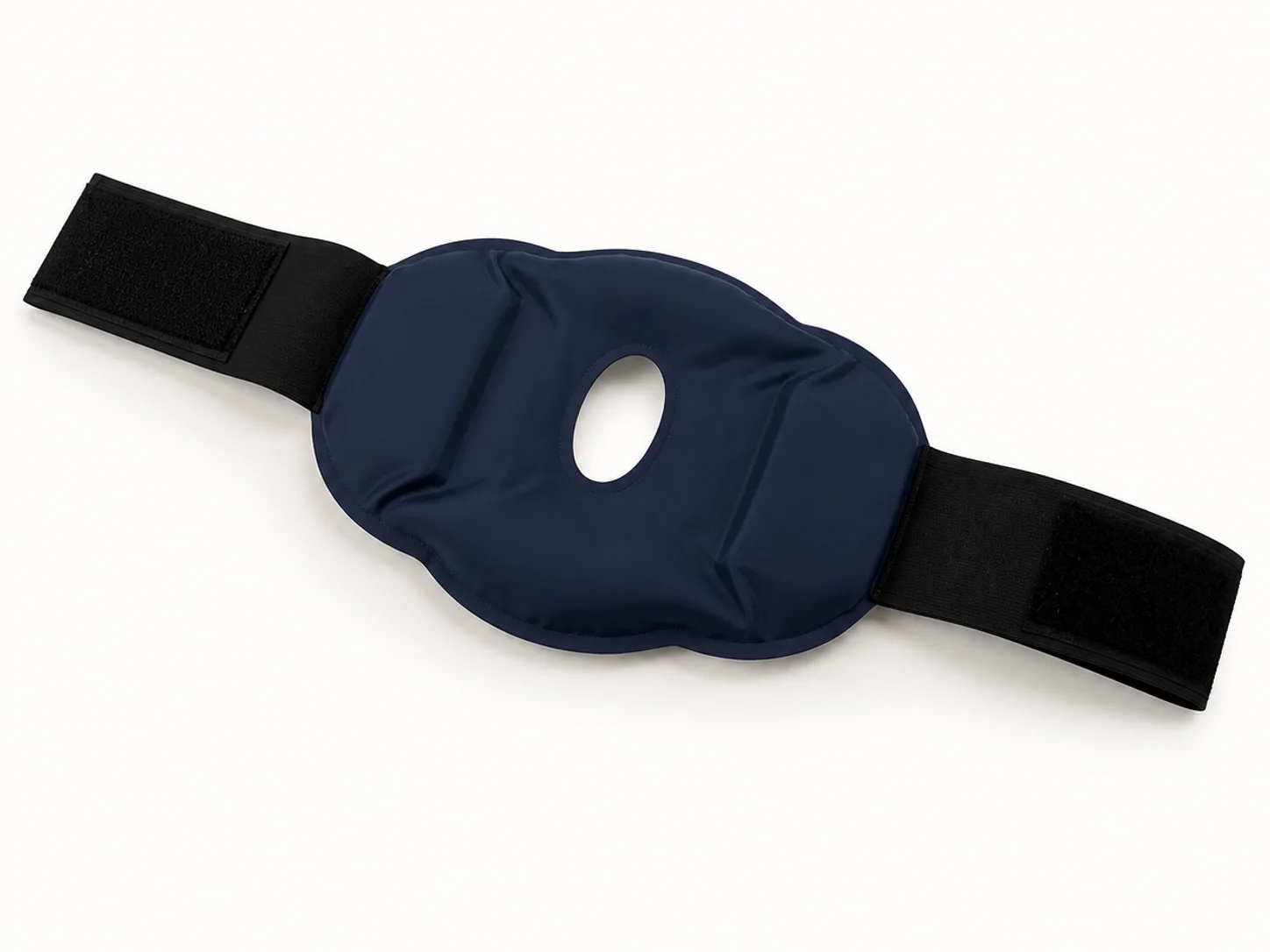
A reusable knee ice pack wrap is not a small ice machine. It has no water reservoir, powered pump, hose, or electronic temperature control. The gel-filled wrap is cooled before use and held around the knee with fastening straps. That simpler design can suit a brief home or post-activity cooling routine when cold is appropriate, while a circulating system may make repeated or longer clinician-directed sessions easier to organize.
| Decision point | Reusable knee ice pack wrap | Cold therapy machine |
|---|---|---|
| Cooling source | Gel body chilled before use | Ice water or an electronic chiller circulates through a pad |
| Setup | Prepare, position, and fasten the wrap | Fill or power the unit, connect the hose, position the pad, and check controls |
| Portability | Compact to carry within its cold-storage window, but needs freezer access to reset | Reservoir, hose, pad, and power needs limit mobility |
| Cooling pattern | Gradually warms and then needs re-chilling | Can provide more repeatable circulation during a planned session |
| Upkeep | Inspect the fabric, seams, and gel body, then clean as directed | Drain, clean, dry, and inspect the reservoir, hose, connectors, and pad |
| Typical tradeoff | Lower complexity, but less sustained cooling | Greater convenience for repeated use, but more cost and equipment |
The FlexiKnee Reusable Knee Ice Pack Wrap belongs to the pump-free gel-wrap side of this comparison. It is designed for a simpler freezer-cooled routine, not circulating water, powered compression, or electronic temperature control. That distinction matters because the product should be judged on wrap coverage, fastening, freezer preparation, and skin comfort rather than machine features it does not have.
The fastening straps hold the wrap in place, but they should not be treated as prescribed medical compression. Whichever format you choose, use the exact preparation and application instructions, keep a suitable barrier between the cold source and skin when directed, and stop if the skin becomes painful, persistently numb, unusually pale, blotchy, or blistered.
What to Compare Before You Buy
1. A pad that matches the knee and the plan
Full-coverage marketing is not the same as useful contact. Check the pad dimensions, hose location, right-left orientation, fastening range, and whether the pad can sit where the treating team permits. After surgery, a bulky dressing may change the fit. Do not place a pad over an incision or alter a bandage simply to make a product fit. Ask whether a universal pad is acceptable or a knee-specific cuff is required.
2. Controls you can understand
Some units have only an on switch. Others allow temperature, cycle length, or compression to be adjusted. More controls are helpful only when the display is readable and the written protocol identifies which setting to use. Look for a clear manual, an automatic shutoff, and controls that do not reset unpredictably after a power interruption. Do not treat the coldest setting as the strongest treatment.
3. Compression that can be separated from cooling
If compression is included, check whether it can be turned off and whether pressure has several levels. A tight cuff can feel secure without being appropriate. New calf swelling, calf pain, unusual color, numbness, or suspected circulation problems are not situations for experimenting with more pressure. Compression decisions deserve individual guidance, particularly after surgery or with vascular disease.
4. Real home logistics
Measure the reservoir space and hose reach. Consider filled weight, lid seal, condensation, pump or fan noise, and whether frozen bottles fit. Replacement pads, connectors, filters, and power supplies should be available without replacing the entire unit.
5. Cleaning, warranty, and second-user hygiene
Check how the tubing drains, which cleaner is permitted, and how the pad dries. A rental or secondhand unit needs documented cleaning, intact tubing, the correct power supply, and original instructions. Do not improvise with cracked hoses, residue, leaks, or a missing manual.
6. Gel body, freezer fit, and fastening range
When comparing a reusable knee ice pack wrap, check whether it lies flat in your freezer, covers the intended area without bunching, and fastens around either knee without squeezing. Inspect the fabric, seams, and gel body for damage or leaks before every use. A second wrap may be useful when the written plan calls for repeated sessions, because a gel wrap needs time to be chilled again. Follow the exact preparation and application instructions instead of copying another product's freezer time.
Using a Cold Therapy Machine After Knee Surgery
Searches for an ice machine after knee replacement, ACL reconstruction, or meniscus surgery sound similar, but the postoperative instructions may not be. The procedure, wound closure, dressing, nerve block, weight-bearing limits, and skin sensation can change what is permitted. Use the surgeon or physical therapist's written plan ahead of general web advice, including any advice in this article.
Before discharge, ask which device or pad is acceptable, when use may begin, whether a barrier is required, where the pad should sit, how the dressing stays dry, how often the skin must be checked, and which symptoms mean stop. If a device is supplied by the clinic, confirm whether it includes compression and who to contact for a leak or malfunction. Do not copy another patient's schedule simply because the operations share a name.
Cold may change comfort temporarily, but it does not clear the knee for extra walking or exercise. Keep rehabilitation limits separate. After formal restrictions end, the knee pain after exercise guide can help track repeated flares and training load.
Rent or Buy?
Start with the expected period of use. A rental can suit a short postoperative window, but delivery, deposits, extensions, pad purchase, and cleaning can change the total. Buying can fit longer use when the warranty, parts, and storage are acceptable. Gel packs may still meet the plan.
Ask the insurer and supplier for a written coverage decision before ordering. Benefits differ by plan, supplier, diagnosis, and jurisdiction. In the United States, the current Medicare DME policy cited below says a fluid-circulating cold pad with pump is denied as not reasonable and necessary. That does not predict every private plan, but it is a reason not to assume reimbursement.
How to Set Up a Knee Ice Machine Safely

- Read the exact instructions first. Confirm the approved water, ice, cleaning method, pad placement, settings, and cycle guidance. Do not use a schedule from a different brand.
- Screen for personal risks. Ask a clinician before use with reduced skin sensation, neuropathy, diabetes-related sensation changes, poor circulation, Raynaud phenomenon, vascular disease, or a history of cold injury.
- Protect the skin. Use a cloth or bandage barrier between the wrap and skin, keep it and any surgical dressing dry, and follow the treating team's and manufacturer's instructions for placement and checks.
- Place the reservoir securely. Use a level surface where children, pets, feet, and mobility aids will not catch the hose. Check the lid, connector clicks, power cord, and tubing before starting.
- Fasten without squeezing. The pad should maintain contact without creating pain, tingling, color change, or a deep strap mark. Use only prescribed compression.
- Check the skin frequently. Look rather than relying on how cold it feels, particularly when medication, a nerve block, or altered sensation could hide an injury.
- Drain and dry after use. Follow the manual for emptying the reservoir and tubing. Keep the pad clean, dry, and away from contamination between sessions.
Water-circulating devices can remain cold longer than ordinary packs. The FDA reports injuries from improper use, including frostbite and severe tissue damage. Stop and contact the treating team for pain, burning, itching, persistent numbness, blisters, welts, increased swelling, or changing skin color. A programmed cycle is not permission to fall asleep with the unit running.
Do not freeze a cuff unless its instructions explicitly call for it. NHS guidance for one CryoCuff system warns that freezing the cuff can cause serious ice burns. Likewise, do not put loose ice against the skin, kink the hose to change flow, add unapproved chemicals, or repair a leaking pad with tape while it is in use.
Which Setup Fits Which Situation?
- A brief, simple cooling plan: two rotating gel packs may be cheaper, quieter, and easier to clean than a pump.
- Frequent prescribed sessions at home: a basic circulating unit can reduce freezer trips, provided someone can fill, carry, drain, and maintain it.
- No reliable ice supply: an iceless unit removes refilling but adds cost, electricity dependence, fan noise, and more equipment.
- Clinician-directed compression: a cold-compression system may combine functions, but pressure must fit the person and the postoperative plan.
- Travel or work: portability, spill resistance, battery or power needs, and the ability to keep the pad hygienic may matter more than extra controls.
The best knee ice machine is therefore not one universal product. It is the least complicated safe system that delivers the plan you were actually given. A machine with unused features can create more setup and failure points without improving the outcome.
When to Get Medical Help
Stop the device and seek advice for burning, persistent numbness, blisters, welts, unexpected pain, increasing swelling, or a marked skin-color change. Prompt assessment is also needed for a hot red swollen knee with fever, a wound that opens or drains, a cold or dark foot, or new calf swelling or pain. Calf symptoms with chest pain, faintness, or breathing difficulty need urgent medical help rather than more cold or compression.
The Bottom Line
A cold therapy machine can make a clinician-approved cooling routine more convenient, but the pump itself is not proven to outperform a well-used pack across the outcomes people care about after knee surgery. Compare the pad, controls, compression, cleaning, noise, replacement parts, and complete cost before buying. Then use the exact instructions, keep the skin and dressings protected, and treat new warning signs as a reason to stop, not a reason to turn the temperature lower.
Frequently Asked Questions
How does a knee ice machine work?
A common home unit has a reservoir, pump, insulated hose, and shaped pad. Ice and water chill the reservoir, then the pump circulates that water through channels in the pad and back to the container. Iceless electronic models cool fluid without repeated ice, while cold-compression units add intermittent or static pressure. Controls and safe-use instructions differ, so one machine's schedule should not be copied to another.
Is an ice machine better than ice packs after knee surgery?
Not consistently. Systematic reviews after total knee replacement find that cold therapy may offer small early benefits compared with no cold, but circulating devices have generally produced outcomes comparable with cold packs. A machine may still be easier to position or refresh. Follow the surgeon's protocol because the operation, dressing, skin sensation, and individual risks matter more than a general product comparison.
Do I need an ice machine after knee replacement?
An ice machine is not universally required after knee replacement. Some surgical teams prescribe one, some use gel packs or a CryoCuff, and others tailor cold use to the patient. Ask what the team expects you to use, where the pad may sit, how the dressing must be protected, and what skin checks are required before buying or renting a device.
Can I sleep with a knee ice machine on?
Do not assume so. A timer, low setting, or circulating pump does not by itself make unattended overnight use safe. The FDA warns that water-circulating devices can remain cold longer than ordinary packs and improper use can injure skin and tissue. Use the exact device and postoperative instructions, and ask the treating team directly if the written guidance is unclear.
Is a cold-compression machine better than a regular ice machine?
Evidence is mixed. A small randomized study after knee replacement reported advantages for some outcomes with compressive cryotherapy, while other trials found many outcomes were not meaningfully different. Compression can also add fit and circulation considerations. It should be adjustable or removable and should not be used to cover up unexplained calf swelling or possible clot symptoms.
Should I rent or buy a cold therapy machine?
Renting may suit a short, clinician-defined postoperative period, while buying may make sense when the expected use is longer and replacement pads are available. Compare the complete cost, deposit, return date, cleaning standard, warranty, and pad compatibility. Insurance rules vary, and current Medicare policy should not be assumed to cover a circulating cold pad and pump, so verify benefits before ordering.
Is a reusable knee ice pack wrap the same as a cold therapy machine?
No. A reusable knee ice pack wrap is chilled in a freezer and secured around the knee. It has no reservoir, hose, pump, or electronic temperature control. It may be simpler for brief home routines when cold is appropriate, but it warms sooner and may need to be re-chilled. Follow the product instructions, protect and check the skin, and follow the surgical team's plan after an operation.