The question is where the slipper will go
A house slipper can be comfortable on a dry living-room floor yet unsuitable for a wet doorstep. The difference is not necessarily the price or whether the label uses the word supportive. The surface, moisture, temperature and distance have changed. Before comparing products, list the places you expect to wear them: bedroom, kitchen, garage, covered porch, mailbox or a longer walk outside.
This guide focuses on that indoor-outdoor boundary in winter. It is not another ranking of the best slippers for knee pain. For the broader questions of fit, underfoot comfort and everyday house-shoe choice, see our slipper guide for sensitive knees. Here, the goal is to decide when one pair is being asked to do two incompatible jobs.
Footwear can contribute to comfort and safe movement, but no slipper can be selected as a universal treatment for knee pain. A recurring painful knee still deserves appropriate assessment. Keep the purchase question specific: what will fit securely, suit the surface and be practical enough that you actually use it as intended?
Indoor, occasional outdoor and winter outdoor are different categories
Indoor-only slippers may prioritize warmth, lightness and a soft sole. A product marketed for indoor-outdoor use may have a more substantial outsole, but the wording alone does not tell you whether it tolerates rain, slush or ice. Read the actual intended-use statement and care information. A photograph of someone standing on a porch is not a traction test.
Winter outdoor footwear has a different job. It may need to protect against moisture, remain secure while negotiating uneven ground and suit the conditions on the route. Even a short journey can include an exposed step or wet paving. The distance to the bin does not change the surface under your feet.
| Setting | Main requirement | Check before using slippers |
|---|---|---|
| Dry indoor floors | Secure comfortable fit and suitable floor contact | Heel retention, fastening and worn areas |
| Covered dry porch | Maker-approved occasional outdoor use | Outsole durability and clean return indoors |
| Wet pavement | Appropriate weather protection and traction | Do not infer performance from rubber alone |
| Snow or ice | Footwear and precautions appropriate to winter conditions | An indoor-outdoor label is insufficient |
| Longer outdoor walk | Footwear suitable for the route and duration | Use an actual walking option rather than stretching the slipper's role |
When the product information is vague, ask the seller a precise question about the surface and conditions. If the answer remains general marketing language, do not fill the gap with optimism. It may be simpler to keep a dedicated pair of outdoor shoes near the door than to search for one slipper that promises everything.
Read the outsole, but do not invent a grip score
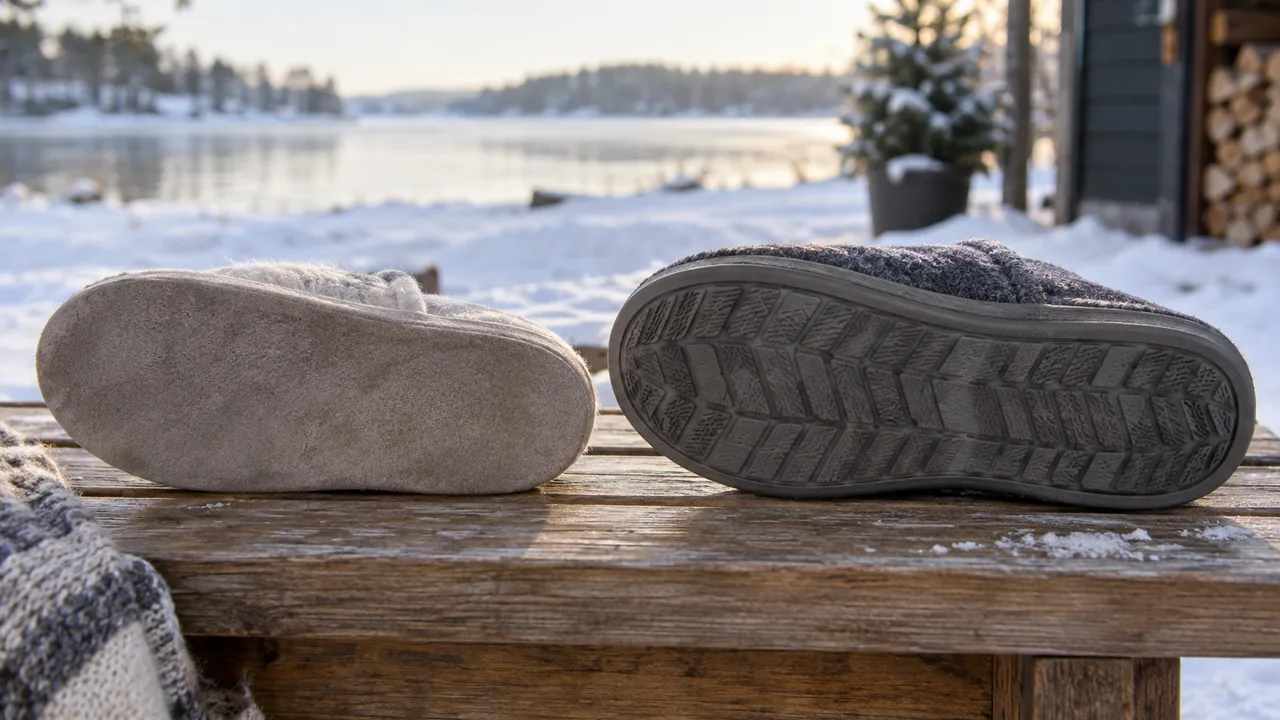
Look at the underside rather than judging from the upper. Is it a thin indoor material, a molded sole with a defined pattern or a worn surface that has become smooth? Are there embedded stones or damaged sections? These observations can identify obvious limitations, but a photograph alone cannot establish measured slip resistance.
Terms such as rubber, textured and non-slip should not be treated as interchangeable. Grip depends on the surface and conditions as well as the footwear. A sole that feels secure on a clean dry floor may behave differently when wet or contaminated. A deep-looking pattern is not proof that the same product is appropriate for ice.
This is why we do not assign made-up winter traction scores to untested slippers. If a manufacturer publishes a relevant test, check which surface and conditions it describes. A general claim without that context should remain a claim, not become a promise in your buying decision. Choose the footwear for the actual journey, not the strongest adjective in the listing.
Warm lining does not make a slipper weatherproof
A thick fleece or wool-like lining may feel pleasant indoors, yet the upper can still admit moisture. Distinguish insulation from water resistance and water resistance from waterproof construction. Read the product's actual specification rather than assuming a winter-looking design has been built for slush. Moisture can arrive from outside or from feet becoming warm during indoor use.
Think about drying as part of ownership. If the same pair goes outside in the morning and stays damp afterward, what will you wear indoors? Keeping a dry alternative can make the routine easier. Do not assume you can solve every wet-footwear problem by placing it directly on a radiator; adhesives, foam and some fabrics may require different care.
A very warm slipper is not automatically the best choice for a heated home. The right balance depends on the person, socks and room conditions. If you repeatedly remove footwear because it becomes uncomfortable, the practical routine is not working. Choose materials and care demands that fit your home rather than the most insulated-looking product.
Secure fit matters at the doorway
The doorway often involves turning, stepping over a threshold and carrying something. Footwear that slides off or requires constant toe gripping can be inconvenient there, even if it felt pleasant while seated. Check that the heel stays appropriately positioned and that any fastening can be adjusted without excessive force. Do not flatten a designed heel counter to turn a shoe into a slip-on.
NHS footwear guidance emphasizes suitable fit, adequate toe room and secure fastening, particularly where falls are a concern. These are not instructions to buy the stiffest or tightest product available. A shoe can be secure without squeezing the foot, and a soft upper can still have a useful fastening. The whole fit matters more than any isolated feature.
Try the pair with the socks you expect to wear. A thick winter sock changes the available space, but automatically ordering a larger size can introduce excess length or heel movement. Check both feet and follow the maker's measurements. If swelling or a medical foot condition makes fit difficult, seek individual advice rather than improvising with multiple layers.
Make changing shoes easier than skipping the change
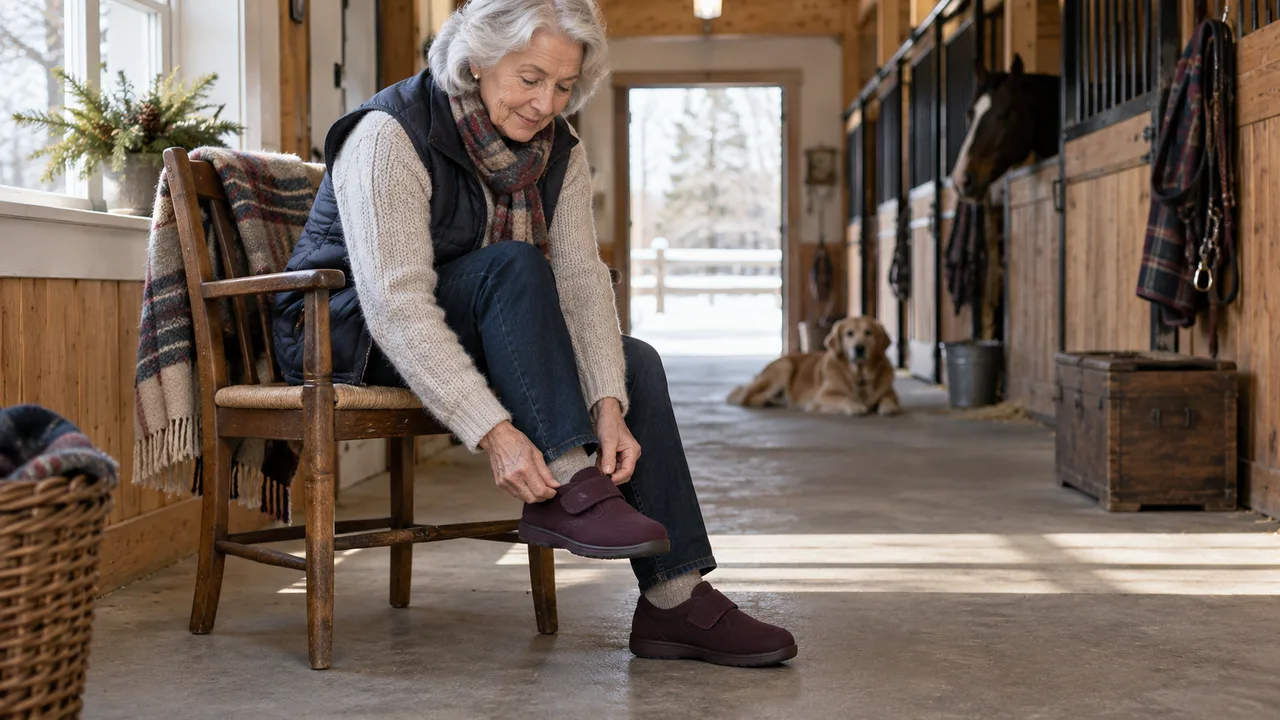
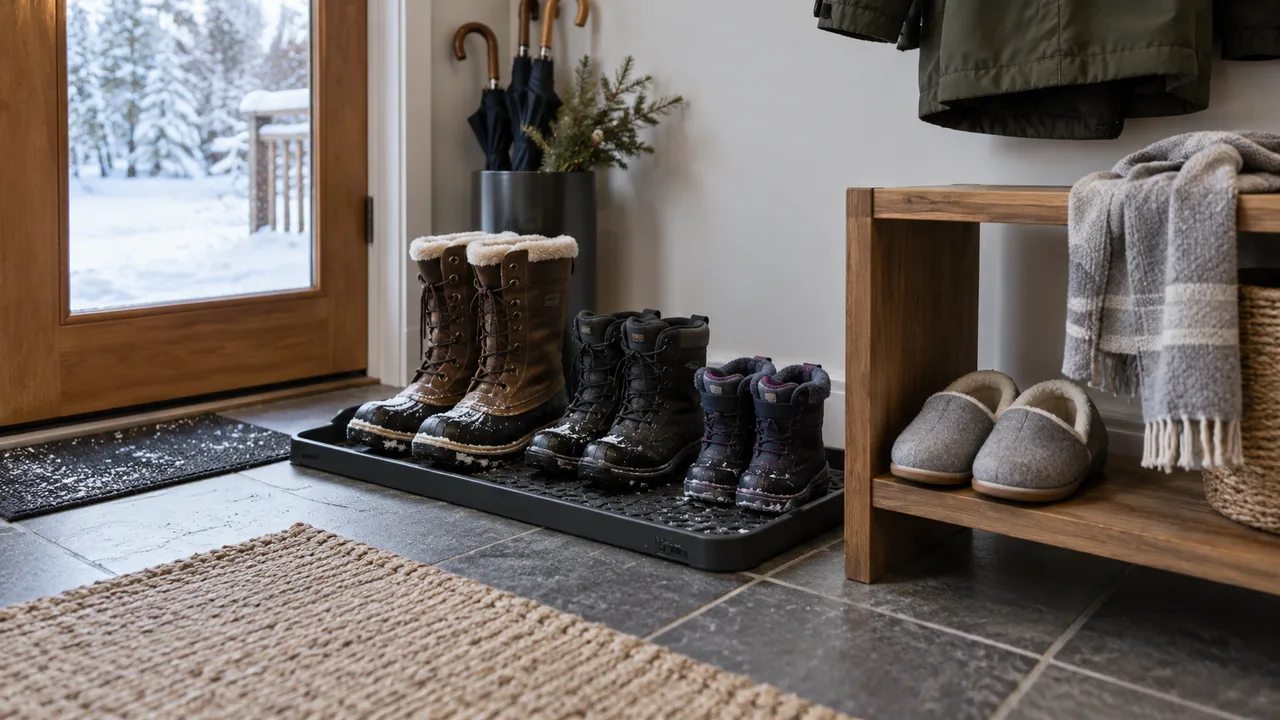
A two-pair system only works if it is convenient. Keep suitable outdoor footwear reachable from a stable seat, with the indoor pair in a dry place that does not block the walking route. If the outdoor shoes are stored in a distant cupboard, you may keep choosing slippers for quick trips despite knowing they are unsuitable for the weather.
Consider the action of putting footwear on, not just walking in it. A secure fastening that is difficult to reach or operate may need a different solution. A long-handled shoehorn or another appropriate aid can be worth discussing if bending is difficult. Do not balance on one leg at the threshold while carrying a parcel and trying to force your foot into a shoe.
Keep mats and trays positioned so they do not create a new obstacle. A wet boot tray is useful for containing moisture, but it should not force you to step around a cluttered pile. Household routines are part of the decision: who dries the floor, where packages land and whether pets leave toys across the entrance can matter as much as the footwear purchase.
The return indoors is part of winter footwear care
Outdoor soles can bring water, grit and other debris back into the house. Before crossing a smooth floor, deal with that transition deliberately. Change into the dry indoor pair, keep the outdoor pair in its designated place and address wet patches promptly. A slipper that was suitable indoors while clean may be a different proposition after walking through a damp garden.
Inspect the soles periodically for wear and trapped debris. Check the upper, fastening and heel structure too. If the foot moves differently because the lining has compressed or the fastening no longer holds, do not judge the fit by how it felt when new. Replacement is a practical condition-based decision, not something that must happen at an invented universal interval.
Follow the care label for cleaning. Machine washable does not mean every temperature or drying method is suitable. After washing, check that the shape, seams and fit remain appropriate. If you use removable inserts, follow the relevant instructions for those separately rather than treating the whole assembly as one washable item.
What if you use insoles or prescribed orthotics?
Do not assume that an insert which fits your walking shoe will also fit a slipper. The internal depth, heel position and available toe room can be different. A removable liner may make compatibility easier, but it is only one part of the decision. Ask the professional who prescribed the orthotic which footwear features it requires.
Stacking an insert on top of an existing footbed can lift the heel and change how securely the upper holds the foot. If the slipper becomes shallow or tight, a stronger arch-support label does not fix the mismatch. Our guide to symptoms after changing insoles covers that separate problem without assuming every insert is appropriate for every shoe.
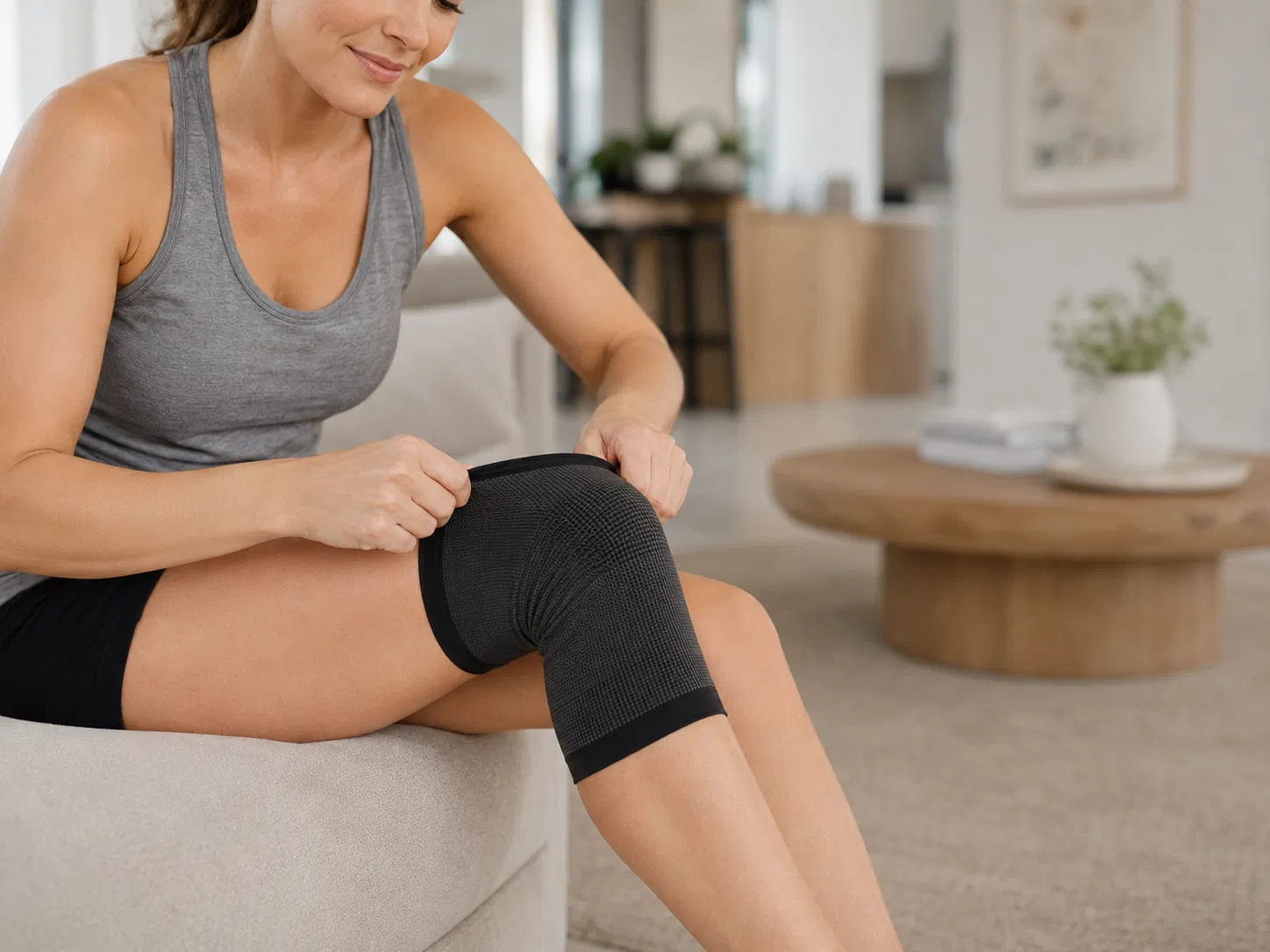
Similarly, do not expect a knee sleeve to make unsuitable footwear safe outdoors. Products around the knee and products under the foot have different purposes. A sleeve may offer optional comfortable coverage for some users, but it does not add traction to a sole or weather protection to an upper.
When individual foot-care advice matters more
If you have reduced sensation, diabetes-related foot concerns, circulation problems, a wound or a history of falls, a general slipper comparison is not enough. A podiatrist or relevant clinician can help assess the specific needs. Not feeling a pressure point does not necessarily mean a product fits well when sensation is reduced.
Seek advice for new skin damage or unexplained changes instead of trying to solve them by choosing thicker lining or a tighter fastening. Also discuss repeated slips or difficulty managing the doorway. A home-safety or mobility assessment may reveal a more useful change than simply replacing one pair of slippers with another expensive pair.
The same principle applies to persistent knee pain. Footwear can be one part of the context, but changing it is not a diagnosis. Avoid attributing every symptom to arch support or cushioning without considering the rest of your activity and health. A comfortable shoe is valuable without needing to be marketed as a cure.
A buying checklist that avoids the one-pair trap
| Question | Useful answer |
|---|---|
| Where will I wear it? | A specific indoor or outdoor setting, not everywhere |
| What does the maker permit? | Clear intended conditions and care instructions |
| Does it fit with my socks? | Secure heel, comfortable fastening and adequate space |
| Can I change it easily? | A workable seated routine and reachable storage |
| What if it gets wet? | A drying plan and a separate dry indoor option |
| Can I return it after an indoor fit check? | Terms understood before outdoor wear |
For example, someone who takes a dog briefly into the garden may be tempted by a plush indoor-outdoor slipper. The useful question is not whether the journey is short; it is whether the path is wet, uneven or icy and whether the manufacturer supports those conditions. Keeping appropriate outdoor footwear by the door may solve the real problem more reliably.
Indoors, choose the pair that fits securely and works with your home routine. Outdoors, use footwear suited to the actual conditions. Keeping those jobs separate is often simpler than searching for a single product that claims to provide warmth, perfect grip, medical support and convenience in every setting.
Check the return policy before testing the doorstep
Trying footwear on a clean indoor surface and wearing it outside may be treated differently by a seller's return policy. Read the conditions before using a new pair on the porch to test its suitability. If the intended outdoor conditions are not covered by the product description, ask the manufacturer rather than conducting your own slippery-surface experiment.
Keep the packaging and try the pair with your usual socks, checking standing, ordinary walking and comfortable fastening indoors. If you already use prescribed footwear or inserts, follow the fitting advice you were given. A convenient delivery or an appealing seasonal discount is not a reason to keep a pair that feels insecure. The goal is a practical indoor-outdoor arrangement, not proving that one purchase can do every job.
Frequently Asked Questions
Can indoor-outdoor slippers be worn on snow or ice?
Do not assume so. The label may describe occasional dry outdoor use rather than winter traction or weather protection. Check the maker's intended conditions and choose suitable outdoor footwear for the actual surface.
Does a rubber sole mean a slipper is non-slip?
No material description guarantees grip on every surface. Outsole design, wear, water, contaminants and the floor all matter. Rubber alone is not evidence of ice performance.
Are thicker slippers better for knee pain?
Not necessarily. Lining thickness and softness do not establish a knee benefit. Secure fit, room for the foot, the activity and any individual clinical advice matter more than a universal softness rule.
Should I buy a larger size for thick winter socks?
Try the footwear with the socks you intend to use and follow its measurements. Automatically sizing up can create heel movement or excess length. Check the complete fit rather than compensating with a guess.
Can I add my orthotics to slippers?
Only if the footwear is compatible and your foot-care professional's advice supports it. Removable liners and adequate depth matter. Stacking an insert into a shallow slipper can change fit and heel security.
How should I dry slippers after an outdoor trip?
Follow the maker's care instructions and allow footwear to dry before reuse. Do not assume a radiator, tumble dryer or hot wash is suitable; heat and cleaning methods can damage some materials or adhesives.