Why a clinician may recommend removing knee fluid
A swollen knee can contain more joint fluid than usual for several reasons. Aspiration can provide a sample to investigate the cause, reduce pressure, or serve both purposes. The reason matters: a procedure intended to investigate possible infection has a different urgency from one discussed mainly for symptom relief.
Ask what question the team wants the fluid to answer. They may be looking for crystals, infection, or other information in the context of your symptoms. Do not assume that drainage confirms a diagnosis in advance. The sample is often being taken precisely because the cause needs clarification.
This guide explains the procedure and practical preparation. When swelling follows activity, our exercise-related knee swelling guide covers that pattern. For crystal-related conditions, the gout and pseudogout comparison explains why different crystals lead to different management questions.
Aspiration and injection are not the same procedure
Aspiration removes fluid from a joint. An injection places a substance into or around it. They may be discussed at the same appointment, but they are not interchangeable terms. The decision to inject medication depends on the diagnosis, clinical situation, and risks, not simply on whether a needle is already being used.
If infection is a concern, that changes the treatment decision. Do not assume a steroid injection will automatically follow drainage. Ask what is planned before consent and whether the plan could change depending on the examination or fluid findings.
It is also possible that the clinician cannot obtain the expected amount of fluid. The joint may contain less accessible fluid than anticipated, or the clinical question may require a different approach. This does not automatically mean the procedure was performed incorrectly. Ask what the outcome means and what happens next.
What to tell the team before the appointment
Provide a current list of prescribed medicines, over-the-counter medicines, and supplements. Highlight blood-thinning treatment, a bleeding disorder, allergies, and previous reactions to local anesthetic or skin-cleaning products. Do not decide independently which items are important enough to mention.
Tell the team about recent illness, fever, skin problems near the knee, wounds, surgery, or a joint replacement. These details can affect planning and interpretation. If symptoms worsen substantially before a scheduled appointment, contact the service rather than assuming the existing booking remains the right level of urgency.
Do not stop anticoagulants or other prescribed medicines on your own. Instructions vary with the medicine, the procedure, and your health history. If a hospital leaflet asks you to contact the team about a medication, do that rather than borrowing a stopping schedule from a different hospital or another patient's experience.
A short preparation checklist
| Before the visit | Question to confirm |
|---|---|
| Medicines and supplements | Should I continue everything as usual, and does the team need any blood test? |
| Allergies and prior reactions | Which skin preparation or anesthetic concerns should be recorded? |
| New illness or skin changes | Do these symptoms change the timing or urgency? |
| Clothing | Can the knee be exposed comfortably without restrictive clothing? |
| Transport | Will I need someone to drive or accompany me afterward? |
| Work and daily tasks | What activity limits should I plan for after the procedure? |
| Results and contact route | Who will explain the findings and whom should I call if problems develop? |
Follow the appointment's specific eating and drinking instructions. Do not assume that every aspiration requires fasting, or that none ever does. The setting and any additional procedure can change preparation. If the instructions are unclear, a short call to the service is safer than guessing.
Bring enough time and practical support for the visit. A brief procedure can still involve registration, consent, preparation, and observation. Avoid scheduling an immediate long drive or physically demanding task before you know the aftercare advice.
What usually happens in the room
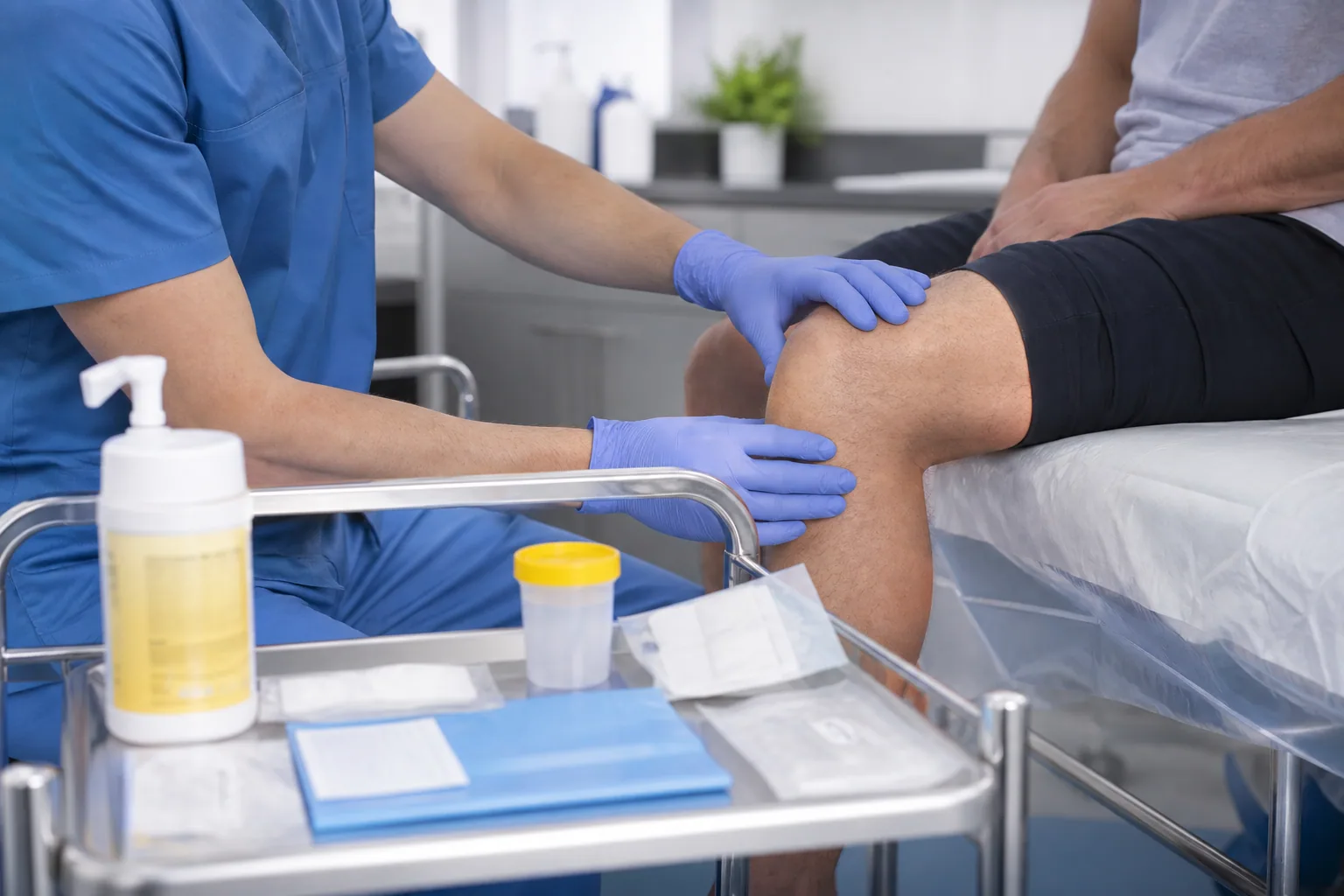
The clinician confirms the plan, explains relevant risks and alternatives, and positions the knee so the procedure can be performed safely. The skin is cleaned, and sterile technique is used. Local anesthetic may be offered or used depending on the approach and service.
A needle is used to withdraw fluid, which may be divided into containers for the requested tests. You may notice pressure or discomfort, and you should tell the clinician how you feel. They can explain what is happening and respond appropriately. You do not need to remain silent to be a good patient.
This description is intended to make a clinical appointment less unfamiliar. It is not a technical guide to needle placement. Knee aspiration should not be attempted at home, even if swelling is visible and the equipment appears simple.
When ultrasound or other imaging may be used
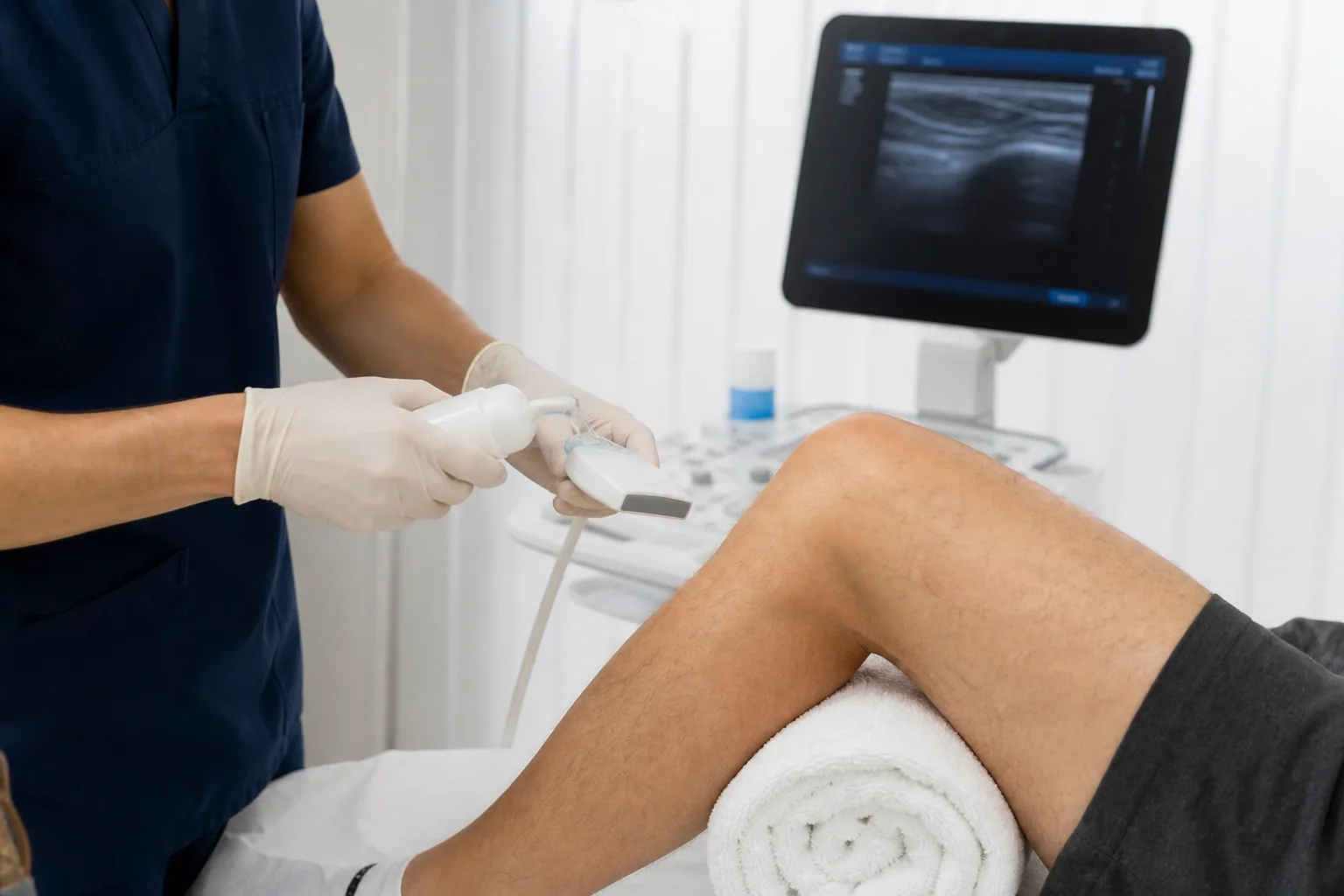
Some aspirations are performed using clinical landmarks, while others use imaging guidance. Ultrasound can help locate fluid and guide the procedure in selected situations. Other imaging methods may be used according to the service and clinical question.
Imaging guidance does not mean the knee problem is necessarily more serious, nor does its absence automatically mean care is inadequate. Ask why the chosen approach fits your situation. The amount and location of fluid, anatomy, and previous procedures can all influence planning.
For background on what different tests show, see our knee imaging guide. A diagnostic MRI and real-time guidance for a needle serve different purposes. More imaging is not automatically the same as a better answer.
Discomfort, anxiety, and communicating during the procedure
People experience aspiration differently. Anticipation can be stressful even when the procedure is brief. Tell the team if needles make you faint, if you have had a difficult previous procedure, or if you need an explanation before each stage. These are reasonable requests that help the visit go more smoothly.
Ask what sensations to expect from any local anesthetic and from fluid removal. Avoid relying on promises that the procedure is completely painless or always very painful. Neither description fits everyone. The clinician can discuss the likely experience and available pain-control options.
If you feel dizzy, unusually unwell, or sharply uncomfortable during the procedure, say so immediately. Do not suddenly move the leg without warning. Agreeing on a simple way to ask for a pause can make the process feel more manageable and help the team respond safely.
What the fluid tests can reveal
Depending on the clinical question, the laboratory may examine the fluid for crystals, cells, and microorganisms. The appearance of the fluid alone does not provide every answer. A clinician interprets the findings with the history, examination, and other tests.
Crystal identification can help distinguish gout from calcium pyrophosphate crystal arthritis. Finding crystals does not automatically exclude infection, so culture and other information may still matter. Do not assume that one early result closes the investigation if the team has said other tests are pending.
Results can return at different times. Some information may be available sooner than a culture or a specialist review. Ask for a realistic timeframe and a contact route. No news should not be treated as proof that every result is normal, particularly if symptoms continue to worsen.
Why fluid may come back after drainage
Aspiration removes fluid that is present at that moment. If the underlying process remains active, more can accumulate. The procedure may relieve pressure without permanently treating arthritis, inflammation, injury, or another cause. Recurrence therefore needs interpretation rather than an automatic conclusion that the drainage failed.
Tell the team how quickly swelling returns, whether pain changes, and whether the knee becomes warm or difficult to use. A familiar mild recurrence and a rapidly worsening hot joint are different situations. Do not book repeated drainage elsewhere without discussing what is driving the fluid.
The longer-term plan may involve treating the underlying condition, adjusting activity, further testing, or specialist review. Ask how aspiration fits into that plan. It should be one part of a clear clinical pathway rather than an isolated procedure with no explanation of what follows.
Aftercare: follow the instructions for your procedure
The service should explain dressing care, activity, discomfort management, and warning signs. These instructions vary, especially if medication was injected or another procedure was performed. Do not apply a single internet rule about exercise, bathing, or driving to every aspiration.
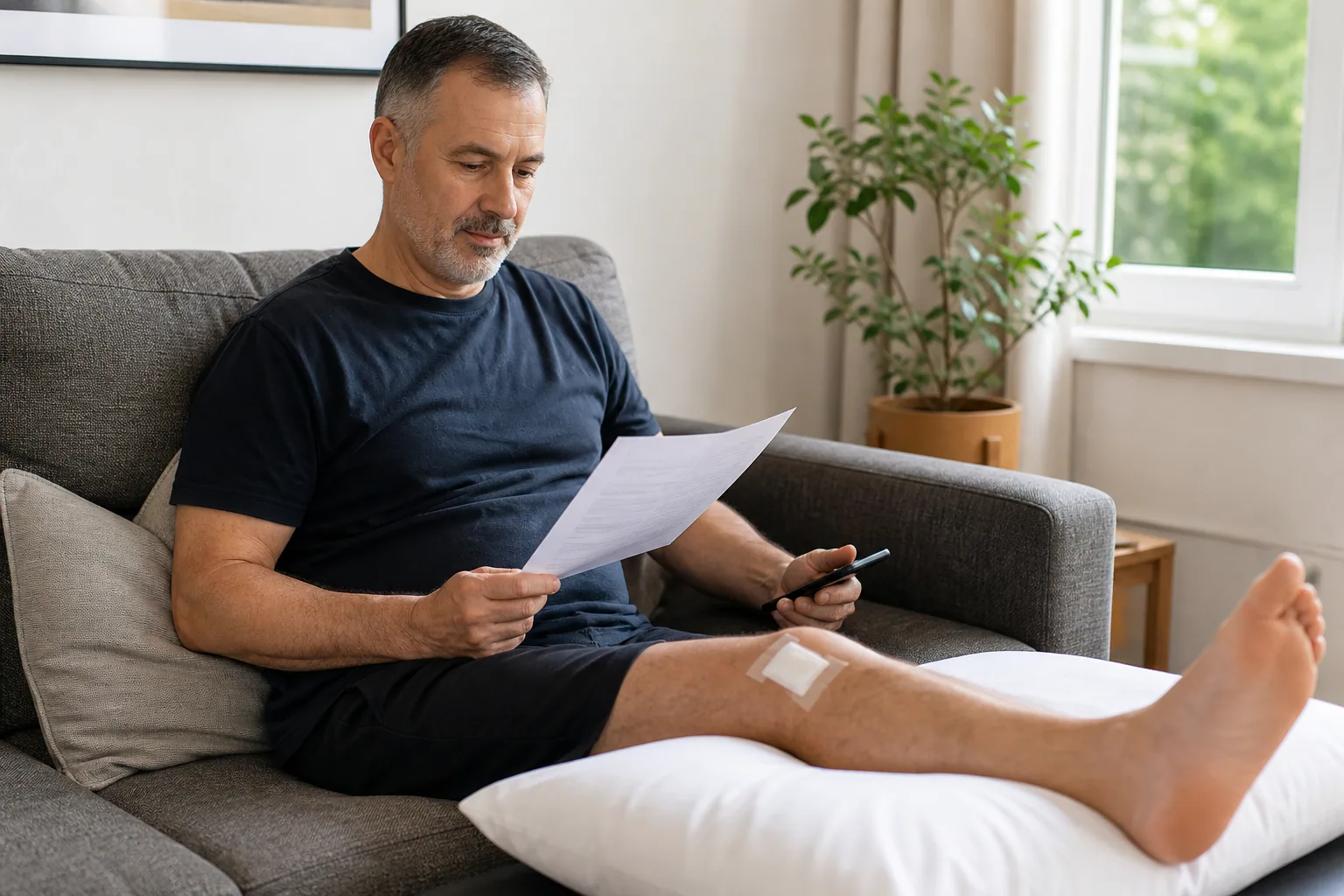
Keep the puncture area as directed and avoid unnecessary handling. Ask when the dressing can be removed and what to do if it becomes wet or loose. Do not massage the site or apply a heat device over it simply because the knee feels stiff afterward.
Plan a manageable day while you learn how the knee responds. If you were told to limit a particular activity, follow that instruction even if the pressure feels better immediately. Pain relief from drainage does not mean the underlying knee condition has disappeared.
Driving, work, and exercise questions
| Activity | Ask the team | Avoid assuming |
|---|---|---|
| Driving | Can I safely control the vehicle, and are there medication restrictions? | A short procedure always permits immediate driving. |
| Desk work | Can I sit comfortably and move as advised? | No physical work means no practical limitations. |
| Manual work | Which loading, kneeling, or lifting tasks should wait? | Reduced swelling clears every work demand. |
| Exercise | When and how should I resume the intended activity? | A drained knee is ready for a hard workout. |
| Bathing and dressing care | What applies to this puncture site and dressing? | All hospital instructions are identical. |
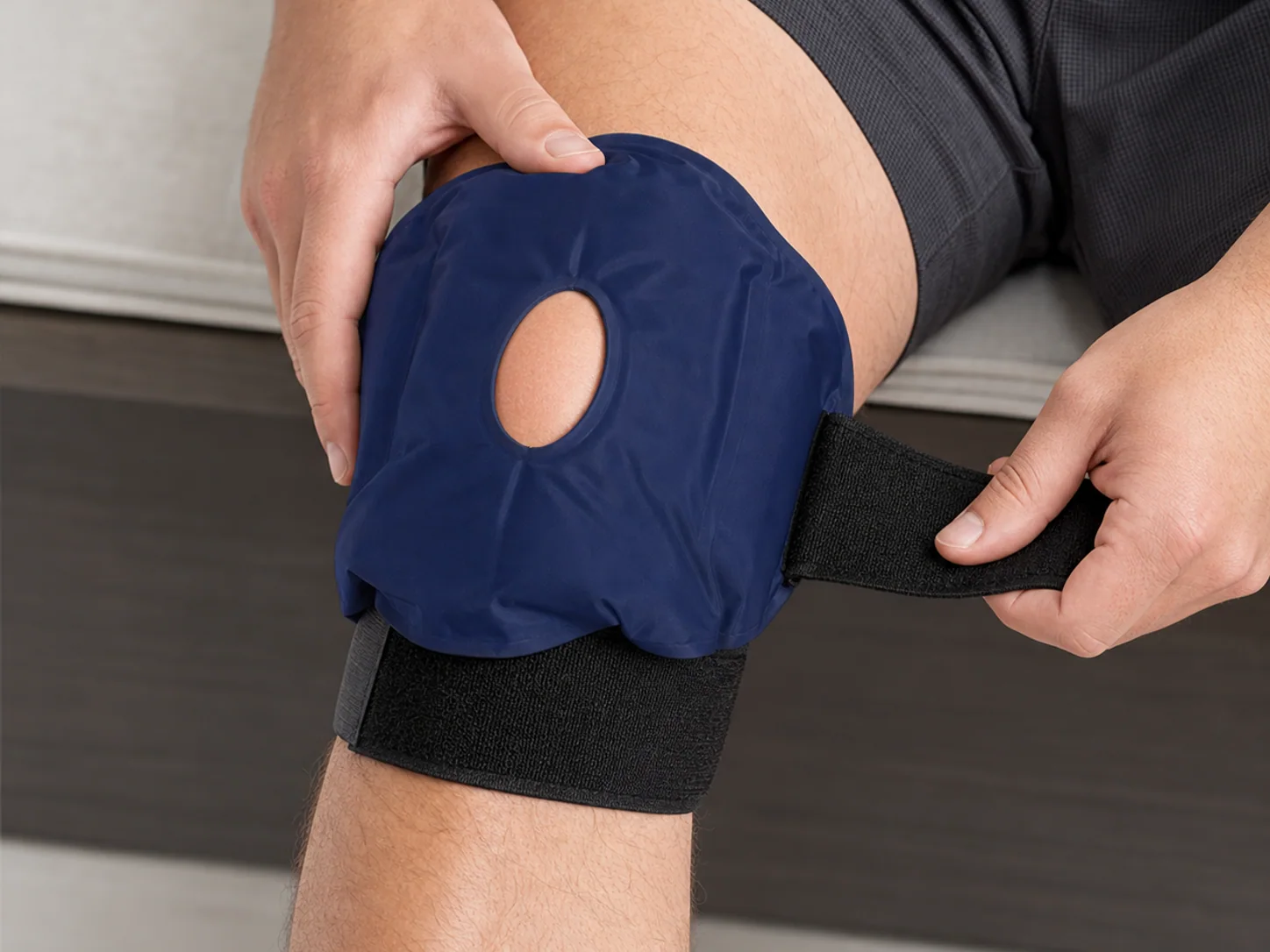
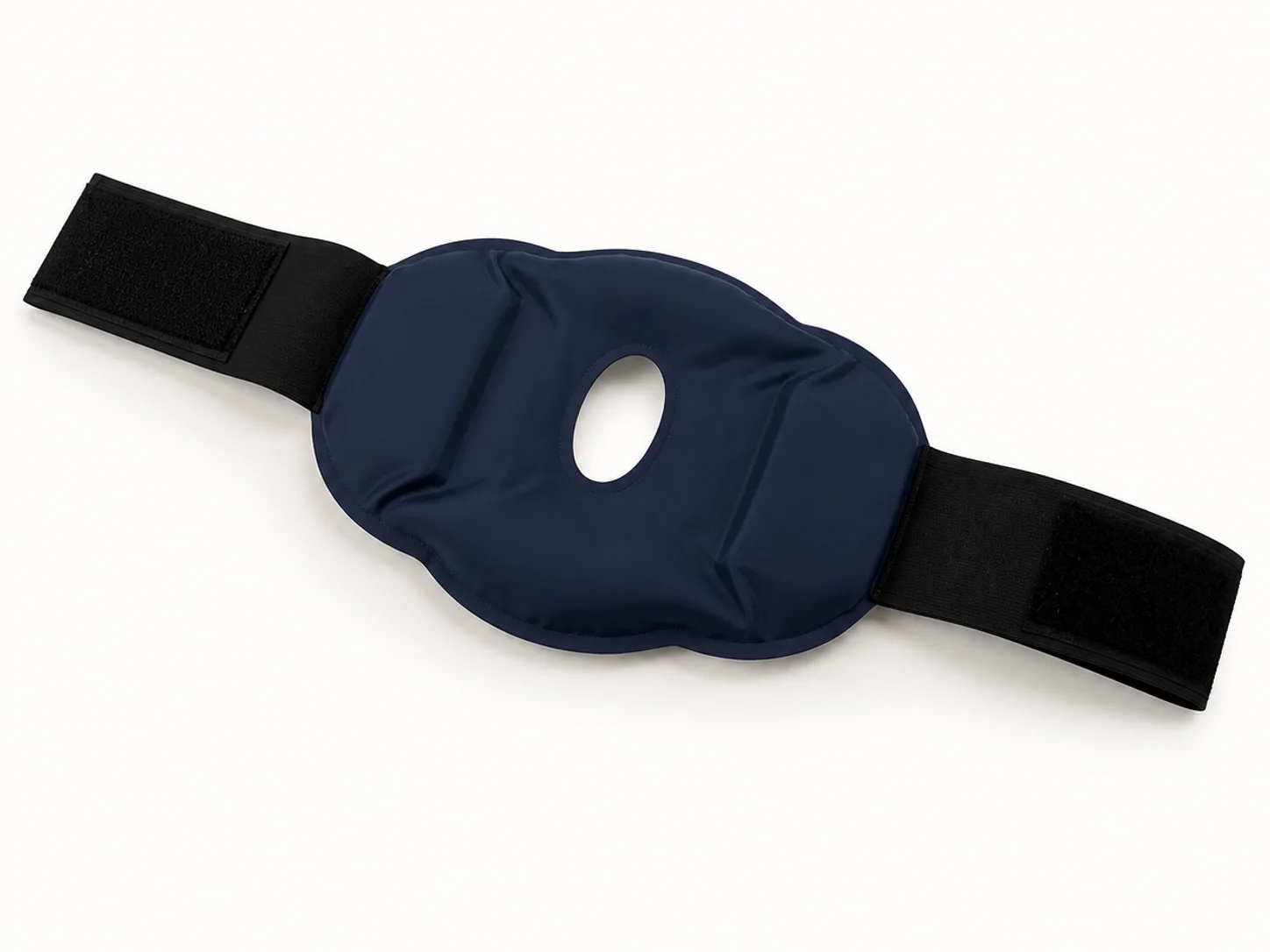
| Comfort measures | Is cold suitable, and what should I avoid over the site? | Any knee product is safe immediately afterward. |
If your job requires kneeling, climbing, or long periods standing, explain that before leaving. A general instruction to take it easy may not answer the actual work question. Ask for specific guidance that can be communicated to an employer when needed.
Similarly, describe the exercise you mean. A gentle household walk, a spin class, and a competitive match involve different demands. Clear examples help the clinician give advice that you can apply rather than interpret through trial and error.
What to bring to the follow-up conversation
Note changes in swelling, pain, motion, and ordinary function. Include any fever, redness, drainage from the site, or increasing warmth. If you were given a treatment after the procedure, record its effect and any suspected side effects without changing the prescription independently.
Ask whether the results establish a diagnosis or whether further assessment is needed. If fluid could not be obtained, ask what that means for the next step. If crystals were found, clarify the treatment plan and whether infection-related results are complete.
Keep copies of the procedure note and results when available, especially if care is shared between services. This reduces confusion about what was tested and which findings remain pending. A clear handover is more useful than remembering only that fluid was drained.
Make the results handover explicit
Before leaving, confirm whether the person performing the aspiration will explain the results or whether they will go to another clinician. Ask how to contact the right service if you have not heard within the stated timeframe. Shared care can work well, but uncertainty about who is responsible can leave a patient waiting without a clear next step.
If you receive an electronic laboratory result before an explanation, avoid interpreting isolated flags on your own. Different tests answer different questions, and a preliminary finding may need the rest of the sample analysis. Contact the clinical team for context, especially if the knee is not improving.
Keep the urgent-symptom instructions separate from the routine results plan. Worsening heat, redness, fever, severe pain, or rapidly increasing swelling should not wait for a scheduled telephone call. Knowing both routes helps you act appropriately without assuming that every concern belongs in the same follow-up queue.
When to Get Medical Help
Contact the clinical team promptly for worsening heat, redness, swelling, severe pain, fever, feeling unwell, or increasing difficulty using the leg after aspiration. Seek urgent care if symptoms are severe or rapidly worsening. Do not assume these changes are routine after-effects, and do not wait for a scheduled follow-up if the knee is becoming significantly worse.
Know the purpose, the aftercare, and the result plan
Knee aspiration can provide valuable information and sometimes pressure relief, but its role depends on why the knee is swollen. Arrive with a complete medicine history, ask about preparation and activity, and leave knowing who will explain the results. Those practical details make the procedure part of an understandable plan rather than an unexplained event.
Frequently Asked Questions
What is knee aspiration?
It is removal of joint fluid through a sterile procedure performed by a trained clinician. The fluid may be tested, and removal may also reduce pressure.
Is knee aspiration painful?
People experience it differently. Cleaning, local anesthetic when used, needle placement, and pressure changes can cause sensations; discuss pain control and tell the clinician if you are uncomfortable.
Will the swelling stay away?
Not necessarily. Fluid can return if the underlying cause remains active. Aspiration does not by itself treat every cause of swelling.
Is aspiration the same as a steroid injection?
No. Aspiration removes fluid; injection puts a substance into the joint. They may sometimes be discussed together, but the purpose and safety decisions differ.
Should I stop blood thinners first?
Do not stop them on your own. Tell the team exactly what you take and follow individualized instructions.
How long do results take?
Different tests return at different times, depending on the laboratory and clinical urgency. Ask who will contact you and when to follow up.
Can I drive afterward?
Ask the team before the procedure. The affected leg, discomfort, any medication, and your ability to control the vehicle can affect the answer.
When should I seek help afterward?
Worsening heat, redness, swelling, severe pain, fever, feeling unwell, or new difficulty using the leg needs prompt medical advice.