The first question is not which crystal
A newly hot, swollen, painful knee needs assessment because several conditions can look similar. Crystal arthritis is one possibility, but joint infection is another and can require urgent treatment. Do not wait for a familiar gout pattern, a fever, or a particular blood-test result before seeking advice about a concerning new episode.
Tell the clinician how quickly the swelling developed, whether you feel unwell, and whether you can bear weight. Mention recent surgery, an injection, a wound, illness, or an injury. A previous gout diagnosis is relevant, but it does not guarantee that every future swollen knee has the same cause.
This guide compares two crystal-related conditions after that safety priority is clear. It does not replace our broader sudden knee pain guide or provide a way to diagnose a hot joint at home. The useful comparison is how the conditions differ in assessment and longer-term management.
Gout and pseudogout involve different crystals
Gout involves monosodium urate crystals. Urate is related to the body's handling of uric acid, and a person's risk reflects more than a single meal. Genetics, kidney function, medicines, and other health factors can contribute. The knee can be affected even though gout is often associated with the big toe.
Pseudogout refers to an acute inflammatory episode associated with calcium pyrophosphate crystals. The broader term calcium pyrophosphate deposition, or CPPD, includes patterns beyond a sudden attack. Crystal deposits can occur with other joint conditions and do not always produce the same symptoms in every person.
The word pseudo does not mean the pain is imaginary or mild. It describes the resemblance to gout despite a different crystal type. Understanding that difference matters because some treatments for an acute episode may overlap while the longer-term approach is not the same.
A side-by-side comparison
| Question | Gout | Pseudogout / acute CPP crystal arthritis |
|---|---|---|
| Which crystals? | Monosodium urate. | Calcium pyrophosphate. |
| Can the knee be affected? | Yes, as can other joints. | Yes; the knee is a common site. |
| Can it begin suddenly? | An acute flare can develop rapidly. | An acute episode can also develop rapidly. |
| Does a blood urate test settle everything? | No; timing and clinical context matter. | It does not identify CPP crystals. |
| Can joint fluid help? | Microscopy may identify urate crystals. | Microscopy may identify CPP crystals. |
| Long-term crystal-specific treatment | Urate-lowering treatment may be indicated. | There is no equivalent routine treatment that removes CPP crystals. |
| Can infection look similar? | Yes. | Yes. |
Use the table to understand the questions a clinician is asking, not to score yourself into one column. Age, previous episodes, and the joints involved can influence the likelihood of a diagnosis, but none safely replaces examination. More than one process can also be present in the same knee.
Why the symptoms overlap so much
Both conditions can produce inflammation inside a joint, with pain, swelling, warmth, and difficulty moving. The knee may become uncomfortable even at rest. Those features describe an inflamed joint; they do not reveal the crystal type by appearance alone.
Symptoms can also overlap with infection, an injury, bleeding into the joint, or another inflammatory condition. A photograph of swelling cannot reliably separate these possibilities. The absence of dramatic redness does not exclude a significant problem, and redness may be harder to recognize on some skin tones.
A familiar pattern may help someone with a confirmed diagnosis follow an agreed flare plan, but a changed pattern should be reported. A more severe episode, a different joint, feeling unwell, or poor response to the usual plan can justify reassessment. Do not treat past experience as a reason to ignore new information.
What blood tests can and cannot show
Serum urate is useful in assessing gout, but a result must be interpreted in context. A level measured during an acute flare may not settle the diagnosis. NICE guidance describes reassessing urate after the flare when gout remains suspected despite a lower result.
A high urate level does not prove that a particular swollen knee is caused by gout. Some people have raised urate without an acute gout attack. Conversely, other tests may be needed when the clinical picture is unclear. The result is one piece of evidence rather than a label for every joint symptom.
Blood tests may also help evaluate inflammation, kidney function, and other health factors that affect treatment choices. For CPPD, clinicians may consider associated metabolic conditions in selected situations, particularly when the presentation is unusual. Do not order or interpret a large panel independently as a substitute for a focused assessment.
Why joint aspiration may be recommended
Joint aspiration removes a sample of fluid through a sterile clinical procedure. The sample can be examined for crystals and, when relevant, signs of infection. Removing fluid may also reduce pressure, but diagnostic information can be the main purpose rather than simply making the knee smaller.
Finding crystals does not automatically rule out infection. A clinician may still need fluid culture and other evidence, especially when the symptoms or risk factors are concerning. Results can return at different times, so ask which findings are available immediately and which are still pending.
Our knee aspiration guide explains preparation and aftercare questions. This is a procedure performed by trained clinicians, not something to attempt at home. Do not delay a recommended assessment because an online description makes drainage sound optional in every situation.

Where imaging fits
X-rays may show joint changes or cartilage calcification associated with CPPD. Ultrasound and other imaging can answer additional questions in selected cases. A finding on a scan needs to be connected to the current symptoms; a deposit seen on imaging is not automatically the only explanation for a painful knee.
Imaging does not remove the need to consider infection in an acutely inflamed joint. Depending on the situation, joint-fluid testing may still be important. Ask what the proposed scan is expected to clarify and whether its result would change treatment.
The knee imaging comparison guide explains the different roles of common tests. It is not a ranking in which the most expensive or detailed scan always gives the best answer. The clinical question determines which information is useful.
Treating a flare is different from preventing future gout
A clinician may use anti-inflammatory treatment for an acute crystal-related episode, selected according to the diagnosis and your health history. Options can have important restrictions involving kidney function, stomach problems, other medicines, and infection risk. Do not copy a dose or combine medicines from someone else's flare plan.
Long-term gout management may include urate-lowering treatment when indicated, with monitoring and a target agreed through care. This is different from taking something only when the knee hurts. Do not stop or change an established prescription on your own during a flare; contact the prescribing clinician for guidance.
CPPD does not have the same routine urate-lowering strategy because its crystals are different. Management may focus on controlling episodes, addressing associated conditions when relevant, and maintaining function. A medication that is central to one person's gout plan is not automatically appropriate for someone told they have pseudogout.
Food, hydration, and misleading blame
Diet can be part of gout management, but a single food is rarely the complete explanation for an episode. Avoid reducing the condition to a moral judgment about eating. Discuss realistic dietary changes, alcohol intake, hydration, and other health factors alongside medical treatment rather than promising that a restrictive menu will solve everything.
CPPD is not simply the result of eating calcium-rich foods. Do not remove calcium from your diet or alter supplements without appropriate advice, particularly when bone health is also a concern. The presence of calcium in the crystal's name does not translate into a straightforward food restriction.
Hydration advice should fit your medical circumstances. People with fluid restrictions or certain heart and kidney conditions should follow their team's guidance rather than a generic instruction to drink as much as possible. A useful lifestyle plan is sustainable and compatible with the rest of your care.

What to do between the appointment and the next review
Follow the specific plan you were given and keep the follow-up route clear. Ask whom to contact if symptoms worsen, treatment causes a problem, or pending results have not arrived when expected. Leaving with a clear review point is more useful than remembering only the name of the suspected condition.
Protect the painful knee from unnecessary demand during an acute episode. Do not repeatedly test deep bending, long walks, or exercise to see whether it is improving. Comfortable activity and rest should follow clinical advice, especially when infection or another diagnosis is still being investigated.
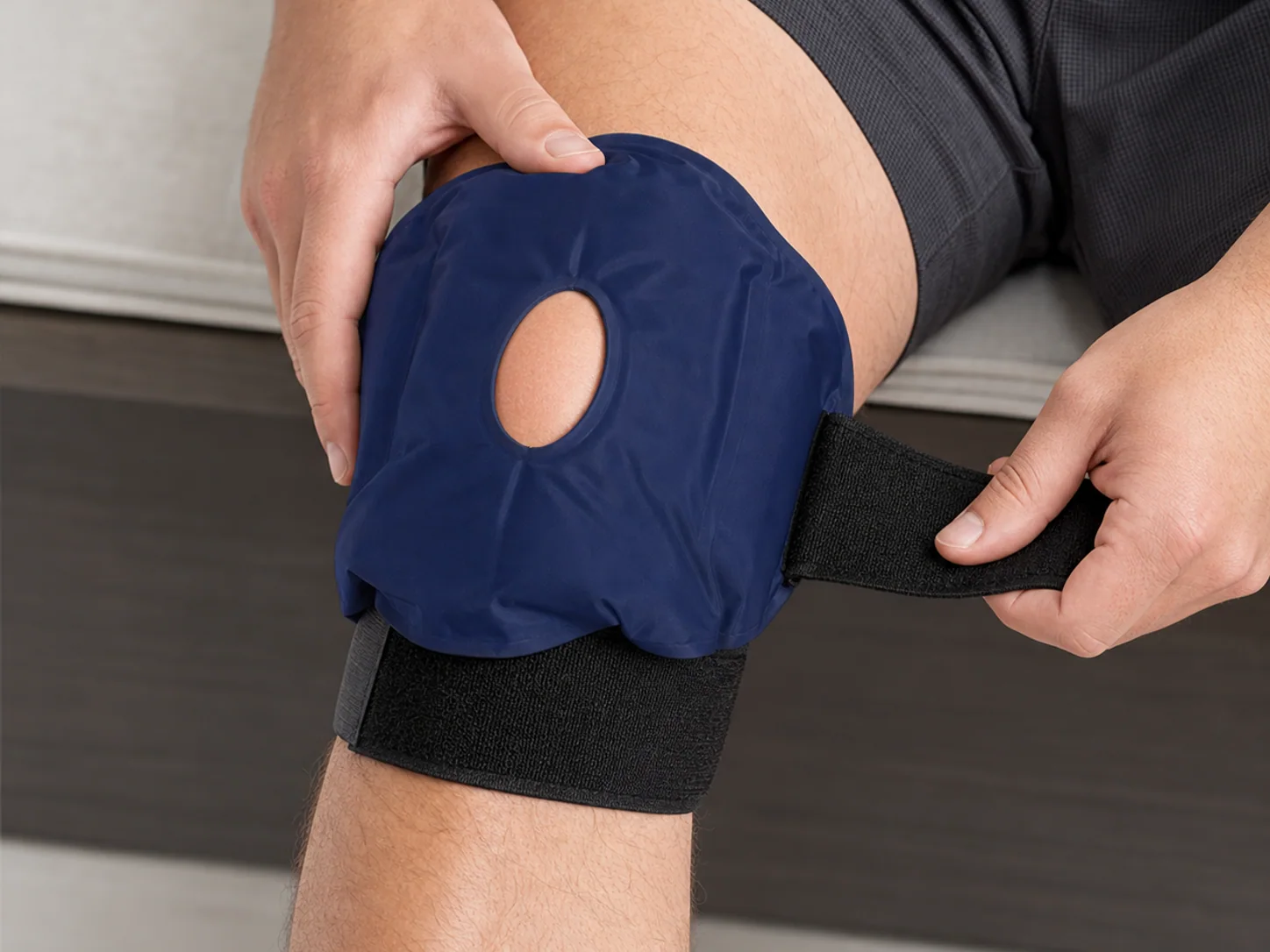
If cold is recommended for comfort, use a protective layer and follow safe exposure instructions. Do not use a heat or massage device on a hot swollen knee as a substitute for treatment. A commercial comfort product cannot determine the cause or replace the plan for an inflammatory joint episode.
Prepare a concise history for the next visit
| Information | Why it helps |
|---|---|
| When swelling began | Speed and sequence can guide the differential diagnosis. |
| Previous confirmed episodes | The basis of an earlier diagnosis matters. |
| Fever, illness, wounds, or procedures | These can change concern about infection. |
| Medication and supplement list | Treatment safety depends on the full combination. |
| Kidney disease or other conditions | These may influence testing and medicine choices. |
| Response to the agreed treatment | Persistent or changing symptoms may require review. |
| Pending fluid or blood results | Different parts of the investigation may return separately. |
If a previous diagnosis was made only from symptoms, say so. If fluid crystals were identified, bring the report when available. This avoids treating an uncertain label as a confirmed fact. It also helps a new clinician understand whether the current episode resembles the earlier one.
Keep a record of functional changes, such as difficulty walking to the bathroom or getting into a chair. Those details communicate severity more clearly than describing the knee as bad. Do not minimize a limitation because you are worried that seeking help will seem excessive.
Questions that keep the long-term plan clear
Ask whether the diagnosis is confirmed or still provisional, what evidence supports it, and whether infection has been sufficiently addressed. Then separate the current flare plan from prevention. Knowing which medicine treats today's symptoms and which is intended for longer-term control reduces confusion.
Ask when laboratory monitoring or follow-up is needed and what side effects to report. If gout is confirmed, discuss the purpose of any urate target rather than treating the number as an isolated test. If CPPD is diagnosed, ask what recurrent episodes would change about management.
Finally, discuss activity once the flare settles. Returning to comfortable movement and maintaining function are different from forcing exercise through an acutely inflamed knee. A gradual plan can fit your ordinary routines without turning every minor sensation into a reason to stop all activity indefinitely.
Do not let an uncertain label become permanent
After the acute episode, ask whether the record says confirmed gout, confirmed CPP crystal arthritis, or a suspected diagnosis. Those phrases carry different levels of certainty. If later results change the explanation, make sure the long-term plan changes with them rather than continuing treatment based only on the first impression.
When seeing a new clinician, bring the evidence behind the diagnosis if available, including fluid results and relevant blood tests. A clear record can prevent repeated uncertainty and inappropriate assumptions. It also helps separate a familiar flare from a new event that deserves fresh investigation.
When to Get Medical Help
A new hot swollen knee needs prompt assessment. Seek urgent help when pain is severe, you feel unwell or feverish, swelling worsens rapidly, or you cannot bear weight. Infection can occur without every classic symptom and can coexist with crystals. Do not assume a previous gout diagnosis explains a new or unusually severe episode.
The distinction matters after the urgent questions are addressed
Gout and pseudogout share a painful appearance but differ in crystal type and longer-term management. The safest route is assessment, appropriate testing, and a clearly explained plan. Use the comparison to ask better questions, not to choose medication or postpone care for a newly inflamed knee.
Frequently Asked Questions
Can gout affect the knee?
Yes. Although the big toe is a familiar site, gout can affect the knee and other joints.
Is pseudogout a mild form of gout?
No. It is a different crystal-related condition, and an acute episode can be very painful.
Can symptoms distinguish gout from pseudogout?
Not reliably on their own. Both may resemble infection or other joint problems, so assessment and sometimes fluid analysis are important.
Does normal uric acid rule out gout?
A serum urate result during a flare may not settle the diagnosis. A clinician may repeat testing later or use other evidence.
Do crystals rule out joint infection?
No. Crystals and infection can coexist. Fluid culture and the clinical picture may still be important.
Should I avoid calcium if I have CPPD?
Do not remove dietary calcium or change supplements without advice. CPPD is not simply caused by eating calcium-rich foods.
Will gout medication treat pseudogout?
Some flare treatments overlap, but long-term urate-lowering treatment addresses gout rather than CPP crystals. The diagnosis changes the plan.
Can I manage a first hot swollen knee at home?
Get prompt medical assessment rather than assuming it is gout. Severe pain, fever, feeling unwell, or inability to bear weight increases urgency.