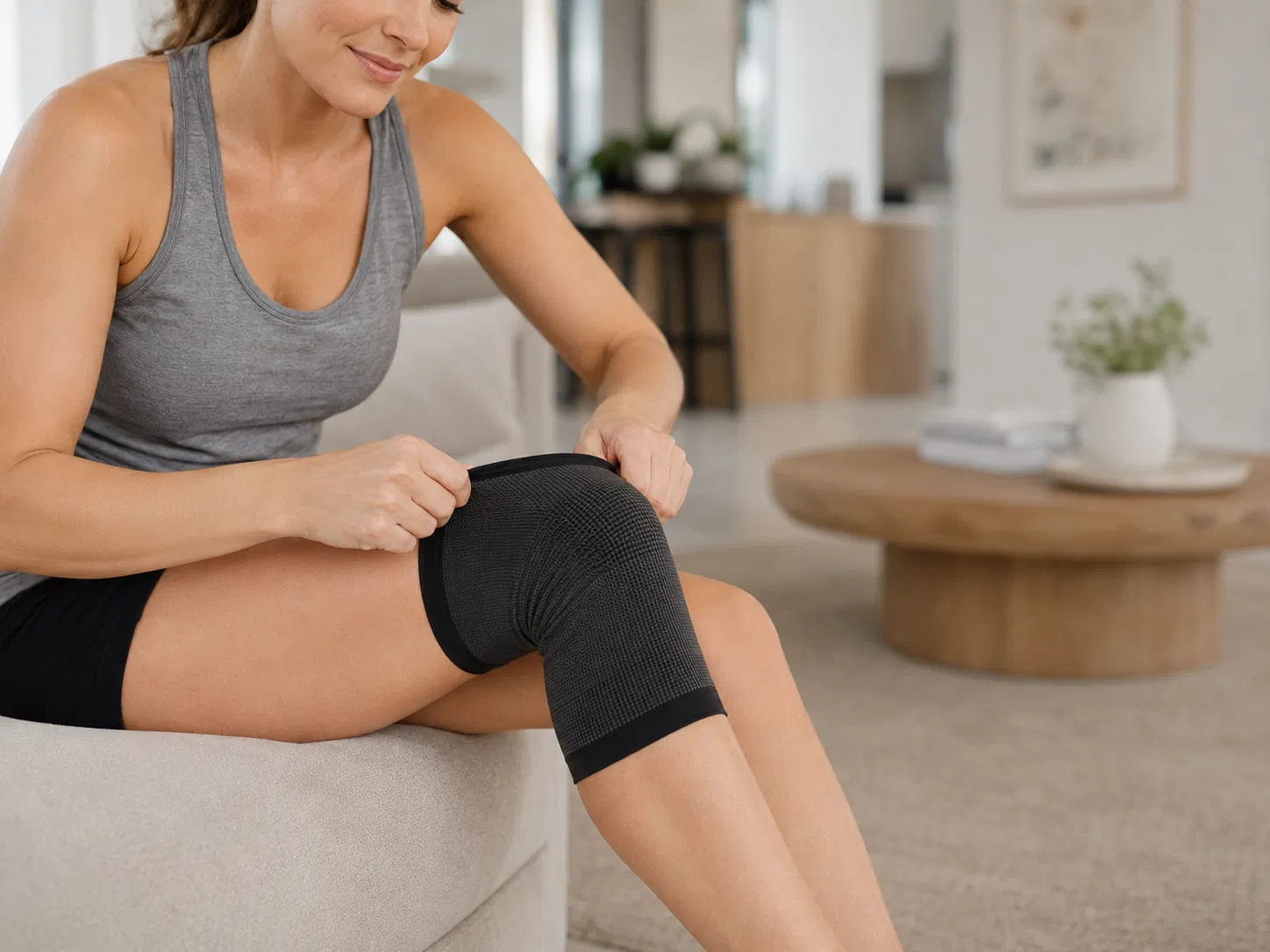
Find the movement that changes the knee
Badminton is not one repeated motion. A front-court lunge, a backward recovery step, a side reach, and a jump landing place different demands on the legs. Start by noticing which movement brings symptoms on. This gives you a more useful training decision than labeling the whole sport knee unfriendly.
Record whether pain begins during play, immediately afterward, or the following morning. Note whether it affects one side, appears only late in a session, or follows a specific twist or landing. These observations do not diagnose the knee, but they help separate a workload question from an injury that needs assessment.
This guide stays with badminton footwork and session planning. Court sports share some demands, but our padel knee pain guide covers a different movement environment. Do not copy another sport's drill progression without considering badminton's reaches, overhead shots, and rapid return toward a ready position.
What lunge research can actually tell players
Laboratory studies have compared badminton lunges with different approaches, distances, and recovery patterns. They show that a lunge is not mechanically identical every time. The speed of approach and the way a player pushes back can change the forces and joint demands measured during the movement.
Studies also compare more experienced and less experienced players. Differences in technique or loading describe those participants under study conditions; they do not prove that copying one visual detail prevents injury. A coach needs to consider the complete movement, including anticipation, spacing, racket reach, and how the player recovers for the next shot.
Fatigue and bracing have been studied as well. A change in a measured joint angle or force is not the same as evidence that a particular sleeve prevents injuries over a season. Use research to understand why movement and dose matter, not to turn a small laboratory study into a guaranteed product recommendation.
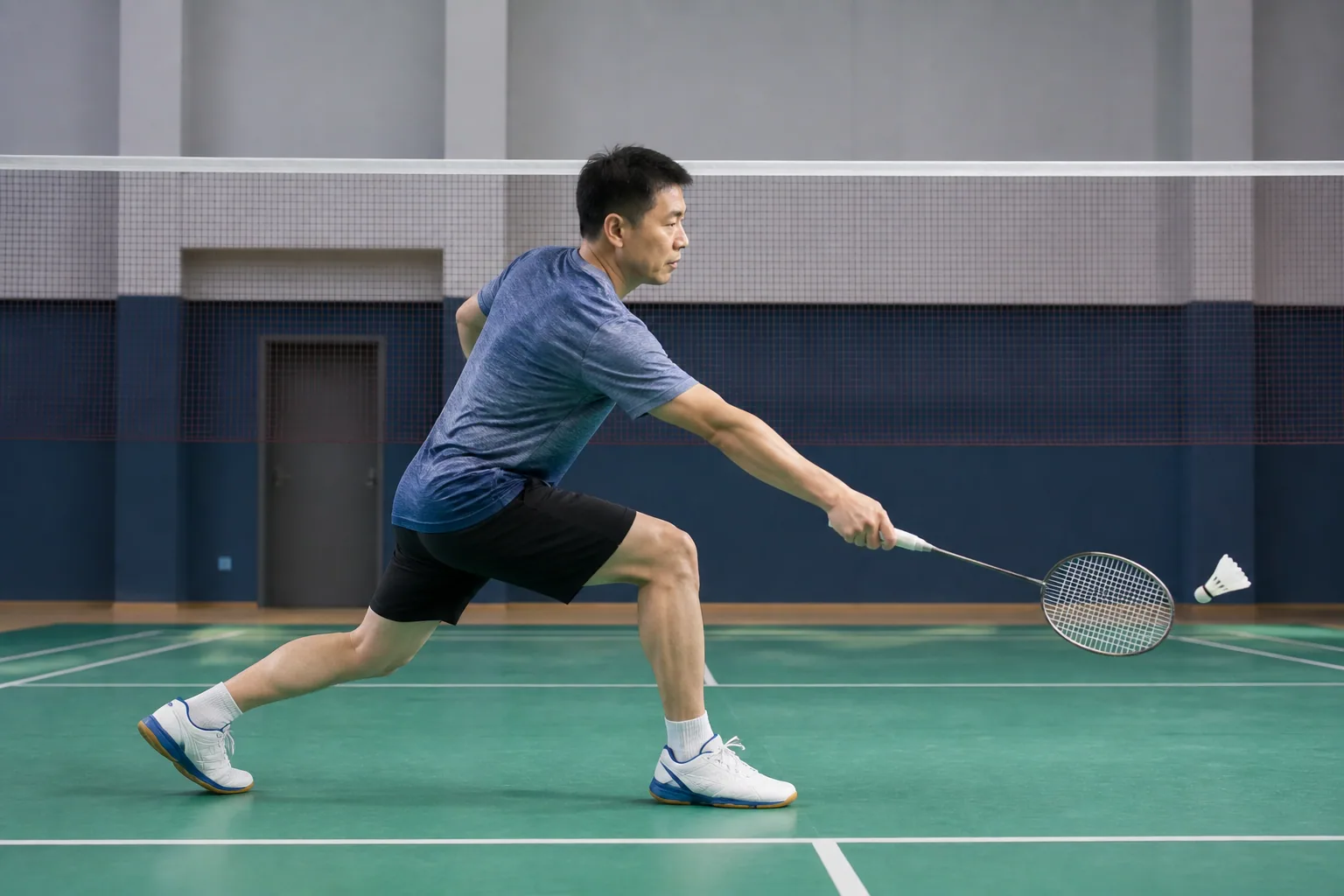
Front-court lunges: distance and recovery matter together
A late arrival at the net can force a longer reach than a well-timed approach. That does not mean every deep lunge is wrong. It means the same player may face a much greater demand when the shuttle arrives unexpectedly or fatigue delays the first step. Work on court positioning as well as the final foot placement.
During a controlled drill, choose a reach distance you can return from without collapsing into a hurried extra step. The recovery is part of the repetition. Reaching the shuttle once is not the only goal; you also need enough control to leave the position and prepare for what comes next.
Avoid treating one knee-over-toe rule as a universal answer. The knee may move forward during a normal lunge, and its position depends on the task and your proportions. What matters is a suitable demand, a stable contact, and a movement you can manage. Pain should prompt a review, not a forced alignment correction.
Jump landings: practice the return to control
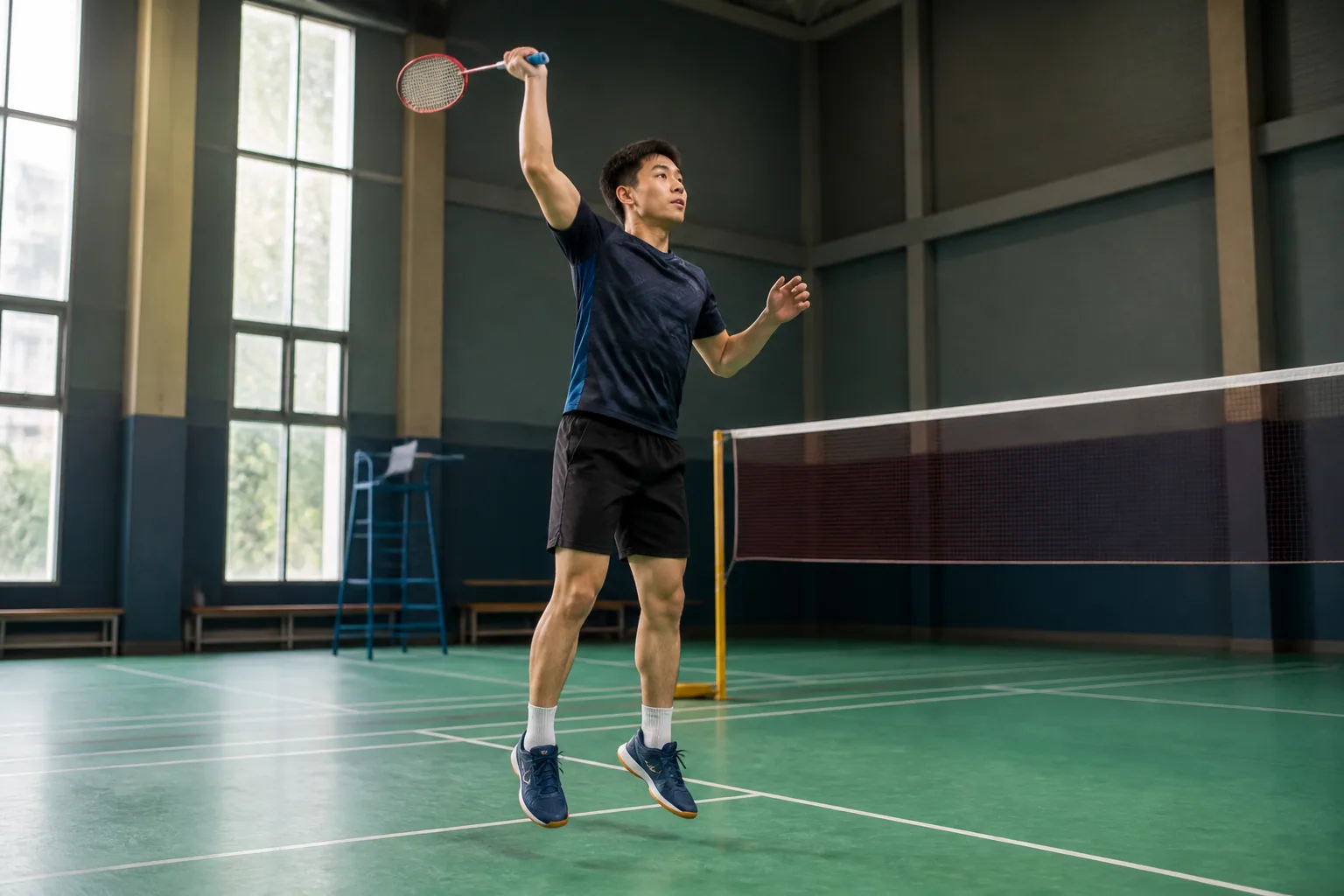
An overhead shot can draw attention upward while the legs prepare to land. If landing is the painful part, reduce the jumping task rather than repeatedly testing it at full effort. A coach or therapist can assess a lower-demand version and decide how to rebuild the movement when appropriate.
Landing quality is more than making less noise. The player needs to control body position, absorb the task, and be ready for the next movement. A deliberately soft but unstable landing is not automatically better. Likewise, chasing a deep knee bend without regard to symptoms can add a demand that the knee does not currently tolerate.
Separate planned landings from unpredictable rallies during a return. In a drill, you know where and when you will move. Competition adds decision-making, fatigue, and an opponent. Passing a few planned repetitions is a useful step, but it does not establish readiness for an entire match.
Side steps, pivots, and getting back to the base
Not every symptom comes from a forward lunge. Side reaches and hurried turns can feel different, especially when the shoe grips while the upper body continues rotating. Notice whether the foot stays planted during the painful moment. Describe the event to someone assessing the knee rather than repeatedly reenacting it.
Recovery steps deserve deliberate practice. Players sometimes train the dramatic reach but spend less attention on the return. A rushed push from an awkward position may be the part that causes trouble. Shorten the drill and slow it enough to see where control is lost before restoring game speed.
Anticipation and positioning can reduce the need for desperate movement without making the game passive. A coach may adjust where you begin a drill, the feeder's pace, or the number of directions available. These are meaningful load changes. You do not have to choose only between full competition and doing nothing.
Match the symptom pattern to the next question
| When pain appears | Question to investigate | Avoid assuming |
|---|---|---|
| At the net | Did approach speed or reach distance increase? | Every lunge pain means poor technique. |
| On landing | Does the knee remain controlled after contact? | A quieter landing proves readiness. |
| During a twist | Was there a clear injury event or instability? | A sleeve makes continuing safe. |
| Late in sessions | Are fatigue and total repetitions changing movement? | The last drill is the only cause. |
| Next morning | How did the complete session compare with usual play? | No pain during play means the dose was suitable. |
| During ordinary walking | Is the problem extending beyond sport? | More badminton practice is the best test. |
Front-knee pain, tendon-area discomfort, and symptoms along the joint line can overlap in a player's description. A location does not establish the diagnosis. Swelling, locking, giving way, or a clear injury mechanism makes professional assessment more important than selecting the closest online exercise routine.
For a confirmed patellar tendon problem, equipment and loading discussions are more specific. Our patellar tendon strap guide explains the limits of that tool. It should not become a default answer to all badminton knee pain simply because a strap is easy to wear.
Count drills as well as matches
A session with relatively little match play can still contain many demanding lunges if you spend the first hour on repetitive feeding drills. Count the parts of training that repeatedly challenge the painful movement. Warm-ups, coaching demonstrations, and extra practice between games all contribute to the day's exposure.
Recent changes matter: a new club, a tournament weekend, more singles, a different court, or returning after a break. Review these before assuming your technique suddenly became defective. A movement that was manageable twice a week may be too much when combined with several additional sessions and other leg training.
Look at the whole week. Running, gym work, long shifts standing, and other sports may leave less capacity for evening badminton. This does not mean those activities are inherently harmful. It means planning should account for combined demand rather than treating each workout as if the knee had a fresh start.
Footwear and court conditions
Use footwear appropriate for the court and your foot, with a secure fit and predictable grip. A shoe that slides unexpectedly or catches in a way you cannot control changes the task. Check worn areas and any debris on the sole. Do not choose extreme grip or extra cushioning as a universal knee-pain fix.
Inspect the playing area for moisture, loose objects, or surface problems, and report hazards. Equipment choices cannot compensate for an unsafe court. If a new surface feels unfamiliar, allow a gradual familiarization period rather than beginning with maximum-effort reaches and turns.
A new insole, shoe, or support can change how the foot sits and moves. Introduce one change at a time and confirm there is still enough room. Persistent symptoms after changing footwear deserve assessment, not an endless cycle of buying another accessory. Fit and movement should be reviewed together.
A practical lower-demand session
| Session part | Possible adaptation | Progression question |
|---|---|---|
| Warm-up | Easy movement and controlled direction changes. | Can you move without an increasing symptom pattern? |
| Net drill | Shorter reach, slower feed, fewer repetitions. | Can you recover smoothly after each lunge? |
| Overhead work | Reduce or omit jumps while appropriate. | Is the planned landing controlled and comfortable? |
| Footwork | Limit the number of directions before adding uncertainty. | Does quality remain stable as decisions increase? |
| Match play | Shorter, less demanding exposure if cleared. | How does the knee respond later and next morning? |
| Finish | Stop before fatigue changes the pattern markedly. | Could you repeat this dose without a setback? |
These are ways to reduce demand, not a prescription for an injured knee. A clinician may advise a different starting point or a temporary pause from court activity. If you are working with a coach, agree on a stopping rule before the session so you do not have to negotiate while frustrated or competitive.
Keep the revised session simple enough to evaluate. Changing shoes, adding a strap, altering stance, and doubling warm-up time all at once makes the outcome hard to interpret. Choose the most relevant change, record the response, and review it before adding another.
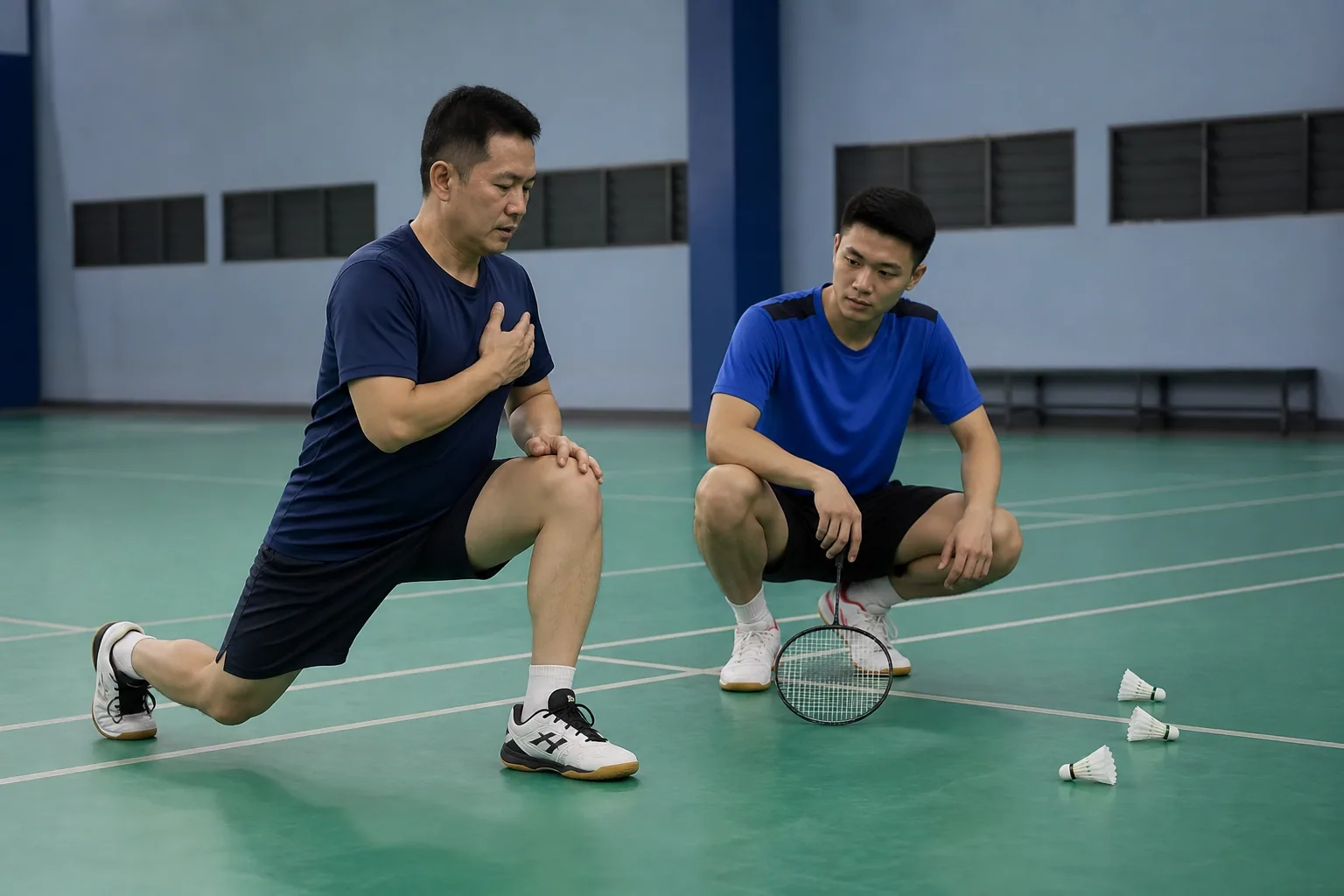
Return to play through predictable steps
After an injury, follow a diagnosis-specific rehabilitation plan. Once court work is appropriate, controlled movement usually provides a clearer starting point than unrestricted rallies. Build the ability to approach, stop, reach, and recover before adding greater speed, longer sequences, and uncertainty.
Do not use a single good practice as the only test. Review how the knee behaves during ordinary activities and the next day. Pain that returns more strongly after every session suggests the current dose or plan needs adjustment. A tournament deadline does not change that response.
Confidence can recover at a different pace from strength or pain. Explain hesitation to your therapist or coach instead of disguising it with a rushed movement. A planned progression can address the tasks you actually fear, whether that is a net lunge, landing, or changing direction toward the back court.
Prepare useful notes for an assessment
Bring a concise account of when symptoms began, whether there was a specific incident, and which movements remain comfortable. Include changes in weekly play and other exercise. A short safe video of ordinary technique may help a coach, but do not reproduce severe pain or unstable movement for the camera.
Ask what you can keep doing, what needs to pause, and what should prompt reassessment. Clear activity boundaries are more useful than a vague instruction to be careful. If a support product is suggested, ask what function it serves and whether it changes the return plan. Most accessories do not replace the underlying progression.
Also discuss your realistic schedule. Someone playing socially once a week needs a different practical plan from a player with several coached sessions and weekend competition. The goal is not the most elaborate programme on paper. It is a plan that fits your life well enough to follow and review consistently.
Agree on the modified session with your partner
A reduced-demand plan works better when the other player knows what it means. Explain which drills are limited, whether jumps are excluded, and when you intend to stop. Otherwise an easy warm-up can quietly become competitive play. Arrange predictable feeds before adding surprise, and keep the option to finish early without needing to justify the decision after every rally.
If you coach a group, avoid using an injured player's modified drill as a challenge for others to beat. The purpose is controlled practice at an appropriate level. A clear shared plan protects the quality of the session and makes the later symptom response easier to interpret.
When to Get Medical Help
Seek urgent advice for a major injury, rapid swelling, deformity, inability to bear weight, a locked knee, or a hot red knee with fever. New numbness or weakness also needs prompt review. Persistent worsening pain, repeated giving way, or symptoms limiting everyday activity warrant assessment before demanding court drills continue.
Make the next session more specific, not simply tougher
A useful response to badminton knee pain identifies the demanding movement and changes its dose, predictability, or setup. Practice the return from a lunge as carefully as the reach, and the landing as carefully as the shot. Sustainable play comes from matching the session to current capacity and acting on warning signs early.
Frequently Asked Questions
Why do my knees hurt after badminton?
Repeated lunges, jumps, fatigue, and changes in playing volume can contribute, but a clinical problem may also be involved. Note the movement, timing, swelling, and effect on daily activity.
Are badminton lunges bad for knees?
They are demanding movements, not inherently harmful ones. Distance, speed, control, and current capacity determine whether a drill is suitable.
Should I stop jumping if landings hurt?
Reduce or stop the provoking task and assess the pattern. A painful landing is not something to fix by repeatedly jumping higher.
Can a knee strap solve badminton pain?
A strap may help selected diagnosed tendon symptoms, but it is not a universal treatment or protection against ligament injury.
Is doubles always easier on knees?
Not necessarily. Court coverage, rally intensity, anticipation, and playing style change the demands. Judge the actual session.
Do badminton shoes prevent knee injuries?
Suitable court footwear can support the task, but no shoe eliminates injury risk. Fit, grip, surface condition, and workload all matter.
Can I play with clicking but no pain?
Painless sounds alone do not identify injury. New pain, swelling, locking, or giving way changes the situation and needs assessment.
When can I return after a knee injury?
Follow a diagnosis-specific plan. Controlled footwork, landings, and later symptom response should be reviewed before unrestricted competition.