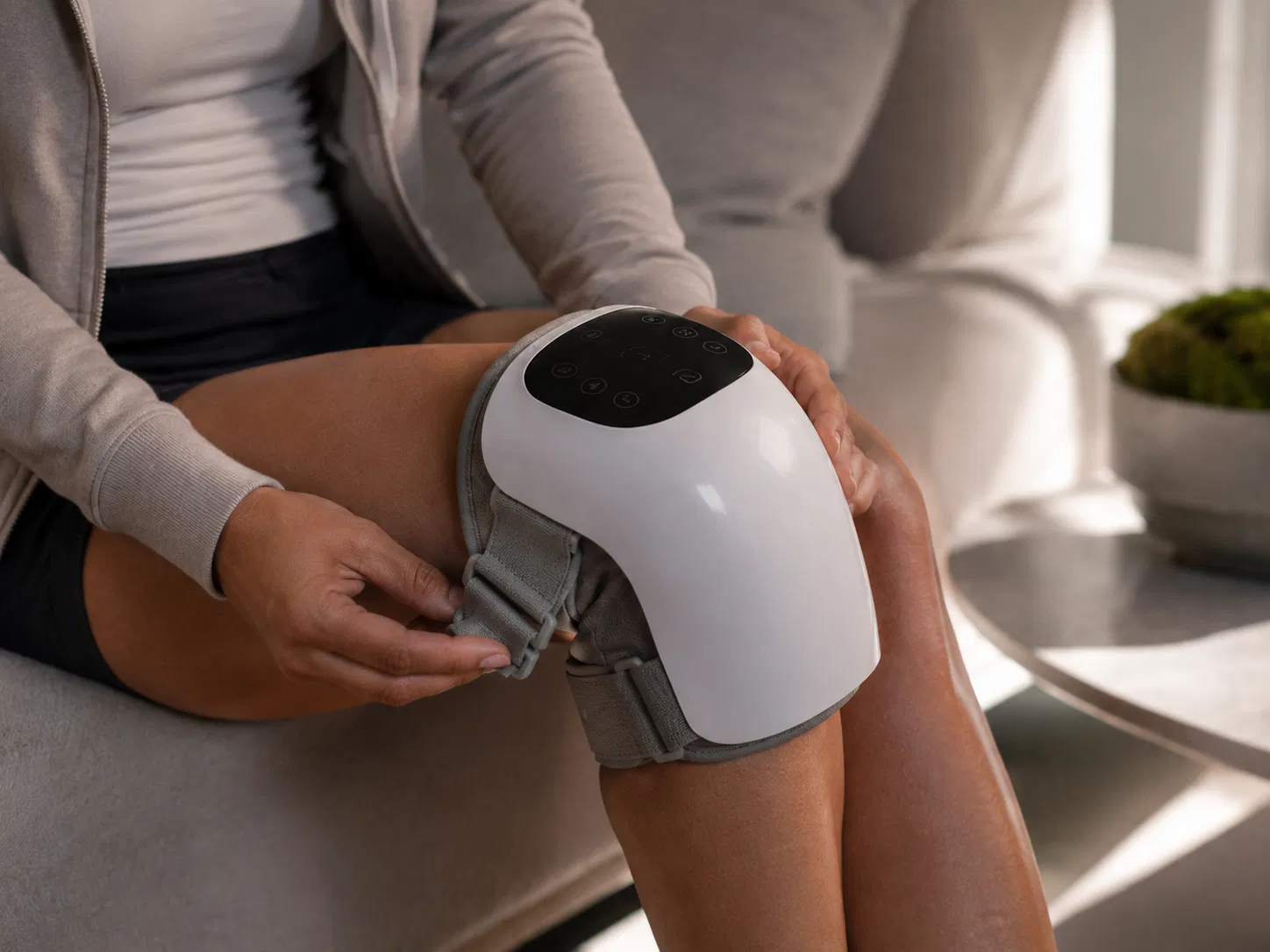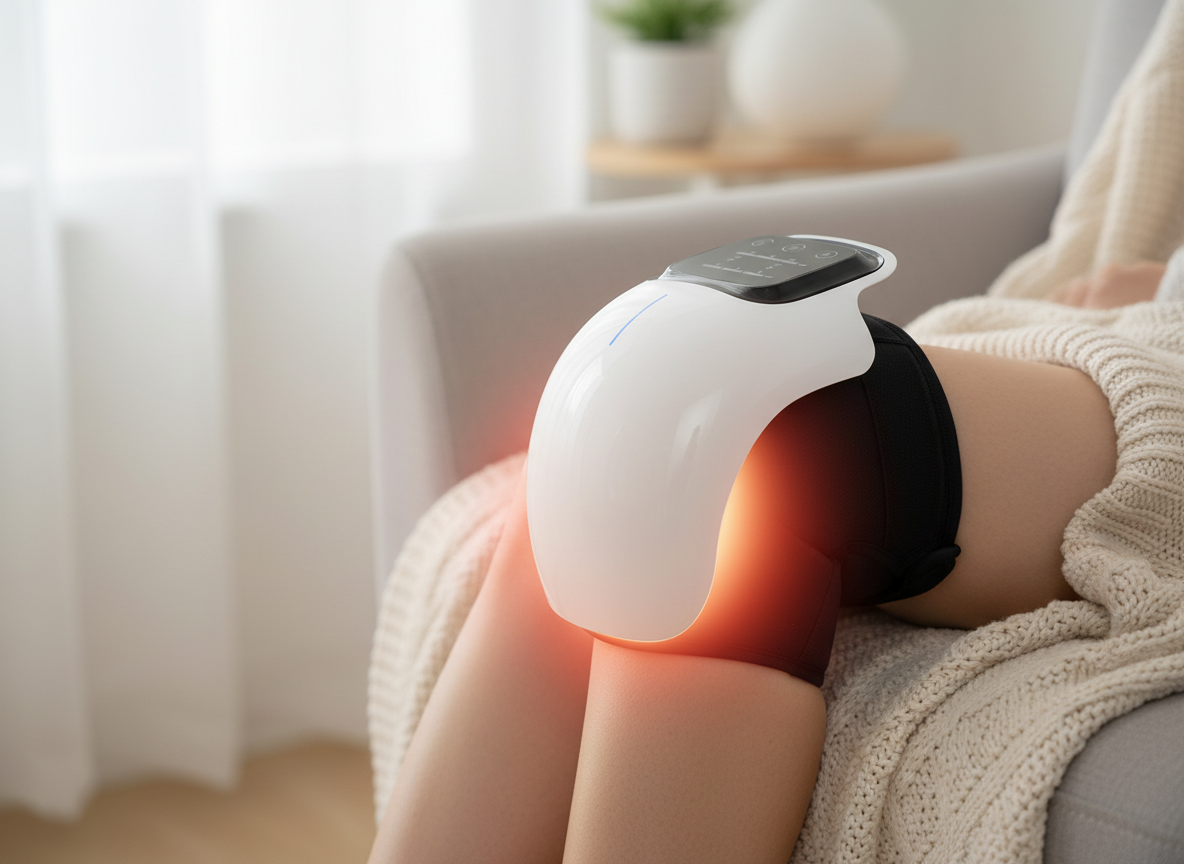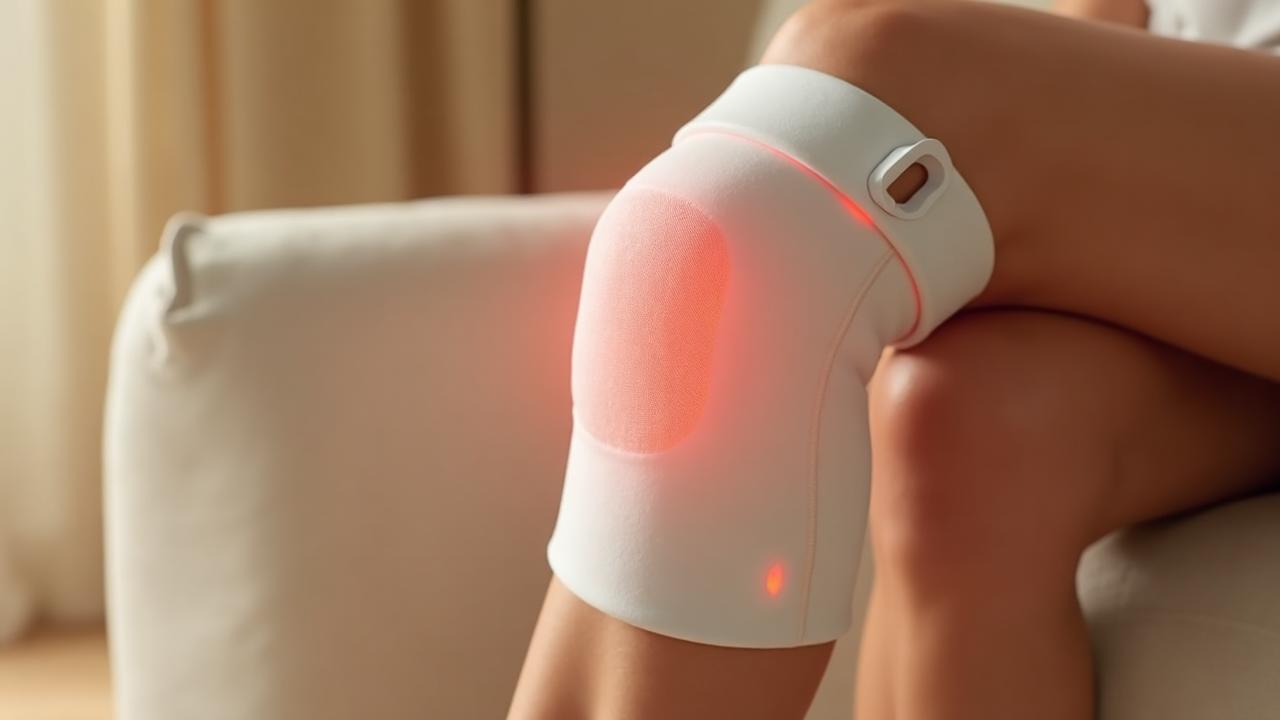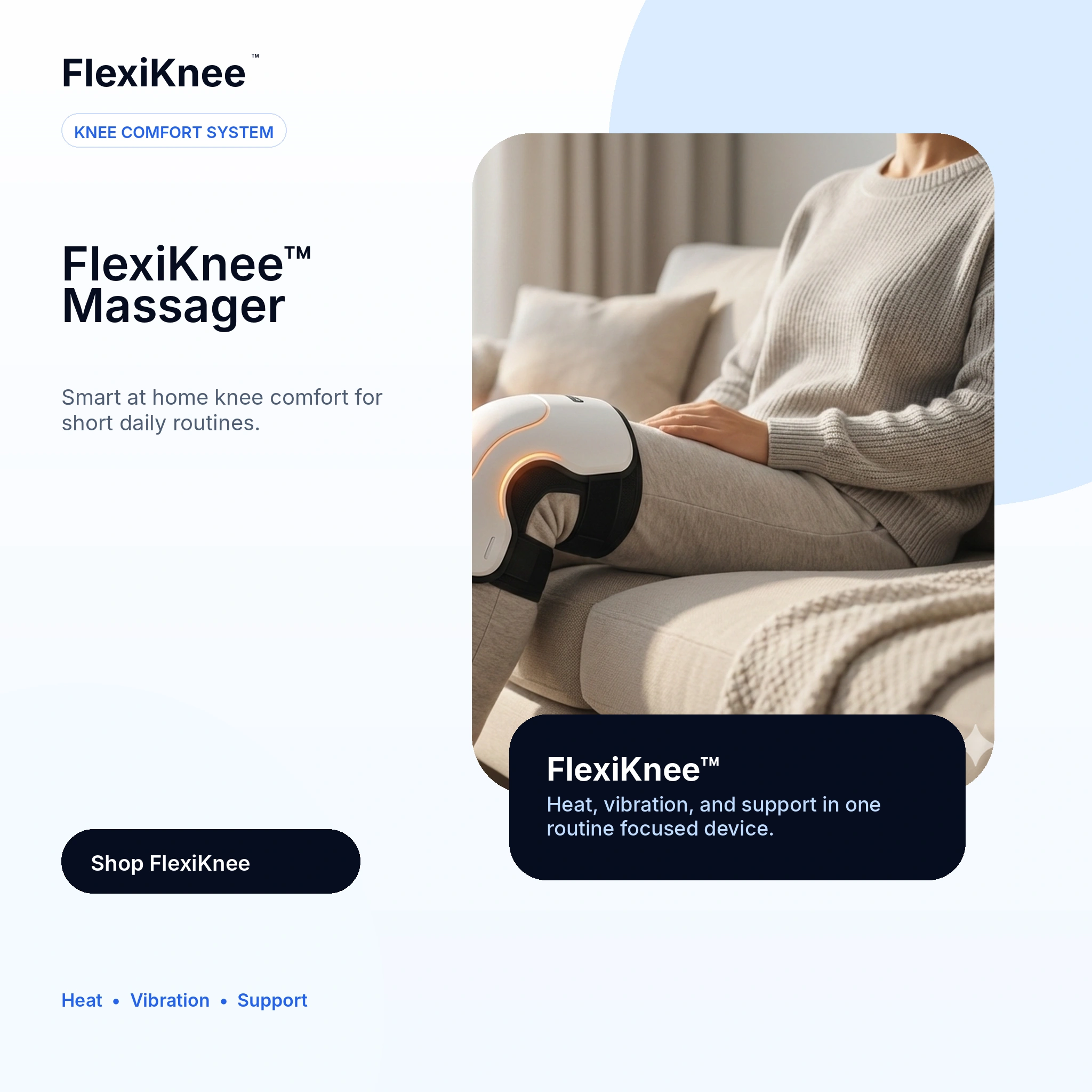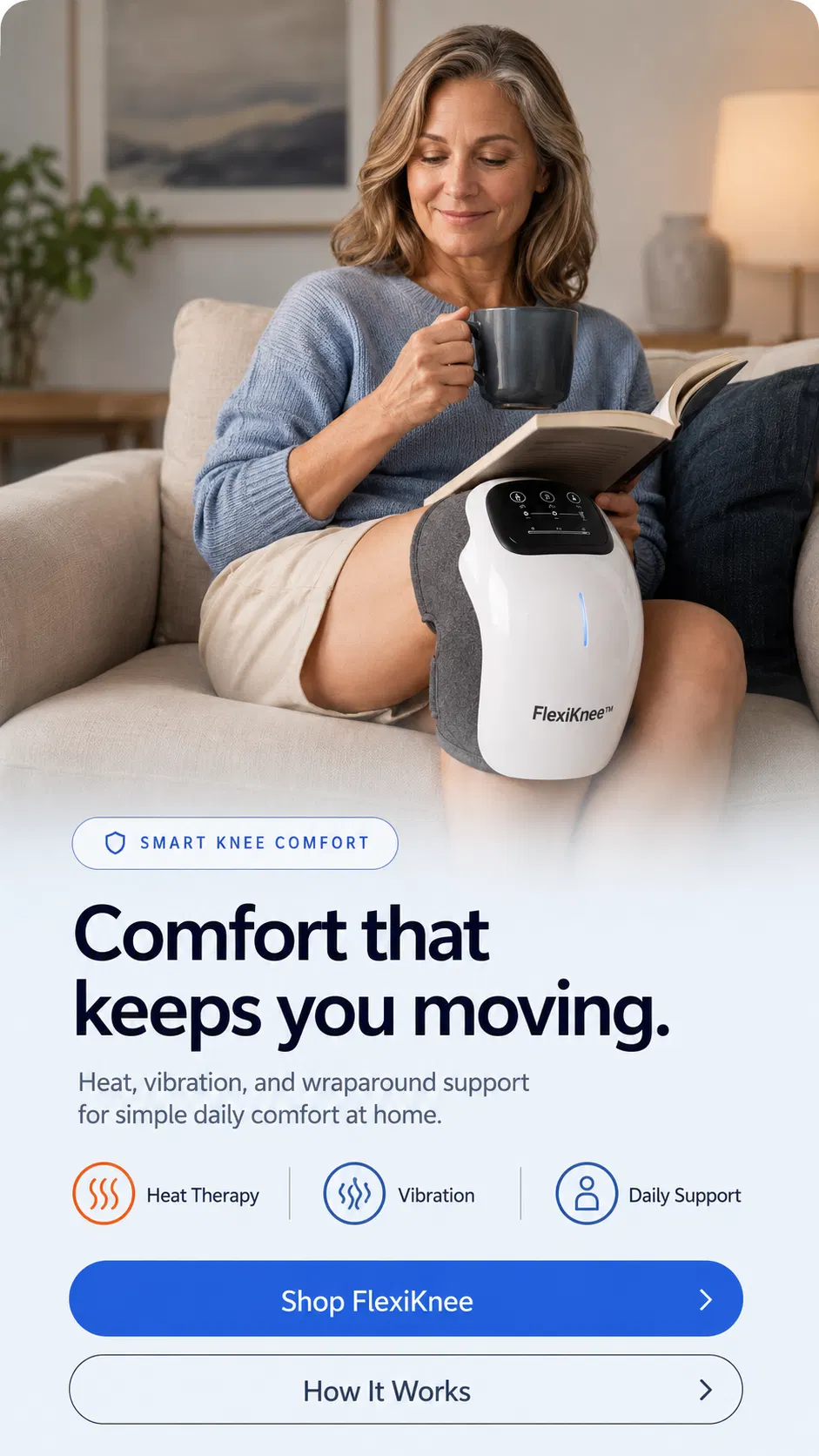
A cordless knee massager solves a real practical problem: the best comfort routine is the one you will actually use. Being able to sit on the sofa, move between rooms, or pack the device for travel can make a short daily session easier to maintain. But “wireless” tells you almost nothing about how well a product fits, heats, or lasts.
In 2026, the category ranges from simple USB warming wraps to rechargeable devices combining heat, vibration, and red light. The most expensive model is not automatically the best. A secure fit, understandable controls, even warmth, and a realistic return policy usually matter more than a long list of modes.
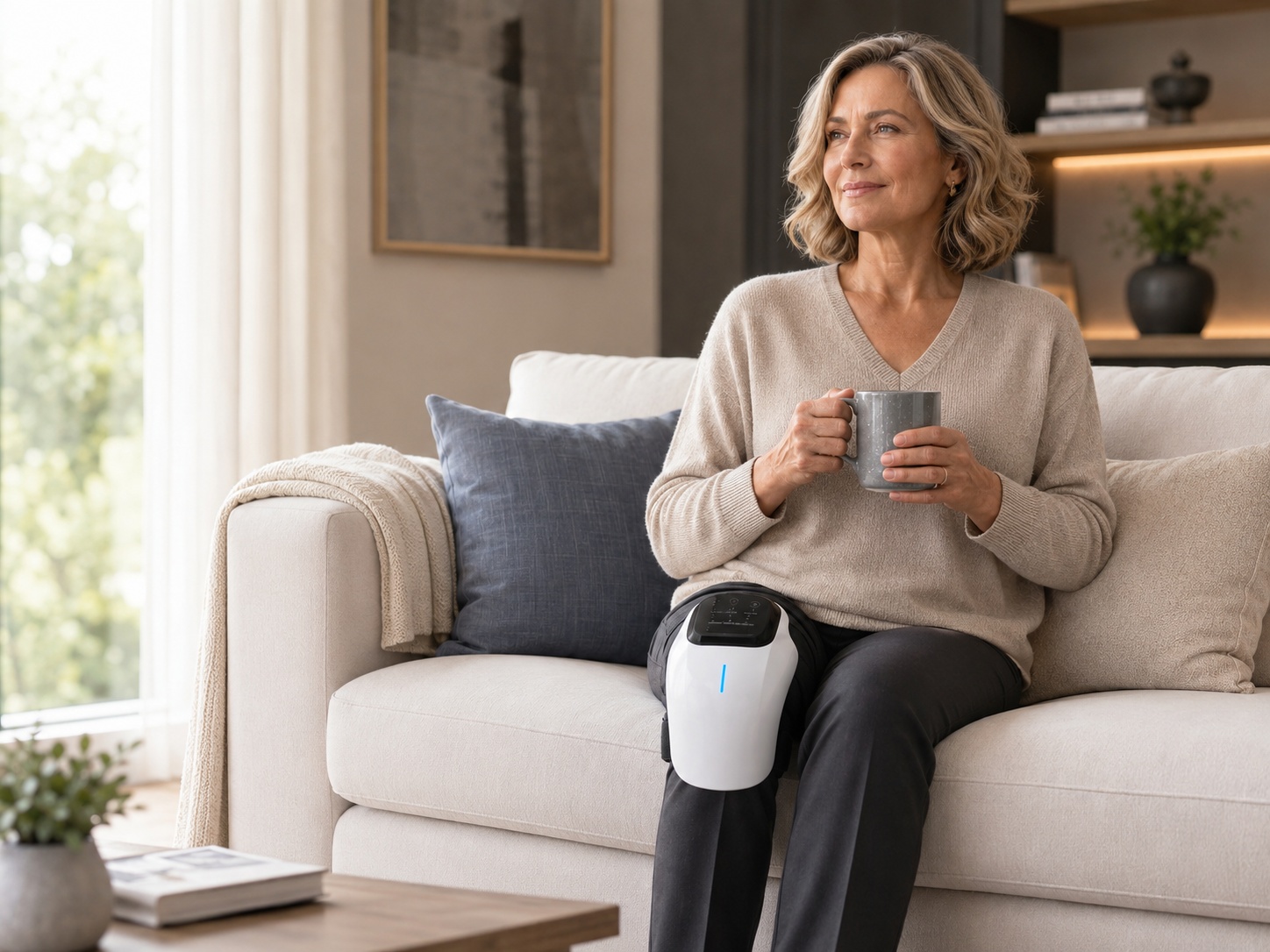
Start With the Device Category
| Type | Power source | Best for | Trade-off |
|---|---|---|---|
| Plug-in heating pad | Wall outlet | Stationary home use and broad heat | Limited movement and cable management |
| USB powered wrap | Cable to adapter or power bank | Lightweight warmth at a lower price | Not truly cordless unless paired with a compatible power bank |
| Rechargeable heated wrap | Internal or removable battery | Portable heat and simple routines | Runtime, battery weight, and charge time vary |
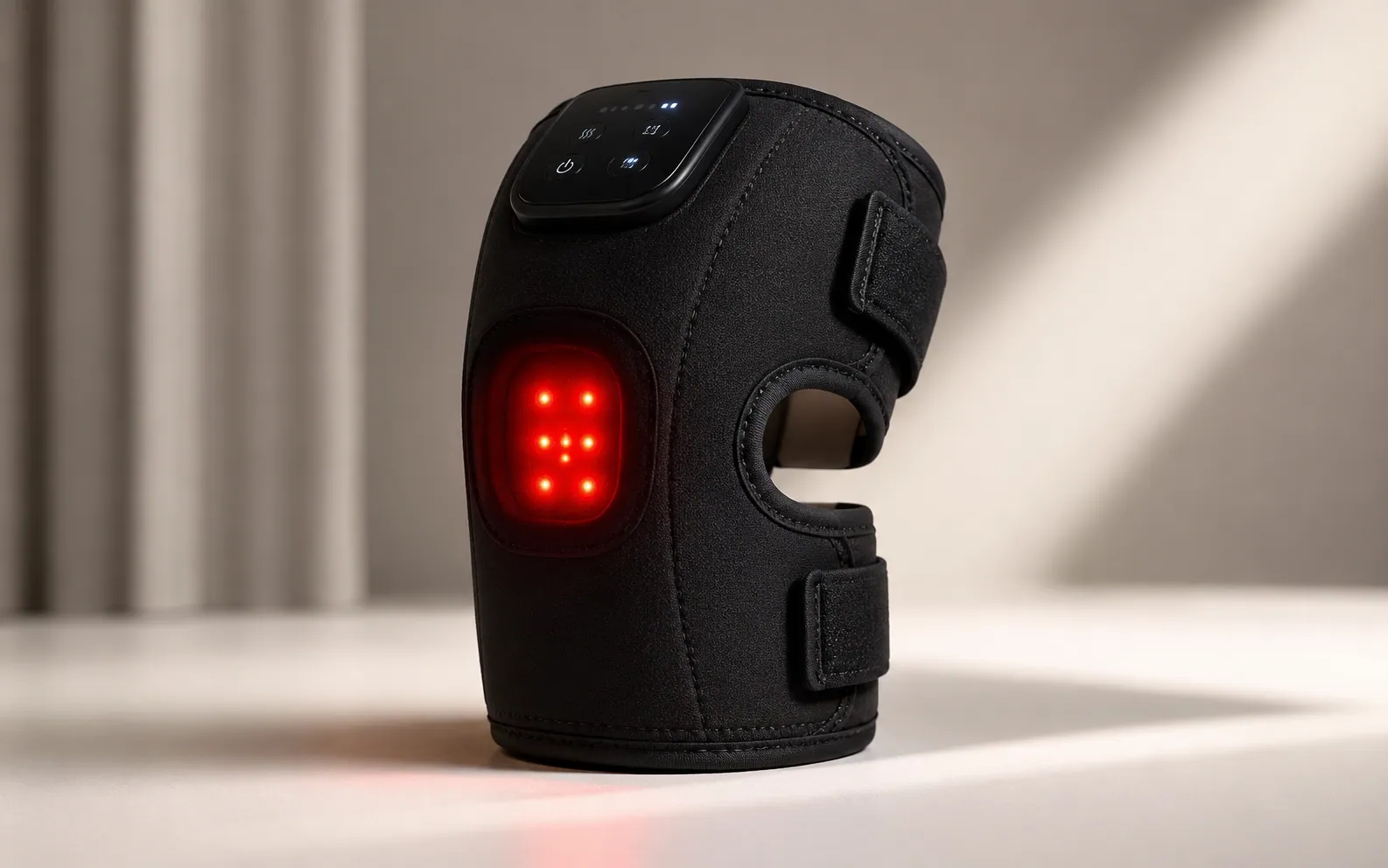
| Multi-function knee massager | Rechargeable battery | Heat plus vibration and/or red light | Bulkier, more controls, higher price |
The Eight Features That Actually Matter
1. Coverage and fit
Check the stated knee-circumference range and the position of the heating area. A wrap can have strong heating elements but still feel ineffective if the active zone sits above or beside the area you intended to warm. Straps should hold the device without pinching behind the knee or sliding when you stand.
Measure around the knee according to the brand's diagram, not where you assume the measurement should be taken. People near the minimum or maximum size should read return terms carefully because “one size fits most” often hides a narrow practical range.
2. Even, controllable warmth
Do not choose by the highest advertised temperature. A well-designed device distributes heat across the intended area, offers clearly separated levels, and does not create one small hot spot. Look for a manual that explains the levels and a control that can be changed without removing the wrap.
Why “hotter” is not automatically better
Heating products can cause burns when temperature control, sensors, wiring, or automatic shutoff fail. FDA recall notices have documented overheating and burn hazards in consumer heating products. Prioritize controlled, even warmth and follow the manufacturer's session instructions.
3. Automatic shutoff
Automatic shutoff limits accidental overuse, but the timer length should still be visible in the instructions. A timer is not permission to fall asleep in the device. Never fold or bunch the active heating area, and stop if the surface becomes unusually hot, smells abnormal, changes shape, or displays an error.
4. Battery information you can verify
Runtime depends on battery capacity and which functions are active. Heat at the highest level normally consumes more power than low heat; vibration and light features can reduce runtime further. Useful listings state battery capacity, charging input, approximate charge time, and runtime under specific settings. Vague claims such as “all-day battery” are not comparable.
A practical device should complete several ordinary sessions without creating charging anxiety. Also check whether it can be used while charging, many products should not be, and whether the battery is replaceable or permanently sealed.
5. Controls and visibility
Controls should be readable, tactile, and difficult to activate accidentally. Color-only indicators can be confusing, so labels or a simple display are helpful. If the device has separate heat, vibration, and light settings, make sure each can be adjusted independently rather than forcing every feature to run together.
6. Vibration quality
Vibration can make the session feel more active and relaxing, but stronger is not always better. The motor should not create rattling, painful pressure, or a sensation concentrated directly on the kneecap. Multiple intensity levels are useful only when the lowest level is genuinely gentle.
7. Red-light specifications
“Red light” is not one standardized feature. Compare wavelength, output or irradiance when supplied, number and location of LEDs, coverage area, and recommended exposure time. Photobiomodulation research is promising in some musculoskeletal contexts, but results depend heavily on dose and device design. A listing that gives no technical information should not command a large premium merely for glowing LEDs.

8. Cleaning, materials, and warranty
The part touching the skin will collect sweat and body oils. Check whether there is a removable liner, wipe-clean surface, or specific cleaning method. Never submerge electronics unless the manual explicitly permits it. A traceable seller, accessible instructions, warranty terms, and a realistic return period are more valuable than an extra mode you may never use.
How to Read Battery Claims
Suppose one product says “up to 180 minutes” and another says “90 minutes.” The first is not necessarily better. Ask what was active during testing. A maximum figure may refer to the lowest heat with vibration and LEDs turned off. Compare these five details:
- Battery capacity, usually stated in mAh or Wh.
- Runtime on low, medium, and high heat.
- Whether vibration and red light were active during the test.
- Charging time and charger requirements.
- Performance in colder rooms, where more energy may be needed to maintain warmth.
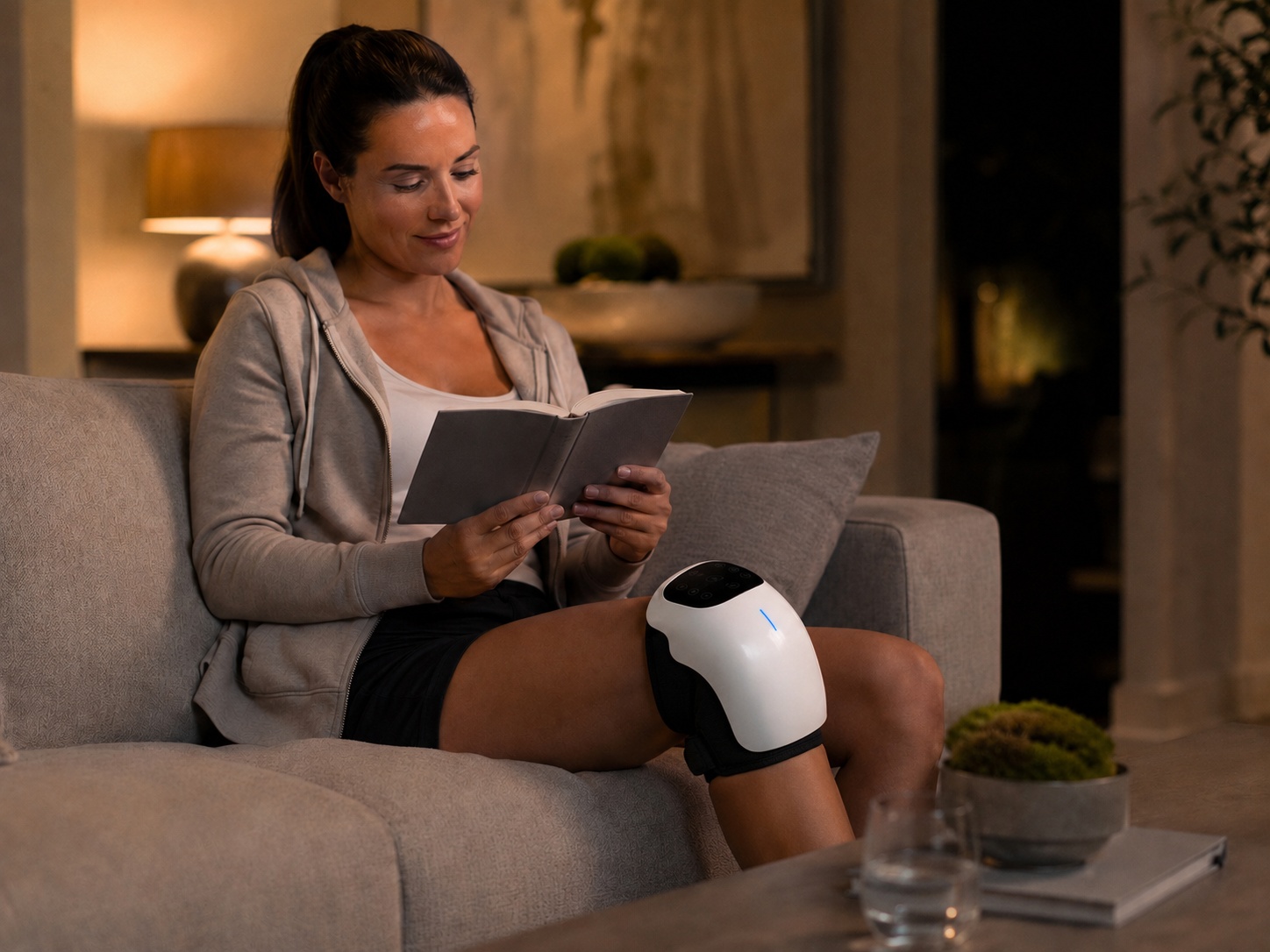
A 10-Point Shopping Checklist
- The size range includes your measured knee with room for comfortable adjustment.
- The active heat zone is shown clearly.
- Heat levels are explained rather than described only as low, medium, and high.
- An automatic shutoff time is stated.
- Battery capacity, charge time, and test conditions are disclosed.
- Heat, vibration, and light can be controlled independently.
- Cleaning instructions are practical.
- The seller provides a manual, contact details, and warranty information.
- The return period is long enough to assess fit and routine compatibility.
- The claims focus on comfort and use, not guaranteed treatment or cure.
For named products rather than a feature checklist, see our current FlexiKnee, Peka Flexi, HeatPulse, Nooro and premium knee massager comparison.
Safe Use: A Practical Routine
- Inspect the wrap, connector, battery, and controls before use.
- Start at the lowest comfortable setting, especially during the first session.
- Keep the active area flat and positioned as shown in the manual.
- Stay awake and check the skin periodically.
- End the session at the recommended time or sooner if discomfort develops.
- Allow the device to cool before folding, storing, or charging.
Do not use heat over broken or irritated skin. People with reduced sensation, circulation problems, diabetes-related neuropathy, or conditions that affect temperature awareness should ask a qualified healthcare professional whether a heated device is appropriate. Do not combine the wrap with topical products unless both manufacturers say the combination is safe.
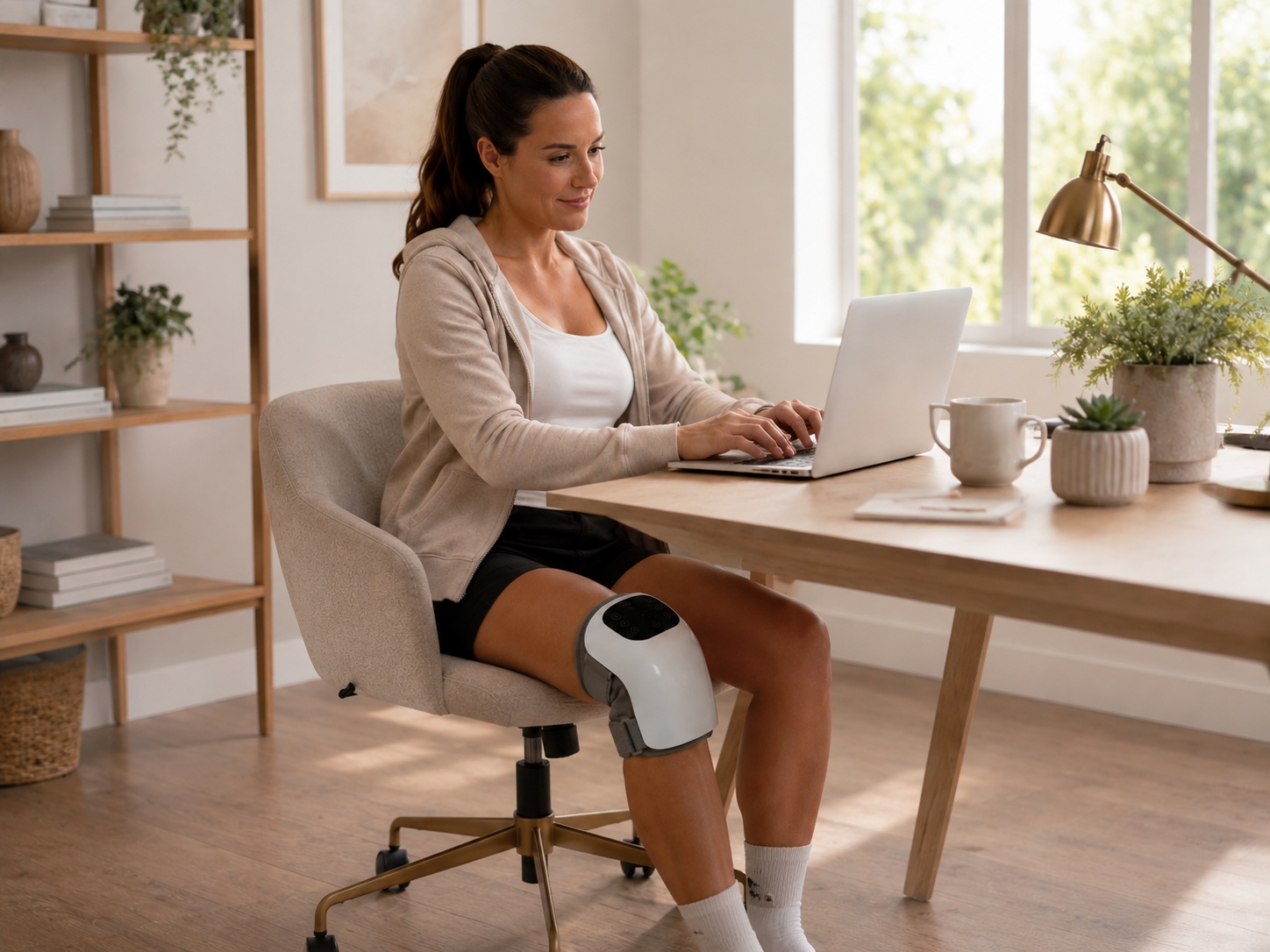
Which Type Fits Which User?
- For simple warmth at home: a straightforward heated wrap with clear controls may be enough.
- For travel: prioritize compact size, locking controls, USB-C charging when available, and battery rules for air travel.
- For a multi-sensory routine: consider heat plus independently adjustable vibration and red light.
- For support during activity: choose a true orthopedic or compression brace rather than assuming a bulky massager can serve the same role.
- For visible swelling after an acute event: a heated massager may not be the appropriate first tool; review our heat versus ice guide and seek advice when needed.
Common Marketing Claims to Treat Carefully
Be cautious with guaranteed pain relief, “medical-grade” language without a defined standard, exact treatment timelines, or claims that a consumer wrap repairs cartilage. Also question listings that provide precise temperature or battery figures without explaining how they were measured.
A credible product page should tell you what the device does, how to operate it, who should avoid it, and how to obtain support. It should not require a medical promise to justify the purchase.
Bottom Line
The best cordless knee massager is not the one with the most modes. It is the one that fits securely, delivers controllable and even warmth, has a reliable shutoff, provides transparent battery information, and is simple enough to become part of your routine. Vibration and red light can be worthwhile additions when their specifications and controls are clear.
Compare the device as a complete system: wrap geometry, active coverage, power, controls, materials, cleaning, instructions, and seller support. That approach is more dependable than choosing by maximum temperature or a single headline runtime.
Frequently Asked Questions
How long should a rechargeable knee massager battery last?
There is no universal benchmark because runtime changes with heat level, vibration, red-light use, battery capacity, and ambient temperature. Compare devices only when the manufacturer states test conditions, and prioritize enough runtime for several normal sessions rather than the largest headline number.
Is a cordless device as warm as a plug-in heating pad?
It can provide useful local warmth, but cordless products manage power differently and may heat a smaller area. The safer comparison is evenness, controllable levels, and automatic shutoff, not which product advertises the highest temperature.
Do vibration and red light make a meaningful difference?
They create a different user experience, but their value depends on design and specifications. Vibration should feel comfortable rather than aggressive. For red light, wavelength, output, coverage, and session instructions matter more than simply listing the feature.
Can I walk around while wearing one?
Only if the product is specifically designed for light movement, fits securely, and the instructions permit it. Do not drive, exercise intensely, or use stairs when controls, cables, bulk, or reduced awareness could create a hazard.
What is the most important safety feature?
Reliable temperature control and automatic shutoff are essential. Clear instructions, intact wiring, a battery from a traceable manufacturer, and a design that does not create concentrated hot spots are equally important.