First separate a painful set from ordinary effort
A deadlift asks several muscle groups to work together while you move an external load. Effort in the thighs, hips, or back is not automatically an injury signal. A distinct knee pain that changes your movement deserves more attention, especially if it is sharp, increases each repetition, or makes you shift away from one leg.
Stop the set before troubleshooting. Repeating the same painful movement with progressively different foot positions can turn a small problem into a longer session of irritation. Put the load down safely, notice what happened, and decide whether you need assessment. A new pop with swelling or instability is not a cue to test another variation.
This guide compares deadlift-specific decisions. It does not repeat a general squat-pain programme or prescribe rehabilitation for a diagnosed tendon or ligament injury. If pain occurs across many workouts, our post-exercise knee pain guide helps organize the broader pattern before you focus on a single lift.
Locate the moment, not just the body part
Write down whether pain begins while setting up, leaving the floor, passing the knees, standing tall, or lowering. These are different tasks. A setup that demands more knee bend may be uncomfortable before the bar moves, while a rushed lockout may provoke symptoms at the top. The timing helps a coach or clinician ask better questions.
Also notice whether the issue appears only with heavy sets, only late in the workout, or even with an unloaded movement. A light repetition that looks tidy does not tell you how the movement changes under fatigue. Conversely, one uncomfortable heavy attempt does not establish that all hip-hinge exercise must be avoided forever.
Location is useful but not diagnostic. Pain at the front, inner side, or back of the knee can have several explanations. Avoid assigning a tissue diagnosis from a social-media diagram. Describe the sensation, timing, swelling, and effect on walking; those observations are more valuable than arriving certain that a particular tendon is the problem.
What changes between conventional, sumo, and Romanian deadlifts?
| Variation | Typical movement difference | Knee-related question |
|---|---|---|
| Conventional | A floor start with coordinated hip and knee extension. | Is the start position and initial push comfortable? |
| Sumo | A wider stance and different hip and foot positions. | Does the width or rotation provoke the knee? |
| Romanian deadlift | A hip-hinge emphasis, usually starting from standing. | Can you control the range without locking or overbending the knees? |
| Raised-start pull | The bar begins on suitable blocks or supports. | Does reducing the starting range improve control? |
| Hex-bar pull | Load position and handle height differ by equipment. | Do the chosen setup and knee bend actually suit you? |
Biomechanical studies have measured differences between deadlift styles, including joint positions and moments. These measurements describe the demands in a particular study setup. They do not directly rank the probability that a person with knee pain will get injured. A variation with a lower measured demand in one comparison is not automatically the right rehabilitation choice.
A study of deadlift variations in women, for example, found that equipment and technique altered joint demands. That is a reason to assess the actual lift rather than assume a hex bar or wide stance must be knee friendly. Load, handle height, experience, and proportions all influence what the movement becomes.
Conventional deadlift: examine the start position
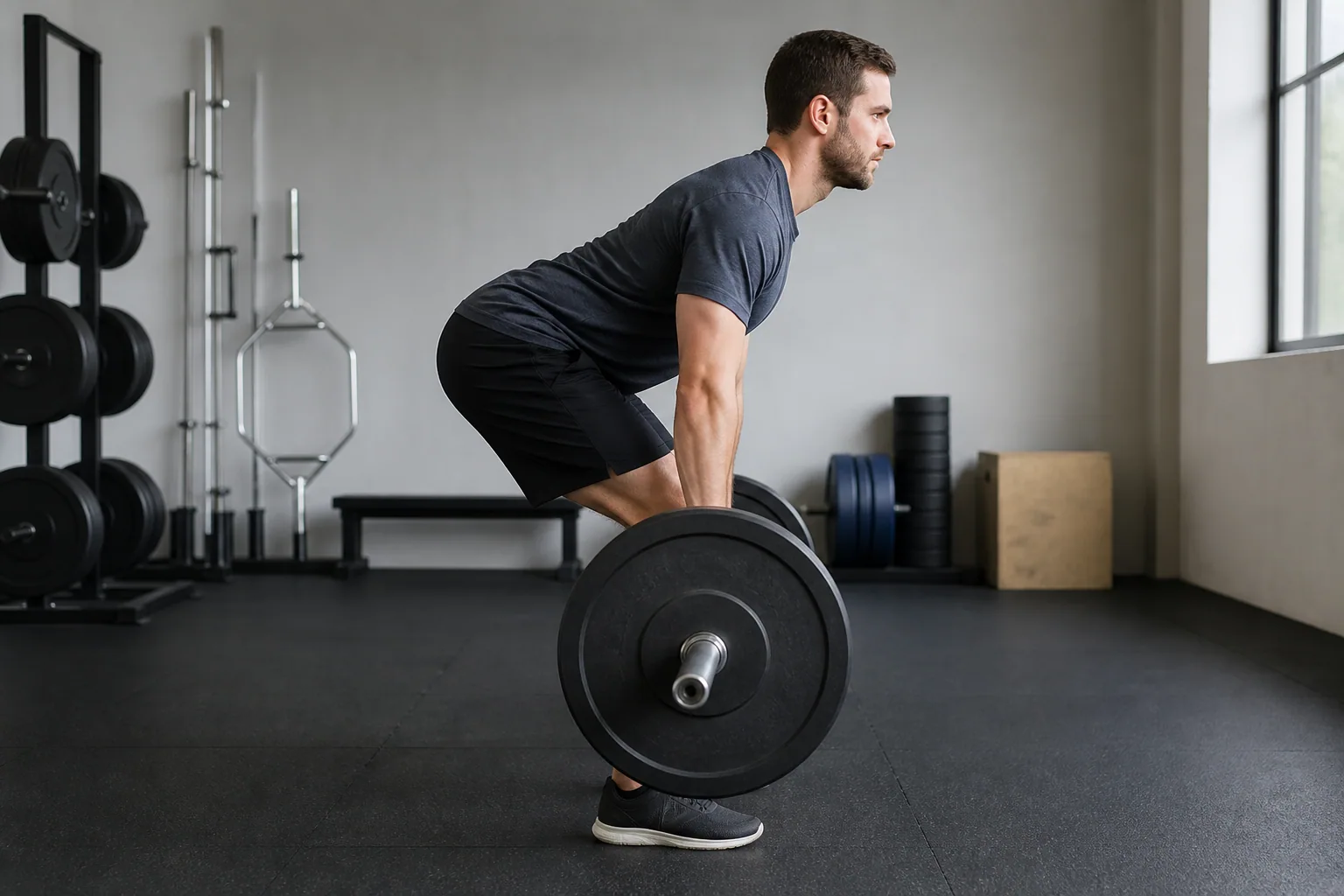
For a conventional pull, the floor start may be the most demanding part of the range. If reaching the bar requires a position you cannot control comfortably, forcing the same setup with heavier plates is unlikely to help. Ask whether a raised start or a different hinge exercise would let you train within a more manageable range.
Keep the bar path and whole-body coordination in view. Trying to avoid all knee movement can turn the lift into an awkward reach, while treating it like a deep squat changes the task in another direction. A qualified coach can observe your proportions and setup without insisting that every lifter use an identical hip height.
Footwear and the surface should feel stable. Do not experiment with loose wedges, soft stacked mats, or unstable platforms under a loaded lift. If you change shoes, treat that as a meaningful training change rather than combining it with a new stance and a personal-record attempt. First learn how the setup feels at a manageable load.
Sumo deadlift: wider is not automatically gentler
A sumo stance changes the relationship between the feet, hips, and knees. Some lifters find it comfortable; others find the wider position or required coordination irritating. Do not widen the stance indefinitely in search of a shorter bar path. The stance should permit a controlled start and finish without forcing a painful joint position.
Watch what happens as the load leaves the floor. If the knees drift into a position you cannot control, reduce the challenge and get technique feedback. Aggressively pushing them outward is not a universal correction either. The objective is coordinated movement, not achieving an extreme alignment cue at the expense of comfort elsewhere.
If sumo produces inner-knee discomfort that conventional pulling did not, that is useful information, not proof of a specific injury. Stop using that variation as a workaround until the pattern is clearer. A clinician may need to examine the knee if symptoms persist outside the lift or are accompanied by swelling or instability.
Romanian deadlift: control the hinge and the endpoint
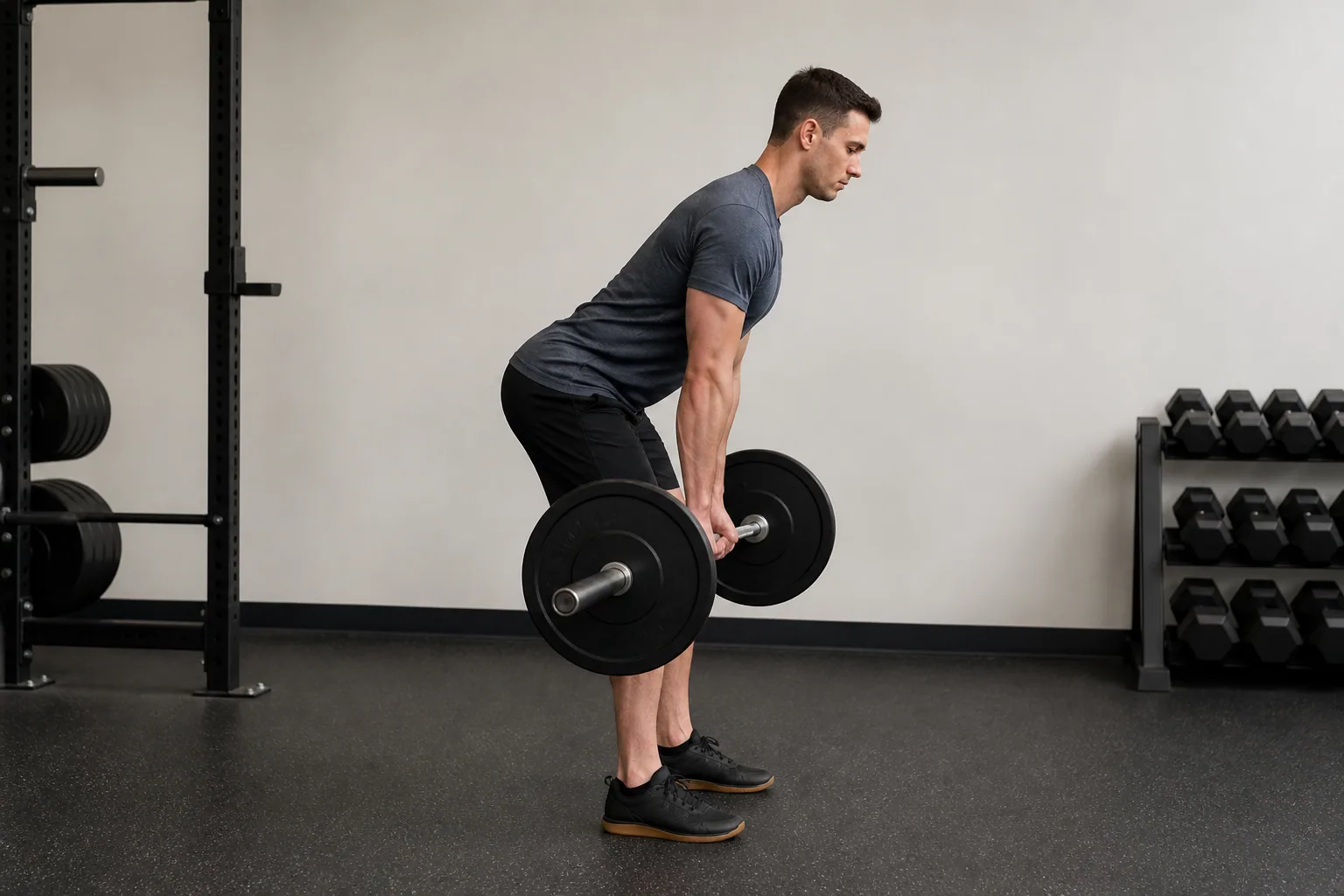
The Romanian deadlift, often shortened to RDL, typically begins from standing and emphasizes moving the hips backward while keeping a controlled slight knee bend. It is not a challenge to keep the knees absolutely straight. Nor does the bar need to reach the floor for the repetition to count as useful training.
Choose an endpoint you can reach without losing the intended movement or provoking the knee. The sensation of a hamstring stretch does not require chasing the deepest possible range. If you reach farther by changing knee position abruptly or shifting onto one leg, the extra distance may not serve the exercise goal.
At the top, finish under control rather than snapping the knees backward. A forceful lockout can be especially unhelpful if you tend to stand in excessive extension. For a habitual loose-joint pattern, see our hypermobile knees guide; a new backward-bending injury needs a different assessment.
Check the training week before changing every technique detail
Consider what else your knees have done recently. Heavy squats, lunges, running, a long shift standing, or an unfamiliar sport can change how a deadlift session feels. The final exercise may be where you notice a problem without being the only contributor. Review the combined week rather than blaming the last repetition in isolation.
Volume includes more than weight on the bar. Additional warm-up sets, slower lowering, longer pauses, and more frequent sessions all change exposure. If you increased several variables together, return to a simpler baseline. This makes it easier to identify a tolerable workload and discuss the response with someone helping you.
Recovery context matters as well. Poor sleep, illness, and a sudden return after time away can make familiar training harder to manage. These factors do not diagnose knee pain, but they belong in the decision about today's session. You do not have to prove that the programme is unchanged before choosing a lighter day.
Useful modifications, and what they cannot prove
| Modification | Why someone might try it | Limit |
|---|---|---|
| Reduce the load | Lower the immediate demand and observe control. | A light comfortable set does not clear an injury. |
| Reduce repetitions | Avoid the point where fatigue changes movement. | Do not compensate by making every repetition maximal. |
| Raise the start | Use a smaller required range. | Supports must be stable and appropriate for lifting. |
| Change the variation | Find a different tolerable movement demand. | A new variation also needs familiarization. |
| Pause heavy pulling | Allow assessment or symptom settling. | Keep other activity appropriate rather than forcing total inactivity. |
| Get technique feedback | Observe setup, movement, and fatigue together. | Coaching does not replace a clinical examination when needed. |
Change one variable at a time when it is reasonable to continue training. Otherwise, a better session might result from lighter weight, a new stance, fewer repetitions, or simple day-to-day variation, and you will not know which. Record the change briefly. This is practical troubleshooting, not a demand for a complicated training spreadsheet.
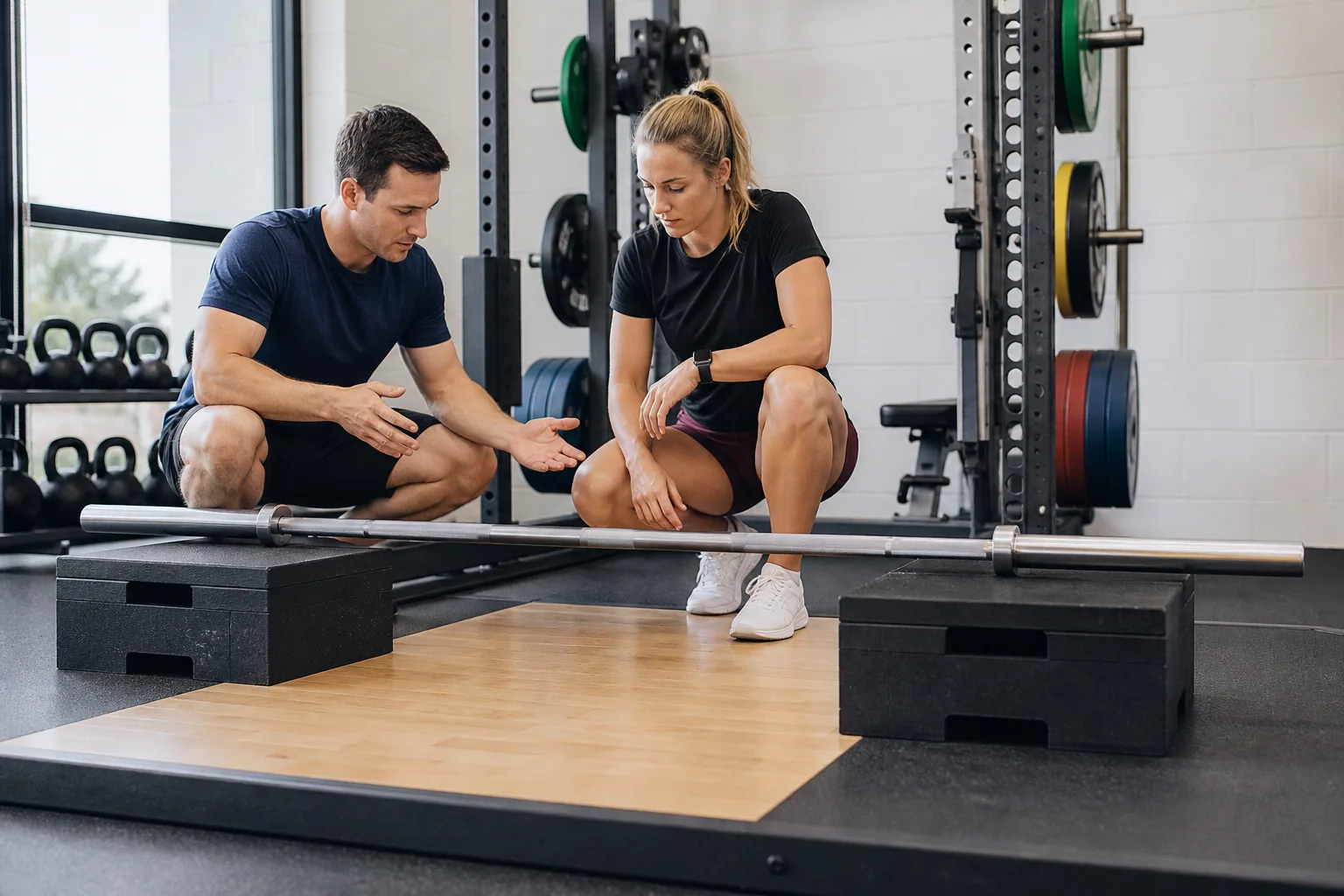
A raised bar should sit on equipment intended to hold it securely. Do not improvise supports that can slide or collapse. Learn how to set the load down from the modified position before the working set. An exercise adjustment is only useful if the surrounding setup remains predictable.
Build a return plan around repeatable sessions
After symptoms settle or you receive a rehabilitation plan, begin from a workload you can perform without a worsening response. Review the knee later that day and the next morning as well as during the set. A return plan should consider ordinary walking and stairs, not just whether you managed to finish a workout.
Increase one element only when the current level is consistently manageable. That might be load, range, repetitions, or frequency, depending on the goal. There is no single percentage increase that suits every knee problem. A previous personal best is historical information, not the correct next step after a painful period.
Keep the purpose of assistance exercises clear. Hamstring work, quadriceps work, and balance tasks may have roles in an individualized programme, but accumulating more exercises is not automatically better. Our Nordic hamstring guide discusses a separate, demanding exercise rather than a universal substitute for painful deadlifts.
What to show a coach or clinician
A brief description of the painful moment, recent workload changes, and later symptoms helps more than a long list of online diagnoses. If filming is safe and permitted, a light demonstration can show the setup you mean. Do not reproduce severe pain or a risky load just to obtain convincing footage.
Bring the whole training context: exercises, approximate loads, recent breaks, and the activities that remain comfortable. Mention any swelling, locking, or giving way even if it happens away from the gym. A clinician may need to assess the knee before technique coaching becomes the main priority.
Ask what would count as a useful improvement and what should trigger a review. Clear boundaries reduce the temptation to test the knee repeatedly. It is easier to follow a plan that says which activities are acceptable and which changes matter than a vague instruction to rest until everything feels perfect.
Equipment is not a substitute for load management
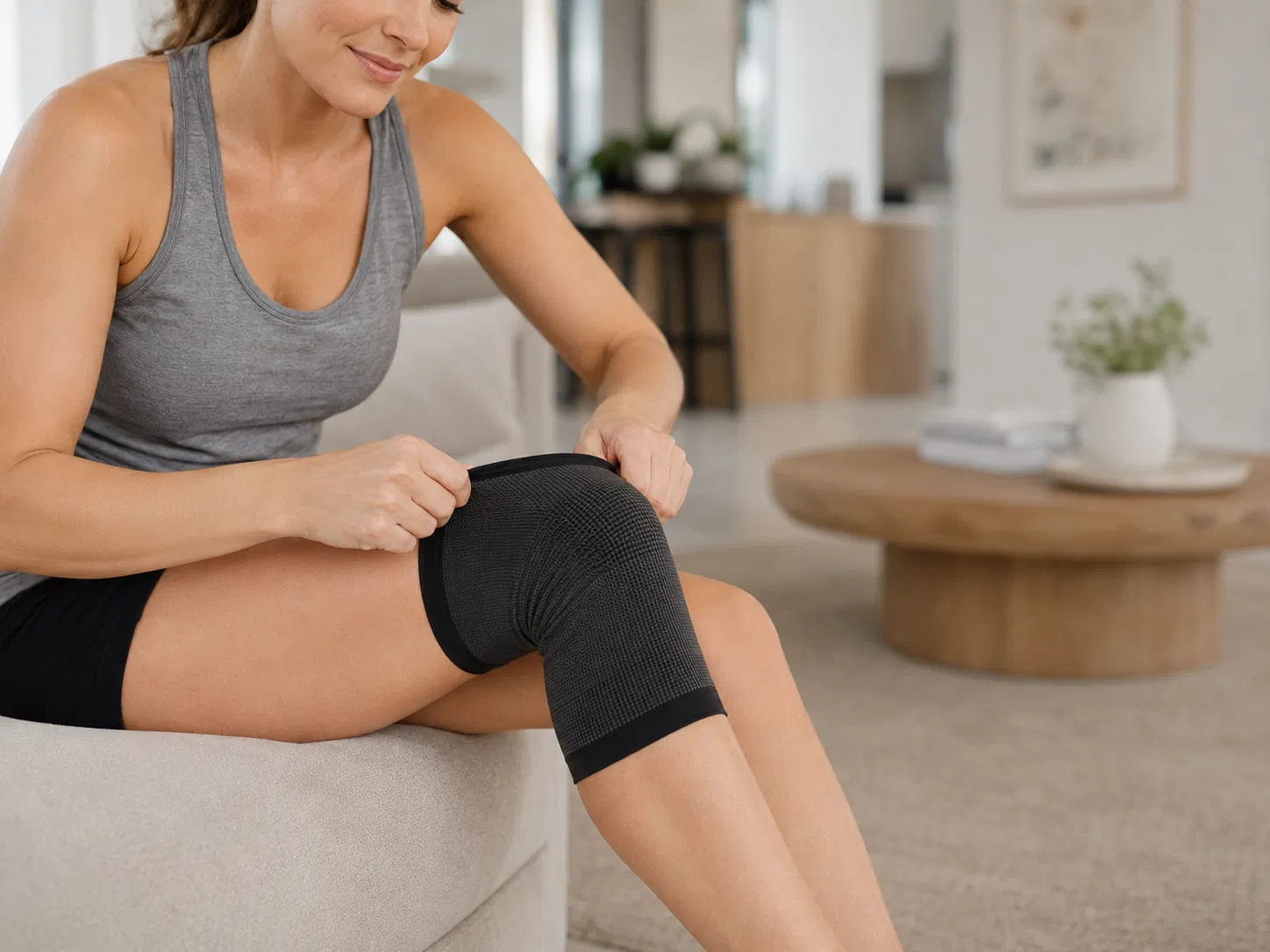
A sleeve can provide warmth or a supported feel, but it does not establish that a movement is safe or protect against every injury. Avoid using tighter compression to silence symptoms. If fabric bunches behind the knee, causes tingling, or changes your movement, stop and reassess the fit.
Likewise, a massage or heat routine after training cannot cancel an excessive workload. Comfort tools are optional and must suit the symptom pattern. New swelling or a fresh injury changes the conversation. Make the next training decision from the knee's response and appropriate advice, not from how quickly a device makes it feel different.
When to Get Medical Help
Seek urgent advice after a significant injury with rapid swelling, deformity, inability to bear weight, or a locked knee. A hot red knee with fever or feeling unwell also needs urgent assessment. Persistent worsening pain, repeated giving way, or symptoms affecting ordinary walking warrant a clinical review before heavy lifting resumes.
Choose the lift your current knee can manage
Conventional, sumo, and Romanian deadlifts are options, not a safety ranking. Identify the painful moment, review the entire workload, and use modifications only when they make the task more controlled. A productive session is one you can recover from and repeat, not one completed by ignoring the knee.
Frequently Asked Questions
Are deadlifts bad for knees?
Not inherently, but suitability depends on symptoms, capacity, technique, and workload. A painful knee may need assessment and a different exercise plan.
Is sumo easier on the knees?
Not for everyone. The wider stance and different joint positions change demands rather than removing them.
Why does an RDL hurt my knee?
Range, load, knee position, fatigue, or an unrelated knee problem may contribute. Do not diagnose the cause from the exercise name alone.
Should my knees be completely straight in an RDL?
An RDL usually uses a controlled slight bend rather than rigidly locked knees. Individual instruction should fit your proportions and goal.
Can I keep lifting through sharp pain?
Stop the set. Sharp pain, swelling, locking, or giving way deserves assessment rather than heavier testing.
Would raising the bar help?
A stable raised start can reduce the required range for some people. It is a modification to assess, not proof that the underlying problem is solved.
Do knee sleeves prevent deadlift injuries?
No sleeve guarantees injury prevention or corrects excessive workload. A comfortable sleeve is optional, not permission to lift through symptoms.
How do I return to normal weights?
Use a gradual plan based on movement quality, symptom response, and any clinical restrictions. Do not jump directly from one comfortable light session to a previous maximum.