Extra movement is a description, not a diagnosis
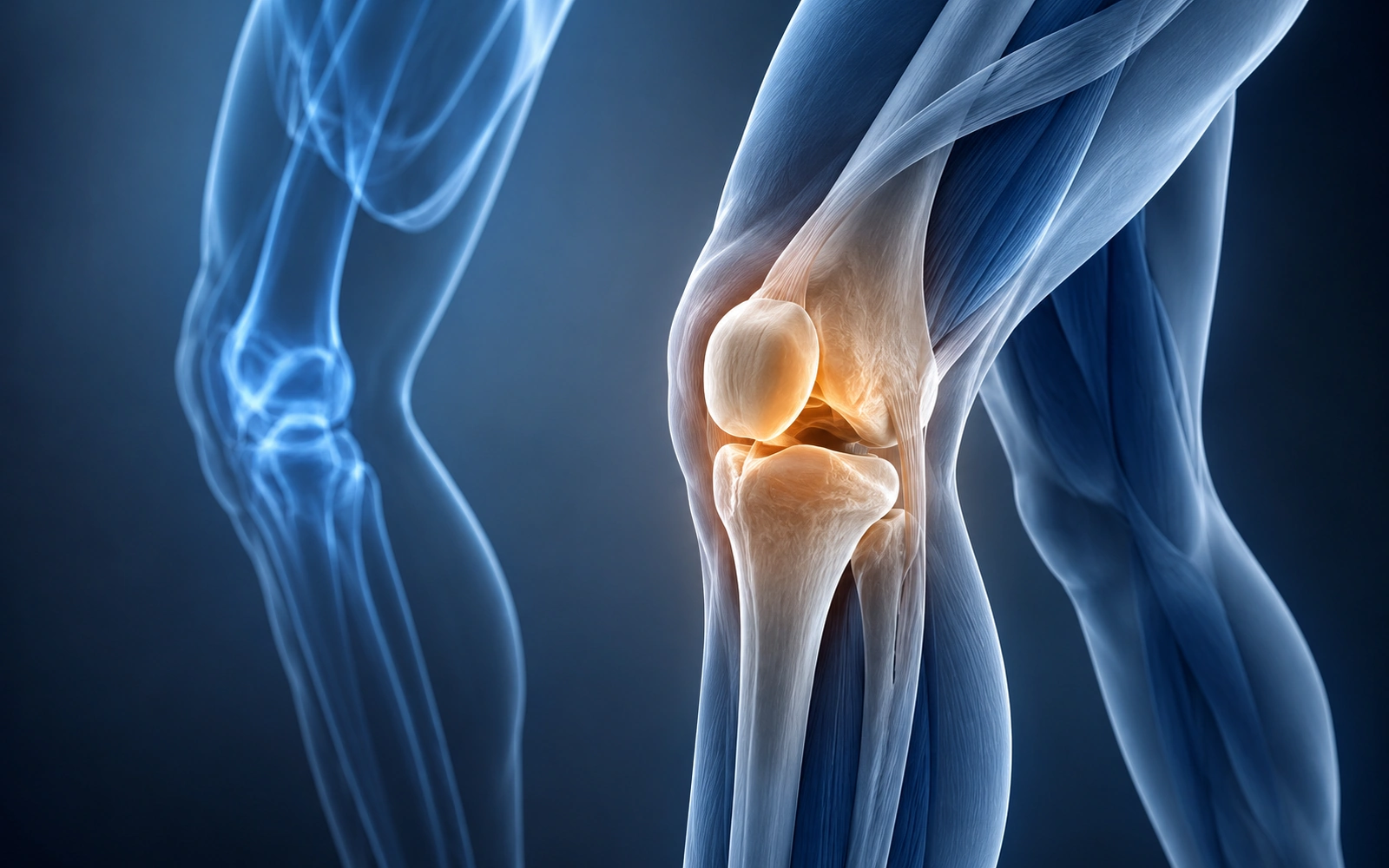
Joint hypermobility means that a joint moves beyond the range commonly expected for that person and joint. At the knee, people often notice extra backward movement when standing with the leg straight. Some have this on both sides, some have several flexible joints, and others have a more localized pattern. The amount can also change with age, injury, training, and previous surgery.
Being flexible is not automatically an illness. A person who has always had extra knee extension and functions comfortably is different from someone with recurrent dislocations, frequent injuries, or persistent pain. Hypermobility spectrum disorders and hypermobile Ehlers-Danlos syndrome involve broader clinical assessments. Neither can be identified from the angle of one knee, an online photograph, or how easily someone demonstrates a flexibility trick.
The Beighton score is one screening tool used in an assessment of generalized joint hypermobility. It samples movement at selected joints and includes knee extension, but it is not a complete explanation of pain or instability. History and other findings matter. Do not repeatedly push your joints to their limits in order to increase a score or convince yourself that your symptoms are valid.
| Term | What it describes | What to keep separate |
|---|---|---|
| Knee hypermobility | More movement than the usual range | Whether that movement is painful or functionally limiting |
| Symptomatic hypermobility | Extra movement alongside symptoms needing evaluation | The specific diagnosis and other causes of pain |
| Joint instability | Difficulty keeping a joint secure during a task | Flexibility alone, which can be painless and controlled |
| Hyperextension injury | A particular event forcing the knee backward | A lifelong movement trait without a new injury |
Why comfortable control matters more than a perfect-looking knee
Many people with hypermobile knees are told that their joints are loose and their muscles must work harder. That can be a useful starting idea, but it is incomplete. Symptoms are influenced by the task, strength, endurance, movement awareness, sleep, recovery, prior injuries, and other health conditions. A strong person can still have difficulty controlling a particular movement, while someone with substantial range may have no difficulty at all.
Control means being able to choose and adjust a position rather than arriving at an uncomfortable limit without noticing. It also means managing transitions: standing from a chair, stepping down, turning, or slowing to a stop. It does not require holding every muscle tense all day. Constant guarding can make ordinary activity feel exhausting and can turn a useful cue into another source of strain.
Think of the goal as having more options. You can straighten the knee comfortably, soften the position when appropriate, bend and straighten during movement, and change posture before discomfort builds. The right strategy should make daily life easier, not make you monitor your knees continuously or fear every straight-leg position.
What does neutral knee position actually mean?
In clinical movement language, neutral extension usually refers to a straight knee around the conventional zero-degree position. A hypermobile knee may travel beyond that point. If your habitual resting position is farther backward, neutral can initially feel slightly bent even when it looks straight from the side. That unfamiliar feeling is one reason verbal instructions alone are sometimes frustrating.
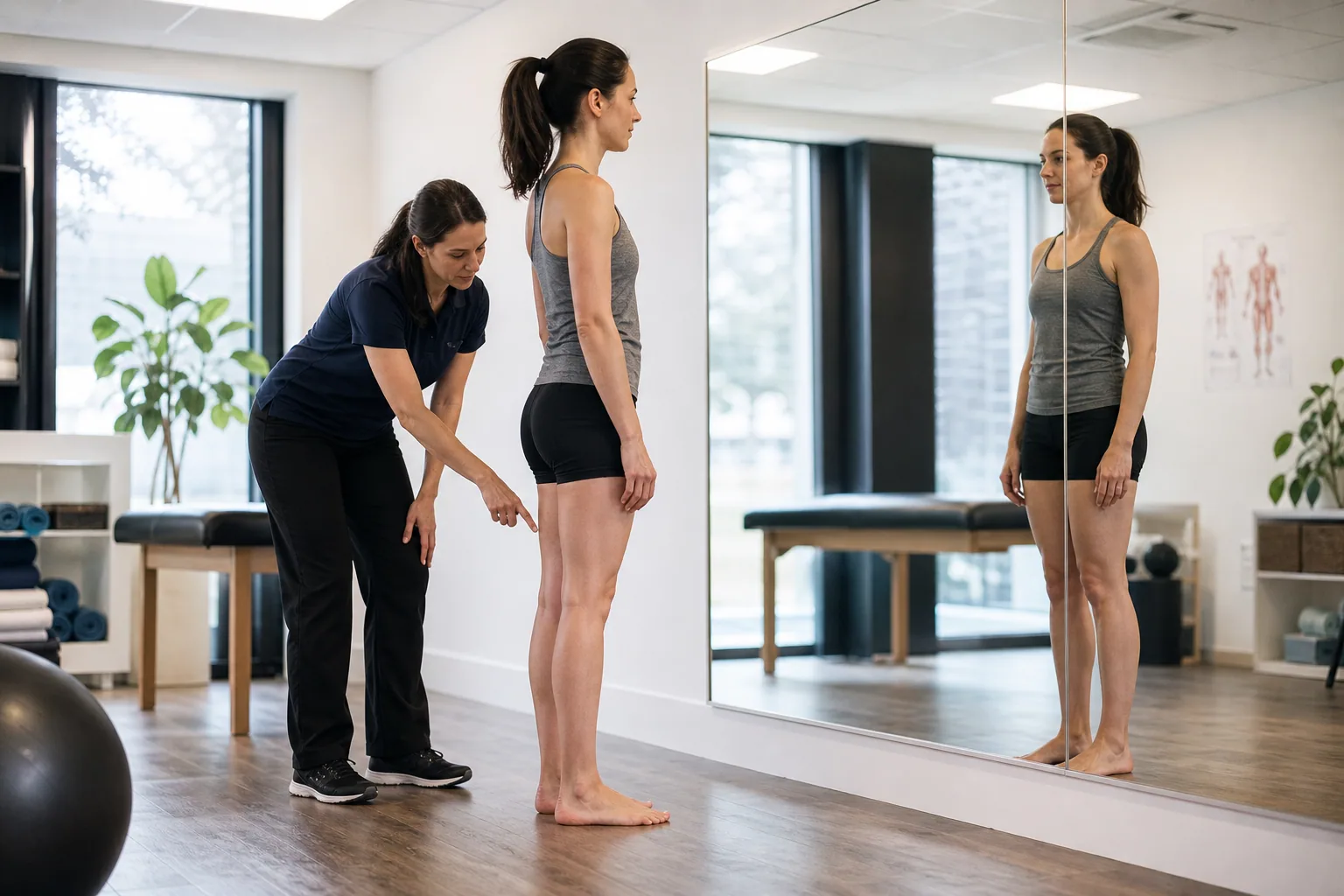
A physiotherapist can help you recognize a comfortable position using a mirror, a light cue, or a simple movement. The objective is not to manufacture a rigid visual line. Your hip and ankle position, footwear, and the task affect how standing feels. A person should not be told to maintain a tiring squat throughout a working day simply because their knees have extra range.
A practical question is whether a cue reduces an actual symptom. If avoiding a forceful backward rest makes standing more comfortable, it may be useful. If the cue produces new thigh fatigue or anxiety without improving function, it needs adjusting. Comfort and control should guide the conversation more than the appearance of a single photograph.
Neutral is a useful starting point, not a universal lifetime limit
It would be convenient if research supplied one rule about exercising only to neutral or using the full hypermobile range. It does not. A small randomized trial in children with knee pain compared supervised programmes performed to neutral or into extra extension. Pain improved after the programme in both groups, while some parent-reported outcomes differed. The study does not establish one range as best for every adult.
That distinction matters. Avoiding an uncontrolled, painful end position is different from declaring that any movement beyond neutral is dangerous. An individualized programme may begin in a comfortable range and later address the range needed for a person's activities. If recurrent subluxations, recent surgery, or a specific injury are present, the clinician's restrictions take priority over general advice.
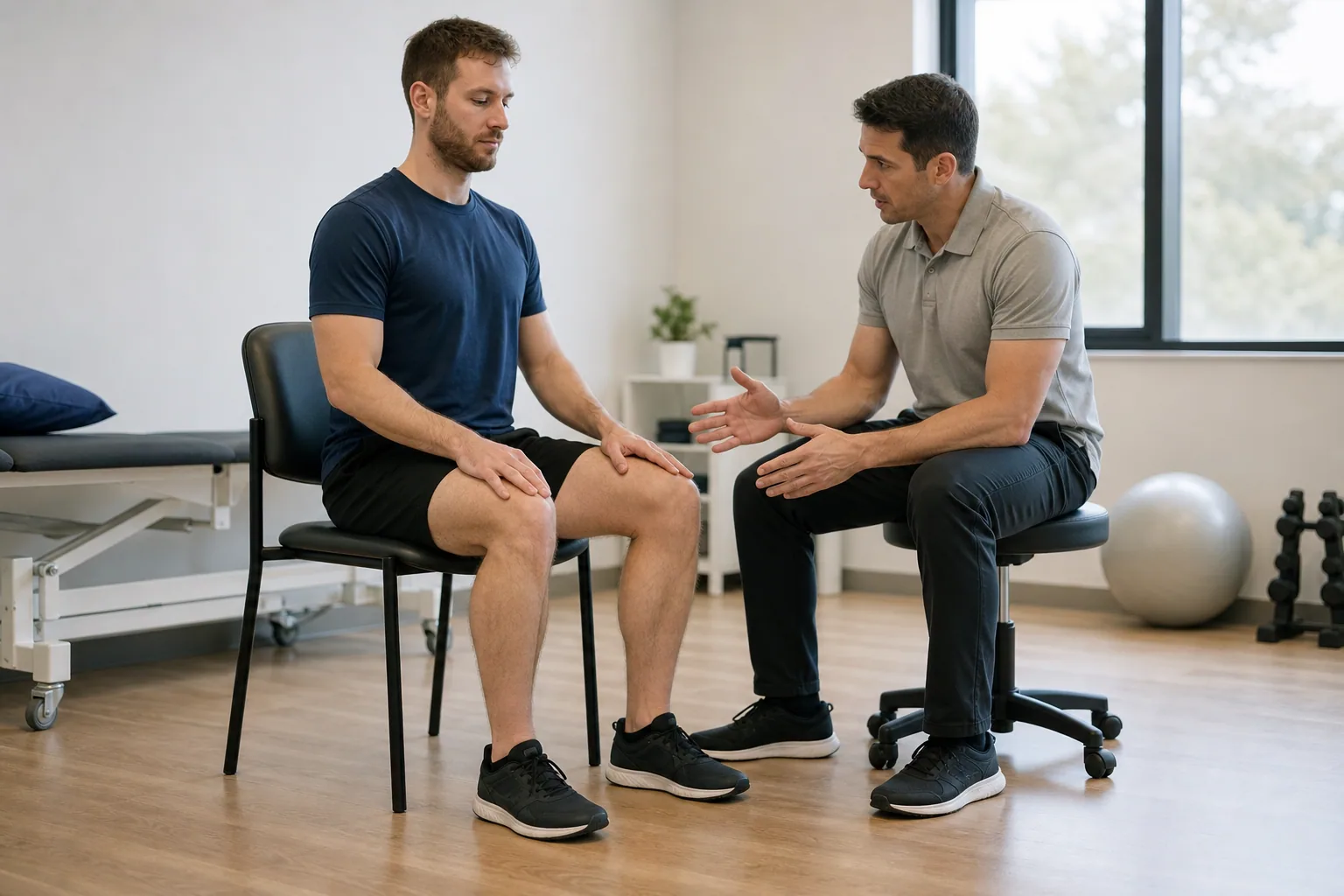
Ask your therapist to explain the range being chosen and how it will progress. You should know whether a cue is temporary, intended for one exercise, or useful during a particular daily task. A clear reason is easier to follow than a blanket instruction that seems to contradict how you naturally move.
Movement awareness is a trainable skill
Proprioception is the body's sense of joint position and movement. Small studies have found differences in knee position sensing in people with symptomatic hypermobility. This does not mean every hypermobile person has poor balance, nor does it prove that altered awareness caused their pain. It provides a reason to consider control and balance alongside muscle strength when planning rehabilitation.
An older small exercise study found improvements in position sense, strength, balance, and reported symptoms after a progressive programme. Because it was small and not a definitive comparison of all treatment options, it cannot promise an outcome for an individual. Still, it supports the practical idea that rehabilitation can involve learning and adapting, rather than merely bracing a joint that is assumed to be permanently incapable.
Feedback should be simple enough to use outside the clinic. One person may benefit from watching a few repetitions in a mirror; another may need a slower movement or a more stable starting position. More difficult is not automatically more effective. A balance drill that creates fear or repeated wobbling may be less useful than an easier task performed with confidence.
What a tailored exercise plan may include
There is no single hypermobile-knee exercise that everyone needs. A clinician may consider leg strength, hip control, calf capacity, balance, general conditioning, and the activity that currently causes difficulty. Exercise selection should account for other painful joints too. A floor exercise is not a good choice if getting down or supporting yourself on the wrists creates a different problem.
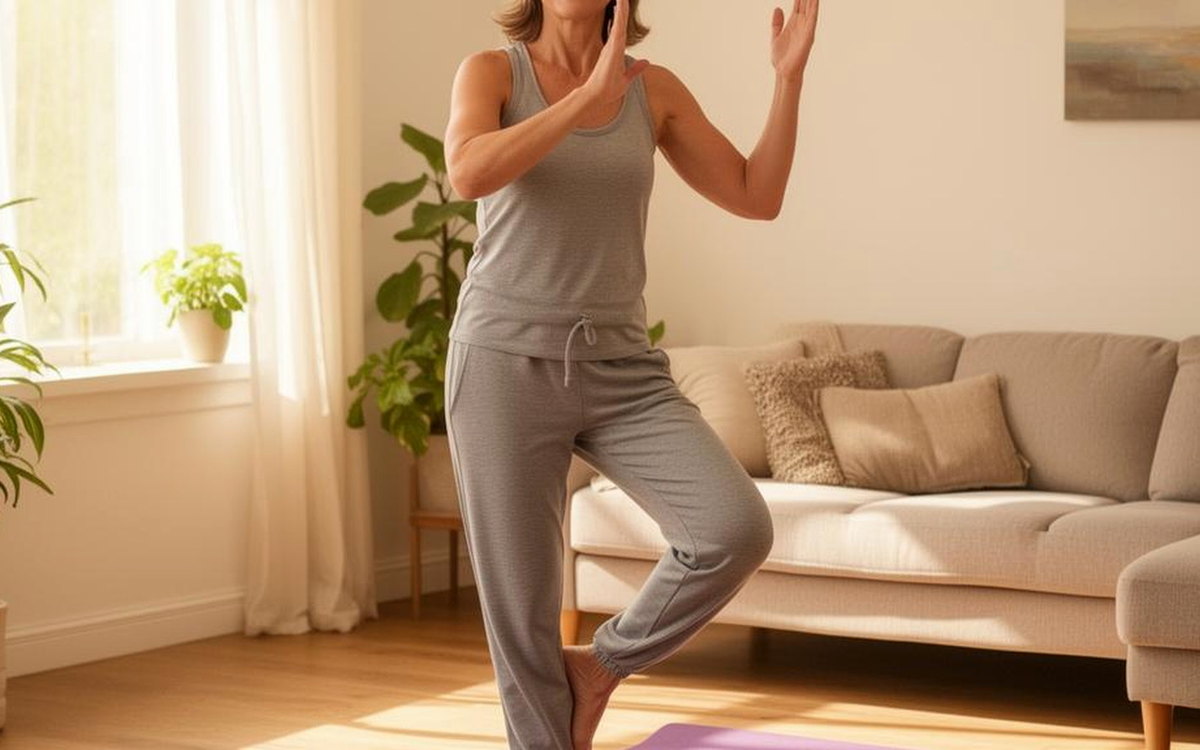
Examples to discuss include an appropriately adjusted sit-to-stand, controlled stepping, supported balance, or resistance work in a comfortable range. These are categories, not a prescription to begin all four today. The starting load and movement may be quite small after a flare or prolonged inactivity. The Ehlers-Danlos Society recommends adapting exercise to the individual and progressing gradually.
Make the intended sensation clear. Ordinary muscle effort is different from sharp joint pain, a feeling of slipping, or a new movement block. Stop the task and seek advice if it produces instability, a substantial flare, or new symptoms. Being able to complete the repetitions is not enough if the knee is increasingly difficult to use afterward.
| Part of the plan | Question to ask | A useful sign of progress |
|---|---|---|
| Movement control | Can I recognize and adjust the position without straining? | Less effort spent correcting each repetition |
| Strength and endurance | Is the load appropriate for my current capacity? | The same task feels more manageable over time |
| Balance | Is there stable support and a suitable challenge? | More confidence without near-falls |
| Daily activity | Which real-life task is this meant to improve? | Standing, stairs, or walking becomes easier |
| Recovery | What response should lead us to reduce or change the exercise? | A steadier pattern between sessions |
More stretching is not automatically the missing ingredient
A joint can have extra movement while some muscles feel tight. That does not justify stretching every structure farther. A sensation of tightness may reflect muscle effort, guarding, or a position that is difficult to control. The sensible response is to identify what is limited and why, rather than using the most flexible joint to obtain an even deeper stretch.
If a specific muscle stretch is appropriate, a therapist can help you keep the knee from drifting into an uncomfortable end position. Avoid repeatedly hanging into backward knee extension just because it is available. In yoga or flexibility classes, tell the instructor that your goal is controlled movement and comfort, not the deepest visual shape.
Our guide to knee pain during yoga discusses modifying positions and support. A class adaptation should be judged by how it feels during and after the session. An instruction to straighten the legs should not become a competition to push the knees as far backward as possible.
Pacing can be more useful than another posture rule
Standing still for a long time can be difficult even when a brief exercise feels easy. The answer may involve the environment as much as the knee. Change tasks, alternate sitting and standing, bring frequently used items closer, and plan a break before symptoms force one. These are ways to manage exposure, not evidence that you are unable to build capacity.
For example, someone preparing a meal might sit for chopping, stand for a shorter cooking task, and avoid doing all the washing up afterward without a break. At work, a stool, a change of station, or a brief walk may be more practical than concentrating on a tiny knee angle for hours. An occupational therapist can help adapt demanding routines.
The NHS describes pacing as part of joint care for symptomatic hypermobility. A useful personal log records which activities matter, how long they remain comfortable, and what recovery looks like. It should help you make decisions, not create an obligation to count every step. Our standing-related knee pain guide offers additional ways to describe the pattern.

Supports, shoes, and taping have specific jobs
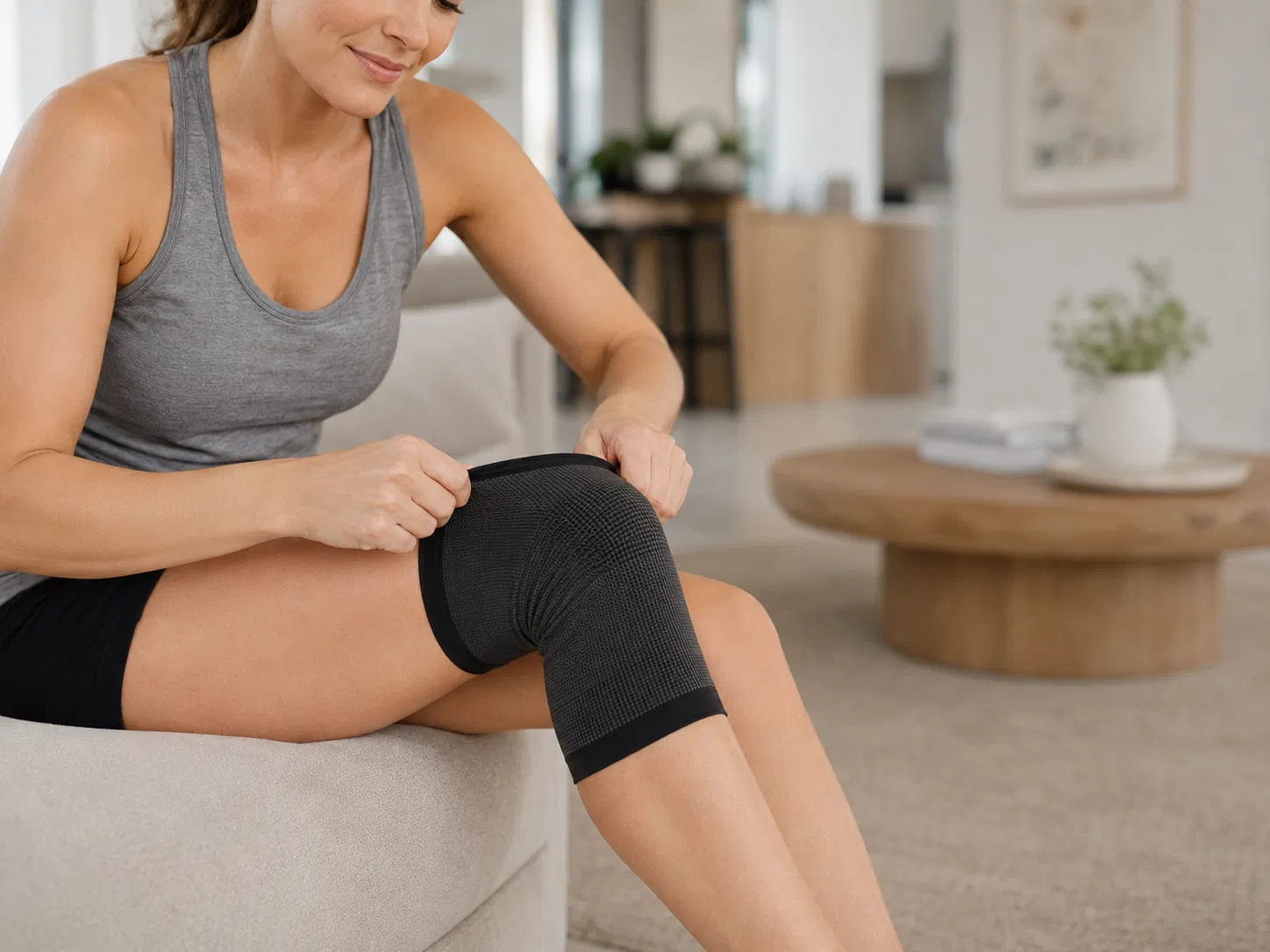
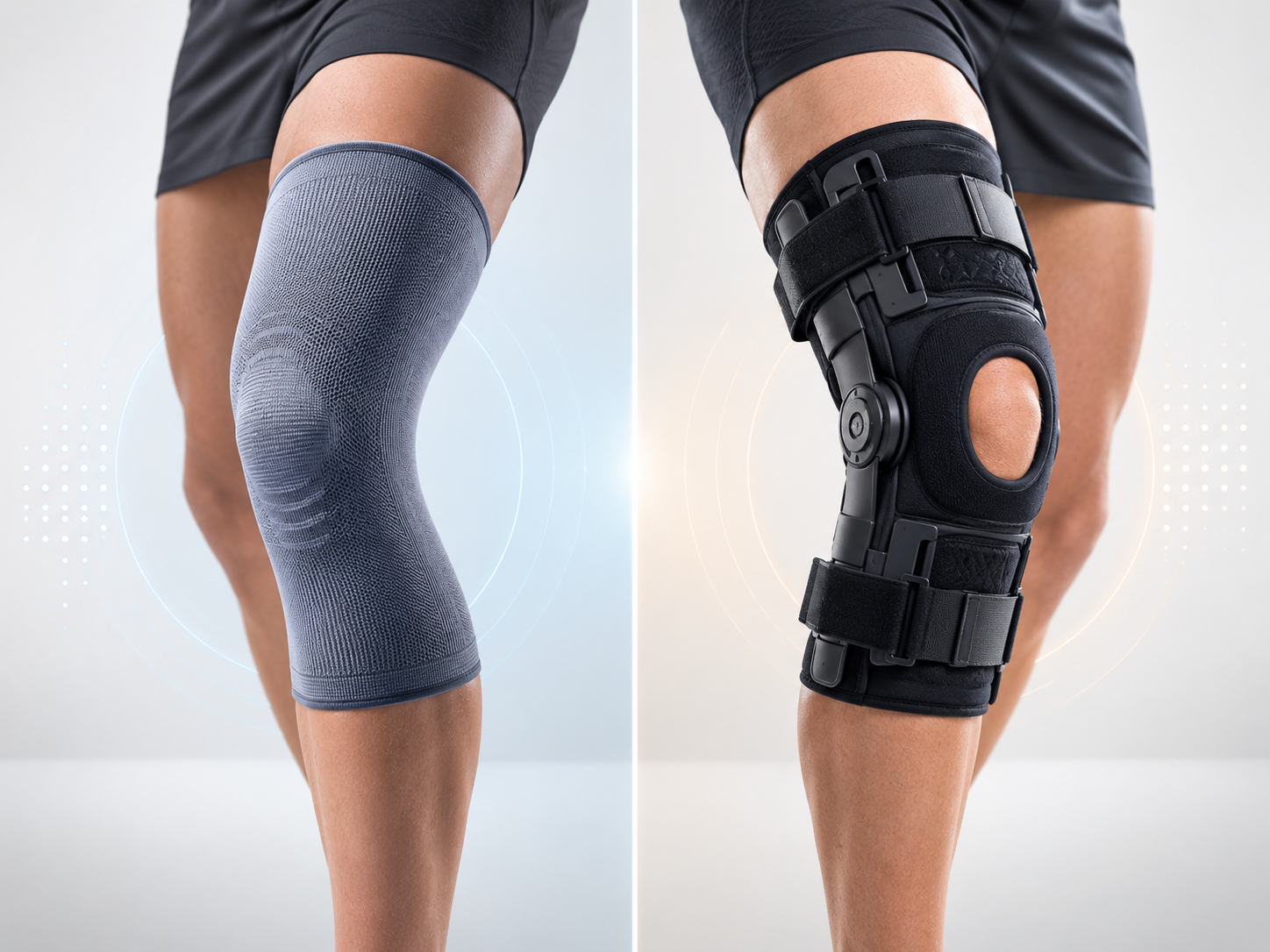
A sleeve may provide a feeling of contact or reassurance for some people, but it is not equivalent to a brace designed to limit a particular movement. A hinged brace may be considered for an assessed instability problem. Choosing a support requires understanding the task, fit, skin tolerance, and what the device is expected to do.
Discuss recurrent giving way before buying a stronger-looking support. Tightness is not a measure of protection. A support that causes numbness, skin damage, altered circulation, or increased swelling needs to be removed and reviewed. Read our brace and sleeve comparison for the difference between comfort garments and injury-specific devices.
Comfortable footwear can make daily activity easier, and prescribed orthoses may have a role for some people. Neither is a universal correction for hypermobile knees. A shoe should be evaluated during the actual task, not selected solely because an arch looks flat or the knee appears to move inward in one photograph.
Recognize when the problem is not simply your usual hypermobility
A new injury deserves its own history. If the knee was forced backward in a fall or sporting incident, do not explain new swelling or instability by saying that it always bends that way. Tissue injury can occur in a flexible joint. Likewise, a knee that suddenly cannot straighten is not the same as a knee that habitually travels too far into extension.
Pain may also arise from a condition unrelated to hypermobility. Persistent heat, swelling, increasing night symptoms, or declining daily function warrants assessment. The presence of a known hypermobility diagnosis should not prevent a clinician from considering other explanations. Our knee injury symptom guide can help you organize what changed without attempting a self-diagnosis.
| Situation | Useful next step | Avoid assuming |
|---|---|---|
| Extra range without symptoms | Continue suitable activity and notice meaningful changes | That appearance alone requires treatment |
| Recurring pain or fatigue | Review activity, control, and a tailored rehabilitation plan | That the answer is simply more strength work |
| Recurrent slipping or giving way | Seek assessment of instability and appropriate support | That a sleeve makes every activity safe |
| Sudden injury or locked knee | Use an injury-focused or urgent assessment pathway | That this is just the usual hypermobility |
Make appointments about function, not just flexibility
Bring examples of what is difficult: standing at work, descending stairs, turning during sport, or recovering after exercise. Note whether one or both knees are affected, whether the range is longstanding, and whether there have been actual dislocations or episodes of giving way. Mention symptoms in other joints and relevant family history without trying to assemble a diagnosis in advance.
Ask for a small number of priorities, clear progression criteria, and a plan for flares. If previous physiotherapy made things worse, describe the exact exercise, dose, and later response. That information can help change the approach. A disappointing programme does not prove that all rehabilitation is unsuitable, but it is a reason not to repeat the same dose unquestioningly.
When to get medical help
Seek urgent assessment for a new locked knee, severe injury, inability to bear weight, major swelling or deformity, or a hot red knee with fever. Arrange a routine assessment for persistent pain, repeated instability or dislocations, or symptoms affecting several joints and daily life. Do not force a joint back into place or use exercise to test an acutely injured knee.
The goal is confidence across a useful range
Hypermobile knees do not need to look identical to everyone else's. They need a plan that respects symptoms, develops control, and supports the activities that matter to you. Comfortable neutral positioning can be one tool, but it works best alongside appropriate strength, pacing, and clear reassessment when something changes. Improvement is measured in easier living, not in winning a battle against your natural range.
Frequently Asked Questions
Are hypermobile knees always a problem?
No. Some people have extra knee movement without pain, injuries or activity limitations. Symptoms and function matter more than appearance alone. Recurrent instability, pain or unusual fatigue are reasons to seek individual advice rather than assuming that extra range must be corrected.
Do hypermobile knees mean I have Ehlers-Danlos syndrome?
No. Hypermobile knees are one possible finding within a much broader assessment. Hypermobile Ehlers-Danlos syndrome and hypermobility spectrum disorders have specific clinical criteria and require consideration of other explanations. A photograph or a knee flexibility test cannot establish either diagnosis.
Should I always keep my knees slightly bent?
Not necessarily. Constantly holding a crouched position can be tiring. A clinician may help you find comfortable neutral alignment and control without resting heavily at a painful end range. The appropriate range during exercise should be individualized rather than governed by a permanent bend rule.
Can I strengthen hypermobile knees?
Muscles around hypermobile joints can be trained. A suitable programme may combine strength, balance, movement awareness and gradual activity exposure. It should be adapted to symptoms and any instability, rather than starting with heavy loading or assuming flexibility means weakness.
Should I stretch if my knees are hypermobile?
Extra joint range does not mean every muscle is flexible, but repeatedly pushing an already mobile knee farther backward is not the goal. If a specific muscle needs stretching, a physiotherapist can show how to target it while controlling the joint. Avoid stretching simply to demonstrate your maximum range.
Are knee sleeves useful for hypermobility?
Some people find a sleeve helpful for comfort or awareness, but it is not a reliable barrier against backward movement or a substitute for an instability assessment. Injury-specific braces need appropriate selection and fitting. Remove a support that causes numbness, skin irritation, swelling or increased pain.
Is knee hypermobility the same as a hyperextension injury?
No. Hypermobility describes a range-of-movement trait. A hyperextension injury is a particular event in which the knee is forced backward and may damage tissues. A sudden injury needs assessment based on its symptoms, even in someone whose knees have always been flexible.
Can hypermobile people run or do yoga?
The answer depends on symptoms, control, instability and training history. A painless hypermobile knee does not automatically prohibit sport. If joints are unstable or activity repeatedly triggers symptoms, seek help adapting the activity and building capacity. Avoid treating deeper range as the goal in flexibility-focused classes.
How long does rehabilitation for hypermobile knees take?
There is no single timeline. Useful goals include more comfortable standing, better confidence on stairs and greater activity tolerance. Progress depends on the starting point, other symptoms and the plan. Review persistent flares or lack of progress rather than repeatedly increasing the same exercises.