Ask what would make an ordinary day easier
The best starting question is not which knee product has the longest feature list. Ask what your parent would enjoy doing with less inconvenience. That might be getting comfortable with a book, choosing shoes without rushing, attending a family event with fewer stairs, or having someone carry shopping home. A specific answer gives the gift a purpose that a general promise of relief cannot provide.
Be careful not to make the present an unsolicited comment about age, mobility or health. Someone may welcome practical support but dislike opening a medical-looking box in front of the family. Another person may have asked for exactly that item. Preferences matter more than whether a gift guide describes something as suitable for moms, dads or seniors.
This is a selection guide, not a hands-on ranking of every product category. FlexiKnee sells knee-comfort products, including the device discussed below. That commercial connection should be clear while you compare options. Some of the most useful choices here involve no device purchase at all, and none should be presented as a treatment for the cause of unexplained knee pain.
Match the gift to the task, not a diagnosis label
| Everyday preference | Possible gift | Check before buying |
|---|---|---|
| A simpler evening comfort routine | A suitable easy-control comfort device or familiar reusable comfort item | Safety instructions, fit, setup, cleaning and whether the parent wants it |
| More comfortable footwear shopping | A contribution toward a pair chosen and tried on by the recipient | Fit, intended use, orthotic compatibility and exchanges |
| Less carrying and standing | Help with errands, deliveries or a specific household task | Timing, consent and the recipient's preferred way of doing things |
| Time together without a demanding itinerary | A flexible outing with seating, transport and changeable plans | Access, walking distance, queues and cancellation terms |
| An item already recommended by their care team | Help obtaining the exact suitable product or attending a fitting | The recommendation, size, setup and any restrictions |
This approach avoids assuming that two parents with knee pain need identical gifts. Their symptoms, routines, homes and preferences may be different. One may already own a heating pad they like; another may prefer not to use heat at all. A gift that duplicates equipment or adds a complicated replacement can create work instead of reducing it.
If the recipient is comfortable discussing it, ask what they have already tried and what annoyed them. The useful detail might be a difficult buckle, tiny display, awkward charging socket or footwear that slips at the heel. Those observations can guide a purchase without asking the giver to diagnose a condition or choose medical treatment.
Easy use is a whole routine, not just a large button
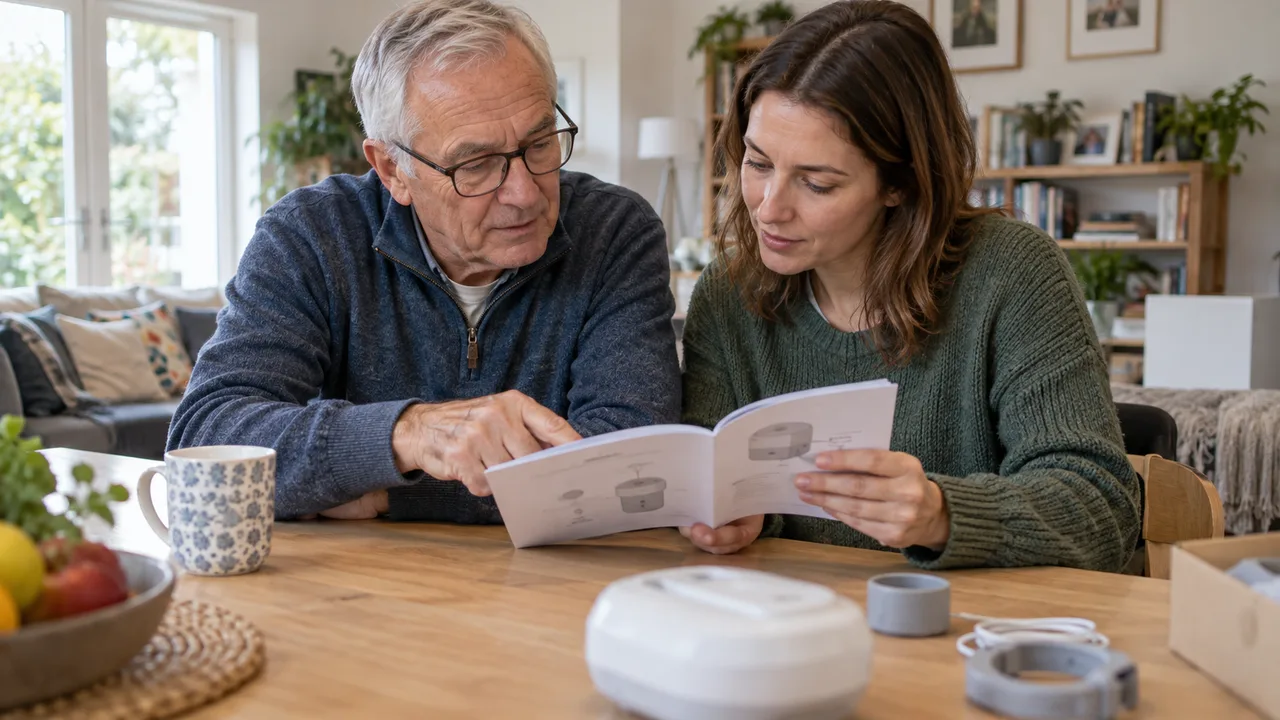
Imagine the item arriving on a normal evening when nobody else is there to explain it. Can the recipient remove the packaging, read the instructions and identify the controls? Can they reach the fastening and put the product in the intended position? A device that looks simple once someone has fitted it may still be difficult to use independently.
The Arthritis Foundation's Ease of Use program emphasizes the practical demands of using products. It is a useful reminder to inspect grips, effort and interaction, but do not assume that every item marketed for joint comfort has passed that program. Certification is a specific claim that needs verification. Neither this guide nor the FlexiKnee product should be interpreted as carrying an unverified seal.
For an electronic gift, check how settings are changed and how operation is stopped. Look for instructions the recipient can actually read, clear feedback and a setup that matches their preferences. Extra modes are not automatically an advantage if they make the basic routine harder to remember. If possible, show the instructions or demonstration before making the purchase a surprise.
Maintenance belongs in the same assessment. Who will clean the item, where will it dry, and how will it be stored? Does the charging cable fit an accessible outlet without crossing a walkway? A cordless product still needs a charging routine. These details are often more relevant to long-term usefulness than another feature in a comparison table.
When a knee-comfort device belongs on the shortlist
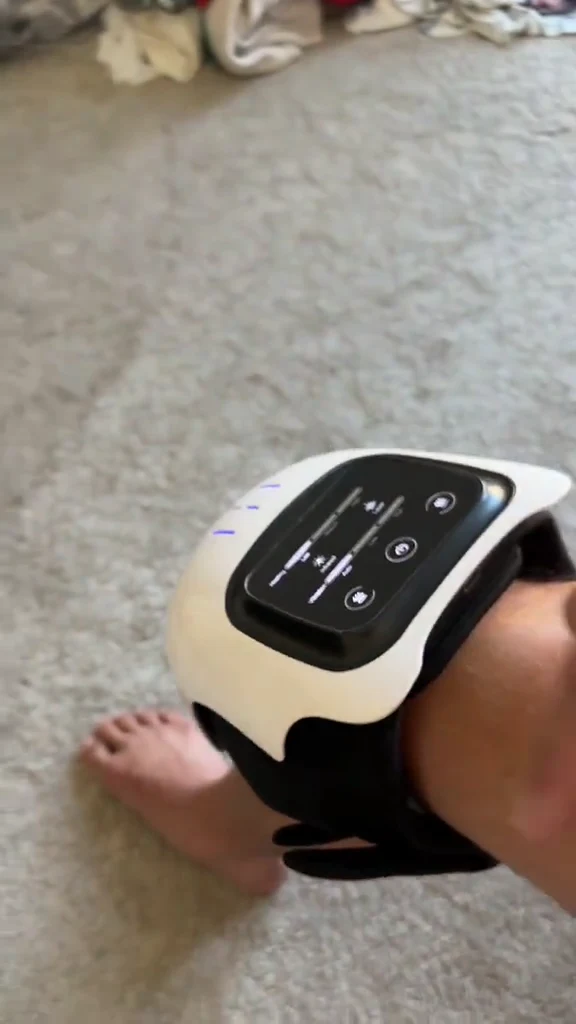
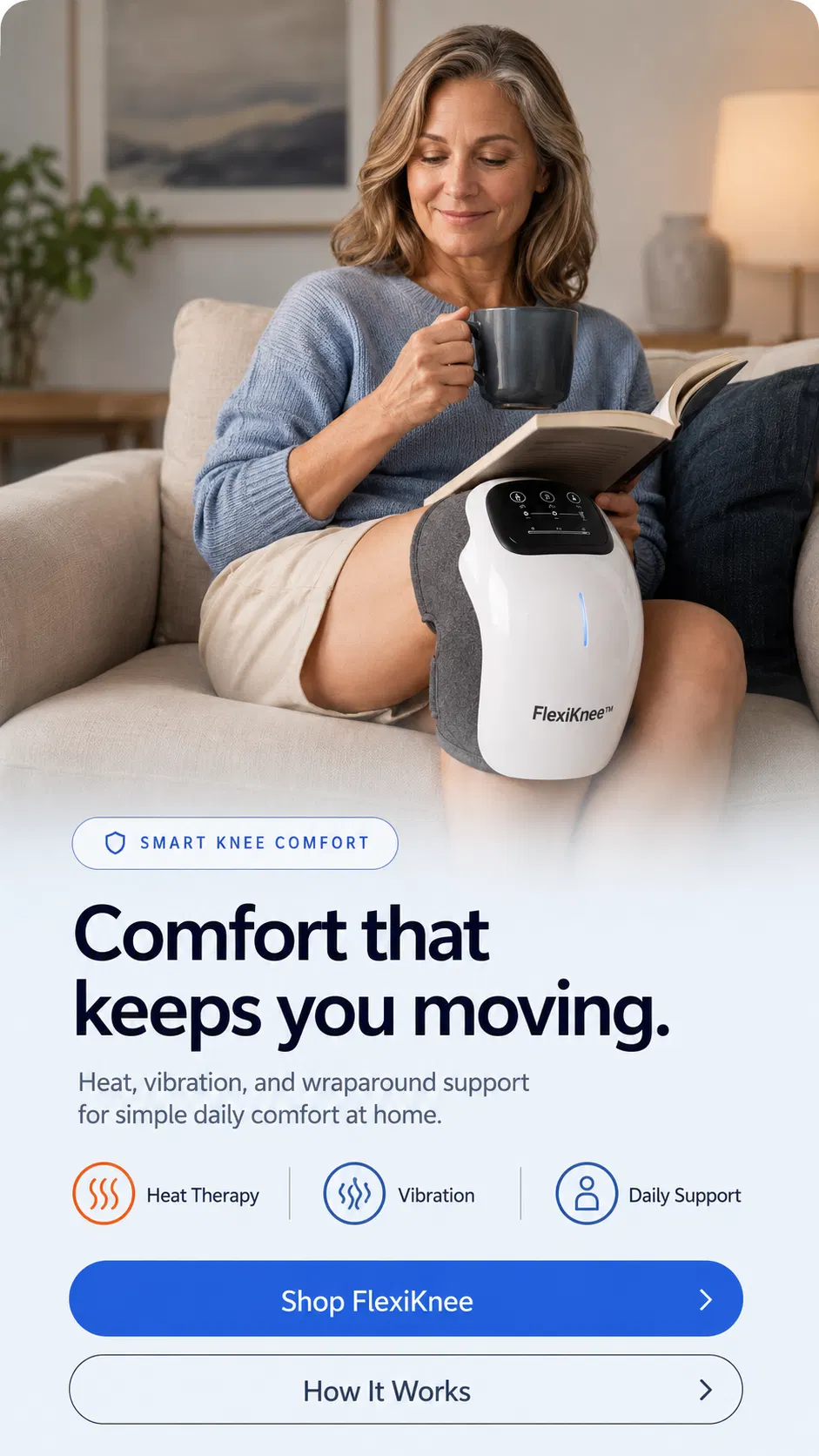
A parent who already enjoys an appropriate seated warmth routine may be interested in a wearable device that combines controls and fastening in one unit. FlexiKnee's main knee massager is one option to inspect, with adjustable warmth and optional vibration. View the actual use demonstration, measurements and current product instructions rather than deciding from a photograph alone.
The useful question is whether its operation suits this particular person. Can they position it comfortably, reach the controls and remove it easily? Do they want warmth or vibration, and are those features appropriate for them? An attractive gift box does not answer those questions. The video linked with the product card can show handling, but a demonstration is not evidence that a device will resolve the cause of knee pain.
Keep expectations modest and explicit. A comfort product is not a replacement for assessment, rehabilitation or prescribed treatment. Read what knee massagers can and cannot do before treating a product description as a medical promise. Features involving warmth, vibration or light should not be combined into a claim that the device repairs joints or cures arthritis.
Heat is not suitable in every situation. New injury, swelling, impaired sensation, circulation concerns or individual medical restrictions can change the decision. Follow the device instructions and ask the treating clinician if suitability is uncertain. Do not give a heated product on the assumption that a parent will simply tolerate the strongest setting or use it while asleep.
Explain the gift as an optional comfort choice, not something the recipient owes you an enthusiastic response to. If they try the setup and dislike it, an uncomplicated return is a successful outcome compared with a device kept out of politeness and never used. Their preferences should remain more important than the giver's research effort.
Footwear gifts work better when the wearer chooses the fit
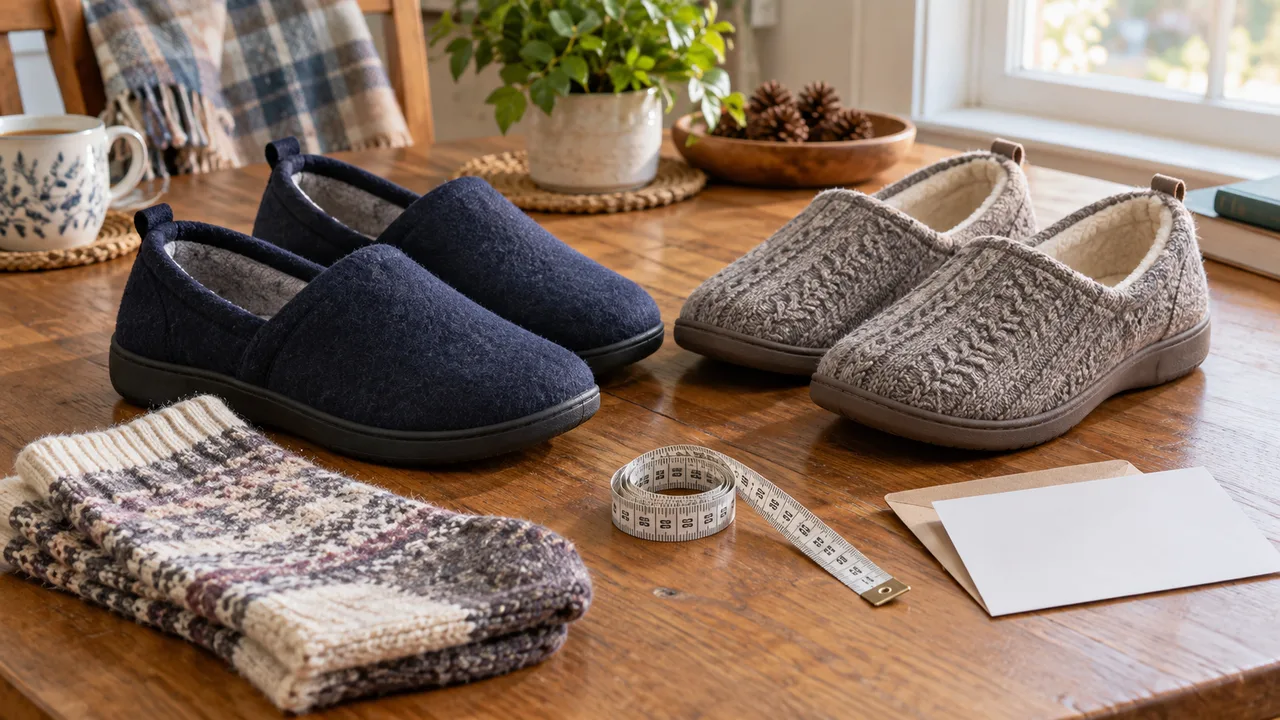
Slippers and house shoes can be thoughtful, but buying from a familiar size number alone is risky. Shape, depth, fastening and intended use matter. A thick lining may reduce internal room, while a loose heel can make an otherwise soft slipper feel insecure. The recipient should have a chance to try the pair with the socks and any approved inserts they actually use.
Consider giving a shopping contribution and time together instead of choosing a fixed pair. That preserves the personal nature of the gift while leaving the fit decision with the wearer. Check exchange conditions before ordering several sizes, especially if the seller treats worn footwear differently from an item only tried indoors.
For category comparisons, our slipper guide covers fit considerations, while the indoor versus outdoor winter slipper guide focuses on surfaces and moisture. Avoid promising that a soft sole corrects knee mechanics or that an indoor-outdoor label makes footwear suitable for icy paths.
Do not improvise a brace or mobility-aid prescription
A compression sleeve needs an appropriate fit, and a mechanical brace may have a specific clinical purpose. Neither should be selected solely because a product page says support. If your parent already has professional advice, offer to help obtain the recommended category or attend a fitting. Do not replace it with a more impressive-looking version without checking.
The same caution applies to walking aids, exercise equipment and devices that change how a person moves. A surprise gift can unintentionally introduce setup or training needs. Help with an agreed assessment or a recommended purchase is different from deciding that a parent now needs a cane because walking looked slower at the last family gathering.
If the recipient asks for a fabric sleeve, start with measurements and our sleeve sizing guide. Make sure the person understands what the product is and is not intended to do. A tighter size is not a way to turn a fabric sleeve into a prescribed ligament brace.
Useful gifts do not have to be products
Practical help works best when it is specific and agreed. Instead of an open-ended promise to help whenever needed, ask whether a particular shopping trip, delivery arrangement or household task would be welcome. Let the parent decide how and when it happens. Support that takes away control or rearranges the home without permission may be more frustrating than useful.
An outing can also be adapted without making the whole event about the knee. Check the distance from parking or transport, whether seating is available and whether the plan can change. A meal at a convenient location or a flexible museum visit may be more enjoyable than a prepaid activity with long queues and no easy way to leave early.
For someone who likes being active, offer company within the routine they already enjoy and any existing guidance. Do not make participation in an ambitious exercise program the condition of receiving a gift. A supportive companion can help with logistics while leaving the pace and decision to continue with the recipient.

Small environmental details can make a visit easier: a place to put belongings, a clear walkway and a seat the parent finds comfortable. Discuss changes rather than prescribing a universal furniture height or moving possessions without asking. If there are recurrent falls or significant difficulty getting around, professional advice is more appropriate than a gift-based home redesign.
Check the purchase terms before the wrapping paper
| Question | Why it matters | What to keep |
|---|---|---|
| When does the return window begin? | A gift bought early may have less time left after it is opened | Order and delivery dates plus the current policy |
| Can the product be tried and returned? | Condition and hygiene rules may differ by category | Packaging and the seller's written requirements |
| Who pays return costs? | An unsuitable gift should not create an unexpected bill | Return instructions and relevant regional terms |
| What does the warranty cover? | Defect coverage is different from comfort or suitability | Receipt, warranty information and support details |
| Are there subscriptions or replacement parts? | Ongoing costs can turn a gift into an obligation | Any renewal, consumable and maintenance information |
Read the policy that applies to the actual seller and destination, not a general statement from another marketplace listing. Shipping times, customs arrangements and return destinations can change the practicality of a present. Avoid making a last-minute order dependent on an arrival date that the seller has not confirmed.
Keep discount expectations separate from the gift decision. A code, bundle or seasonal promotion may have eligibility and combination rules. Check the final cart rather than assuming every advertised saving adds together. A suitable item at a clear price is preferable to a larger bundle containing products the recipient did not want.
Hand over the choice as well as the present
When giving the item, offer a short setup session and a genuine option to exchange it. Leave the instructions, receipt and support information together in a place the recipient chooses. Do not remove labels or discard packaging before the person has checked fit and suitability. Those small choices make it easier to say that something is not right.
If new or worsening knee symptoms are the reason you started shopping, encourage appropriate assessment rather than waiting to see whether the gift fixes them. Severe pain, major swelling, inability to bear weight or a hot red knee with fever should not be managed as a product-selection problem. A present can accompany care; it cannot replace the need for it.
A thoughtful gift does not need to announce that it solves knee pain. It can simply make a wanted routine easier, provide company or remove an inconvenient task. Choose with the parent, keep the practical demands low, and leave room for their answer to be different from the one you expected.
Frequently Asked Questions
What is a thoughtful gift for a parent with knee pain?
Start with something the parent wants and can use easily. Practical help, a flexible outing, a footwear-shopping contribution or a suitable comfort product may be useful. Avoid presenting any gift as a cure or a substitute for assessment.
Is a heated knee massager a suitable gift for everyone?
No. Check the device instructions and the recipient's circumstances. New injury, swelling, altered sensation, circulation concerns or other medical restrictions may change suitability. Ask a clinician when uncertain rather than guessing.
Should I buy a knee brace as a surprise?
A prescribed or mechanically supportive brace should not be chosen as a surprise substitute for clinical advice. Even a fabric sleeve needs correct measurements and suitability. Offer to help with a fitting or the cost instead.
Are slippers a good gift for a parent with sore knees?
They can be if the recipient chooses a secure, comfortable fit suited to the intended use. Softness alone does not establish a knee benefit. Keep exchange options and consider existing foot-care advice.
What should I check before giving an electronic comfort device?
Check controls, setup, fit, charging, cleaning, instructions, safety restrictions and returns. A product that needs help every time may be inconvenient even if its feature list looks impressive.
Does a warranty mean the product can be returned if it is unsuitable?
Not necessarily. Warranty coverage and change-of-mind returns are different. Check the seller's current return window, condition requirements, costs and warranty exclusions before purchasing.