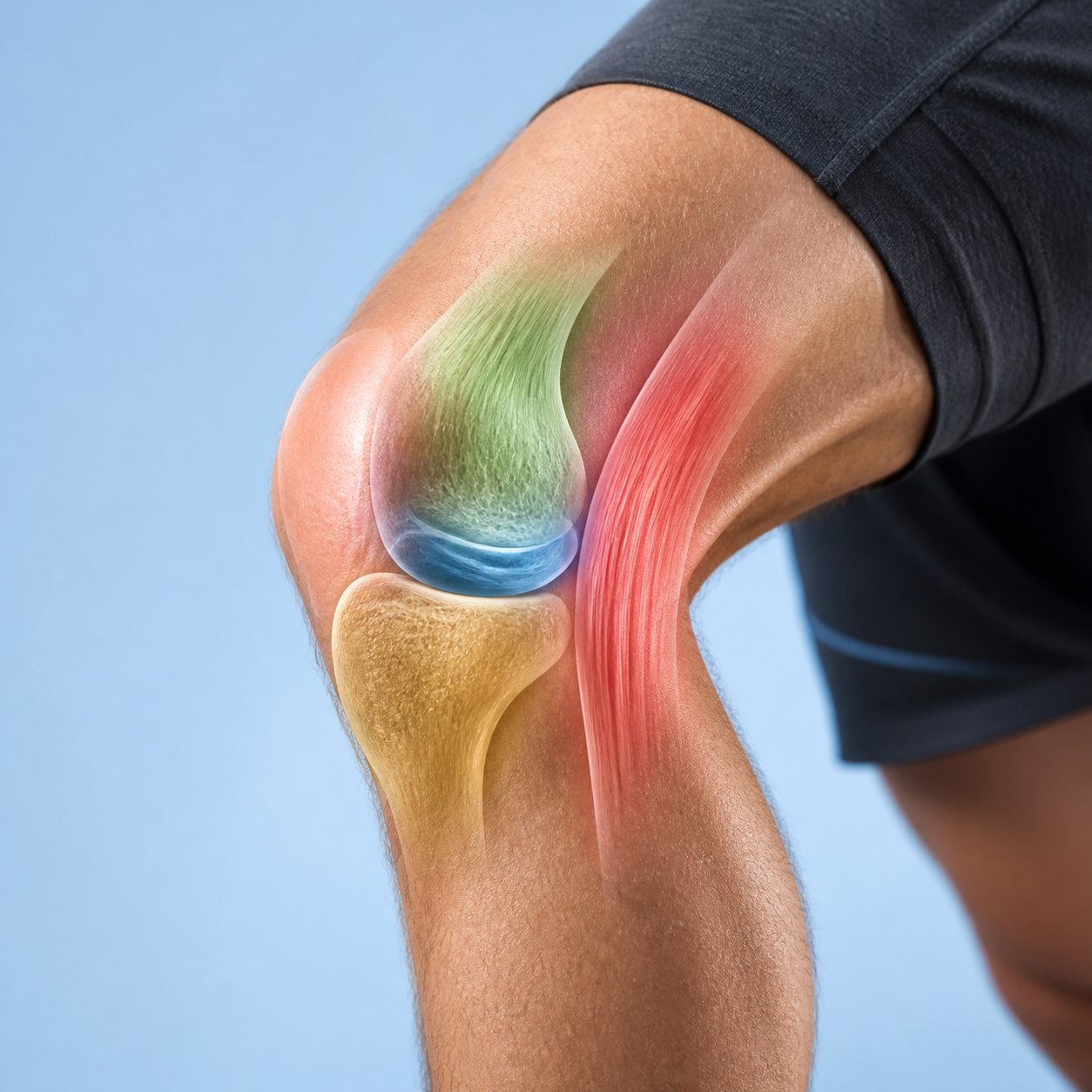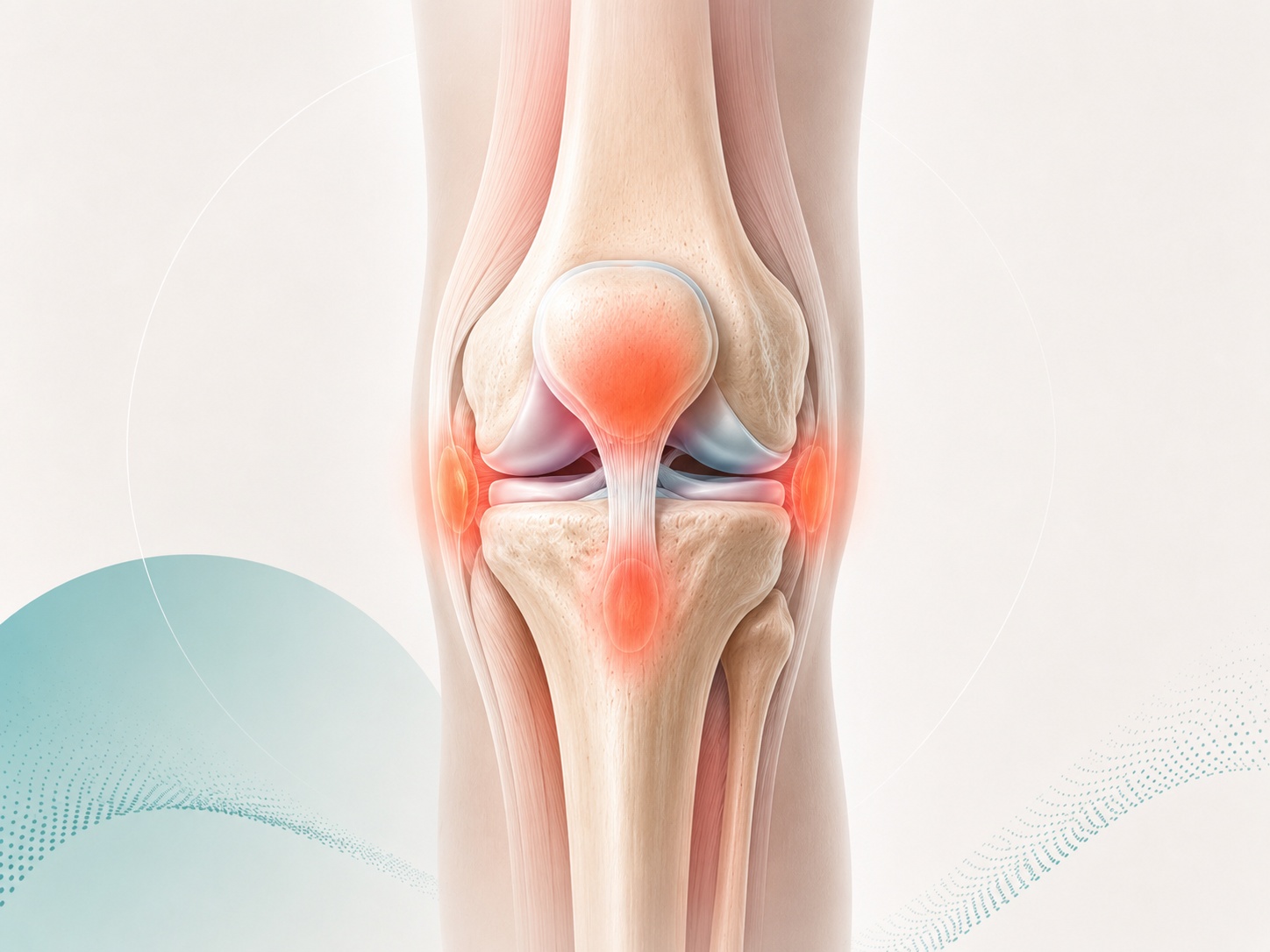
Pain from the hip to the knee can describe several different patterns: pain referred from the hip joint, outer-hip pain that extends down the thigh, nerve symptoms traveling through the leg, and knee pain that changes how the hip moves. Treating all four as one hip-to-knee chain would be misleading.
This guide is a location and referral map. It differs from our broader lower-back, hip, and knee connection guide, which discusses daily movement and whole-body load. Here the central question is narrower: when pain is felt at the knee, what clues suggest the hip joint, lateral hip, lumbar spine, nerve, thigh tissue, or knee itself should be examined?
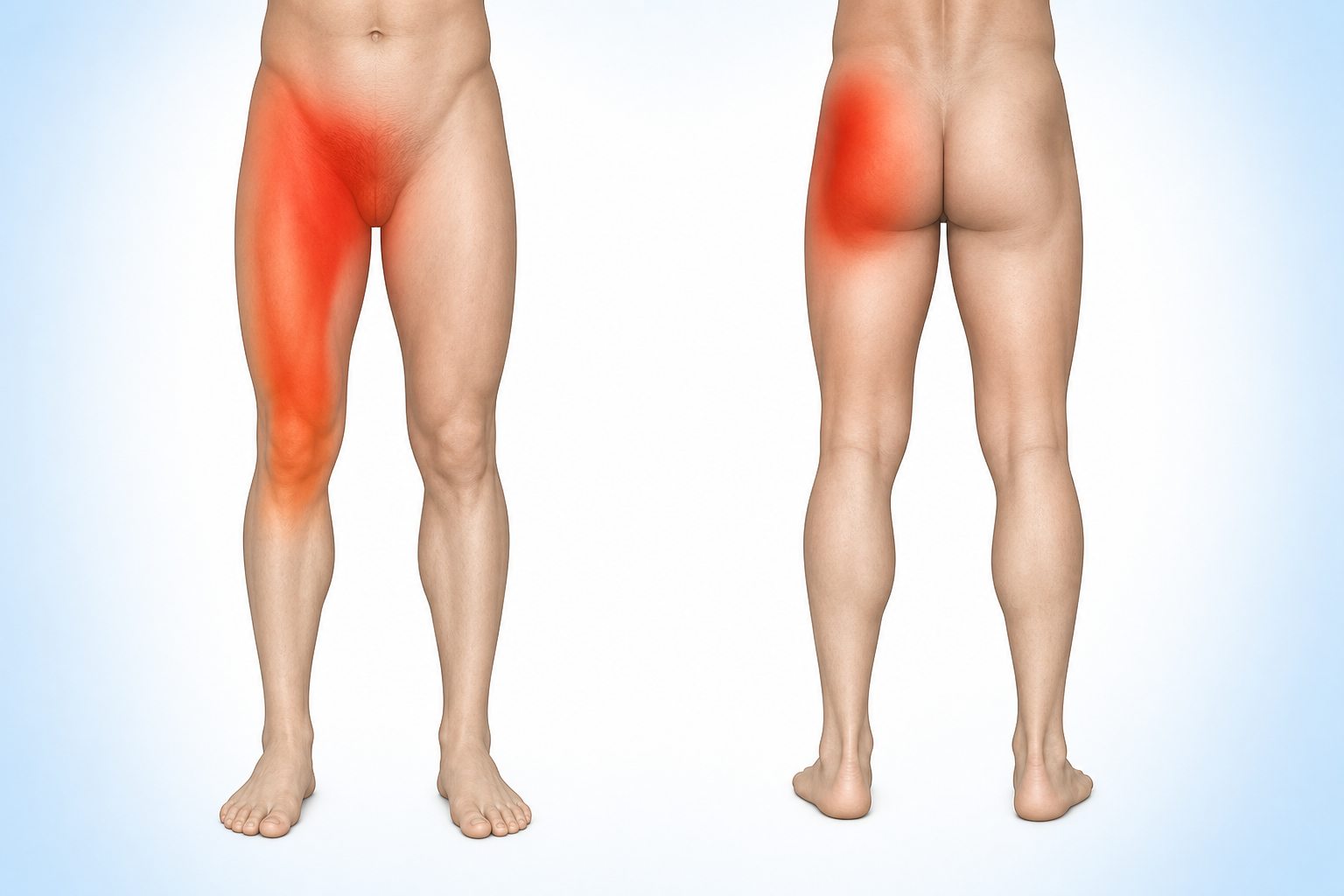
Hip-to-Knee Referred Pain Location Chart
| Possible source | Common pain route | Movement clues | Other useful clues |
|---|---|---|---|
| Hip joint or hip OA | Groin, front hip, front or inner thigh, knee | Walking, turning, shoes and socks, car entry, hip rotation | Hip stiffness, reduced range, sometimes little hip pain |
| Lateral hip or gluteal tendon | Outer hip and upper outer thigh, usually not one deep joint line | Side-lying, stairs, single-leg stance, hills | Tenderness at the bony side of the hip |
| Lumbar nerve | Back or buttock into thigh, knee, shin, or foot | Spine posture, cough or sneeze, prolonged sitting | Tingling, numbness, burning, weakness |
| Local knee | Front, joint line, sides, back, or a focal tender structure | Kneeling, isolated knee bend, direct pressure, stairs | Knee swelling, locking, local trauma, focal tenderness |
| Muscle or tendon between them | A narrower line through quadriceps, adductor, hamstring, or IT band | Resisted contraction or stretch of that tissue | Localized tenderness without joint swelling |
Why the Hip Can Be Felt at the Knee
Referred pain means the perceived location differs from the tissue producing the signal. The hip capsule receives sensory branches associated with the femoral and obturator nerves, among others. Those pathways also serve regions of the thigh and knee. The nervous system can therefore localize a hip-joint signal imperfectly, especially when the hip problem develops gradually.
A systematic review of hip-joint innervation found dense nociceptive innervation in the anterior capsule and consistent contribution from femoral and obturator nerve branches. That anatomy supports referral, but it does not let a person trace one nerve on a picture and self-diagnose. Pain perception is influenced by movement, inflammation, sensitization, previous injury, and the overlap of several tissues.
The clinical consequence is simple: a knee-focused assessment can miss the source when hip motion is never checked. Published reports describe people treated extensively for knee pain before hip arthritis was recognized. That is uncommon enough not to make every painful knee a hip problem, but important enough to examine the hip when the knee findings do not explain the symptoms.
Hip Osteoarthritis Pain From Groin to Knee
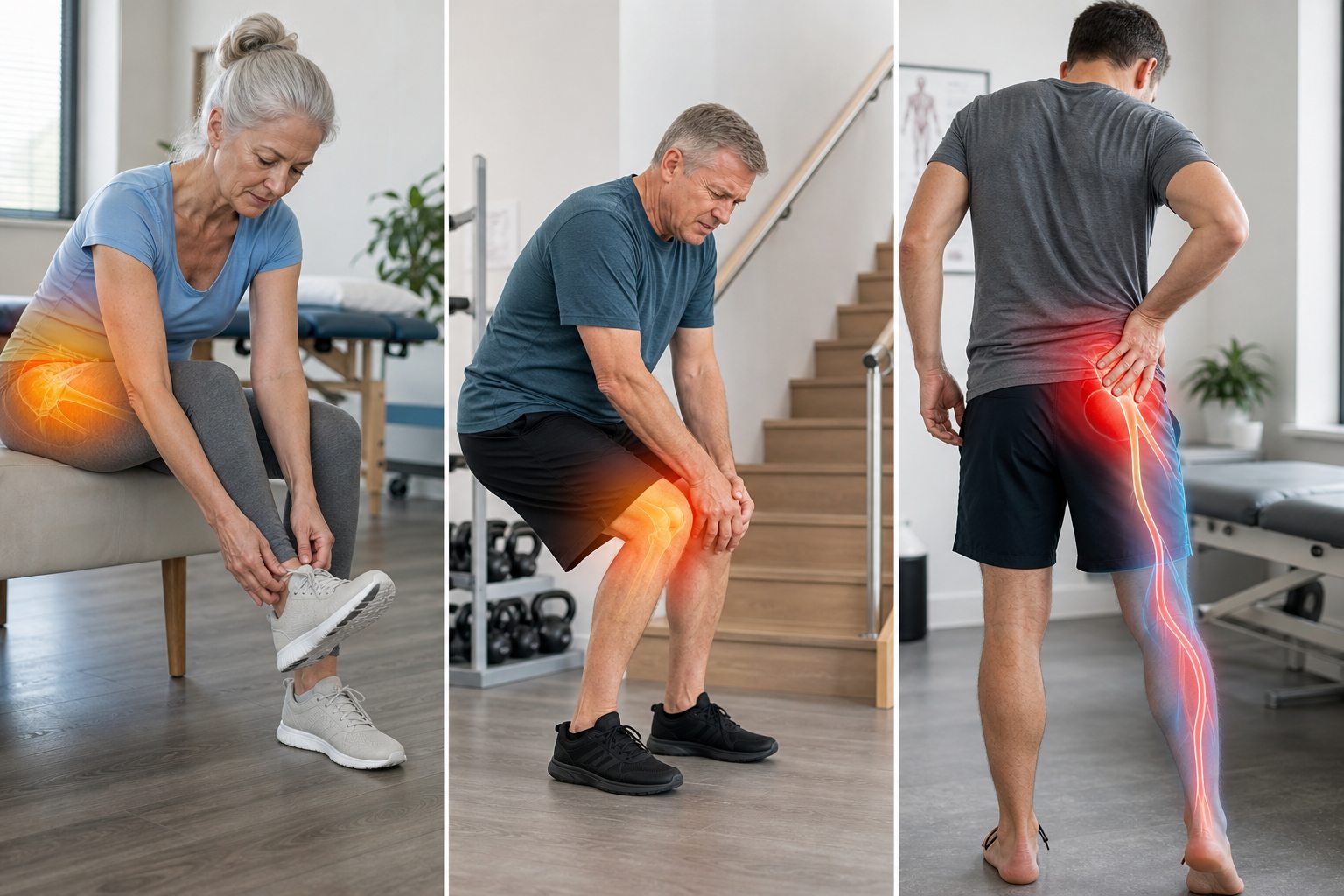
Hip osteoarthritis often produces gradual pain and stiffness. The groin is a classic location, but pain may be felt in the buttock, front or side of the thigh, and down to the knee. Walking, standing, turning, getting into or out of a car, and putting on shoes or socks may become difficult. Stiffness is often more noticeable after rest.
Knee pain may be prominent even when the person does not volunteer much hip pain. Clues include reduced hip internal rotation, a shorter stride, difficulty crossing the ankle over the opposite knee, and pain when the thigh is rotated. None is specific enough for self-diagnosis, and a painful knee can also cause protective hip changes.
Imaging is not the first answer to every hip-to-knee pattern. Osteoarthritis can often be suspected clinically from age, activity-related joint pain, and stiffness. X-rays may be used when the diagnosis is uncertain, symptoms are atypical, or planning requires them. The severity of an X-ray does not perfectly predict pain distribution.
Lateral Hip Pain That Travels Down the Outer Thigh
Greater trochanteric pain syndrome and gluteal tendon problems are commonly felt over the bony outside of the hip. Symptoms may spread down the outer thigh, but they often remain above the knee. Side-lying, prolonged standing on one leg, climbing stairs, or walking hills can provoke the area. Direct tenderness at the outer hip is a useful clue.
That pattern differs from a deep groin-to-knee referral and from IT-band pain centered near the outer knee. The same person can have more than one issue, particularly when altered walking loads the lateral hip and knee. A chart should show possible routes, not force one origin onto every point along the line.
Lumbar Nerve Pain Through the Hip and Knee
Nerve-root irritation can create pain, tingling, numbness, or weakness through the buttock, thigh, knee, lower leg, or foot. The route depends on which nerve tissue is affected and does not always follow a simple textbook stripe. Back pain may be absent. Symptoms may change with sitting, spine position, coughing, or sneezing.
Pain extending below the knee, especially with altered sensation or weakness, raises nerve questions more strongly than an isolated ache at the joint line. Front-thigh and knee symptoms can involve upper lumbar nerve roots, while classic sciatic patterns often travel through the back or outer leg. A neurologic examination checks strength, reflexes, sensation, and tension signs rather than relying on the pain map alone.
New progressive weakness, numbness in the saddle area, or loss of bladder or bowel control requires urgent medical assessment. Ordinary back or leg pain without those signs is not automatically an emergency, but persistent neurologic symptoms deserve a clinician's review.
Hip vs Knee vs Spine: Movement Clues
Clues That Put the Hip Higher on the List
- Groin or front-thigh pain accompanies the knee symptom.
- Putting on shoes and socks, crossing the leg, or getting into a car is restricted.
- Turning the whole leg or walking with a long stride provokes the familiar pain.
- The knee examination or imaging does not explain the level of disability.
- Hip range is clearly reduced compared with the other side.
Clues That Put the Knee Higher on the List
- There was a clear knee twist, impact, or direct kneeling event.
- The knee is visibly swollen or has focal joint-line or tendon tenderness.
- Isolated knee bending, kneeling, or pressure reproduces symptoms while hip motion does not.
- The knee catches, locks, or repeatedly gives way.
- Pain location matches a local structure and the examination confirms it.
Clues That Put the Spine or Nerve Higher on the List
- Pain is joined by tingling, numbness, burning, or weakness.
- Symptoms travel below the knee or change with spine position.
- Coughing, sneezing, or prolonged sitting changes the leg symptoms.
- Reflex, strength, or sensation differs between sides.
Do Not Use One Home Test as the Answer
It is reasonable to notice whether a comfortable hip rotation or knee bend changes symptoms. It is not reasonable to force the joint to end range, compare painful stretches repeatedly, or treat a social-media maneuver as a diagnosis. Pain during a hip test may come from the hip, surrounding muscle, back, or simple guarding.
A better home observation is functional. Note whether shoes, car entry, bed turns, stairs, walking, sitting, and direct knee pressure behave differently. Record the exact region and whether symptoms include numbness, swelling, catching, or stiffness. That pattern gives a clinician more information without provoking the area.
Why Clinicians Examine Both Joints
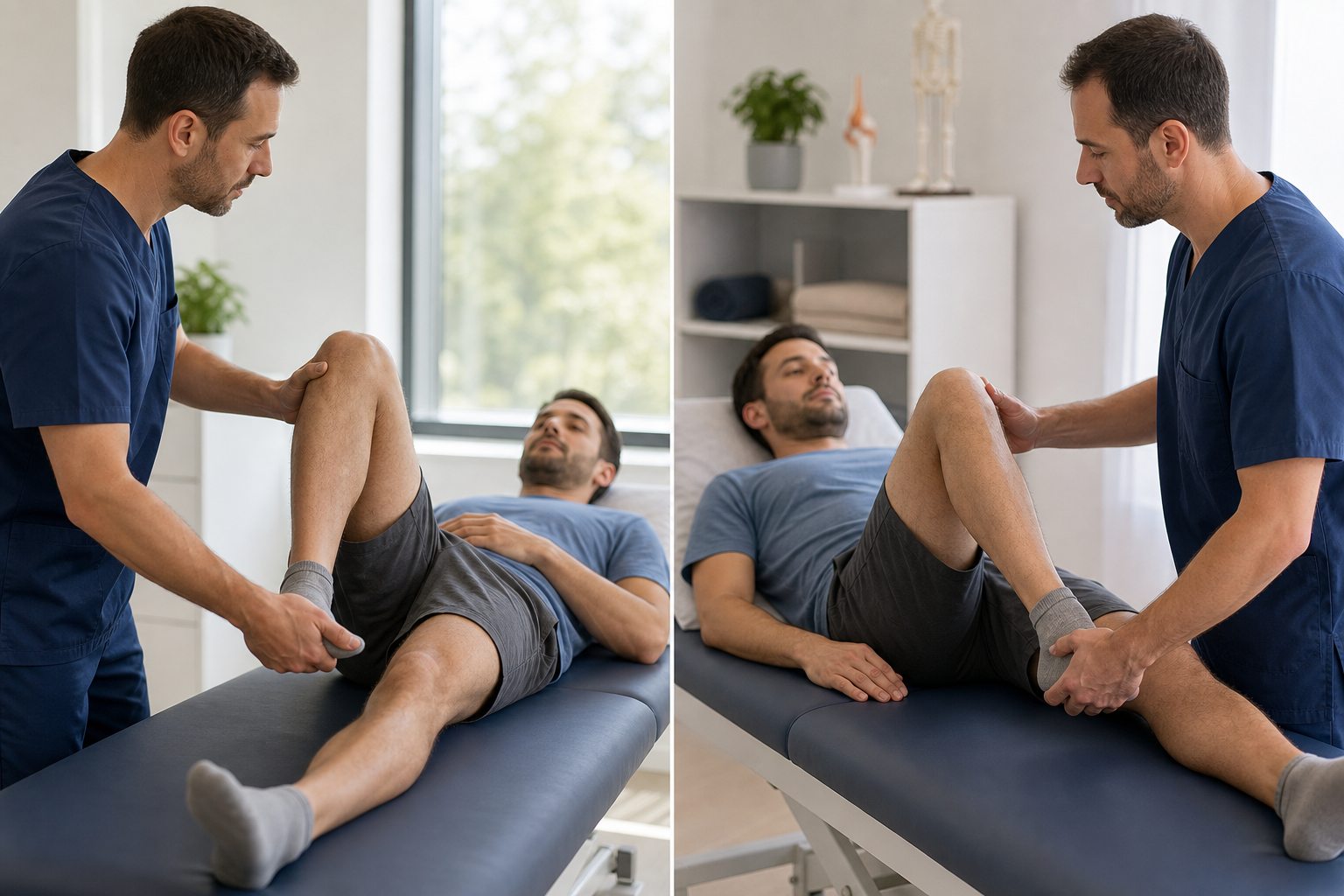
The examination usually begins with walking and the story of symptom onset. Hip range, especially rotation and flexion, is compared with the other side. The knee is checked for swelling, tenderness, motion, stability, and mechanical symptoms. The lower back and neurologic system are included when pain distribution or altered sensation suggests them.
A diagnostic injection into the hip is sometimes used in specialist care when the source remains uncertain, but it is not a routine shortcut. Imaging findings at the hip, spine, and knee are common in people without pain. The result must agree with symptoms and examination before it is treated as the cause.
Can Hip Strength Help Knee Pain?
Hip-targeted exercise is part of some knee rehabilitation programs, especially patellofemoral pain, because the hip helps control the thigh during running, stairs, and squats. That does not mean weak hips caused every knee symptom or that generic clamshells will fix referred hip pain. Exercise selection depends on the diagnosed problem and the task that is limited.
For hip osteoarthritis, therapeutic exercise, education, and appropriate load management are core options. A program may include hip and knee strength, walking progression, balance, and mobility. For nerve symptoms, the plan may differ. The important step is matching the program to the source rather than strengthening the nearest muscle by default.
A Seven-Day Observation Framework
- Map the route. Mark groin, front thigh, outer hip, buttock, knee, lower leg, numbness, and weakness separately.
- Compare functions. Record shoes, car entry, stairs, walking, sitting, lying on the side, and direct knee pressure.
- Track stiffness. Note the first steps after rest and how long restriction lasts.
- Change one variable. Reduce one aggravating activity rather than changing shoes, exercise, medication, and sleep position together.
- Watch direction. Improvement, stability, spread, or progressive weakness matters more than one daily pain score.
This framework is for a stable non-urgent pattern. It is not a reason to delay assessment after a fall, with inability to bear weight, fever, neurologic warning signs, or rapidly worsening symptoms.
How Daily Positions Refine the Hip-to-Knee Pattern
Symptoms during sitting, lying, stairs, and walking provide different information because each position changes load at the hip, knee, and spine. Groin or thigh pain that is worse when putting on socks, getting out of a low car, or turning the leg may keep the hip high on the list. Outer hip tenderness that makes side-lying difficult fits a different pattern. Pain with prolonged spinal positions, coughing, or nerve tension may direct attention toward the back and nerves.
Knee-dominant problems can still alter the hip. Limping, avoiding knee extension, or climbing stairs one step at a time changes work at the pelvis. This is why the direction of referral cannot be inferred from the most painful point alone. The hip can create knee pain, the knee can change hip loading, and both can coexist.
Footwear and walking surface are modifiers rather than diagnoses. A supportive shoe may make a walk more comfortable while the underlying source remains uncertain. A steep hill may expose limited hip extension or quadriceps capacity. Record the context, but do not let one helpful shoe or one painful surface decide where the condition originates.
What to Bring to a Hip and Knee Assessment
- A body map: Mark the groin, outer hip, thigh, kneecap, joint line, calf, or foot rather than writing only “leg pain.”
- A movement list: Include sitting, first steps, stairs, shoes and socks, side-lying, bending, and walking distance.
- Nerve clues: Report burning, tingling, numbness, weakness, foot slap, or symptoms below the knee.
- Timing: Note whether pain starts immediately, builds with distance, wakes you, or is worst the next morning.
- Previous treatment: Include injections, surgery, joint replacement, back episodes, and the response to exercise or medication.
- Function change: Describe limping, falls, reduced range, inability to cross the legs, or difficulty getting out of a chair.
A complete assessment may still begin with simple examination rather than a scan. Imaging findings are common in people without symptoms, so the useful question is whether the image, examination, and pain distribution tell the same story.
When to Get Medical Help
Seek urgent care after a fall or injury when you cannot bear weight, the leg looks shortened or deformed, or pain is severe. Urgent guidance is also needed for a hot swollen joint with fever, new marked weakness or numbness, saddle numbness or loss of bladder or bowel control, or calf swelling with chest pain or breathing difficulty. Arrange a routine assessment when unexplained knee pain persists, hip motion is limited, or symptoms do not improve with a sensible activity adjustment.
The Bottom Line
Hip-joint pain can travel through the groin and front or inner thigh to the knee, and hip osteoarthritis can occasionally present mainly as knee pain. Lateral-hip and lumbar-nerve patterns follow different routes and produce different movement or sensory clues. A location chart helps describe the pattern, but only a combined hip, knee, spine, and neurologic examination can determine the source. When a knee-focused explanation does not fit, remember to examine the hip rather than treating the map as the diagnosis.
Frequently Asked Questions
Can hip pain cause knee pain?
Yes. Hip-joint pain can be referred through the groin and thigh to the knee because sensory pathways overlap. Hip osteoarthritis is a well-described example. This cannot be confirmed from location alone, so clinicians may examine the hip even when the knee is the main complaint.
Where is referred pain from the hip usually felt?
Hip-joint referred pain is commonly felt in the groin, front of the hip, front or inner thigh, and sometimes the knee. Buttock pain may occur too. Pain traveling well below the knee with tingling or numbness raises different questions, including nerve involvement.
How can I tell hip pain from knee pain?
Hip-related patterns often change with hip rotation, putting on shoes, getting into a car, or groin-focused movement restriction. Local knee patterns may be more clearly reproduced by kneeling, direct pressure, isolated knee bending, stairs, or a tender knee structure. These are clues, not diagnostic tests.
Can hip arthritis feel like pain only in the knee?
It can. Published case series describe hip arthritis being mistaken for knee disease, sometimes when the hip symptoms were not prominent. Persistent unexplained knee pain deserves an examination that includes hip motion, walking, and the lower back.
Does pain from the hip go below the knee?
Hip-joint referral commonly reaches the thigh and knee. Symptoms below the knee can occur in complex patterns, but pain with tingling, numbness, burning, or weakness more strongly raises nerve or spine questions. A clinician should interpret the full distribution and neurologic examination.
When should hip-to-knee pain be assessed urgently?
Seek urgent care after a fall or injury when you cannot bear weight, the leg looks shortened or deformed, or pain is severe. Also seek urgent guidance for a hot swollen joint with fever, new marked weakness or numbness, loss of bladder or bowel control, or calf swelling with chest pain or breathing difficulty.