Start with the job, not the most expensive padding
Planting seedlings, laying flooring, cleaning a low cupboard, and working on machinery all place the knees in different situations. One involves damp soil, another a smooth finished surface, and another repeated walking between tools. Before comparing products, list where the pad will touch, how often you will move, and how long the task tends to last.
A pad that feels luxurious when squeezed in a shop may be awkward when you reach forward or move sideways. A hard outer shell may slide usefully in one job and feel unstable in another. The choice is not simply maximum softness. It is a balance between cushioning, grip, coverage, movement, and compatibility with the work environment.
This is a selection guide, not a ranking based on laboratory tests of particular products. We have not measured the pressure reduction of individual retail pads. Any safety rating, protective claim, or certification should be checked in the actual manufacturer's documentation and, for work equipment, against your employer's task assessment.
What padding changes, and what it does not
Kneeling creates contact between the front of the knee region and the supporting surface. Padding can spread that contact and reduce the feel of a hard point underneath you. NIOSH research has examined pressure, posture, and loading during occupational kneeling. Those studies support looking at both protection and work position rather than treating the pad as the whole solution.
However, contact comfort is not the same as eliminating internal joint load. The knee is still bent, your body still needs support, and reaching or twisting can change how you bear weight. Thick padding cannot make an hour in one position equivalent to a few brief tasks with breaks. A comfortable pad may even make it easier to overlook elapsed time.
If pain already occurs when kneeling, use our guide to knee pain when kneeling to understand the broader symptom question. Do not buy increasingly thick pads to work through a hot swollen area or a painful lump. The cause may need attention before equipment selection becomes useful.
Wearable pads versus a kneeling mat
Wearable pads follow you between positions, which can help when a job repeatedly alternates between walking and floor work. Their main challenge is fit: straps may slip, clothing may bunch, or the pad may rotate away from the contact area. Try the movement sequence you actually use, not just one still kneeling pose.
A separate kneeling mat avoids straps and can provide a broad resting area for both knees. It works best when you can place it flat, keep it clean, and stay within its supported area. If you repeatedly lean beyond the edge, one knee may end up on the hard surface while the other remains raised on the mat.
A garden kneeler with handles can offer another work position, but its stability and intended use matter. Do not assume a lightweight seat is designed to support a forceful push to standing. Check weight limits, folding locks, ground firmness, and the manufacturer's instructions before relying on any frame for balance.
| Option | Potentially useful for | Check before choosing |
|---|---|---|
| Wearable soft pads | Frequent moves between floor tasks | Strap comfort and rotation |
| Broad kneeling mat | A relatively fixed gardening or cleaning spot | Size, stability, moisture and edges |
| Task-specific hard-shell pads | Suitable flooring or trade work | Surface marking, sliding and required protection |
| Stable low seat or raised work area | Tasks that can be moved off the knees | Reach, access and safe transfers |
Foam, gel, and outer shells
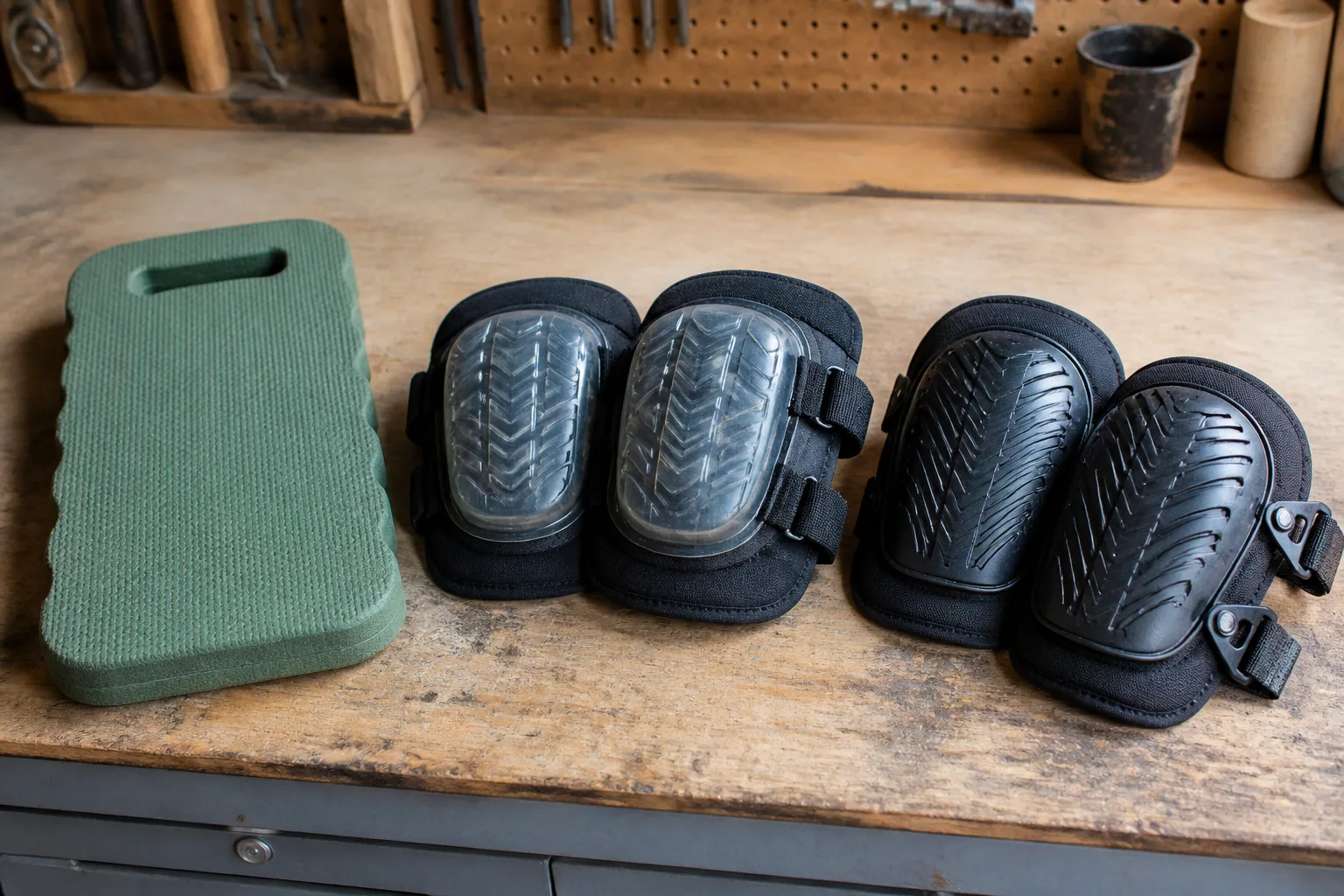
Foam can feel light and simple, but thickness on a product page does not tell you how it behaves under your weight. Check whether the pad compresses into a hard-feeling layer during the intended position. Also notice whether it recovers its shape afterward. Permanently flattened padding may no longer provide the experience you originally chose it for.
Gel is often combined with foam or another supporting layer. That combination may feel comfortable, but gel is not a guarantee of better protection for every knee. A pocket that shifts, an edge that presses, or a cover that slides can matter more than the material inside. Judge the assembled pad as a whole.
The outer surface also deserves attention. A tough shell may resist wear but can trap grit that scratches a finished floor. A soft fabric face may grip differently when damp or collect debris in a garden. Leather knee pads are another construction option, not proof of superior medical performance. Match cleaning and surface requirements to the job.
Fit the pad while moving, not only while standing
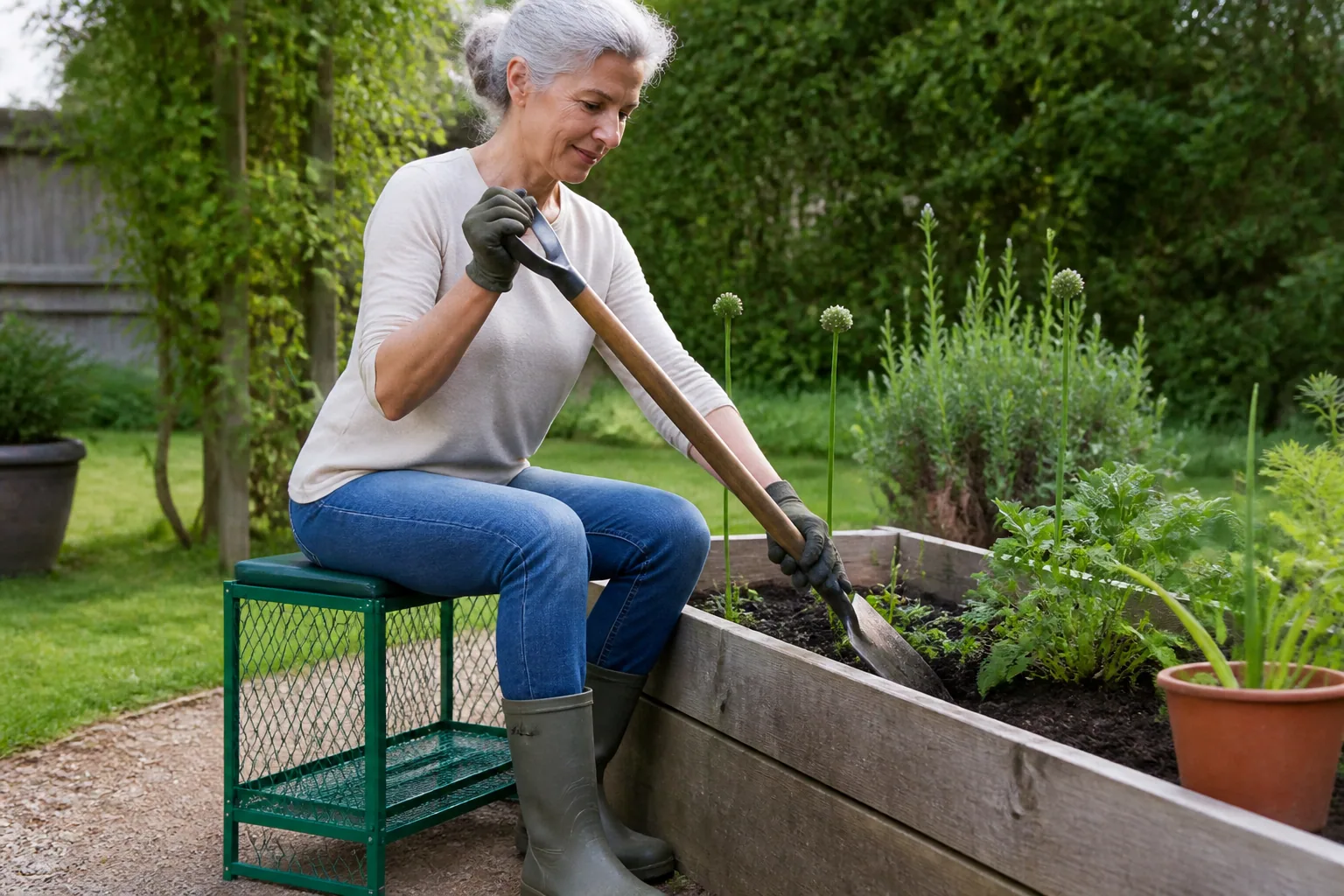
Put the pad on over the clothing you normally wear for the task. A fit tested over thin shorts may change over thick work trousers. Position the cushioning according to the maker's design and secure the straps without pulling them as tight as possible. Walking a few steps should not require constantly correcting the pad.
Then try a brief supported kneel on the intended type of surface. Notice whether a seam, buckle, or edge sits under pressure. Stand again and check whether the pad has rotated. A useful fit stays where it needs to be through the transition. If it only works when you hold it in place with one hand, it may not suit that task.
Look behind the knee for bunching or uncomfortable strap pressure. Tingling, numbness, a cold foot, or marked color change is not a normal break-in requirement. Remove the pad and review the fit. Do not add another tight layer underneath to compensate for a pad that keeps slipping.
Gardening: change the height of the task
Before settling onto the pad, bring tools, plants, and water within a comfortable reach. Repeatedly stretching across a bed can turn a short kneeling job into sustained awkward work. Move around the bed rather than twisting on planted knees to reach its far edge. Keeping supplies close also reduces the number of difficult floor-to-standing transitions.
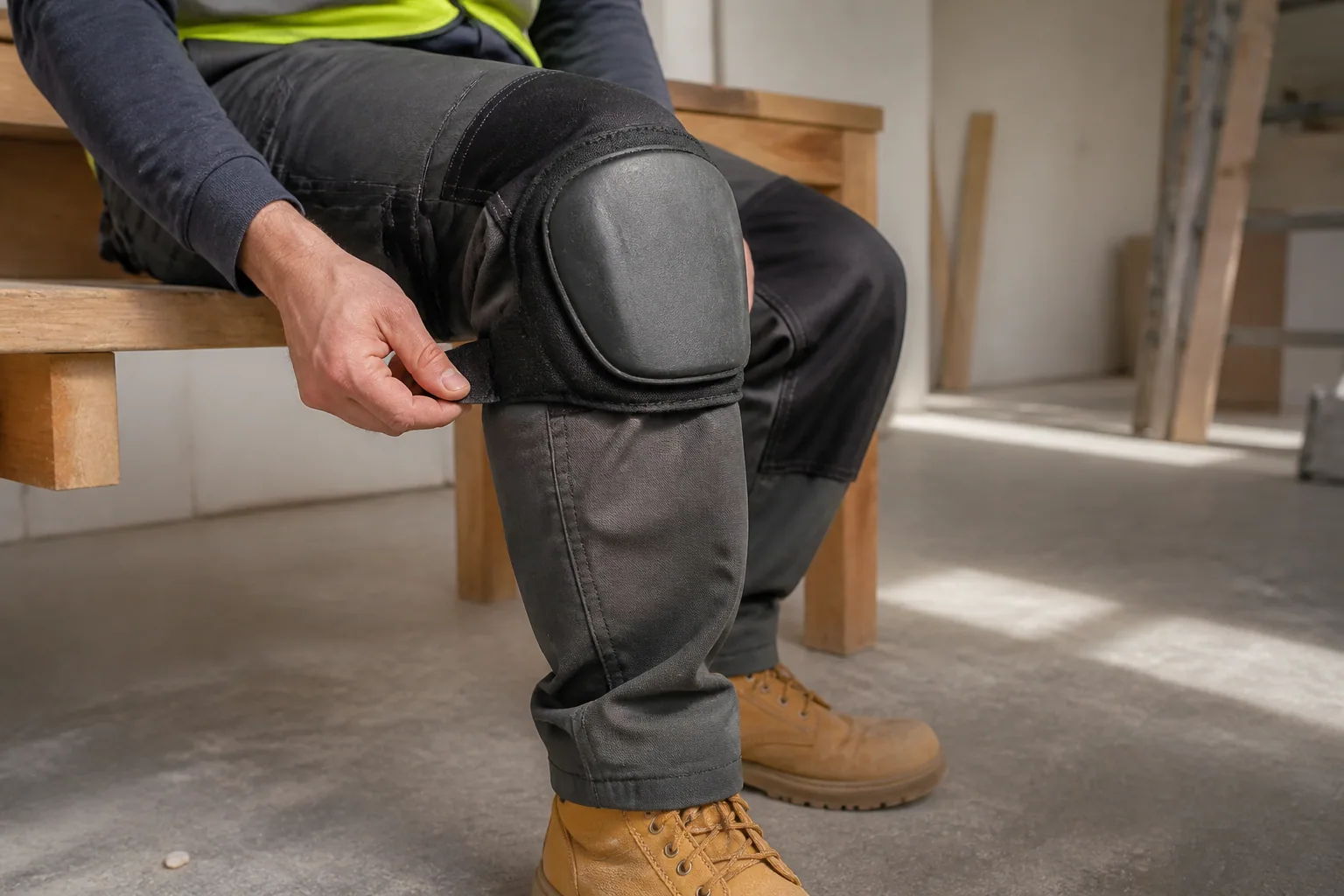
Raised containers, a stable stool, or a longer-handled tool may let you complete part of the job without kneeling at all. The Arthritis Foundation highlights adapting tools and work positions for joint comfort. The best setup may therefore include padding for a few moments and a different position for the rest of the task.
Outdoor ground is not as predictable as a showroom floor. Check for stones, roots, moisture, and uneven support before lowering yourself. A small portable pad can tip or slide if placed across a raised edge. Keep a practical route back to standing and avoid gardening alone in a position you are unsure you can leave safely.
Flooring and trade work need task-specific protection
For occupational use, follow the site's protective-equipment requirements. A comfortable household gardening pad is not automatically appropriate for sharp debris, chemicals, hot surfaces, or the demands of a particular trade. Check the manufacturer's intended use and ask your supervisor or safety representative when the protection requirement is unclear.
Changing the job can sometimes reduce exposure more effectively than changing the pad. NIOSH construction guidance discusses tools and supports that bring work within reach or change floor-level posture. A suitable long-handled tool, platform, or approved work aid may reduce repeated kneeling, but each option still needs to fit the workplace and task.
Do not improvise wheeled supports on slopes or cluttered surfaces. A device that moves easily can create a different stability problem. Likewise, do not remove required PPE because it makes the kneepad uncomfortable. Resolve the compatibility issue with the equipment provider instead of trading one protection problem for another.
Plan the exits as well as the kneeling
Think through how you will stand before beginning the task. A secure nearby support, clear floor, and reachable tools can matter as much as pad thickness. If you need help getting up, arrange that help in advance. Do not use a paint tin, folding tray, or wheeled chair as an improvised support.
Break a long job into smaller sections and change position between them. There is no universal timer that guarantees safety, so choose a schedule that prevents symptoms building rather than waiting for strong pain. If the knee becomes more uncomfortable each time you return to kneeling, stop the task and reassess instead of resetting the timer.
Our supported floor-transfer guide explains why planned practice differs from trying to get up after a fall. A kneepad does not substitute for adequate strength, balance, or assistance. After an injury or a fall, the priority may be getting help rather than completing a transfer.
A sleeve is not a kneepad
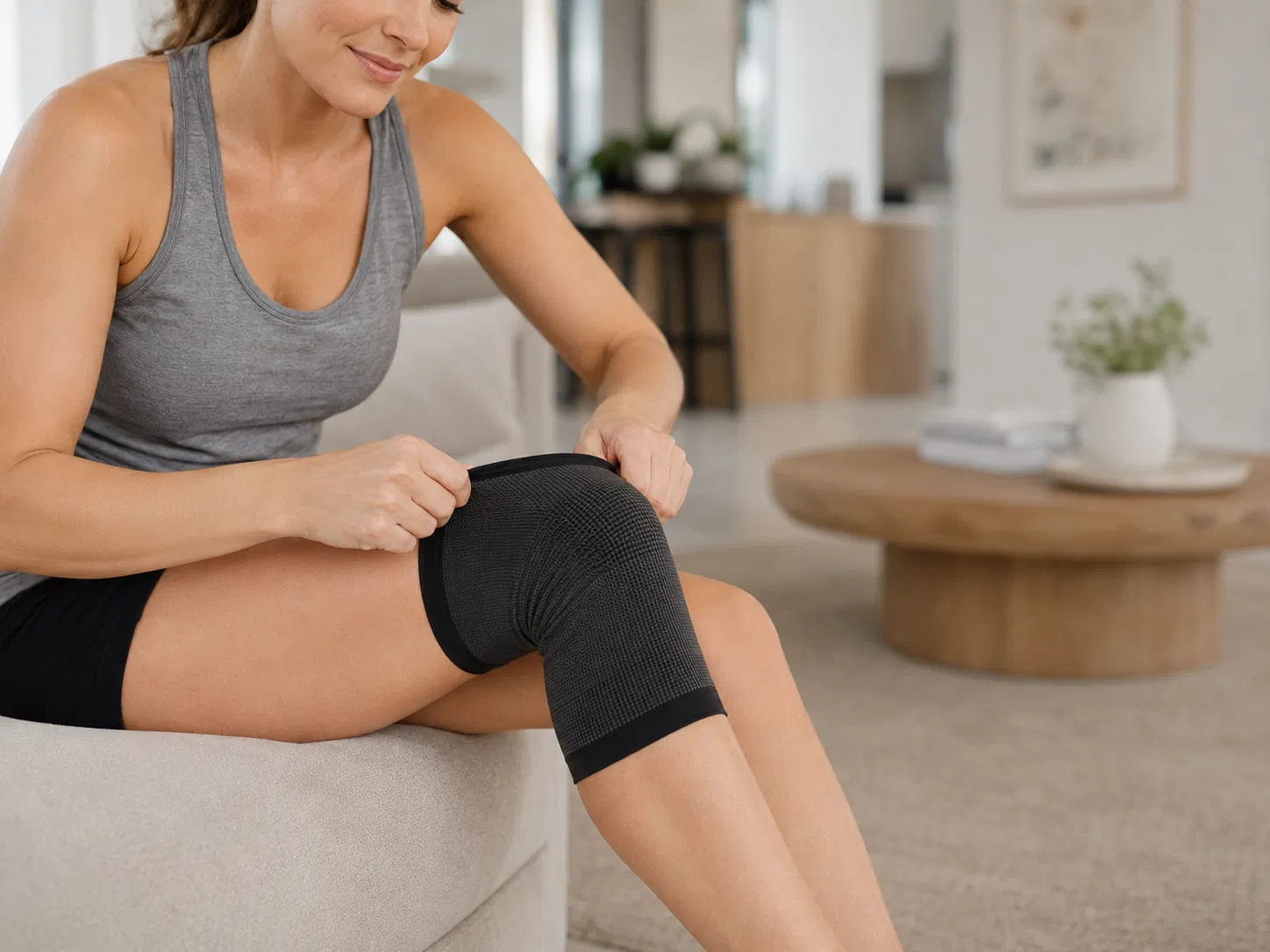
A compression sleeve and a protective pad have different jobs. A sleeve may offer a supported feel during ordinary movement, while a kneepad is designed to cushion contact with a surface. The soft fabric of a sleeve should not be mistaken for impact protection, and a pad should not be described as stabilizing an injured ligament.
If you use both, check comfort and movement with the full combination. Extra layers can change strap pressure and make the pad rotate. Our brace and compression sleeve comparison explains those support categories. Keep the specific floor-work protection question separate from a general desire for knee support.
Inspect, clean, and replace
Before use, look for crushed padding, cracked shells, loose stitching, exposed hard edges, and straps that no longer hold. Remove grit and follow the cleaning instructions. A pad stored wet in a tool bag may be less pleasant against the skin even if its outer shell looks intact.
Dry the equipment as directed rather than using aggressive heat that could affect materials. Keep pairs together so you can notice an unevenly worn pad. If one side repeatedly feels different, check both the equipment and the task position; do not assume the knee simply needs to get used to it.
| Problem | Check first | Useful change |
|---|---|---|
| Pad rotates | Sizing, clothing and strap arrangement | Choose a better-fitting design, not tighter pressure |
| Hard spot remains obvious | Flattened padding, debris or a seam | Clean, replace, or change work position |
| Pain grows despite cushioning | Duration, bending and existing symptoms | Stop kneeling and review the cause |
| Difficult return to standing | Support, balance and task height | Arrange assistance or work from a stable seat |
Try the complete task before committing to a pair
A quick kneel in a shop may reveal an obvious pressure point, but it does not reproduce moving between plants, reaching under a cupboard, or returning to standing. When the return policy and instructions allow, assess the intended sequence on a suitable clean surface. Notice whether the pad stays aligned as you change position, not only while you remain still.
Wear the clothing you normally use for the task. A strap adjusted over thick work trousers may behave differently over thin fabric, and a pad that is comfortable seated may feel tight with more knee bend. Do not solve every movement problem by tightening the straps. If the design repeatedly rotates or presses behind the knee, a different fit or task setup may be needed.
Consider how often you must walk between kneeling tasks. A bulky shell that protects contact with a rough surface may be inconvenient for frequent walking, while a stationary mat requires repositioning. Neither is universally better. Choose the compromise that matches the job, and keep the option to work at a higher level when kneeling remains uncomfortable despite suitable protection.
When to Get Medical Help
A hot, red, increasingly swollen knee, fever, a skin wound with spreading redness, or inability to bear weight needs prompt medical advice. Do not kneel through a new injury or postoperative restriction. Persistent focal swelling deserves assessment, even if padding temporarily makes it easier to tolerate.
Choose protection that lets you change position comfortably
The most useful kneeling setup combines suitable padding, stable contact, manageable reach, and regular opportunities to move. Try the complete task sequence before committing to a product. If the job still requires prolonged uncomfortable kneeling, the next improvement may be a different work height or assistance, not another layer under the knee.
Frequently Asked Questions
Are gel knee pads better than foam?
Not automatically. Padding shape, thickness under load, stability, and fit matter alongside the material. Try the pad on the intended surface rather than choosing from the word gel alone.
Can I use a kneeling mat instead of wearable knee pads?
Yes, when you can position it securely and do not need to move frequently. Keep it flat and dry, and make sure reaching beyond it does not leave one knee unsupported.
Will knee pads prevent bursitis?
They may reduce direct contact pressure but cannot guarantee prevention. Long kneeling periods, repeated friction, skin damage, and other factors still matter. New warmth or swelling needs assessment.
How tight should kneepad straps be?
Secure enough to prevent slipping, not tight enough to cause numbness, deep pressure, or uncomfortable bunching behind the knee. Check the fit while walking and kneeling, following the maker's instructions.
Are compression sleeves suitable for kneeling?
A sleeve is not usually a protective kneepad. It may offer a supported feel but often lacks the cushioning and surface protection needed for floor work. Use equipment intended for the task.
Can I kneel after knee replacement if I wear pads?
Ask your surgical team about your recovery stage, wound, sensation, and permitted activity. Padding does not override postoperative restrictions or make a tender incision ready for pressure.
Why do my knees still hurt with thick pads?
Padding does not remove the effects of deep bending, long exposure, twisting, or an existing knee problem. Review the job position and duration as well as the pad fit.
Can knee pads damage a floor?
Hard shells, trapped grit, and unsuitable materials can mark some surfaces. Check floor and pad manufacturer guidance, keep the contact surface clean, and use an approved non-marking option where required.
When should I replace my knee pads?
Follow the manufacturer guidance and replace them if padding remains flattened, straps no longer hold, the shell cracks, or seams expose hard edges. There is no single replacement interval for every task and material.