First separate the knee joint from the muscles around it
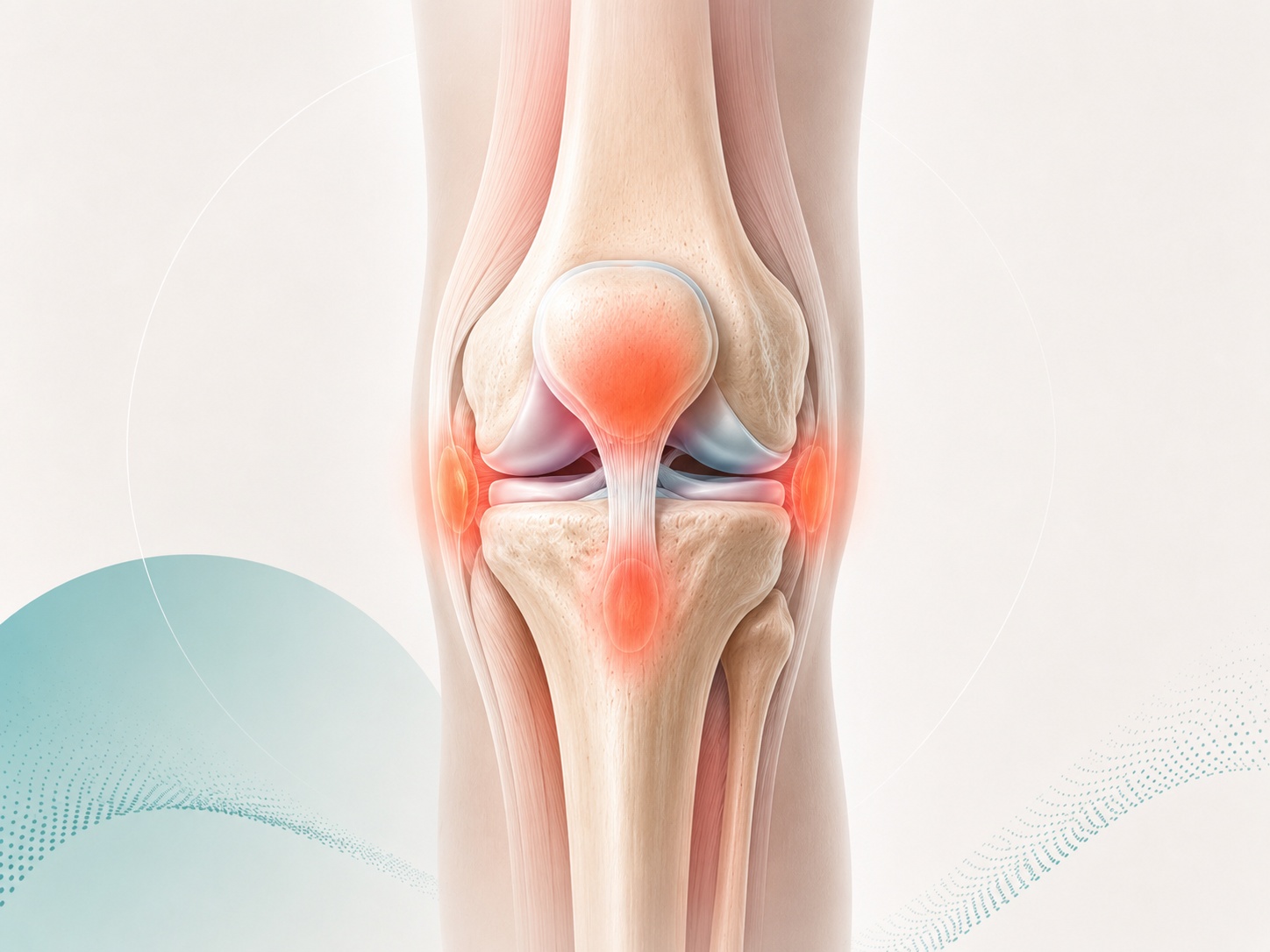
A massage gun repeatedly moves an attachment against the body. The intended target is suitable soft muscle tissue, not every spot that feels sore. Around the knee, that distinction becomes particularly important because muscles, tendons, bone, nerves, and joint structures lie close together. A small change in head position can change what receives the contact.
The quadriceps occupy the front of the thigh; their tendon continues toward the kneecap. The hamstring muscles lie farther up the back of the thigh, while their tendons approach the knee. A broad muscle belly is different from the thinner tissue immediately beside the joint. You should not need to press hard to identify an appropriate area.
If the discomfort is truly inside the joint, localized at a tendon attachment, or associated with swelling, a massage gun is not a way to investigate it. Record when it started and which ordinary activities provoke it. Our knee pain location guide explains how to describe a region without treating location as a diagnosis.
What percussion research actually measures
Many percussion studies examine immediate flexibility, muscle stiffness, soreness, or performance in small groups of healthy or physically active adults. These are useful questions, but they are not the same as asking whether a home device treats chronic knee arthritis or heals an injury. Read the participant group and measured outcome before accepting a broad marketing claim.
A 2025 crossover study involving 35 healthy recreationally active adults compared several percussion schedules and measured hip and ankle range of motion. It found changes in flexibility under the studied conditions. That result does not establish an optimal home protocol for a painful knee, and it does not justify copying the study's speed progression when your symptoms are unexplained.
A separate trial in healthy young adults compared percussion with static stretching for hamstring flexibility. Both approaches produced short-term changes, without a clear advantage for percussion over stretching on the reported flexibility gains. The practical lesson is that a device may be one optional tool, not an essential purchase or a replacement for ordinary movement.
Other research has examined muscle and fascial stiffness or percussion added to structured rehabilitation after ACL reconstruction. A supervised postoperative study is not permission to use a gun around a fresh surgical knee. The timing, screening, treatment area, and accompanying exercises matter. Your own operation and rehabilitation instructions take priority over a study headline.
Areas that should not become a percussion target
Do not put the head directly on the kneecap, the bony upper shin, the joint line, or a tender tendon. Avoid the hollow at the back of the knee and the bony prominence on its outer side. A narrow attachment can concentrate the impact rather than make these areas accessible. Strong sensation is not evidence that you have found the right spot.
Fullness behind the knee should not be treated as a knot to break up. Neither should unexplained calf pain or one-sided swelling. Do not repeatedly test a sensitive area to see whether pressure makes it disappear. The back-of-knee pain guide outlines why several different problems can feel similar in that region.
| Area or situation | Approach | Important distinction |
|---|---|---|
| Broad middle-thigh muscle | Consider gentle use only if appropriate for you | Muscle comfort, not joint treatment |
| Kneecap, joint line, tendon, bony point | Do not apply percussion directly | A smaller head does not remove the risk |
| Hollow behind the knee | Avoid percussion | Not an area to search for a muscle knot |
| New swelling, injury, or unexplained calf pain | Stop and seek appropriate assessment | Do not use massage as a diagnostic trial |
Who should ask before trying a massage gun?
Check with a clinician before use if you have a circulation disorder, reduced sensation, a bleeding disorder, easily damaged skin, or take medication that increases bleeding risk. The same applies after surgery or a recent significant injury. Do not stop prescribed medication to make massage possible; the optional device should adapt to your medical situation.
Reduced sensation deserves particular care because discomfort may not provide a reliable warning. If you cannot easily feel or inspect the intended area, a home experiment is a poor way to establish safety. Varicose veins and unexplained swelling also require a different discussion from ordinary muscle tightness. A recovery gadget cannot rule out a vascular problem.
Ask a specific question rather than simply asking whether massage is allowed: which area, which type of device, and under what conditions? Show the clinician the attachment and instructions if possible. Permission for gentle hands-on massage does not automatically mean repeated powered percussion is suitable in the same location.
Choose an attachment you can control
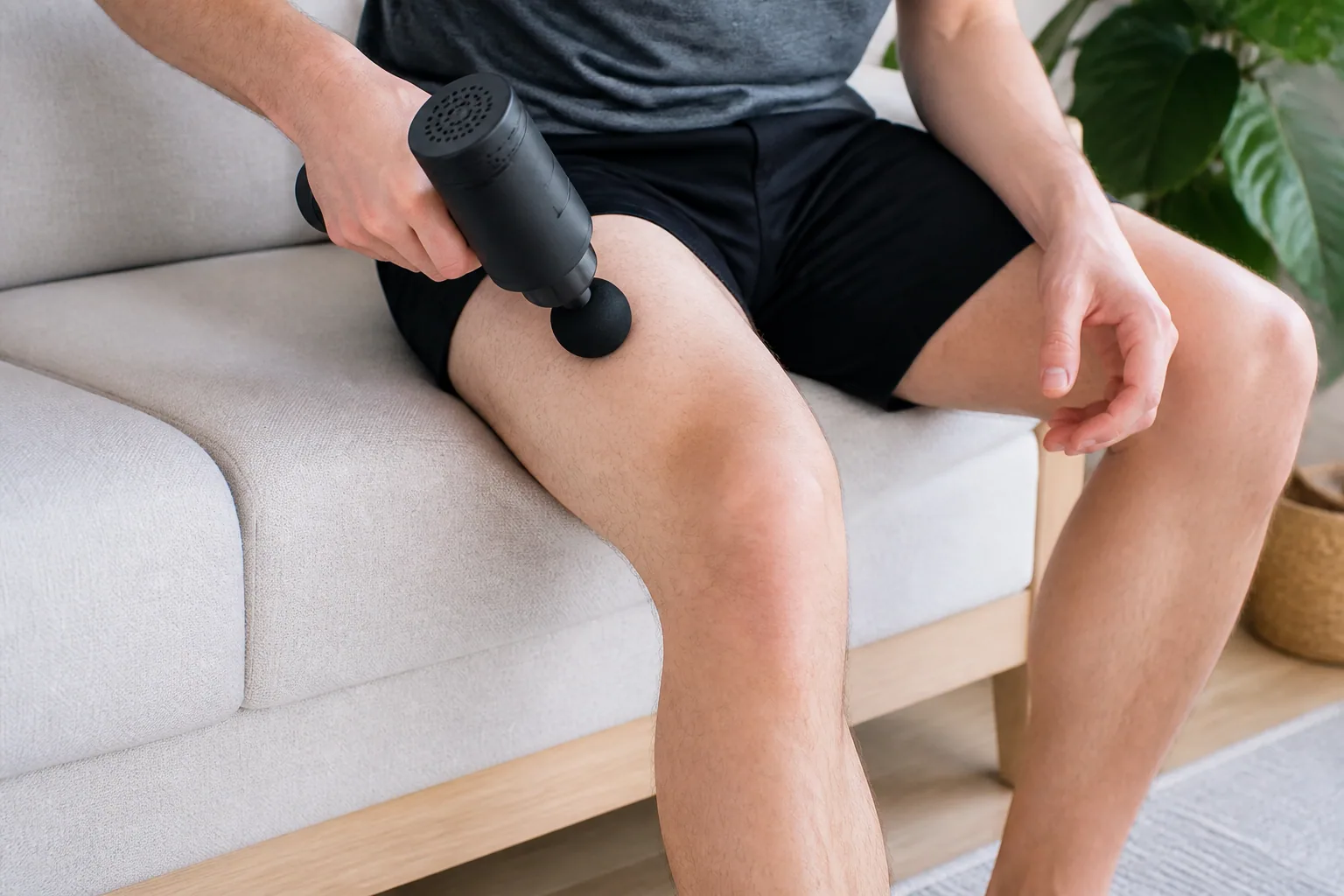
For an appropriate thigh muscle, a broad soft attachment may be easier to control than a pointed one. Check the device manual because attachment materials and intended uses differ. A hard plastic head and a compressible foam ball do not feel the same even at the same speed. Replace a cracked, loose, or damaged attachment before considering use.
The best grip is one that lets you keep contact light without bending awkwardly or straining your wrist. A heavy device can encourage leaning into the tissue simply because your arm is tired. Compact or portable massage guns may be easier to hold, but smaller dimensions are not evidence of clinical effectiveness or safer force.
Look for clear controls and a stop action you can reach comfortably. Noise, battery life, weight, and cleaning instructions affect whether the tool is practical at home. Those details are more useful than an unexplained claim about professional strength. You do not need maximum power to assess whether a mild comfort routine suits you.
A cautious first-use checklist
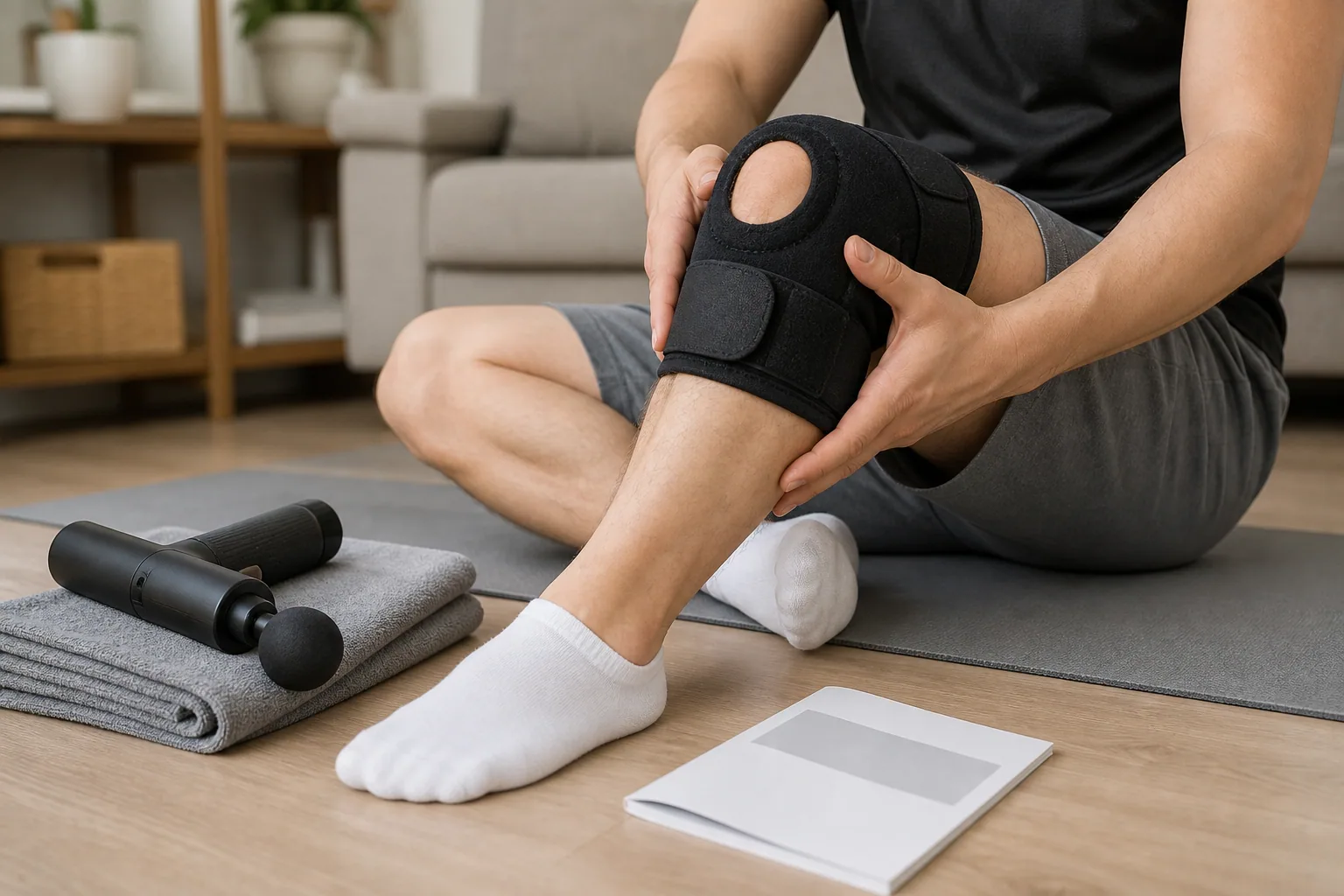
First decide whether the sensation fits an ordinary muscle-comfort question. If there is a new injury, unexplained swelling, a hot joint, or altered walking, stop at that decision rather than moving on to device settings. Choose a supported position in good light so you can see the muscle and control your arm without balancing at the same time.
Follow the manufacturer's instructions for starting and contacting the body. Begin at a gentle setting with light contact on a suitable broad muscle area. Do not press down to stop the head bouncing or pin the attachment against a painful point. Keep the first exposure brief enough that you can judge comfort before deciding to continue.
There is no universal number of seconds or revolutions per minute that makes every device safe for every person. Different products have different stroke lengths and force characteristics. Follow the limits for your actual device and any individualized advice. Research protocols are not interchangeable consumer instructions.
Stop immediately for sharp pain, tingling, numbness, burning skin, or an unpleasant deep vibration. Check the skin afterward. Bruising is not a necessary step toward recovery. If a gentle attempt does not feel helpful, you have learned something useful without needing to increase pressure until a response appears.
Before exercise, after exercise, or on a rest day?
Before exercise, treat any comfortable muscle effect as preparation rather than readiness clearance. You still need gradual activity-specific movement. For example, an easy walk before a longer walk tells you more about current walking tolerance than how the thigh feels while seated with a device. Do not jump straight from temporary relief to your hardest set.
After exercise, distinguish muscle soreness from joint symptoms. Research on delayed-onset soreness does not mean a swollen knee after training should be massaged. Note whether the issue is broad muscle tenderness, a specific painful movement, or a change in joint size. Our post-exercise knee pain guide addresses that broader pattern.
On a rest day, it can help to compare the same simple activity before and later after an optional comfort session. Keep the comparison modest: ordinary room-to-room walking, for example, rather than repeated deep squats. A more comfortable sensation is worthwhile, but it should not be interpreted as proof of tissue repair.
| What you notice | Useful next step | What not to conclude |
|---|---|---|
| Thigh feels temporarily less tight | Keep ordinary movement gradual | The knee injury has healed |
| No meaningful change | Skip the device and review the routine | More pressure must be needed |
| Skin irritation or bruising | Stop and reassess suitability | A deeper treatment is working |
| Joint pain or swelling increases | Seek assessment rather than another session | Pain is simply leaving the tissue |
Massage gun, foam roller, and heated wrap are different tools
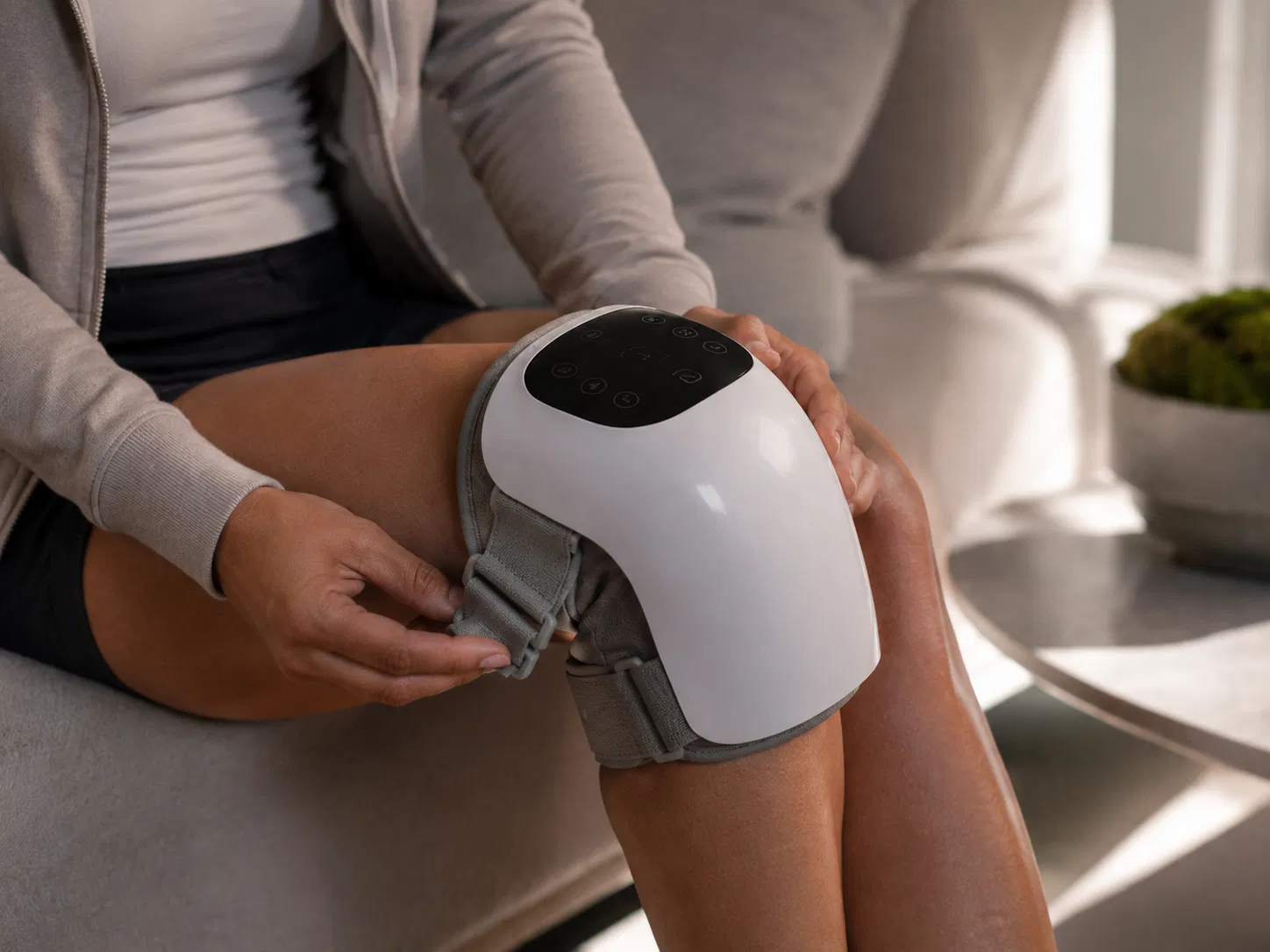
A foam roller uses body weight and positioning to apply pressure. A percussion gun adds repeated movement from a powered head. A heated wearable wrap may provide warmth and vibration without that same handheld impact. They should not share one instruction sheet, and evidence about one device cannot simply be transferred to the others.
If your question is about the outer thigh, our IT-band rolling guide covers that particular routine and its limits. This article does not recommend pounding the IT band or outer knee because the area feels tight. More focused discomfort is a reason for more careful assessment, not a more aggressive attachment.
For ordinary stiffness without active swelling or a new injury, some people prefer a gentle warmth routine rather than percussion. Read the heat and cold guide before choosing between comfort options. The choice should follow the symptom context, not a claim that one product treats every kind of knee pain.
If you want to compare wearable devices, see what knee massagers can and cannot do. Look at the actual functions, instructions, fit, and return terms. A device can make a routine easier to follow without becoming the main treatment for the underlying problem.
Keep a useful record, not a complicated recovery score
Write down the activity before the symptom, the area you treated, the attachment, and whether ordinary movement felt different later. You do not need to rank every sensation all day. A few consistent observations across separate occasions are more informative than one unusually good minute immediately after using the gun.
Keep exercise volume, sleep, and other recovery tools reasonably stable while comparing. If you change shoes, add stretching, reduce training, and use a new device together, you cannot tell which change mattered. That does not make improvement invalid; it simply limits what you can attribute to percussion.
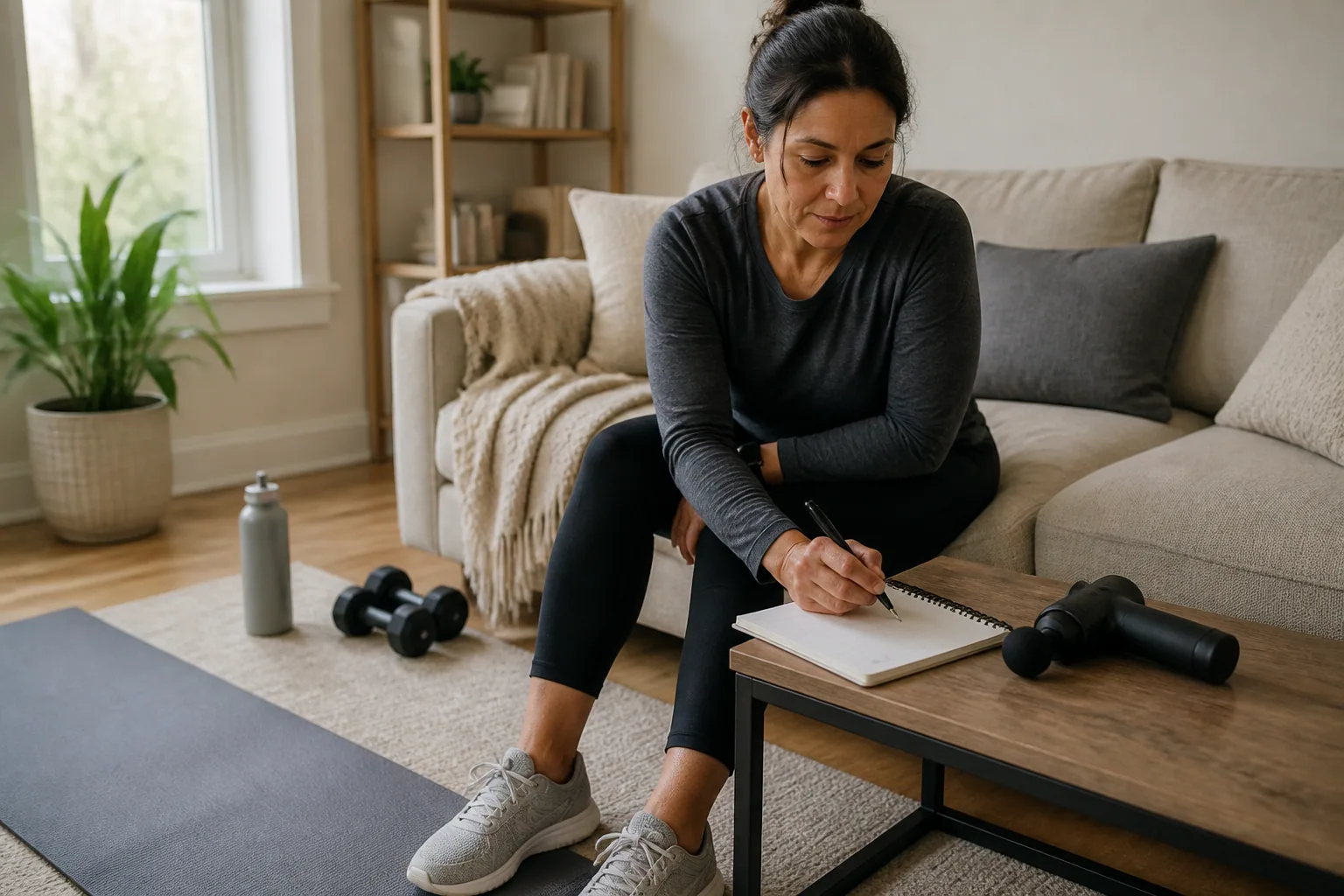
Read the device instructions before choosing an attachment
Two massage guns can look similar while using different speeds, stroke lengths, and attachments. A soft-looking head does not necessarily make the device suitable for a sensitive area. Read the intended uses, charging instructions, and restrictions for the exact model. If the manufacturer cannot provide clear guidance, do not fill the gap with a routine from another brand.
Check whether you can hold the device comfortably without reaching awkwardly or pressing harder as your arm tires. The control you have over it matters more than the number of settings. Stop if the attachment loosens, the device behaves unexpectedly, or the skin becomes irritated. A damaged battery or charging problem is an equipment issue to resolve before further use.
If you discuss percussion massage with a clinician, bring the model name and describe where you intend to use it. Saying that you own a massager may refer to very different products. Explain whether the goal is temporary muscle comfort, a warm-up experiment, or rehabilitation after an injury. That context helps the clinician answer the actual question instead of approving an undefined device.
When to Get Medical Help
Seek urgent care for a hot red knee with fever, major injury, inability to bear weight, a locked knee, or rapidly increasing swelling. Calf swelling with chest pain or breathlessness needs emergency help. Arrange assessment for persistent pain or symptoms that worsen after percussion.
The useful role of a massage gun is limited and optional
A sensible percussion routine starts with appropriate muscle tissue, gentle control, and a clear reason to stop. It does not begin with the assumption that the most painful point needs the strongest setting. If the knee itself is the problem, finding the cause and choosing manageable activity matter more than adding another recovery tool.
Frequently Asked Questions
Can a massage gun help knee pain?
It may change short-term muscle tightness or soreness for some people. That does not establish the cause of joint pain or show that percussion repairs cartilage, a tendon, or a meniscus. Persistent knee symptoms deserve assessment.
Can I put a massage gun directly on my kneecap?
No. A percussion massage gun is intended for suitable muscle tissue, not direct use on the kneecap, joint surfaces, or other bony points. Do not use a smaller attachment to concentrate force there.
Is it safe to massage behind the knee?
Do not use a percussion gun in the hollow behind the knee. Important nerves and blood vessels pass through this region, and fullness there may need assessment rather than massage.
Which attachment should I use around the thigh?
Follow the manufacturer instructions. A broad soft attachment can be easier to control on an appropriate muscle than a narrow pointed head, but an attachment does not make an unsuitable body area safe.
Should I use the highest speed for tight quadriceps?
No. Higher speed and greater pressure are not proof of greater benefit. If use is appropriate, begin gently, keep contact comfortable, and stop for pain, tingling, skin irritation, or bruising.
Can I use a massage gun with knee arthritis?
Arthritis does not make percussion a cartilage treatment. Discuss use when you have active swelling, substantial pain, reduced sensation, fragile skin, or other medical conditions. Do not pound the painful joint.
Can a massage gun replace my warm-up?
No. A short-lived change in flexibility does not replace gradual movement, practice repetitions, or a sensible training load. Test readiness with the activity itself at an easy level.
Why is my knee worse after a massage gun?
Stop using it. Contact may have been too forceful, too long, or over an unsuitable structure, but an online description cannot identify the cause. Get assessed if pain persists, swelling appears, or walking changes.
Is a heated knee wrap the same as a massage gun?
No. A wearable wrap may provide warmth and gentle vibration without repeated percussion from a handheld head. The intended body areas, instructions, and precautions differ; neither is a diagnosis or a substitute for rehabilitation.