The location: below the inner joint line
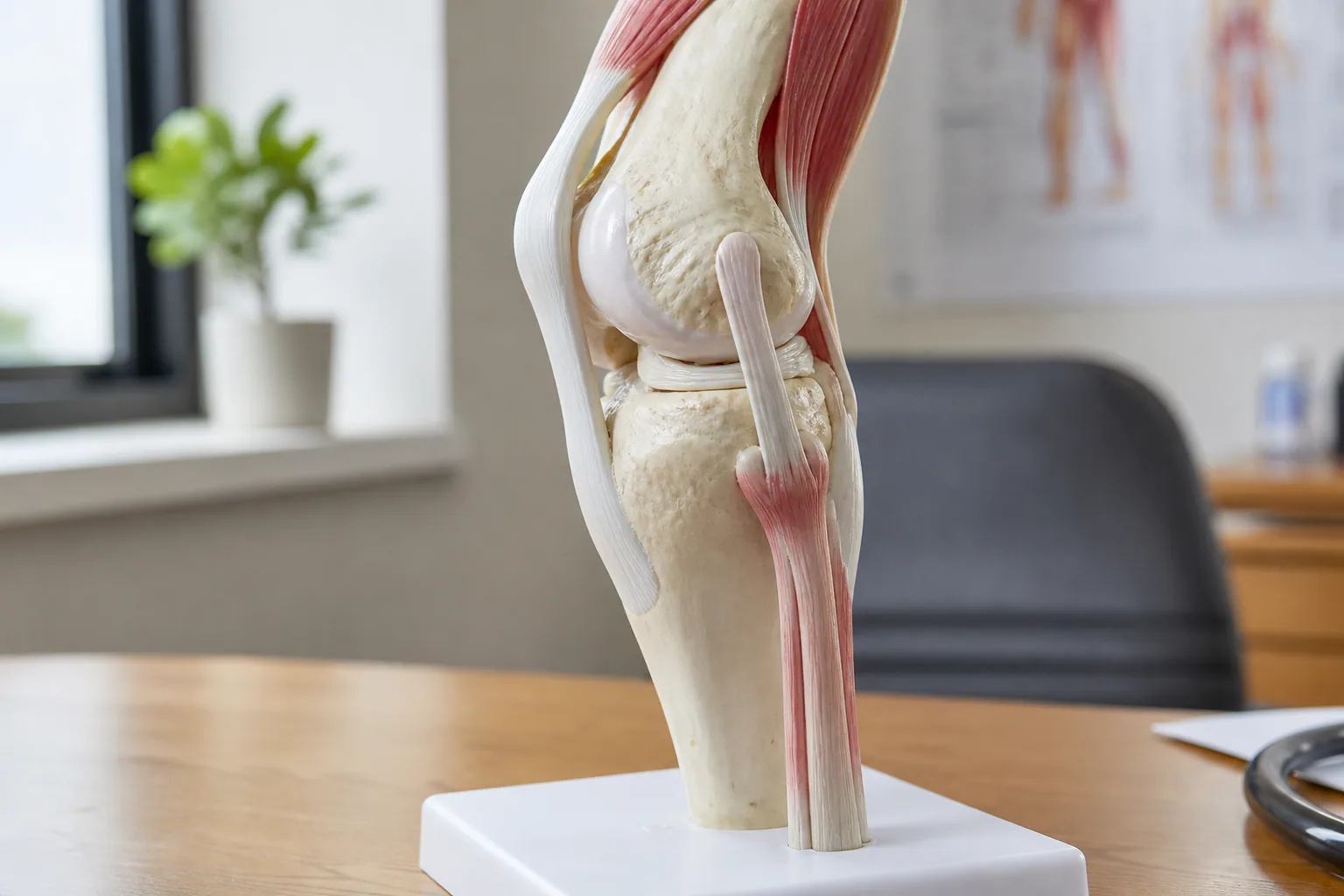
The pes anserine region lies on the upper inner part of the shinbone. Tendons from three muscles, sartorius, gracilis, and semitendinosus, come together in this area. A nearby bursa helps the tissues move against surrounding structures. Irritation here can create tenderness below the knee rather than a broad ache across the whole joint.
You may see the terms pes anserine bursitis, tendinitis, or tendinobursitis used in descriptions. They emphasize slightly different tissues around the same region. A clinical label may describe a symptom pattern before it proves that one particular structure explains all the pain. That distinction matters when deciding whether further assessment is useful.
This page focuses on that localized upper-inner-shin pattern. Our general knee bursitis guide compares bursae in other locations. Pain directly over the kneecap after kneeling is a different presentation and should not automatically receive the same diagnosis or exercise advice.
What symptoms may feel like
People may notice localized tenderness, discomfort with stairs, or pain that increases with a particular amount of walking or exercise. Some describe puffiness in the area. Others mainly notice a spot when clothing presses against it. None of these observations is exclusive to bursitis, so consider the whole history rather than one symptom.
Ask whether the problem developed gradually or followed a clear injury. A new twist, impact, or sudden inability to bear weight deserves a different level of concern from a mild familiar ache after increased activity. Do not use the word bursitis to make an unexplained injury sound less important.
Record how the knee behaves later as well as during activity. A stair session may feel manageable at the time but produce a stronger response afterward. Repeatedly pressing the tender area to see whether it still hurts can add irritation without providing useful diagnostic information. A brief symptom note is a better record.
Why location alone cannot confirm the diagnosis
The inner knee contains several closely spaced structures. Symptoms from the medial meniscus, collateral ligament, joint arthritis, or a bone stress problem can overlap in everyday descriptions. A clinician considers the location alongside examination, injury mechanism, swelling, and the tasks that provoke symptoms.
Research examining clinical diagnosis of pes anserine tendinitis-bursitis syndrome has found that symptoms and imaging findings do not always correspond closely. This is a reason for careful interpretation, not a reason to scan every tender knee. The useful question is whether an additional test would change the diagnosis or treatment plan.
Our meniscus location guide explains a neighboring pattern, but comparing pictures cannot rule out a tear. Locking, repeated giving way, or a clear injury history should be described directly to the clinician rather than fitted into whichever online label seems most reassuring.
| Possible pattern | Detail that helps assessment | Important limit |
|---|---|---|
| Pes anserine-region pain | Tenderness below the inner joint line. | A sore spot alone does not confirm bursal inflammation. |
| Medial joint-line symptoms | Twisting history, catching, or joint swelling. | Not every inner-knee ache is a meniscus problem. |
| Ligament-related injury | A force or twist followed by instability. | Self-testing with sideways pressure is not recommended. |
| Bone-related pain | Persistent focal pain and changes in loading. | A stress injury may need investigation. |
| Arthritis with nearby soft-tissue pain | A broader stiffness pattern plus a localized tender area. | Two problems can coexist. |
Activity changes that may contribute
A sudden increase in hills, stairs, running distance, or repeated bending may precede symptoms. That does not mean the activity is inherently harmful. It may mean the recent dose exceeded what the area could comfortably manage. Compare the current week with your usual routine before focusing on a single step or stretch.
Knee osteoarthritis can coexist with pes anserine-region pain. In that situation, a treatment plan may need to address joint function and local symptoms together. It is not always useful to ask which condition is the only cause. The practical goal is to identify which factors can be changed and how progress will be assessed.
Body shape, movement patterns, and muscle capacity vary. Avoid concluding that a visible alignment difference must be corrected with an insert or brace. A clinician can assess whether a particular factor is relevant. Buying equipment based on a photograph of your legs may create a new discomfort without addressing the original problem.
What an assessment may involve
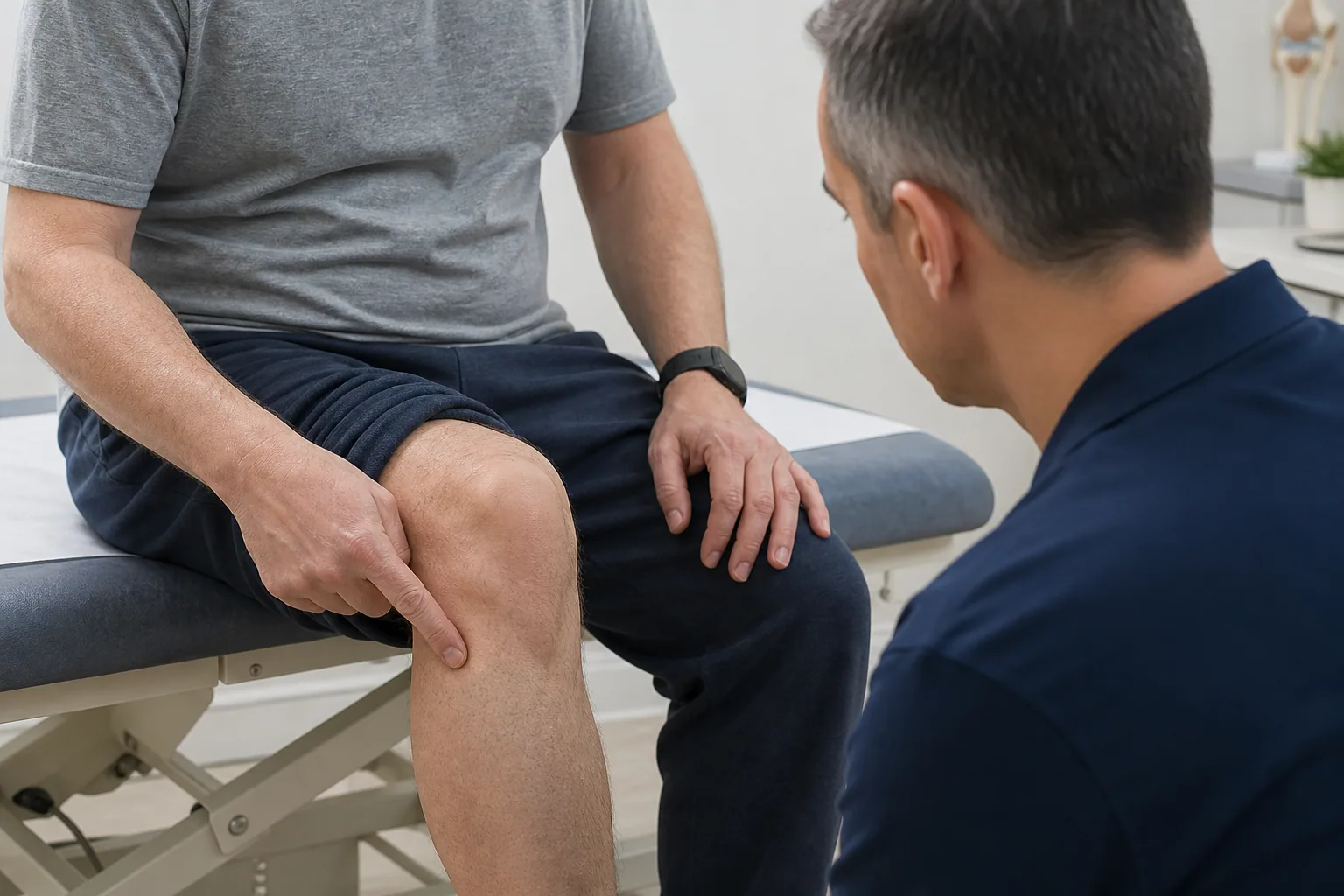
Expect questions about timing, location, activity, injury, and the effect on ordinary tasks. The clinician may examine movement, tenderness, swelling, and other knee structures. Bring information about recent training changes and any previous diagnosis. A clear timeline often helps more than a list of exercises you tried from several websites.
Imaging may be considered when the diagnosis is uncertain, symptoms suggest another problem, or a procedure is being planned. X-rays, ultrasound, and MRI answer different questions. Our knee imaging comparison explains those roles without assuming the most detailed scan is always necessary.
Ask what the clinician thinks is most likely and what remains uncertain. If an imaging report mentions a finding, ask whether it matches the painful area and changes treatment. A report is part of the assessment, not a substitute for it. Incidental findings should not become a reason to abandon all comfortable activity.
Start by reducing the provoking dose
When appropriate, reduce the activity that consistently increases symptoms rather than eliminating every form of movement. You might shorten a hilly walk, use fewer stair repetitions, or temporarily replace a demanding drill. The right change depends on what provokes the knee and which alternatives remain comfortable.
Make the change specific enough to evaluate. Switching from a long hill route to a shorter level route is easier to interpret than vaguely deciding to take it easy. Keep a note of the later response. If ordinary walking continues to worsen despite a reduced dose, seek review instead of repeatedly shrinking the plan without assessment.
Do not add aggressive massage, deep pressure, and several stretches at the same time. Too many changes make it difficult to know what helps or irritates. A localized tender area is not necessarily asking for more pressure. Keep comfort measures gentle and discuss persistent symptoms with an appropriate professional.
Exercise questions: mobility, strength, and progression
Rehabilitation may include mobility or strength work selected for the person. The goal is not simply to stretch the painful spot until it stops hurting. A programme can consider hip and knee function, the activity you want to return to, and how symptoms respond to loading.
If hamstring stretching is prescribed, ask about the position, range, and intended sensation. Pulling harder is not automatically more effective. A stretch that reproduces sharp inner-knee pain needs modification or review. Likewise, a strengthening exercise should have a clear purpose and a manageable starting dose.
Progression should be based on a repeatable response rather than enthusiasm on a single good day. Increase one element at a time, such as range, resistance, or repetitions, when appropriate. If the next morning is consistently worse, the current plan may need adjustment even when the exercise feels acceptable while you perform it.
Before following an exercise PDF
A printable exercise sheet can help you remember a programme that has already been explained. It cannot confirm that your inner-knee pain is pes anserine bursitis or choose the right progression by itself. Check whether the handout identifies who it is intended for and what symptoms should prompt you to stop.
Do not combine every exercise from several PDFs into one session. Repeated versions of the same movement can create more load than the separate sheets suggest. Ask which exercises matter most, how to fit them around walking or sport, and when to review the response.
If you cannot understand the starting position from a still image, request a demonstration. Technique can change during the movement, especially as fatigue builds. A short supervised practice may be more useful than a long printed list with no explanation of how to adapt it.
Medication, injections, and other treatments
A clinician or pharmacist can advise whether pain-relieving or anti-inflammatory medication is appropriate for your health history. Kidney disease, stomach problems, other medicines, and allergies can change that decision. Do not assume a topical or over-the-counter product is suitable simply because it is sold without a prescription.
Studies have compared physical therapy approaches and corticosteroid injections for pes anserine tendinobursitis. Other trials examine shockwave therapy and injection techniques. These studies involve selected patients and limited follow-up, so they do not establish that everyone needs a procedure or that one option permanently solves the problem.
Research comparing ultrasound-guided with landmark-based injection highlights the importance of accurate targeting when an injection is chosen. It does not mean ultrasound-guided treatment is necessary for every sore knee. Ask about the diagnosis, likely benefit, risks, alternatives, and how the procedure would fit with activity modification and rehabilitation.
Comfort tools have a limited role
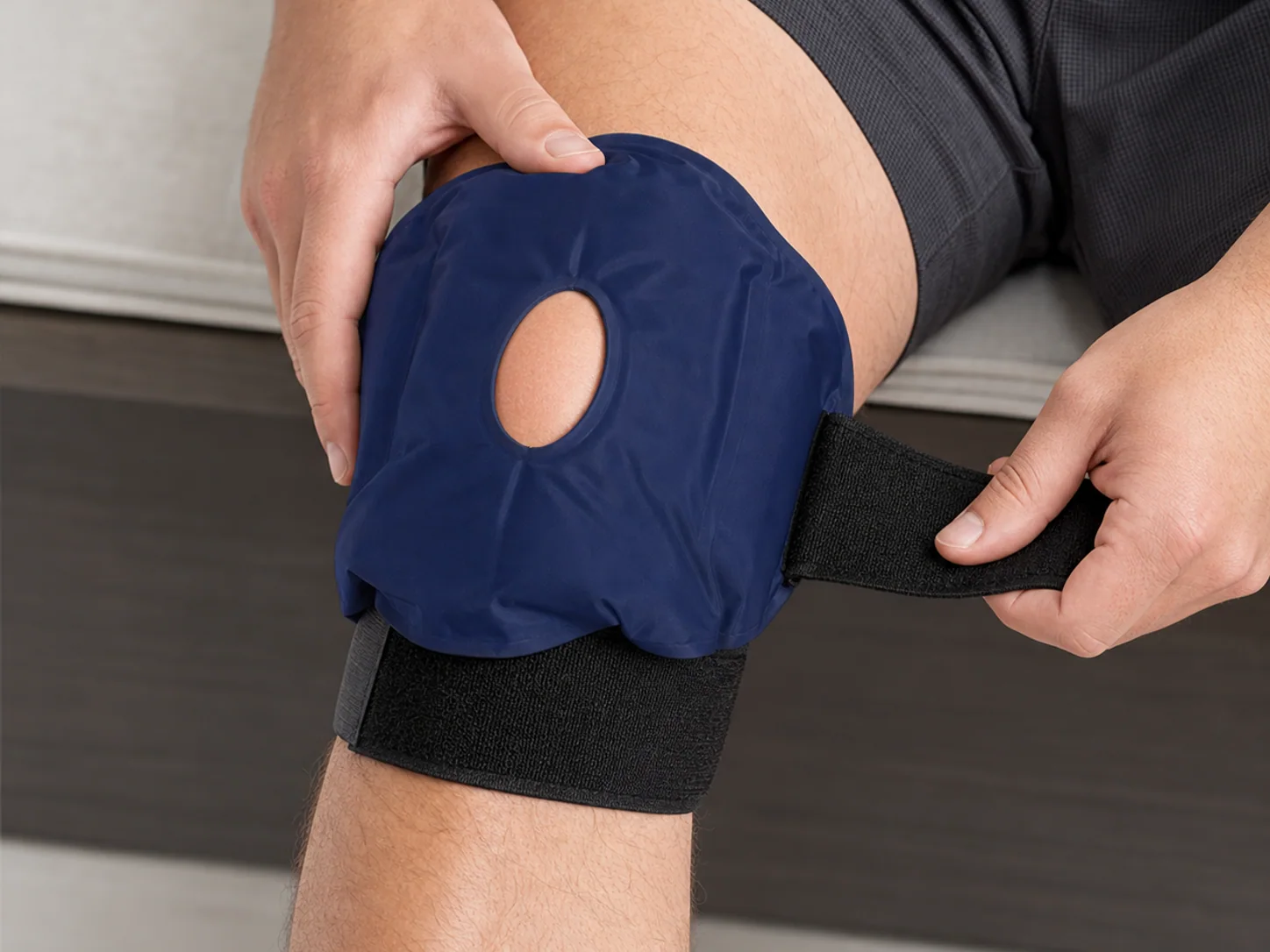
Cold may be used for comfort when suitable, with a protective layer and the product's instructions. Avoid direct frozen contact and prolonged exposure, especially when sensation or circulation is reduced. A hot, red, rapidly worsening area needs assessment rather than an attempt to manage it solely with temperature therapy.
A sleeve may feel supportive, but tight fabric or a seam over the tender region can be uncomfortable. Stop if it causes numbness, skin changes, or increased pain. A support does not confirm the diagnosis and should not be used to push through an activity that repeatedly worsens symptoms.
Heat and massage devices are not default treatments for a newly swollen or unexplained painful knee. Match any comfort measure to the clinical situation. The most useful purchase may be no purchase at all while you clarify the cause and establish a manageable activity plan.
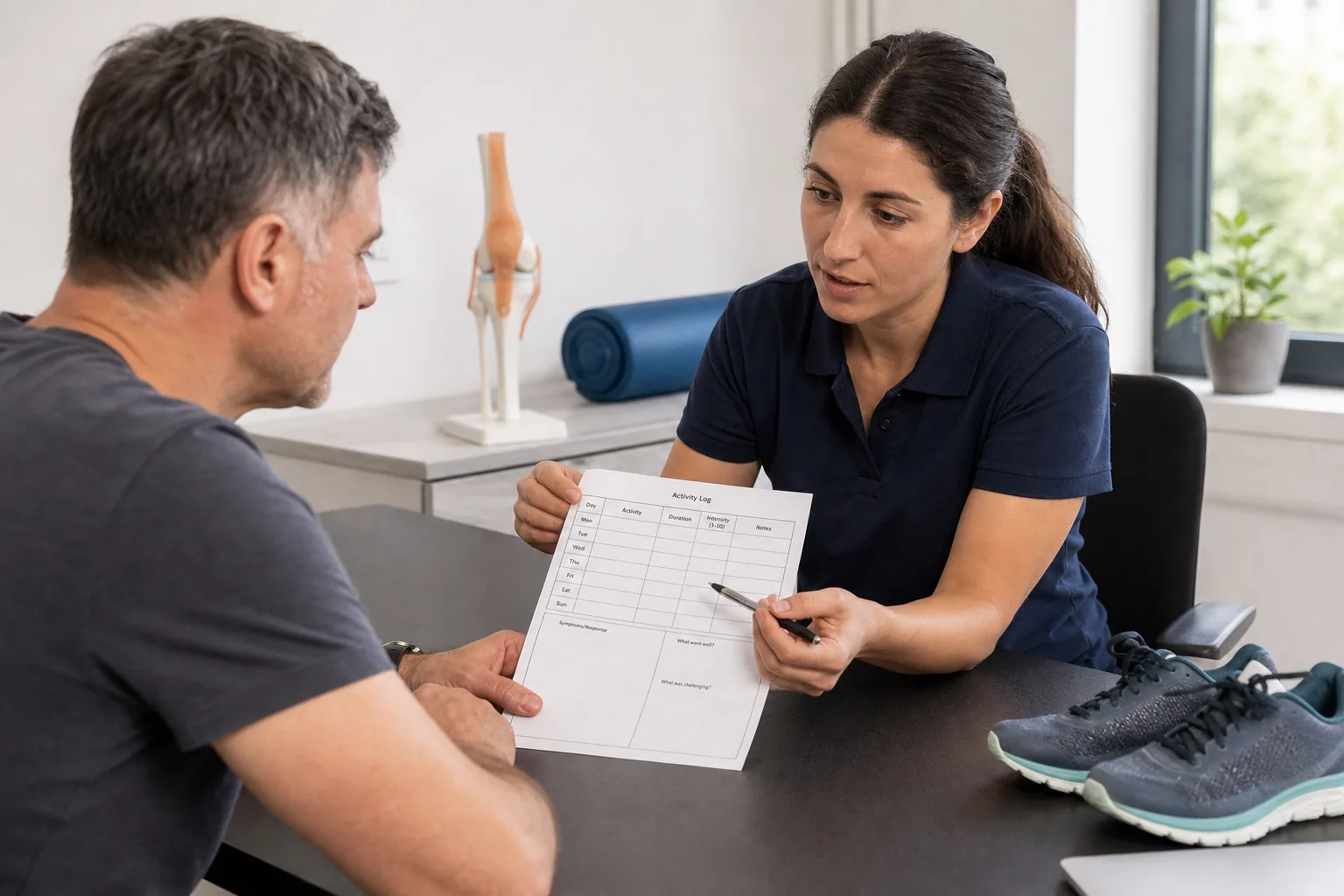
Follow progress through ordinary tasks
| Task to follow | Useful observation | Reason to review |
|---|---|---|
| A familiar level walk | Distance and later comfort at a similar pace. | The same short route is increasingly painful. |
| Necessary stairs | Whether a manageable number feels easier. | Swelling or instability appears. |
| Prescribed exercise | Control and response at the same dose. | Sharp pain or a repeated next-day flare. |
| Work or household activity | Whether task changes reduce irritation. | Symptoms persist despite a realistic adjustment. |
| Return to sport | Tolerance of a gradual, specific progression. | Full intensity repeatedly causes a setback. |
Keep the comparison fair. A shorter walk on level ground and a longer hilly walk are different tests, even if both take place on a good day. Note the conditions and do not interpret every fluctuation as failure. The overall pattern over time is usually more useful than repeatedly checking one tender point.
Keep necessary stairs manageable while the plan develops
You may not be able to remove stairs from daily life, even when they provoke symptoms. Discuss practical ways to reduce repeated trips, carry less at once, and use a secure handrail. The aim is to make essential movement manageable while the cause is assessed, not to invent a stair technique that ignores your balance or another joint problem.
Combine tasks when practical so that a routine errand does not create several unnecessary journeys. If a clinician recommends a particular stepping pattern or walking aid, have it demonstrated on an appropriate step. Do not copy postoperative stair instructions that were written for different weight-bearing restrictions.
Report whether the change improves the actual day, including later soreness and confidence. If you are increasingly avoiding essential movement, that is useful clinical information. A plan should preserve necessary function as well as reduce irritation, and it may need adjustment when the home or work environment makes the original advice unrealistic.
When to Get Medical Help
Seek urgent advice for a hot red swollen knee, fever, rapidly worsening pain, inability to bear weight, or a significant injury. Persistent focal pain, recurrent swelling, locking, or giving way needs assessment. Do not assume every painful area below the inner knee is bursitis, particularly when symptoms are worsening or ordinary activity is becoming limited.
Use the location to guide questions, not self-diagnosis
Pes anserine bursitis is a specific possibility within a crowded inner-knee region. A careful assessment, a realistic change in provoking activity, and an individualized progression are more useful than forceful stretching or a generic treatment bundle. Aim for a plan you can follow and review, with clear next steps if the expected improvement does not occur.
Frequently Asked Questions
Where does pes anserine bursitis hurt?
The typical area is on the upper inner shin below the knee joint, rather than directly over the kneecap. Location alone cannot confirm the diagnosis.
Is it the same as a meniscus tear?
No. The structures differ, although symptoms can overlap. Locking, joint-line symptoms, and injury history need clinical interpretation.
Can it occur with knee osteoarthritis?
Yes. The conditions can coexist, which is one reason an assessment should not attribute every symptom to the same structure.
Should I stretch the hamstrings?
A clinician may include suitable mobility work, but aggressive stretching over a painful area is not a universal solution. The plan depends on the assessment.
Does an exercise PDF provide a complete treatment plan?
No. A handout can support prescribed exercises, but it cannot confirm the diagnosis or adapt load, range, and progression to you.
Will ultrasound always show bursitis?
Symptoms and imaging do not always line up neatly. Imaging is considered alongside examination and the clinical question.
Do I need an injection?
Not everyone does. Discuss conservative options, diagnosis, expected benefit, risks, and alternatives before choosing a procedure.
How long does it take to improve?
There is no single timeline. The cause, workload, coexisting conditions, and treatment response influence recovery; persistent worsening deserves review.