Pickleball creates a strange mismatch between how easy it looks and how demanding it can feel. The court is smaller than a tennis court, the paddle is light, and doubles rallies often happen at a conversational pace. Yet the knees still absorb dozens of short accelerations, abrupt stops, side steps, low reaches, and reactive pivots. A player may never run more than a few yards at once, but may repeat those few yards for two hours.
That pattern is exactly why a generic “rest and stretch” answer is not enough. Pickleball knees need a plan that considers the sport itself: the no-volley zone, sudden dinks, lateral shuffling, crowded doubles positioning, hard surfaces, and the temptation to play one more game. This guide separates ordinary training soreness from warning signs, then builds a recovery routine that supports the next session instead of merely calming the knee for an hour.
Why Pickleball Can Be Tough on the Knees
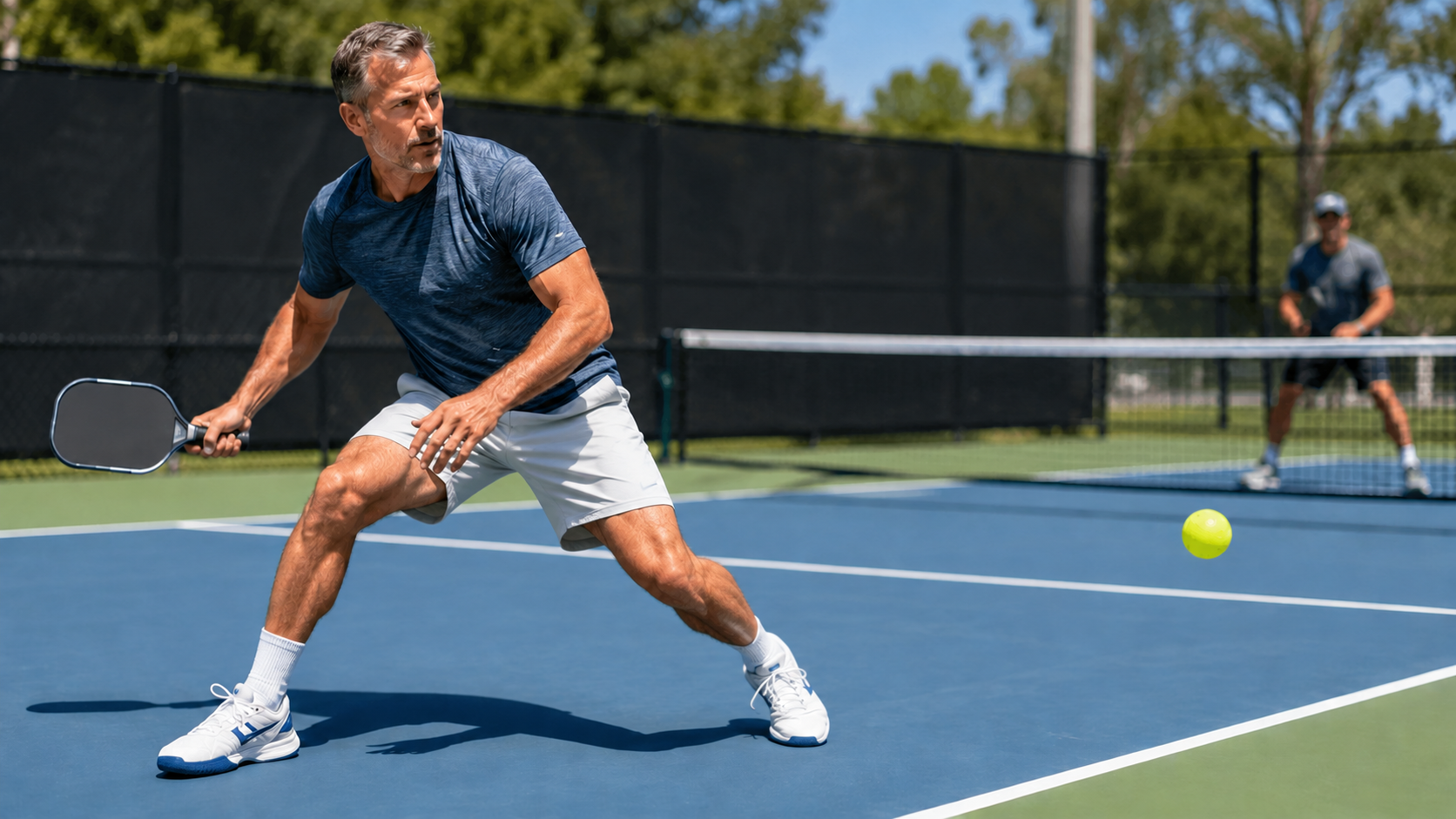
Recent pickleball injury research consistently points to lower-extremity problems, particularly in adults over 50. Falls, rapid directional changes, running or lunging forward, sprains, strains, and fractures appear repeatedly in the literature. That does not mean pickleball is inherently unsafe. It means that the sport rewards preparation, balance, strength, and sensible workload more than its friendly pace suggests.
Repeated braking
The knee does more than bend when you stop. The quadriceps work eccentrically, meaning they produce force while lengthening, to keep the body from continuing forward. Those braking forces repeat every time you chase a short ball, stop at the kitchen line, or recover after a wide shot. When fatigue rises, the knee may drift inward, the trunk may stay too upright, and the final step may become a hard plant instead of a controlled deceleration.
Padel uses some of the same stop-start court skills, but the enclosed court, wall rebounds, low reaches, and movement patterns deserve their own progression. Padel players can use the separate padel knee pain and return-to-court guide.
Low reaches and lunges
A soft dink can force a deeper knee bend than a powerful baseline shot. Players often reach the paddle forward while the hips remain behind, loading the front leg and kneecap. Repeating this position without adequate hip and thigh strength can make the front of the knee feel sore, especially on stairs or when standing up later.
Lateral movement and pivots
Side-to-side movement asks the hip, knee, ankle, and foot to share load. A late reaction may turn a shuffle into a crossover step or a sudden twist on a planted foot. The meniscus and ligaments are not automatically injured by a pivot, but pain after a distinct twist, especially with swelling, catching, or instability, should not be treated as ordinary soreness.
Hard courts and long sessions
The same game can feel very different on a forgiving indoor surface versus a hot, rigid outdoor court. The more important issue, however, is often duration. Social games make workload difficult to notice: waiting between matches feels like rest, but the total session may still reach two or three hours. Weekly play can also jump quickly when a new league, open-play group, or tournament begins.
Soreness, Overload, or Injury?
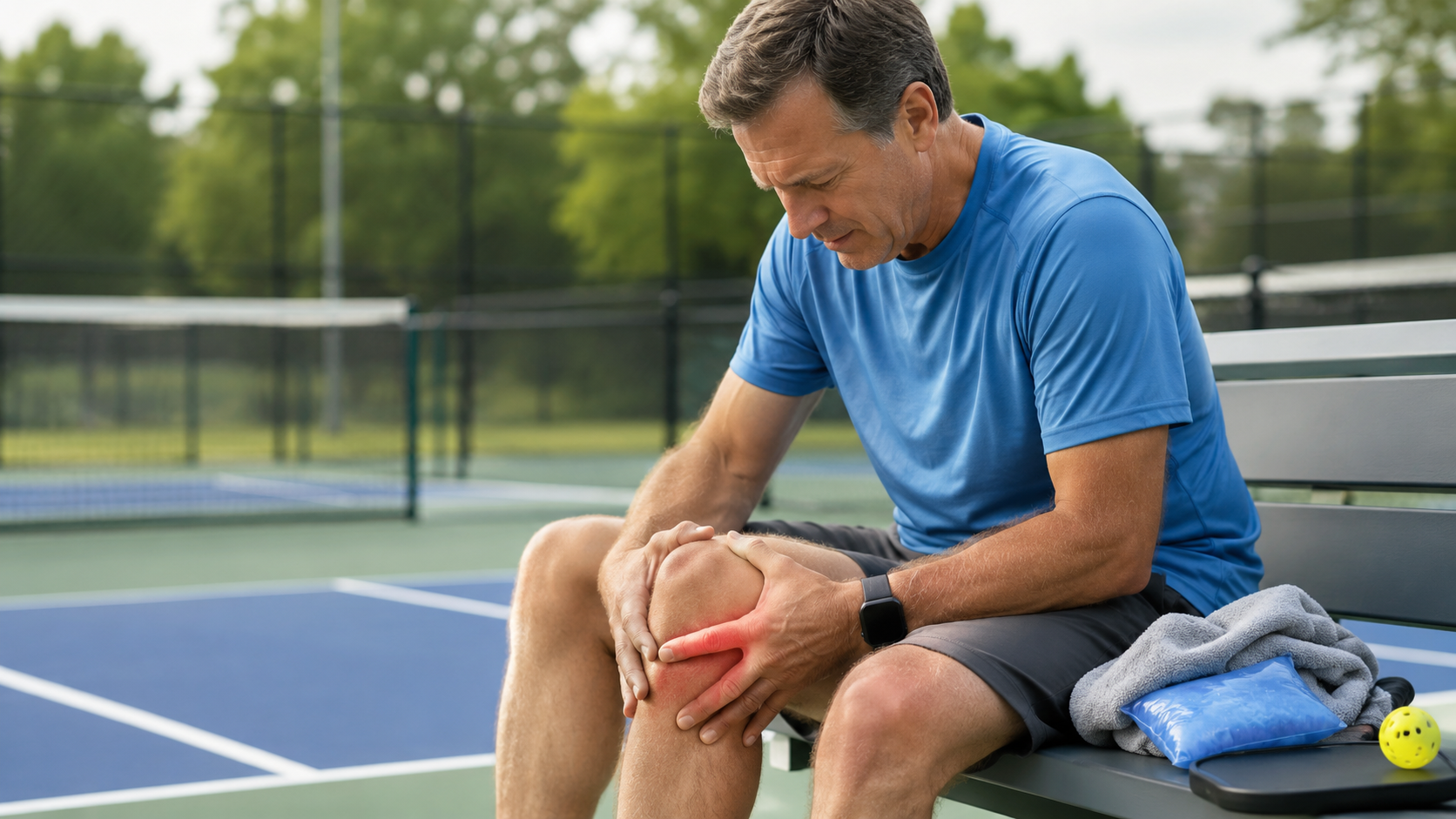
Recovery advice is safest when you first decide which category the problem resembles. This is not a self-diagnosis test. It is a practical screen for deciding whether to reduce load, stop the session, or seek assessment.
More consistent with ordinary post-play soreness
- The discomfort is mild and spread through the muscles around the knee rather than one sharply defined spot.
- Walking remains normal and the knee does not feel unstable.
- There is no meaningful swelling, heat, redness, or loss of motion.
- Symptoms improve as you move gently and are clearly better within 24–48 hours.
- The pattern follows an unusually long session or a recent increase in weekly play.
More consistent with an overload problem that needs modification
- Pain returns in the same location every time you play.
- Stairs, getting up from a chair, or the first steps after sitting become increasingly uncomfortable.
- The knee is mildly swollen after several sessions, even without one clear injury.
- You can play, but you change your stride, avoid one direction, or rely on the other leg.
- Symptoms are still present when the next planned session arrives.
More concerning for an injury or medical problem
- A fall, twist, or collision produces immediate severe pain.
- You hear or feel a pop followed by rapid swelling.
- The knee locks, repeatedly gives way, or cannot fully straighten.
- You cannot take several normal steps or the leg looks deformed.
- The joint becomes red and hot, especially with fever or illness.
- One calf becomes newly swollen, warm, and painful, or you develop chest pain or shortness of breath.
Those warning signs move the problem outside the scope of a home recovery routine. Do not use heat, massage, medication, or a brace simply to cover symptoms and return to the game.
The First 20 Minutes After Play
The best immediate recovery step is often the one players skip: do not stop moving abruptly. Walk easily for five to ten minutes while your breathing settles. This lets the calf muscles continue pumping blood, gradually reduces effort, and gives you a chance to notice whether the knee is merely tired or truly painful.
- Walk for 5–10 minutes. Keep the pace easy. If walking increases pain or a limp appears, stop and reassess.
- Use gentle range of motion. Try ankle pumps, slow heel slides while seated, and five to ten comfortable knee bends. Do not force a deep squat.
- Hydrate and cool down. Hot outdoor sessions can reduce concentration and reaction speed. Replace fluids and move into shade or a cooler area.
- Check for swelling. Compare both knees. Look at the kneecap outline and the spaces beside it rather than relying only on how tight the joint feels.
- Record the session. Note total playing time, singles or doubles, court type, and symptom location. Patterns become much easier to manage when they are written down.
Ice, Heat, Compression, or Nothing?
Recovery tools should match what the knee is doing. Cold can temporarily reduce pain and may be useful after a new flare with swelling or unusual warmth. Use a cloth barrier, keep sessions brief, and stop if the skin becomes painful or numb. Cold is not mandatory after every game, and repeated icing should not be used to make an injured knee playable.
Warmth is better matched to stiffness and muscle tightness when the knee is not swollen, red, newly injured, or unusually hot. A warm shower, heating pad, or a controlled knee device may help someone feel more comfortable before gentle mobility. Follow device instructions and avoid falling asleep with a heating device. Our heat versus ice guide covers timing and skin safety in more detail.
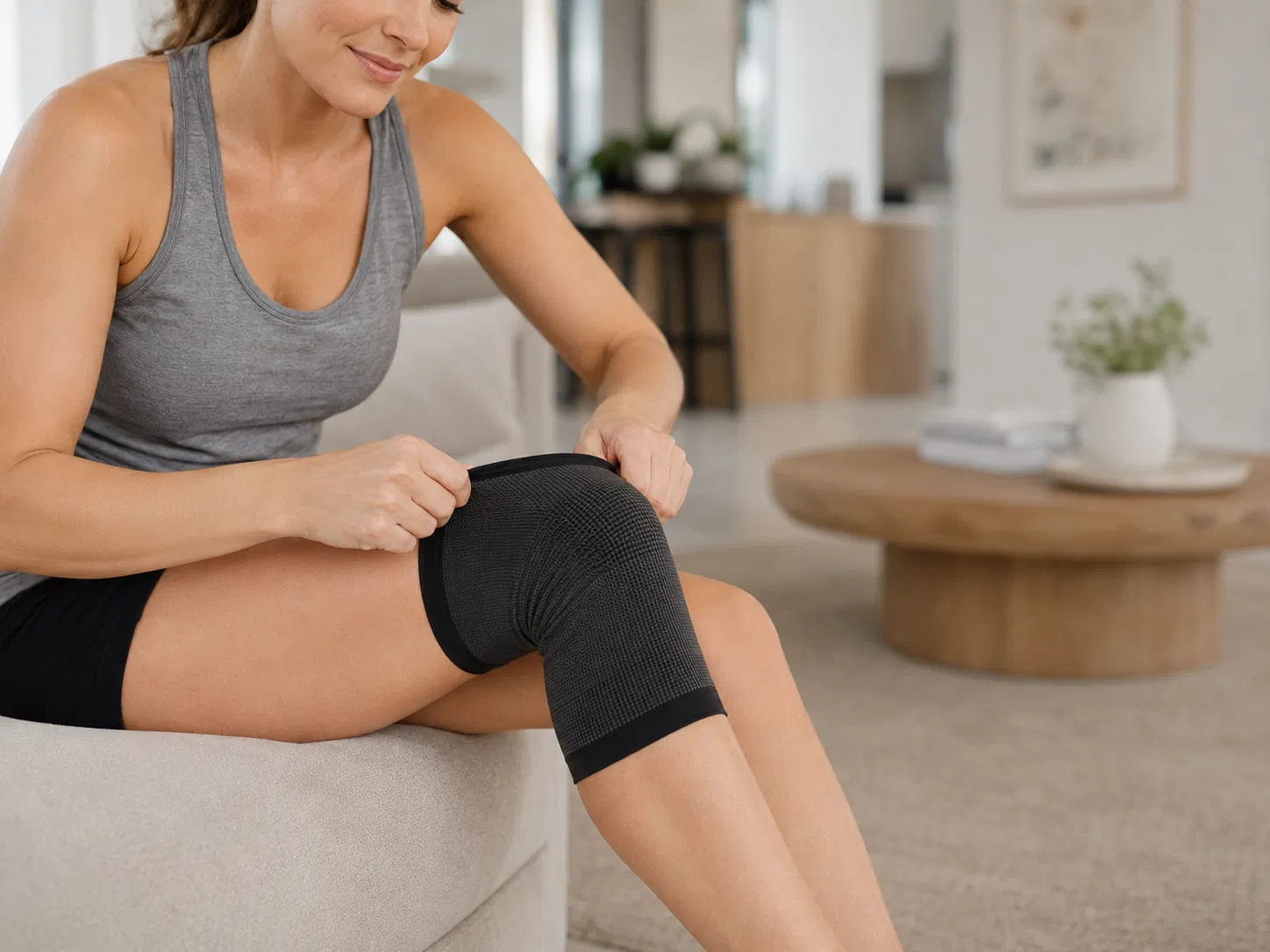
Light compression can feel supportive and may help manage minor post-activity puffiness, but it should not cause tingling, color change, or increased pain. A sleeve does not stabilize a suspected ligament injury or make a locked knee safe. Remove it and seek advice if swelling is substantial or unexplained.
A 15-Minute Pickleball Knee Recovery Routine
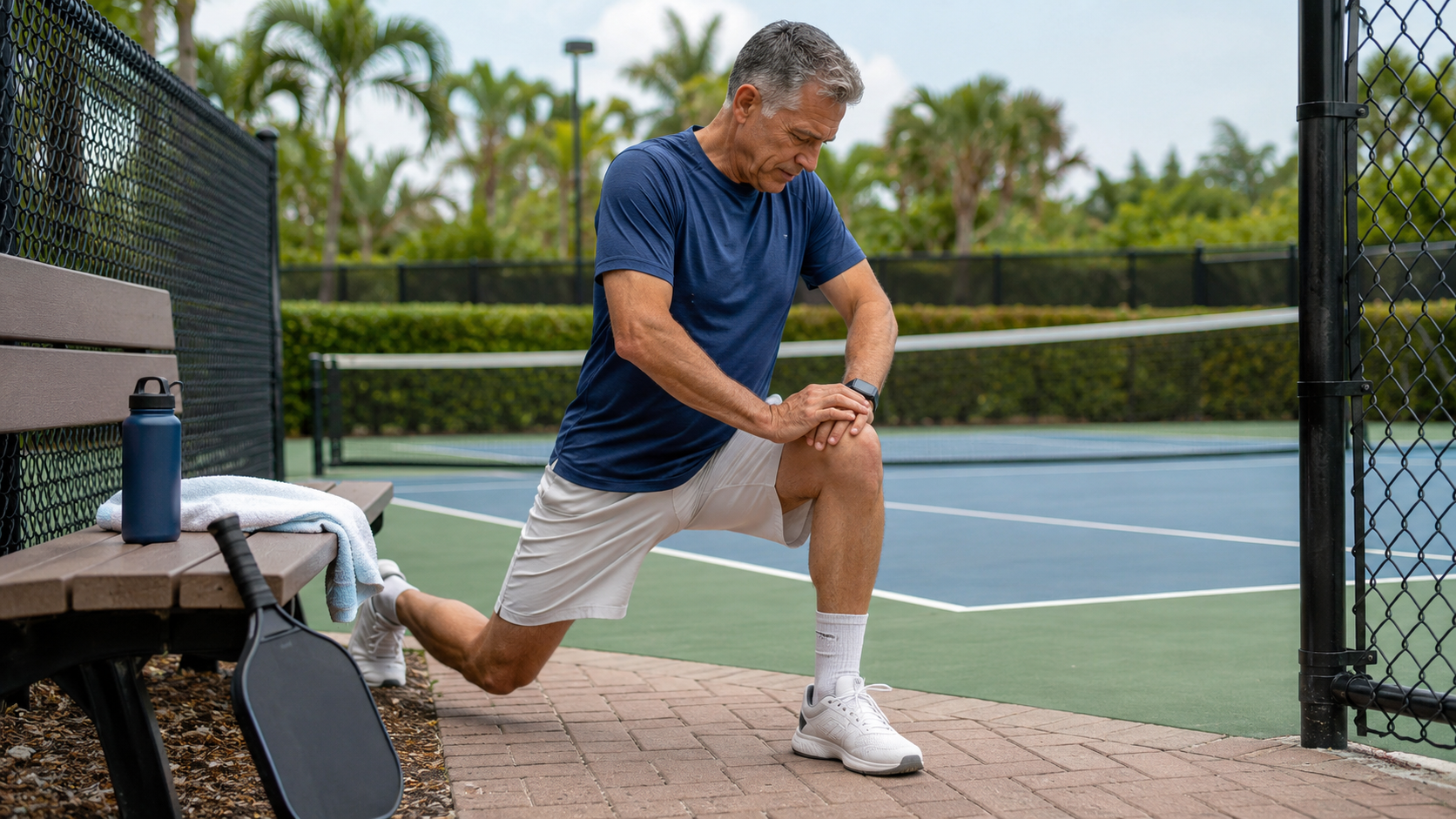
Use this routine after an ordinary session or later the same day when symptoms are mild. It should feel easy. Skip any movement that causes sharp pain, catching, instability, or increasing discomfort.
1. Ankle pumps - 30 repetitions
Sit with both feet supported. Slowly point and flex the ankles through a comfortable range. The ankle matters because limited calf and ankle motion can push more demand toward the knee during low reaches and stopping.
2. Seated heel slides - 10 per side
Sit near the edge of a chair. Slide one foot backward to bend the knee, then forward to straighten it. Keep the heel in contact with the floor and stop before pinching or sharp pain. This is a movement drill, not a stretch contest.
3. Calf stretch - 2 gentle holds per side
Face a wall, step one foot back, and keep the heel down. Hold 20–30 seconds without bouncing. Repeat with a slight bend in the back knee to change the emphasis. Flexible, strong calves help control forward movement and support balance.
4. Supported hip-flexor stretch - 2 holds per side
Use a split stance while holding a fence, wall, or chair. Gently tuck the pelvis and shift forward until the front of the back hip feels a mild stretch. Avoid a deep lunge. A player who sits for much of the day may arrive at the court with stiff hips and compensate through the knees.
5. Sit-to-stand rehearsal - 8 slow repetitions
From a firm chair, place the feet about hip-width apart and stand without dropping the knees inward. Sit back under control. Use the hands if needed. This is not a hard strength set immediately after play; it is a quick check that both legs can share load normally.
6. Easy lateral steps - 2 rounds of 20 seconds
Stand tall with a slight bend in the hips and knees. Take small side steps without crossing the feet. Keep the toes generally forward and the knees aligned over the feet. Stop if the movement reproduces the exact court pain.
The Next-Morning Check
The next morning tells you more than the first hour after play. Adrenaline, warmth, and social momentum can make symptoms feel smaller during the game. Ask four questions after getting out of bed:
- Is walking normal?
- Is the knee more swollen than yesterday?
- Are stairs and a chair rise close to your usual level?
- Did the previous session create a symptom that is still clearly worsening?
When all four answers are reassuring, normal activity or an easy recovery day is reasonable. If the knee is mildly sore but improving, replace hard court play with walking, cycling at an easy resistance, or mobility. If symptoms are worse, change your gait, or remain localized and repeatable, skip the next match and consider a physical therapist or clinician rather than stacking another session onto an irritated knee.
Strength Work That Transfers to Pickleball
Recovery is not only what happens after the game. The most durable plan increases the knee's capacity between games. AAOS knee conditioning guidance emphasizes the quadriceps, hamstrings, hip muscles, and flexibility, while public-health guidance recommends muscle-strengthening activity at least twice weekly for adults. Pickleball players also benefit from calves, balance, and controlled side-to-side work.
Begin with two sessions per week, leaving at least a day between harder sessions. Choose a level that lets you move smoothly. A set should feel challenging near the end without producing sharp joint pain or a next-day flare.
Sit-to-stand or box squat
Perform 2–3 sets of 8–12 repetitions. Use a chair height that keeps the movement comfortable. Progress by lowering the chair slightly, holding a light weight, or slowing the lowering phase.
Controlled step-down
Stand on a low step while holding a rail. Slowly lower the opposite heel toward the floor, then return. Start with 2 sets of 6–8 per side. The goal is knee alignment and control, not depth. This movement resembles the braking control needed when approaching the kitchen line.
Calf raise
Use a wall or chair for balance. Rise onto both forefeet, pause, and lower slowly for 2–3 sets of 10–15. Progress toward more weight on one leg. Strong calves support acceleration, stopping, and ankle control.
Bridge
Lie on your back with knees bent. Press through the feet and lift the hips without arching the lower back. Perform 2–3 sets of 8–12. Bridges train the glutes and hamstrings, which help share load with the knees.
Lateral band walk
Place a light band above the knees or at the ankles if appropriate. Take small side steps while keeping the pelvis level. Two rounds of 8–12 steps each direction are enough initially. Avoid turning this into a deep squat.
Supported single-leg balance
Stand near a counter and balance on one leg for 15–30 seconds. Use fingertip support as needed. Progress by adding gentle head turns or a small reach. Older adults should include balance work as part of weekly activity, and pickleball-specific injury research also highlights falls as a major mechanism.
An 8-Minute Court-Specific Warm-Up
Long static stretching alone does not prepare you to react to a short ball. A useful warm-up raises temperature, moves the joints, rehearses footwork, and gradually introduces hitting.
- Two minutes: brisk walk around the court or march in place.
- One minute: ankle circles, heel raises, and comfortable knee bends.
- One minute: alternating step-backs and gentle hip rotations.
- One minute: small lateral shuffles in both directions.
- One minute: split-step practice followed by two controlled adjustment steps.
- Two minutes: easy dinks and soft volleys before hard serves, drives, or competitive points.
On cold days or after a long drive, extend the easy movement portion. Do not use the first game as the warm-up, particularly when playing singles or entering a tournament after reduced activity.
Footwork Changes That Reduce Emergency Reaches
Technique cannot eliminate injury, but it can reduce the number of awkward situations. Move early with small adjustment steps instead of waiting and lunging at the last second. Keep the paddle prepared so you do not need a dramatic body movement to reach a routine ball. When a lob goes overhead, turn and move forward in the new direction rather than rapidly backpedaling while looking upward.
In doubles, communication matters. Calling “mine,” “yours,” and “switch” prevents late collisions and sudden evasive steps. If a ball is not safely reachable, let the point go. The cost of one lost rally is smaller than the cost of a fall.
Shoes, Court, and Equipment
AAOS advises shoes designed for pickleball or tennis because court shoes are built for lateral movement and traction. A running shoe may feel cushioned but can be less stable during side steps. Replace shoes when the outsole becomes smooth, the upper no longer holds the foot securely, or the midsole feels compressed. Fit should allow toe room without heel slipping.
Inspect the court for wet spots, cracks, loose balls, and bags near the sideline. Outdoor players should account for heat and glare, while indoor players should notice dusty surfaces that change traction. A shoe that grips too aggressively can also catch during a pivot, so the goal is predictable traction rather than maximum stickiness.
Managing Weekly Playing Load
The most common mistake is increasing several things at once: more days, longer sessions, harder opponents, singles, and strength training in the same week. Change one variable at a time. A player returning after a break might start with 30–45 minutes of doubles, then add time before adding another day. Singles usually creates more court coverage and should be treated as a separate workload.
Keep at least one lower-load day after a demanding session. If you play three or four days weekly, make some sessions technique-focused rather than competitive. Tournament weeks are not the time to introduce new shoes, new exercises, and extra practice volume simultaneously.
A simple log can include date, minutes played, singles or doubles, perceived effort from 1–10, and knee response that evening and the next morning. You are looking for repeatable relationships, such as pain after the second consecutive day or swelling after sessions longer than 90 minutes.
Playing With Arthritis or an Old Knee Injury
A diagnosis does not automatically end pickleball. Many people with osteoarthritis remain active, and regular activity can support health and function. The correct dose may be different, however. Shorter games, doubles, longer warm-ups, planned breaks, and consistent strength work can reduce unnecessary spikes. A cane or brace used for daily life is not a substitute for sport-specific medical advice.
After a previous meniscus, ligament, fracture, or surgical history, return-to-play decisions should account for swelling, motion, strength, confidence, and the demands of the game. If the knee repeatedly gives way, swells after modest play, or feels unreliable during a change of direction, a physical therapist can assess movement and create a progression instead of relying on guesswork.
Where Recovery Devices Fit
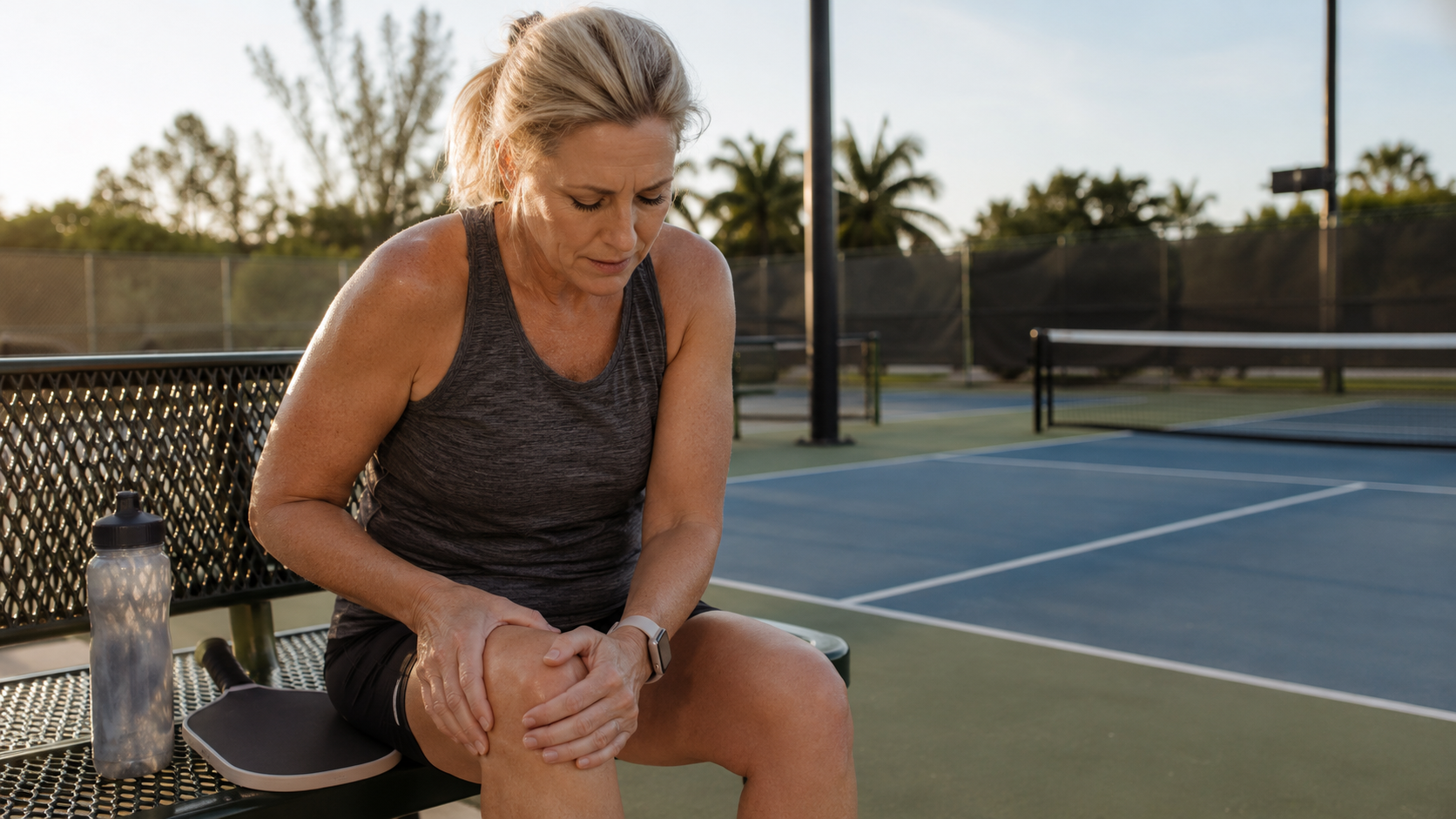
Massage, warmth, compression, and red-light devices are optional comfort tools. They may make a rest period more pleasant or help a stiff knee feel ready for gentle movement. They should not be framed as repairing a torn meniscus, healing a ligament, or preventing every injury. Device settings, skin sensitivity, medications, circulation conditions, and the cause of the symptoms all matter.
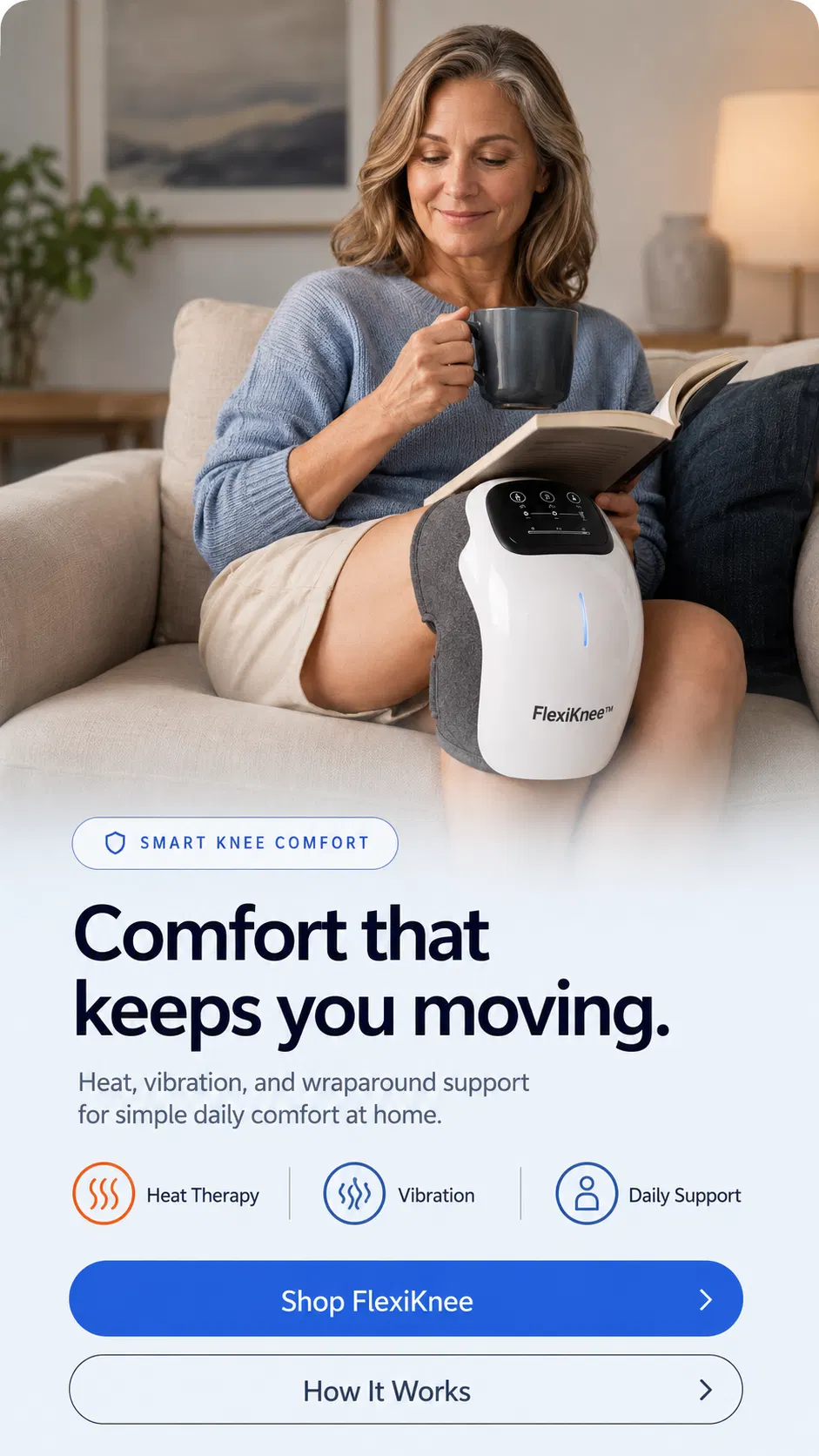
Avoid direct heat or vigorous massage on a newly injured, rapidly swelling, red, or unusually hot knee. Do not place a device over an open wound or use it when sensation is impaired unless a clinician has advised it. Players interested in a combined at-home warmth, vibration, and red-light routine can review the FlexiKnee knee massager, while keeping strength, load management, and appropriate medical care at the center of recovery.
A Practical Return-to-Play Checklist
Return should be gradual and based on what the knee can do. Before an easy session, look for the following:
- Normal walking without a limp.
- No meaningful increase in swelling.
- Comfortable knee bending and straightening close to your usual range.
- Eight controlled sit-to-stands without shifting away from the affected side.
- Ten calf raises and several shallow lateral steps without instability.
- Stairs close to your normal baseline.
- Confidence that the knee will support a controlled change of direction.
Start with easy drilling or doubles, cap the session in advance, and avoid chasing every ball. The real test is not only how the knee feels during play, but how it responds that evening and the next morning. If symptoms rebound, return to a lower level and seek help if the pattern persists.
When to See a Clinician
Arrange an assessment when pain lasts beyond a sensible period of reduced load, returns at the same stage of every session, or limits ordinary walking and stairs. A sports medicine clinician or physical therapist can examine the hip, knee, ankle, strength, balance, footwear, and court movement rather than treating the painful spot in isolation.
Seek urgent care for inability to bear weight, obvious deformity, a locked knee, a pop with rapid swelling, severe pain after a fall, fever with a hot red joint, or symptoms suggesting a blood clot. Chest pain, faintness, or shortness of breath is an emergency.
Bottom Line
Pickleball knee recovery is less about one perfect stretch and more about matching load to capacity. Cool down instead of stopping abruptly, use cold or warmth for the right situation, check the next-morning response, and build strength in the hips, thighs, calves, and balance system. Warm up for the movements you will actually use and increase only one part of the workload at a time.
Most mild soreness can be managed without abandoning the sport. The important skill is knowing when a knee is asking for a smaller next session and when it is warning you not to play. Respect that distinction and the recovery routine becomes part of playing longer-not merely recovering from playing too much.
Frequently Asked Questions
Why do my knees hurt after pickleball?
Pickleball repeatedly combines short acceleration, braking, lateral shuffles, low reaches, pivots, and time on a hard court. Knee soreness may come from a sudden jump in playing time, limited strength or mobility, inadequate recovery, footwear, technique, arthritis, or a specific injury. The location, swelling, timing, and whether the knee feels unstable help determine whether simple recovery is reasonable or an assessment is needed.
Should I use ice or heat after pickleball?
Use cold briefly when the knee is newly irritated, swollen, or unusually warm after play. Heat is better suited to stiffness or muscle tightness when swelling is absent. Neither should be used to hide severe pain and continue playing. Protect the skin, follow device instructions, and seek care for major swelling, redness, inability to bear weight, or a suspected injury.
How long should I rest from pickleball with knee pain?
There is no single number of days. Mild soreness that settles within a day and does not change walking may respond to reduced volume and a gradual return. Pain that worsens, alters your gait, produces swelling, locking, giving way, or persists across several sessions needs a longer pause and clinical assessment. Return should be based on function, not only the calendar.
Can I play pickleball with knee arthritis?
Many people with knee arthritis can stay active, but the dose of play may need adjustment. Doubles, shorter sessions, planned recovery days, strength training, court shoes, and avoiding sudden workload spikes can make participation more manageable. A hot swollen joint, major flare, instability, or rapidly worsening symptoms should be assessed before returning.
What is the best warm-up for pickleball knees?
A useful warm-up begins with 5 to 10 minutes of low-intensity movement, then adds ankle, hip, and knee mobility, controlled lateral steps, split-step practice, and easy dinks before hard rallies. The goal is to prepare for the exact movements of the sport rather than relying only on long static stretches.
Are court shoes important for knee pain in pickleball?
Court shoes are designed for lateral movement and traction, while running shoes are mainly designed for forward motion. Shoes cannot cure knee pain, but a stable court-specific shoe, appropriate fit, and replacing worn soles can reduce avoidable slipping and uncontrolled movement. Too much grip can also be a problem if a shoe catches during a pivot, so fit and movement quality matter.
What exercises help protect knees for pickleball?
A balanced program should train quadriceps, glutes, hamstrings, calves, lateral hip muscles, and balance. Sit-to-stands, controlled step-downs, calf raises, bridges, lateral band walks, and supported single-leg balance are practical starting points. Exercises should be progressed gradually and should not reproduce serious or escalating pain.
Is clicking after pickleball a sign of injury?
Clicking without pain, swelling, locking, or loss of function is common and is not automatically an injury. Clicking that begins after a twist and comes with joint-line pain, swelling, catching, true locking, or instability deserves assessment. The sound alone is less important than the symptoms around it.
When can I return to pickleball after knee soreness?
A reasonable return test is normal walking and stairs, no meaningful swelling, near-normal range of motion, controlled sit-to-stand and shallow lateral movement, and no worsening the following morning. Begin with easy doubles or drills, reduce total time, and stop if pain changes your movement.
When should pickleball knee pain be checked by a doctor?
Seek prompt care after a major fall or twist, a pop with immediate swelling, inability to bear weight, visible deformity, a locked knee, repeated giving way, calf swelling, fever with a hot red joint, or chest pain or shortness of breath. Persistent pain or swelling that does not improve with sensible load reduction also deserves evaluation.