Can work boots contribute to knee pain?
They can be part of the problem, especially when a new pair changes fit, weight, sole stiffness, or the way your foot is held. But the boot is only one part of a shift. Concrete floors, repeated stairs, carrying, kneeling, standing in one place, and longer hours can all change the demands on your legs. A knee that hurts at clock-out is not automatically evidence that the toe cap is too heavy.
Start with the timeline. Did symptoms begin after a boot change, a different assignment, overtime, or a return from time off? Were the old boots still structurally sound? Does the knee settle on days away from work, and is ordinary walking in other footwear comfortable? These questions help separate a footwear issue from a broader workload or knee problem.
A useful assessment keeps the actual job in view. Someone who walks warehouse aisles all day faces a different task from someone standing at a fixed bench or climbing ladders. The most comfortable boot in a shop may not be the best-fitting approved option for the movements you repeat at work.
Keep required protection first
Before changing footwear, identify the protection your workplace requires. Impact, compression, puncture, slip, electrical, chemical, heat, and other hazards are not interchangeable. The relevant employer requirements, local rules, and manufacturer specifications determine which choices are acceptable. Do not replace required safety footwear with an ordinary trainer because it feels softer.
OSHA's foot-protection rule and CCOHS guidance both tie protective footwear to workplace hazards. That does not mean one safety standard or one toe material is appropriate in every country or job. Ask your supervisor or safety team for the exact specification when it is unclear, then compare comfort and fit within those requirements.
Do not remove a protective component, cut the boot upper, or alter the sole to make a painful pair usable. If the boot is required but not tolerable, the solution may involve another approved size, width, model, or work adjustment. Document the problem early rather than waiting until pain affects safe movement around equipment.
| Decision | Confirm first | Do not assume |
|---|---|---|
| Toe protection | Required impact and compression specification | Every toe material meets the same need |
| Sole and traction | Surface, contamination, puncture and slip hazards | A soft sole is suitable everywhere |
| Electrical properties | Exact workplace and manufacturer requirements | Any aftermarket insert is compatible |
| Replacement or modification | Employer process and product instructions | Comfort authorizes removal of protection |
Fit the boot to the foot you have during a shift
Try boots with the socks and any approved supports you actually wear. Feet can change in volume during the day, so a fit check only in thin socks first thing in the morning may miss a late-shift problem. CCOHS recommends allowing for normal daily swelling and checking new footwear by walking in it.
Look for toe room without excessive movement around the heel. Your toes should not repeatedly contact the protective cap, and the boot should not squeeze the forefoot or instep. A larger length is not always the answer to a width or depth problem. Sizing up may leave the heel loose while the same narrow shape still presses across the foot.
Fasten the boot as intended and test ordinary job-relevant movements in a safe fitting area. Notice whether the foot slides forward when you step down, whether the collar bites when you bend, and whether the sole feels awkward during a normal step. Do not test climbing or hazardous work merely to prove that a new boot is acceptable.
Men's and women's labels do not replace a fit check
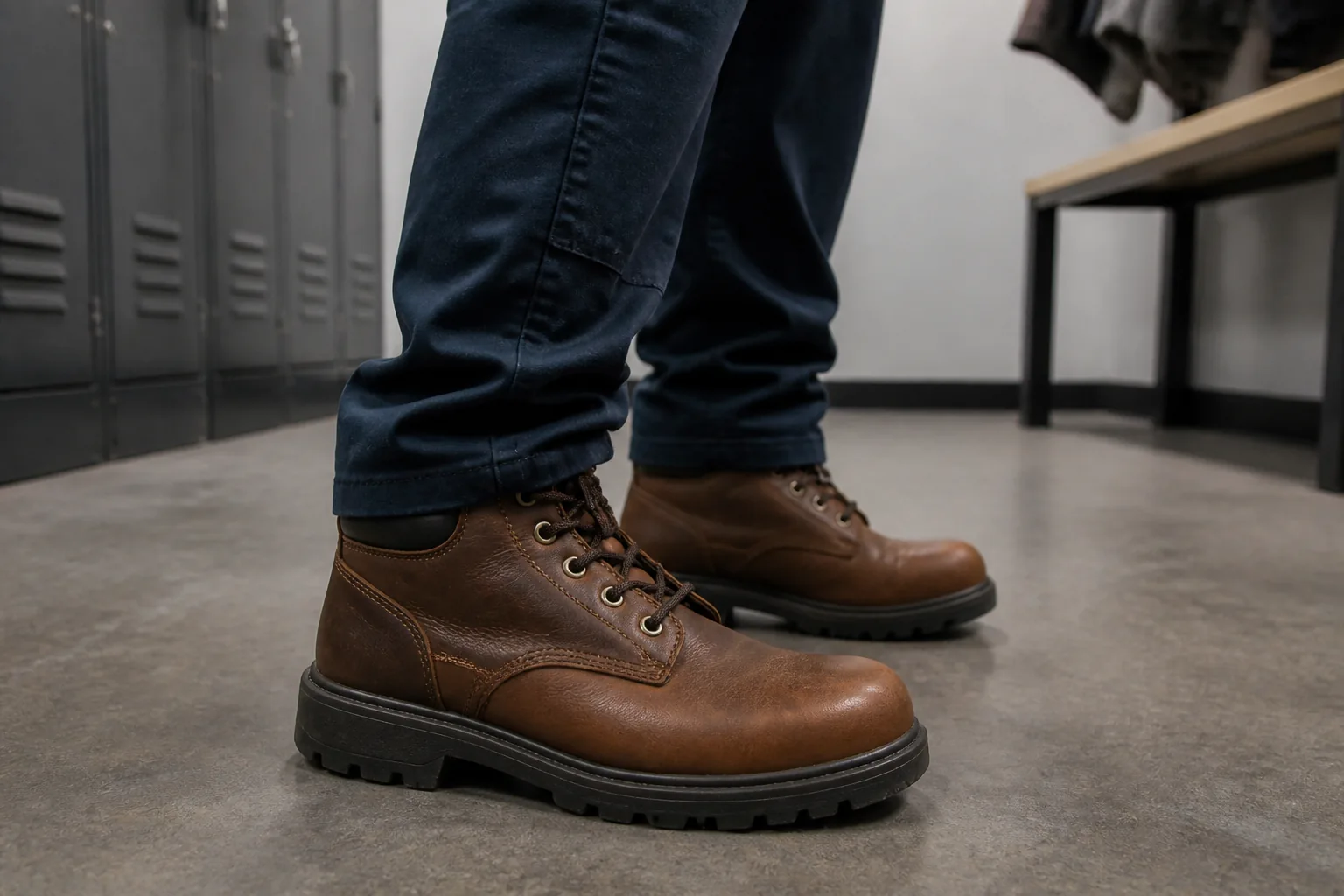
Work-boot ranges may use different shapes as well as different size labels. A person with a narrow heel and broad forefoot may need a different last, the form around which the boot is made, rather than a smaller overall size. Someone with a high-volume foot may need more depth even when the stated width seems adequate.
Compare the actual interior fit instead of assuming that a men's size conversion or a women's label guarantees the right proportions. Check both feet. If one foot is larger, fit must accommodate it without leaving the other dangerously loose. A qualified fitter or occupational-health service can help when standard sizing repeatedly fails.
Protective toe caps do not stretch like ordinary fabric. Leather elsewhere may soften with wear, but that is not a reason to accept toe pressure, numbness, or a painful gait at purchase. “They will break in” should not be used to dismiss a structural mismatch that the boot is unlikely to resolve.
Steel toe, composite toe, and boot weight
A steel-toe boot is not automatically a knee problem, and a composite-toe boot is not automatically a knee treatment. Toe material is only one contributor to overall boot construction. Sole design, waterproof layers, shanks, uppers, and size also affect how a pair feels. Compare complete approved boots, not one material label in isolation.
If a heavy or stiff pair makes you shorten your steps unusually, lift your feet differently, or feel fatigued early, record that observation. It is a reason to review fit and job suitability, not proof of a specific knee injury. A lighter approved model may be worth discussing, but any change must preserve the required protection and stability for the task.
Avoid numerical claims that a certain reduction in boot weight will remove a predictable amount of force from the knee. Real walking and work tasks are more complicated than that. Comfort during a controlled trial and the later shift response provide more useful information than an unsupported calculation from a product description.
Concrete floors and standing still are a separate problem
Replacing boots may not solve discomfort caused by hours in one constrained position. A fixed workstation can limit opportunities to change stance, sit, or move. CCOHS standing-work guidance emphasizes the importance of work design and position changes, rather than treating footwear as the only intervention.
Ask what can change in the task: the height of a work surface, the location of frequently used items, opportunities to alternate tasks, or a suitable seated option during parts of the shift. These are workplace decisions, not instructions to leave a safety-critical station unattended. Bring specific examples, such as pain that starts during a long fixed-position task but not during ordinary walking.
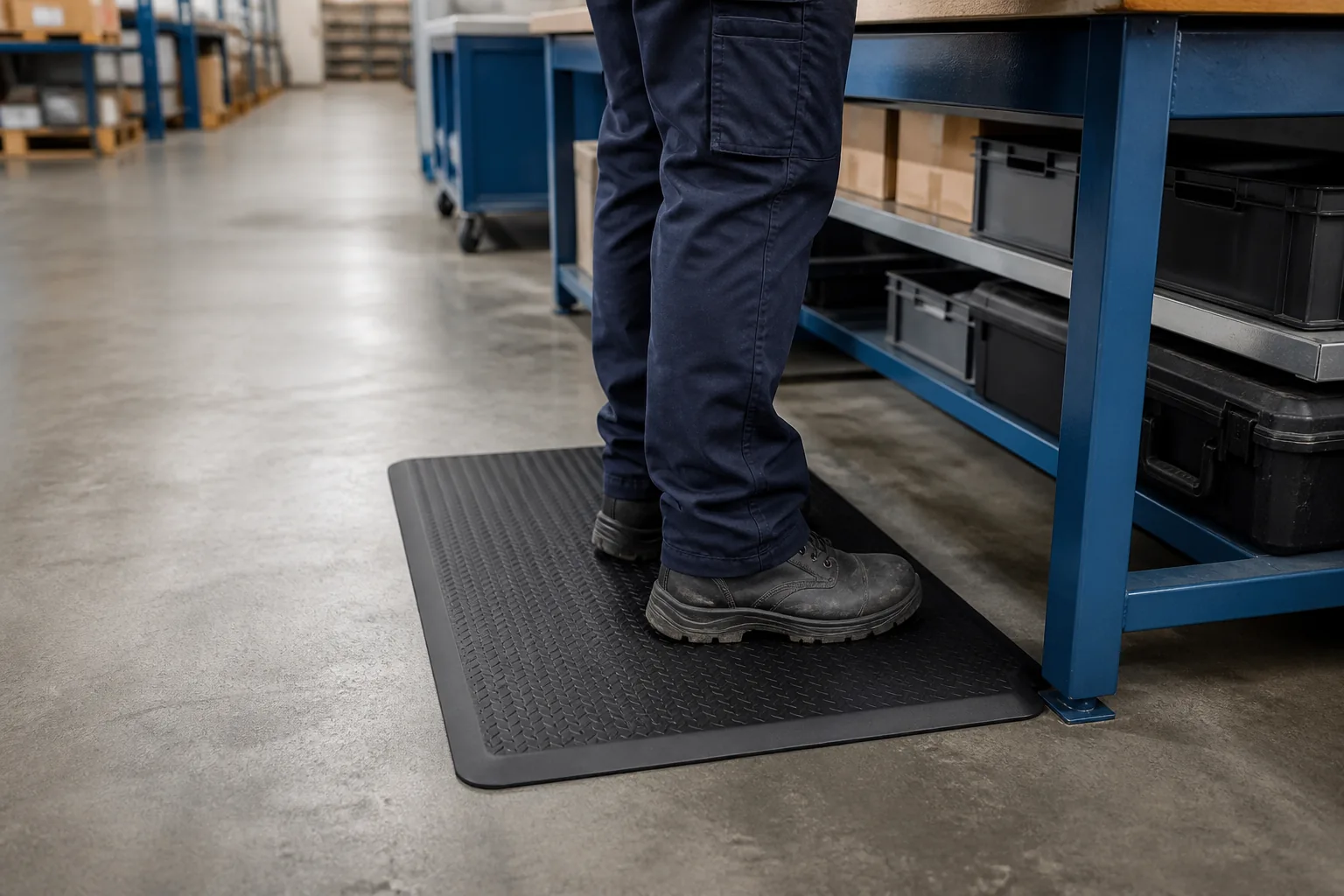
An appropriate anti-fatigue mat may improve standing comfort in some settings, but it must suit the environment and must not create a trip, slip, cleaning, or equipment-access hazard. More cushioning is not always better. The mat should lie flat with suitable edges and remain compatible with the work being done.
Our guide to knee pain after standing covers the broader standing pattern. If the main issue is accumulated walking across a site, the long-walk knee pain guide may be more relevant. Both can coexist during the same shift.
Insoles in safety boots need two checks
The first check is compatibility with the boot's protective function. CCOHS specifically advises checking with the manufacturer whether adding an insert affects protection. This is especially important when the footwear has an electrical or other specialized requirement. Do not assume a generic comfort insert has been tested with every safety boot.
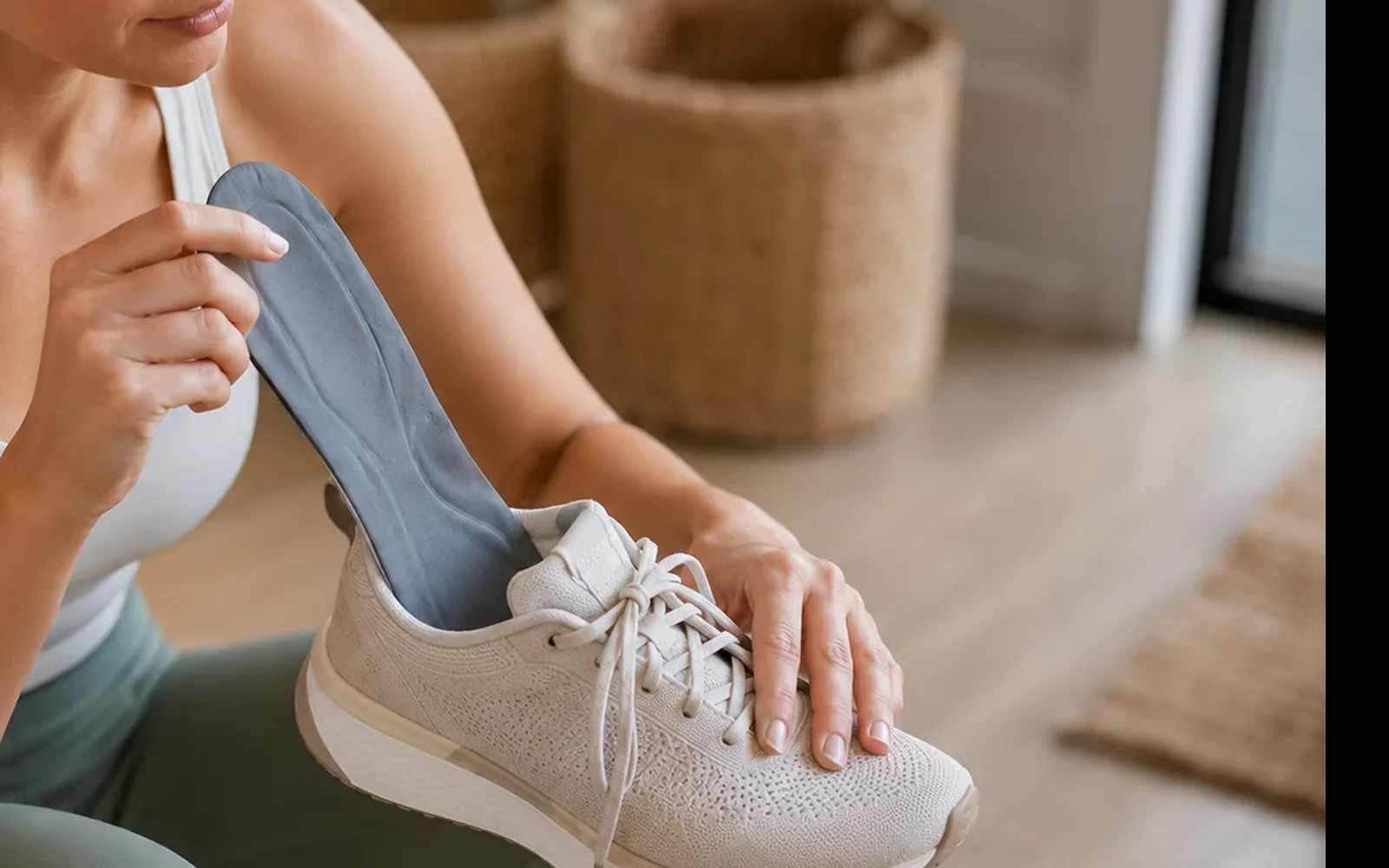
The second check is fit. A thicker insert can lift the heel, crowd the protective toe area, or create pressure under the laces. Follow instructions about replacing the original liner rather than stacking layers. The boot should remain secure without forcing the foot into an uncomfortable shape. An insert cannot make an undersized toe box larger.
If an approved insert causes new knee pain, stop the optional change and seek advice rather than escalating to a higher arch. Prescribed orthoses may require a compatible boot or a device review. Our insole selection guide discusses features and limits, but workplace compatibility still needs its own confirmation.
| Insert question | Why it matters | Action |
|---|---|---|
| Is it approved for this boot? | Protection may depend on the complete footwear system | Ask manufacturer or safety team |
| Does it replace the liner? | Stacking can crowd the boot | Follow both sets of instructions |
| Is the heel still secure? | Added height can reduce heel hold | Recheck with the boot fastened |
| Do toes remain comfortable? | Protective caps will not stretch to add space | Review width, depth, or another approved model |
Waterproof boots, socks, and late-shift pressure
Waterproof leather work boots may be necessary for the environment, but the required construction and your sock choice can change the space inside the boot. If a pair feels fine at the start and tight later, check whether the issue is swelling, bulky socks, moisture, or the added insole rather than assuming the knee itself needs more support.
Use socks appropriate for the task and follow footwear care instructions. Wet, folded, or bunched socks can create local pressure and change how you place the foot. Do not solve dampness by loosening the boot so far that heel hold is lost. Drying and rotation may help maintain comfort when they are compatible with the manufacturer's guidance and workplace arrangements.
Never use aggressive heat, unapproved chemicals, or improvised stretching around protective components. If the waterproof lining or upper is damaged, ask whether repair or replacement is appropriate. A boot can remain visually tidy while an internal seam, liner, or collapsed footbed becomes uncomfortable.
Inspect wear without inventing a diagnosis from the sole
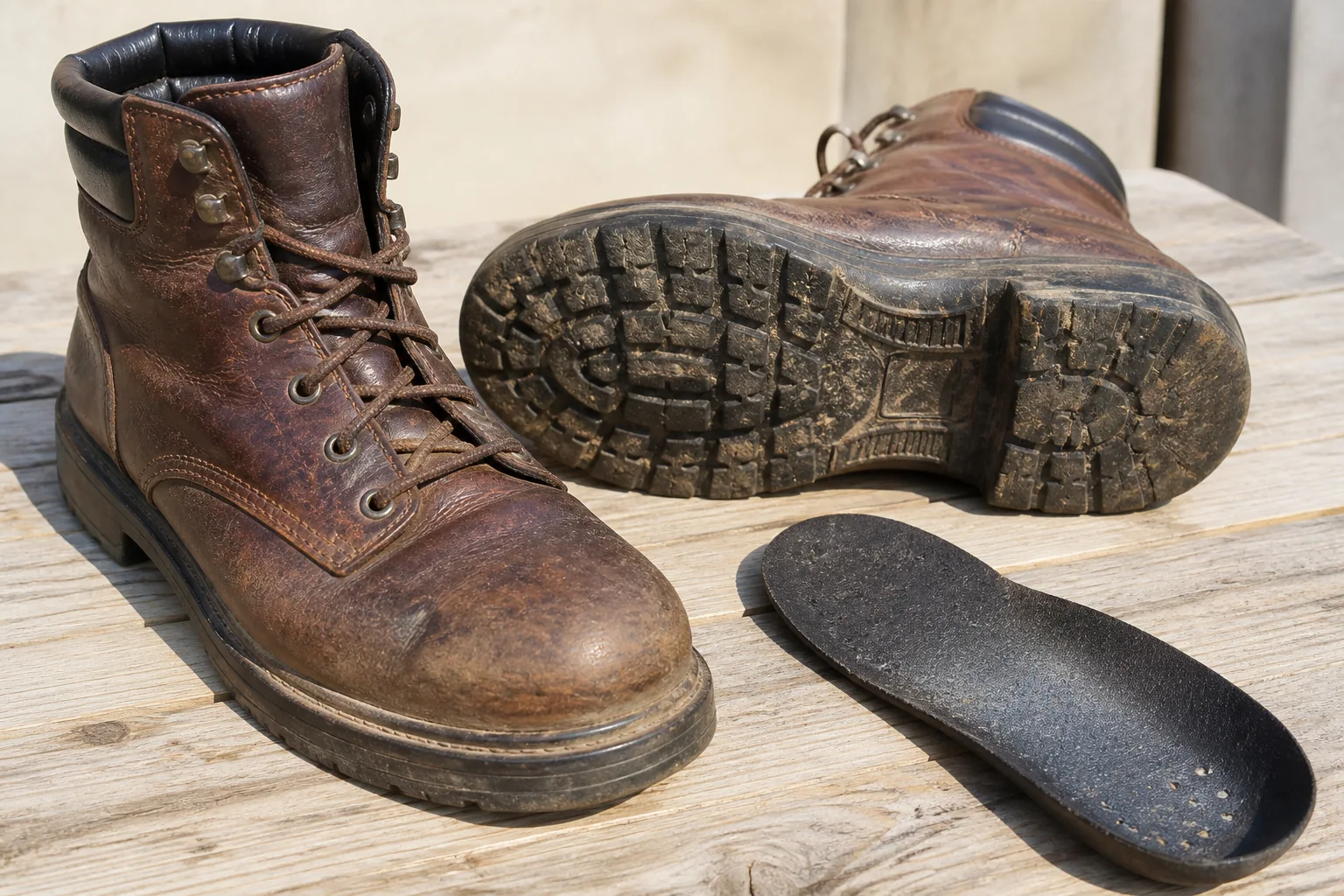
Look for cracked or separating soles, damaged uppers, exposed protective components, compressed footbeds, and lost tread. Check the heel counter and fastening system as well. A boot that no longer holds the foot securely may feel different even when the leather still looks serviceable.
Uneven wear is worth recording, but it does not by itself diagnose overpronation, leg-length inequality, or the source of knee pain. Work tasks can also create asymmetry: repeated pivoting, operating pedals, climbing, or carrying on one side may leave distinctive wear. Use the pattern to ask better questions, not to prescribe yourself a wedge.
Follow manufacturer and workplace replacement guidance after a significant impact, puncture, or other event that may compromise protection, even when damage is not obvious. Do not use a damaged old pair as the “comfortable control” in a boot comparison. A fair comparison requires another sound, approved option.
Make a shift log that separates boots from workload
Write down the boot pair, socks, insert, shift length, main tasks, and symptom timing. Add whether you were standing in place, walking, climbing, or kneeling when the problem became noticeable. This is more useful than simply recording “boots hurt” because it identifies the conditions that need comparison.
If workplace rules allow, compare two sound approved pairs during similar ordinary shifts after the knee has settled. Keep the insert and sock choice consistent unless one of those is the variable being tested. Do not compare a short easy shift in one pair with an overtime shift involving extra stairs in another.
Stop the comparison if pain changes your gait or makes movement around the workplace unsafe. A knee problem is not something to test while carrying loads, climbing ladders, or working near moving machinery. Report the issue and seek a safer temporary arrangement through the appropriate workplace process.
| Log detail | Example observation | Useful comparison |
|---|---|---|
| Timing | Pain begins during the last part of overtime | Similar regular-length shift |
| Task | Standing at the bench hurts more than walking | Approved task variation or workstation review |
| Footwear | New insert crowds the front of the boot | Manufacturer-approved original arrangement |
| Later response | Knee remains sore during home stairs | Clinical review if the pattern persists |
Look for repeated trends across comparable days rather than one perfect result. If every approved boot hurts during the same demanding task, changing the task may deserve more attention than buying another pair. If symptoms persist away from work, the explanation is broader than footwear and needs clinical review.
Kneeling, stairs, and pain location can change the question
Direct pressure from kneeling is different from discomfort during walking in boots. Likewise, repeated stair use may reveal a knee sensitivity that is not present on level ground. Record these task differences rather than placing every symptom in the footwear category. Our kneeling-pain guide and guide to knee pain going downstairs explain those patterns.
Front-knee pain can occur with several activities, including repeated bending, but location alone does not identify a damaged structure. A joint-line symptom after a twist, a swollen knee, or a loss of motion needs a different assessment from an uncomfortable boot collar. Describe the event, the location, and the effect on function clearly.
After work, choose comfortable positions and manageable movement rather than using the evening to repeatedly test the painful task. An easier night does not cancel the need to address a recurring shift trigger. If pain starts earlier each day or interferes with sleep and ordinary walking, arrange an assessment.
When to Get Medical Help
Seek prompt care after a significant injury or for major swelling, a locked or unstable knee, inability to bear weight, or a hot red knee with fever. Arrange review for persistent or worsening pain, a limp, or symptoms away from work. New numbness, skin injury, or loss of foot sensation also warrants advice, especially with diabetes or circulation problems.
The bottom line
The best next step is not automatically a softer boot. Preserve required protection, check the complete fit with work socks and approved inserts, inspect wear, and compare the actual shift demands. When footwear and job adjustments do not produce a clear improvement, bring the log and the boots to an appropriate clinician or occupational-health review.
Frequently Asked Questions
Can work boots cause knee pain?
They can contribute if fit, weight, stiffness, wear, or inserts change how you move. Shift length and tasks may also matter. Compare similar workdays and do not assume every end-of-shift ache comes from the boots.
Do steel-toe boots hurt your knees?
Steel toe is not automatically harmful to knees. The complete boot construction and fit matter more than one material label. Any replacement must still meet the protection required for the job.
Are composite-toe boots better for knee pain?
Not necessarily. They may differ in weight and shape, but there is no universal knee-pain advantage. Compare approved models for actual fit, comfort, and task suitability.
Can I add insoles to safety boots?
Check with the manufacturer or workplace safety team first because inserts may affect fit or protective properties. Follow instructions about replacing the factory liner and confirm that the toes and heel remain comfortable.
Why do my knees hurt when standing on concrete?
Prolonged standing and limited position changes may contribute to discomfort, but the cause cannot be established from the floor alone. Footwear, task design, mats where appropriate, and opportunities to vary position deserve review.
Should painful work boots be broken in longer?
Do not expect protective toe caps or an unsuitable shape to stretch into a safe fit. Definite pain, numbness, toe pressure, or an altered gait should prompt a fit review rather than more hours in the boot.
Does uneven sole wear explain my knee pain?
It is a useful observation, not a diagnosis. Work tasks and movement patterns can create asymmetric wear. Inspect the boot for damage and discuss persistent symptoms rather than adding unprescribed wedges.
Can women wear men's work boots if the size converts?
Only if the actual fit and required protection are appropriate. Size conversion does not guarantee matching heel, forefoot, or instep proportions. Compare the shape and fit of both boots, not just the label.
When should I report boot-related knee pain at work?
Report it early if it changes your gait, affects safe movement, or repeatedly occurs during a task. Seek prompt medical care for major swelling, locking, inability to bear weight, significant injury, or a hot red knee with fever.