What Sharp, Stabbing, and Shooting Knee Pain Can Tell You
Pain quality helps you describe an episode, but different people can use the same word for different sensations. A stabbing pain may be pinpoint or deep. A shooting pain may travel through the joint or down the leg. A pinch may happen only near the end of a movement. These descriptions become useful when paired with timing, location, and function.
| Description | Useful pattern question | Extra clues to record |
|---|---|---|
| Sharp or stabbing | Does one movement reproduce it? | Exact spot, catching, locking, swelling |
| Shooting or electric | Does it travel above or below the knee? | Tingling, numbness, back or hip symptoms |
| Pinching | Does it appear at a specific bend angle? | Front, joint line, end-range straightening |
| Sudden and severe | Was there a twist, fall, pop, or impact? | Rapid swelling, instability, weight bearing |
Sharp Stabbing Pain Patterns - When It Comes and Goes
Common patterns when sharp stabbing pain in knee comes and goes
Common Pattern Groups Behind Sharp Knee Pain
The groups below are possibilities to discuss, not a self-diagnosis list. A clinician combines the history with an examination and decides whether imaging or another test is useful.
Injury and mechanical symptoms
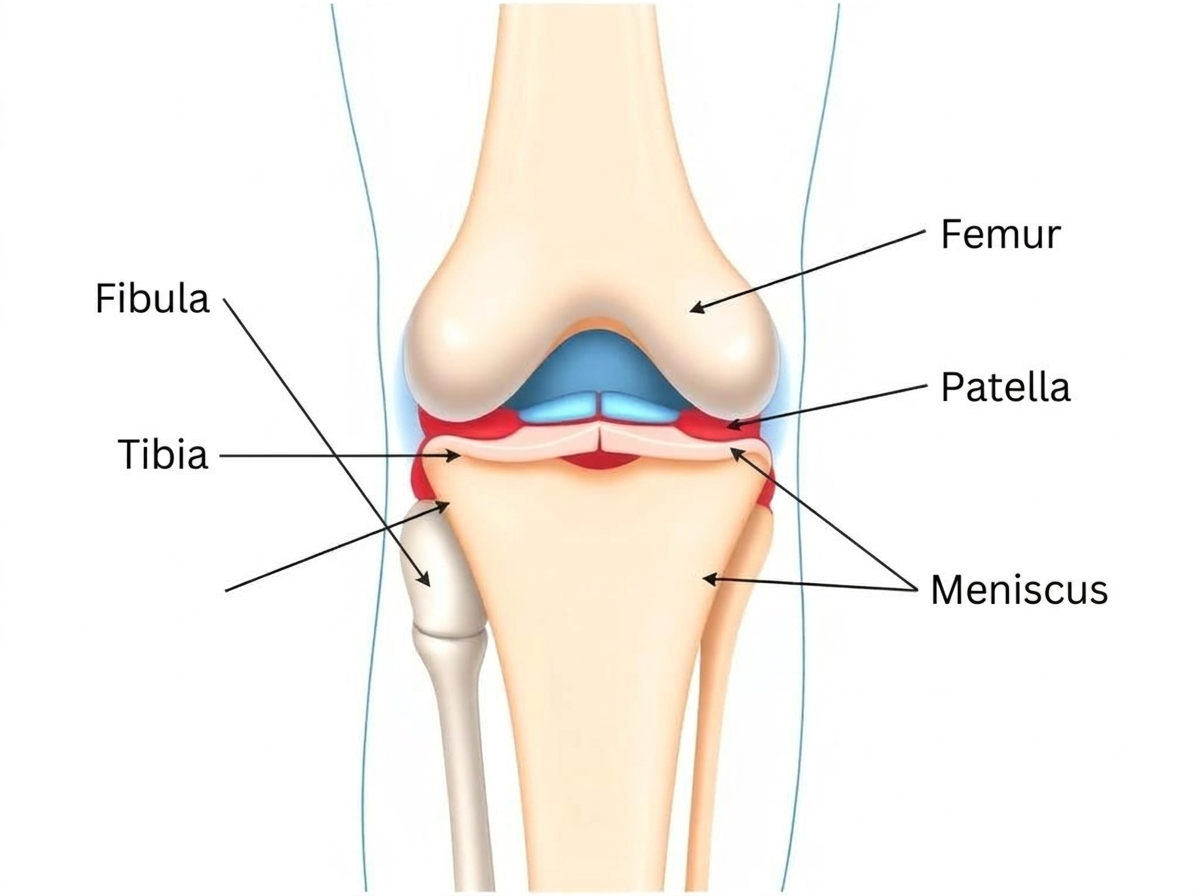
A twist, pivot, awkward landing, or direct impact can affect the meniscus, ligaments, cartilage, or other joint structures. Meniscus injuries can include pain, stiffness, swelling, catching, locking, giving way, or loss of full motion. Ligament injuries can also create swelling and instability. A painful click is different from ordinary painless joint noise.
True locking means the knee becomes physically stuck and cannot move through its normal range. Do not repeatedly force a blocked knee. New locking, repeated giving way, or rapid swelling after trauma needs professional assessment.
Kneecap and front-of-knee loading
Pain around or behind the kneecap often follows repeated knee bending, stairs, squats, running, jumping, kneeling, or sitting with the knee bent. Patellofemoral pain is commonly described as a dull ache, but an irritated front-of-knee area can still feel sharper during a particular step or bend. Pain below the kneecap may follow a different loading pattern involving the patellar tendon or nearby tissues.
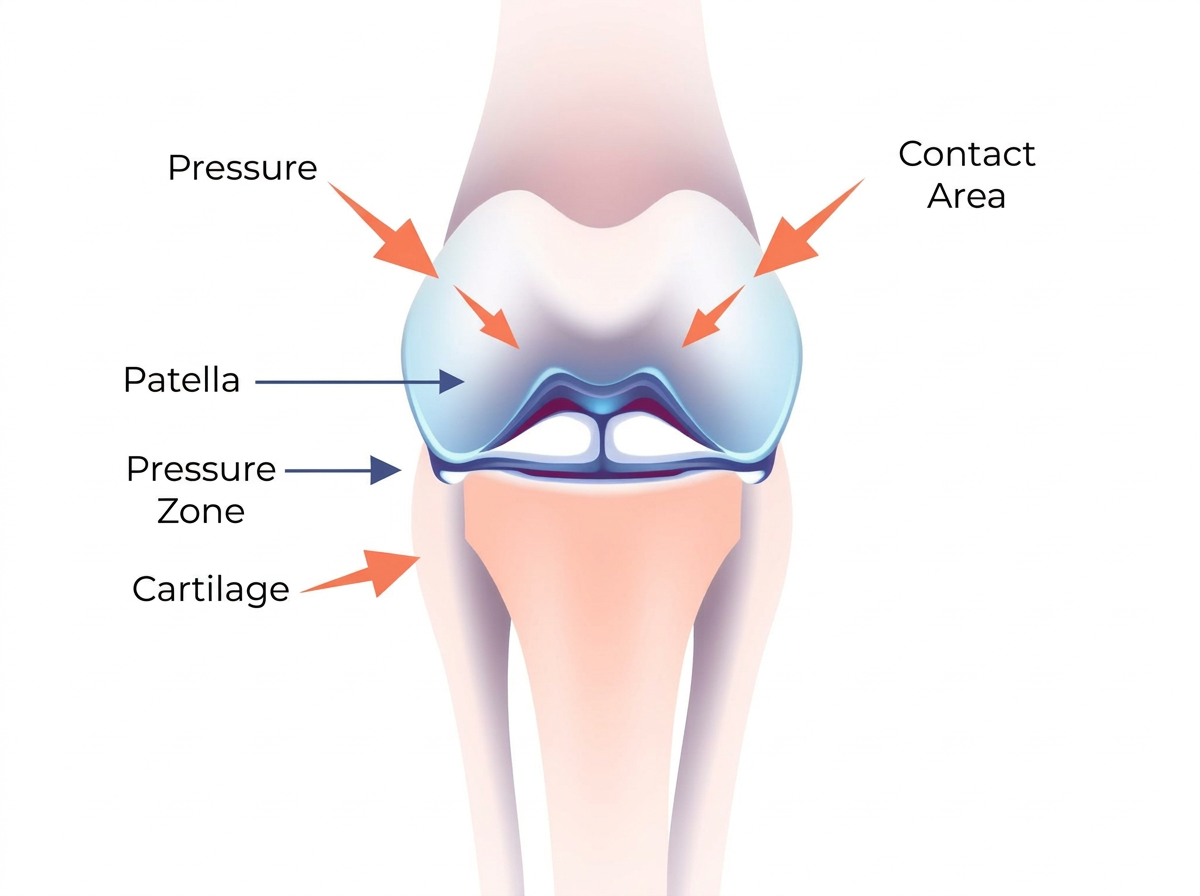
Knee Pain Location Distribution - Below Kneecap Focus
Where sharp pain is most commonly felt around the knee
Side and joint-line patterns
Sharp pain on the inner or outer side can sit directly on the joint line or in nearby soft tissues. Twisting, pivoting, cutting, side-to-side movement, and deep bending provide useful context. The knee pain location chart can help you distinguish inner, outer, joint-line, and kneecap zones without treating the location as a diagnosis.
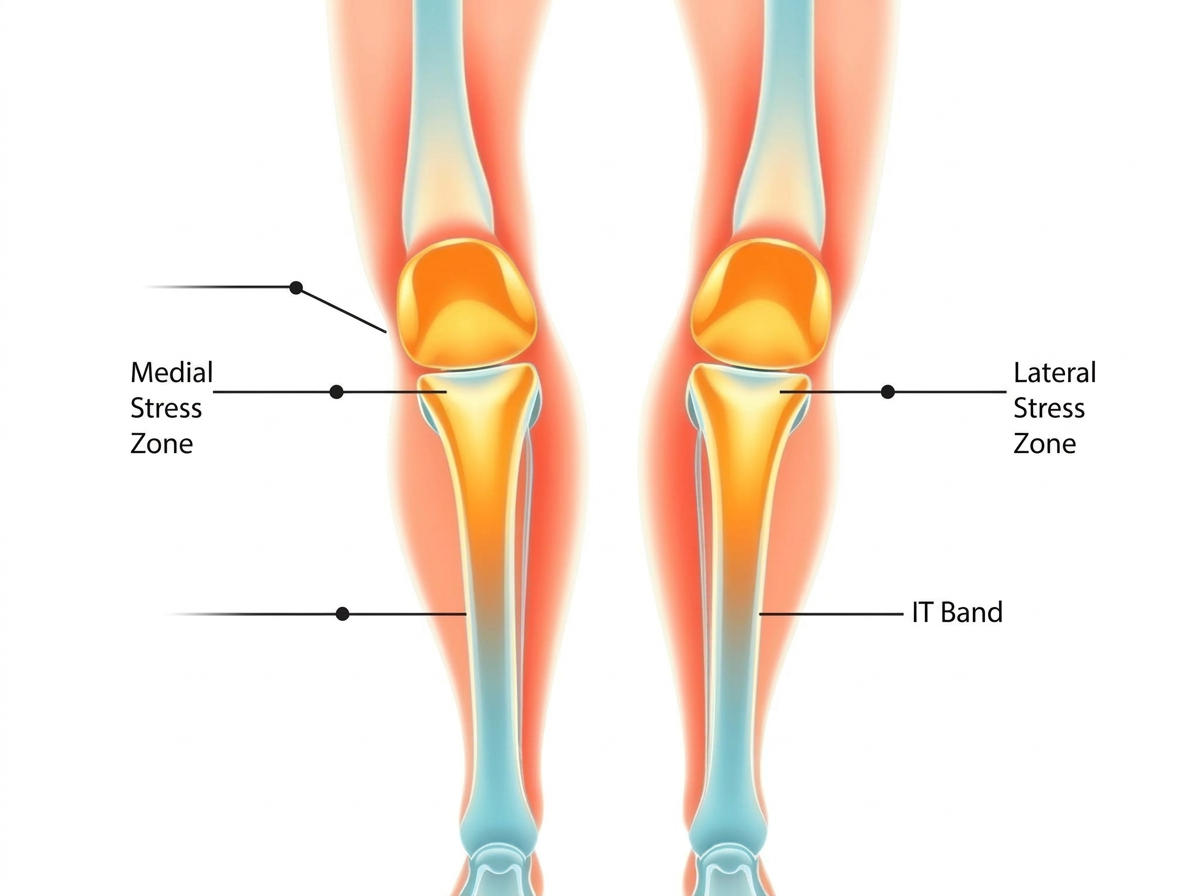
Back-of-knee pain and fullness
Pain behind the knee can involve joint, muscle, tendon, or fluid-related patterns. A Baker's cyst can cause fullness, stiffness, or tightness behind the knee, particularly during straightening. Increasing calf pain or swelling needs prompt medical care because a cyst and a blood clot can produce overlapping symptoms. See the back-of-knee pain guide for a more focused location review.
Nerve-like or referred sensations
A shooting, electric, burning, or needle-like sensation may have a nerve-like quality. The source may be around the knee or referred from another area. Record whether symptoms travel, whether there is back or hip pain, and whether numbness, tingling, or weakness is present. These details are more informative than assuming every shooting pain is sciatica.
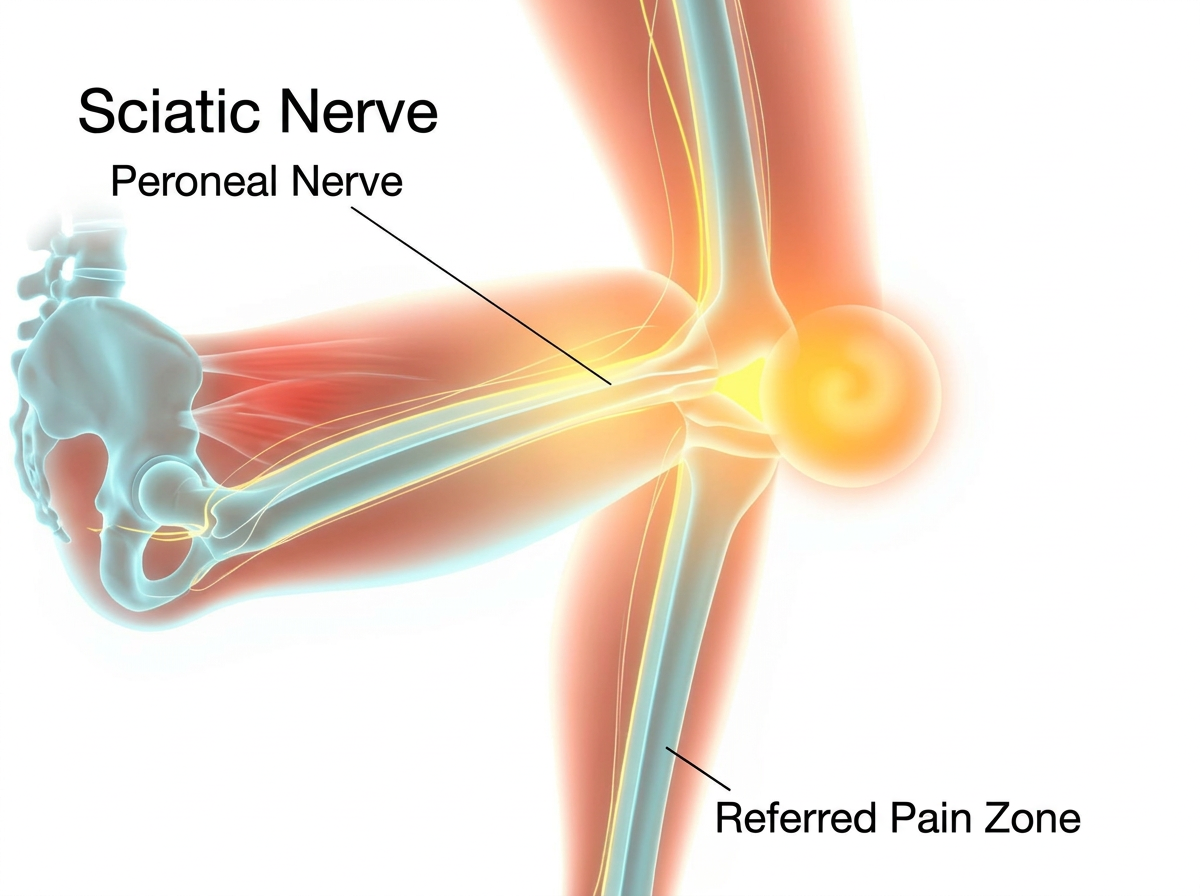
Can Sciatica Cause Knee Pain? Pain Source Analysis
Understanding whether sciatica can cause knee pain and how often
Sharp Stabbing Pain in the Knee That Comes and Goes
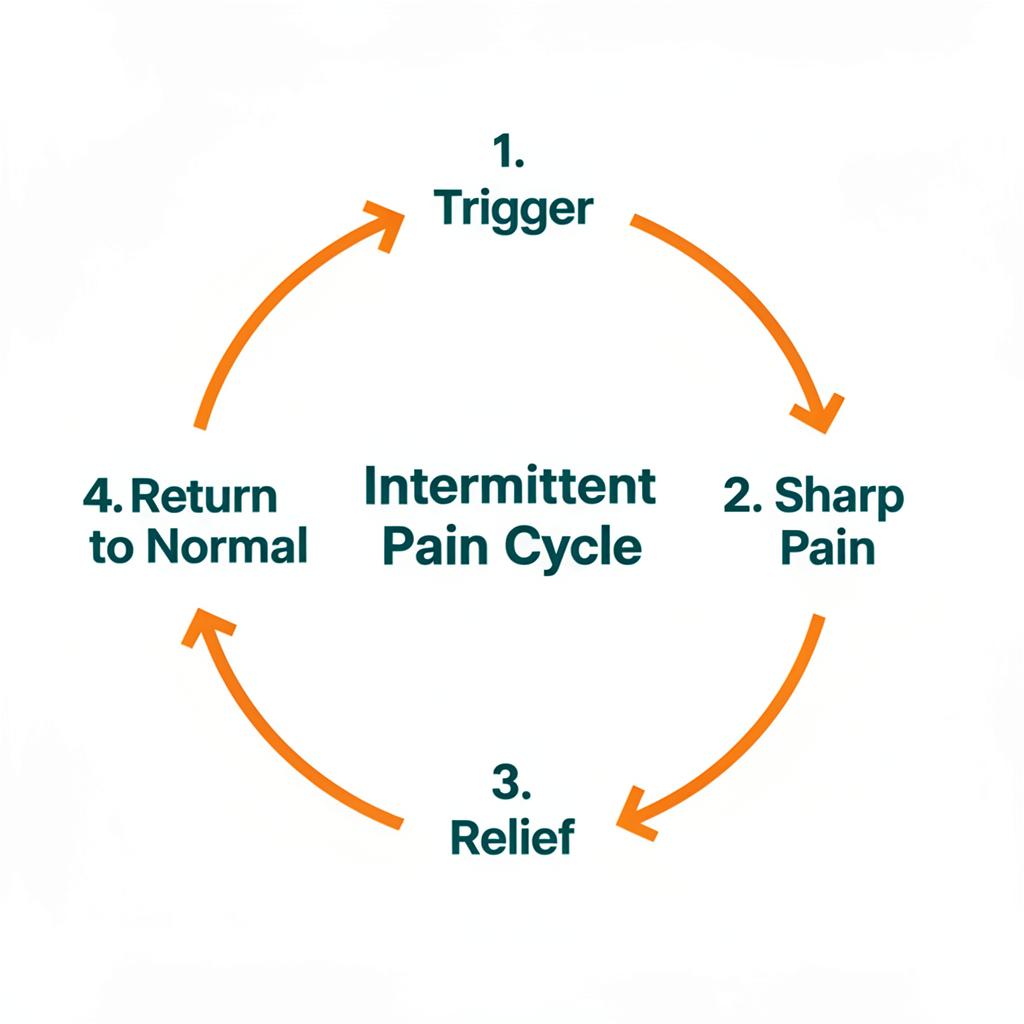
A sharp episode may last seconds and disappear when you change position. It can occur during a turn, first step, squat, stair, or transition from sitting to standing. The stop-start pattern does not prove that a structure is catching, and a pain-free interval does not prove that nothing is wrong.
Track whether each episode is in the same location and triggered by the same movement. Mechanical symptoms such as locking, catching, loss of motion, swelling, or giving way raise the value of an assessment. If the broader issue is knee pain that appears on some days and disappears on others, without always feeling sharp, use the intermittent knee pain guide.
Sharp Pain When Straightening, Bending, or Changing Position
Straightening and bending change pressure and tension across the kneecap, joint line, tendons, muscles, and back of the knee. Note whether pain appears only at the final few degrees, throughout the movement, or while weight bearing. Also record whether the knee feels blocked rather than simply painful.
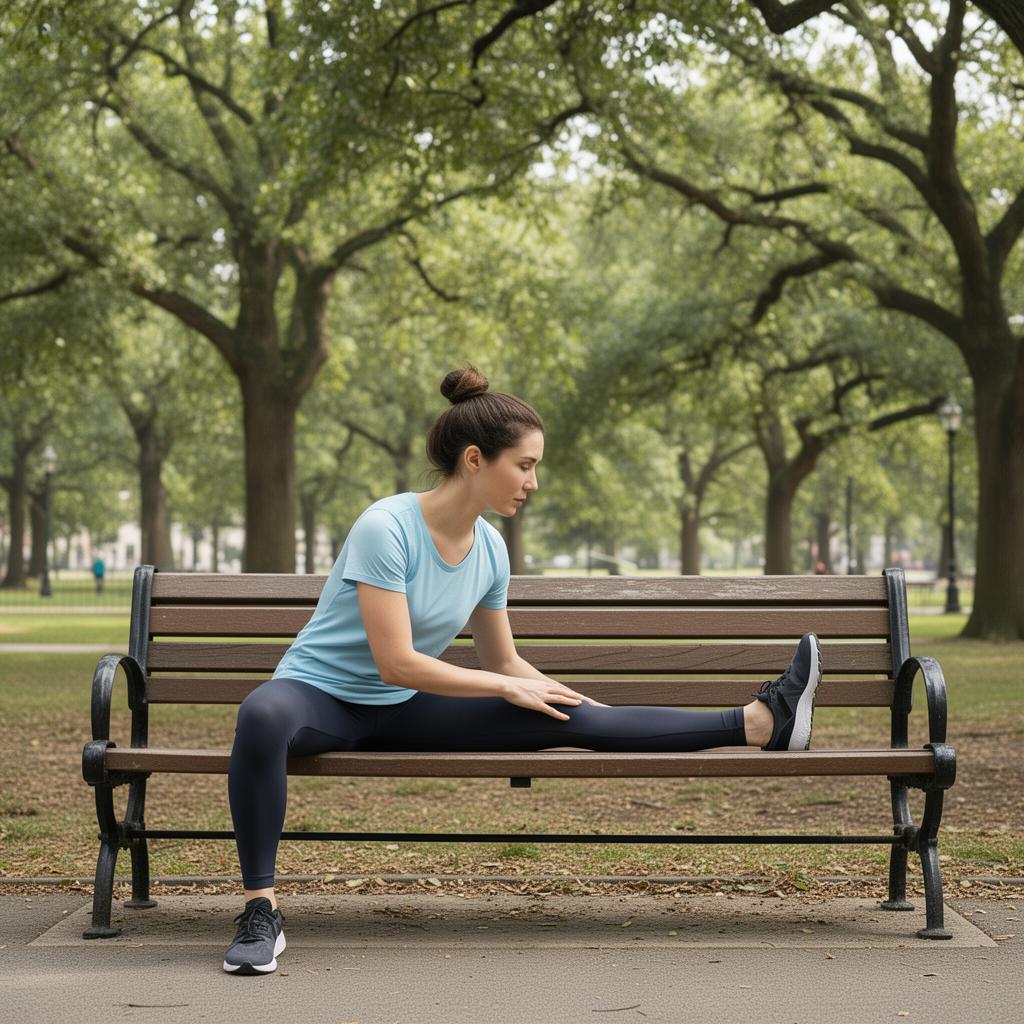
A gentle, comfortable range of motion can be reasonable when there has been no major injury and the knee is not locked or rapidly swelling. Do not push through a sharp block or repeatedly test a motion that causes severe pain.
Sharp Knee Pain at Rest, at Night, or Without a Clear Trigger
Pain at rest can feel more noticeable because fewer other sensations compete for attention. Position, symptoms from the back or hip, an irritated joint, and several other patterns may contribute. Repeated pain that wakes you, steadily worsening pain, or symptoms accompanied by swelling, redness, warmth, fever, weakness, or unexplained weight loss should be discussed with a healthcare professional.
Sudden describes onset, while sharp describes quality. A first severe episode after a twist or impact belongs in an injury decision pathway. A severe episode without an obvious injury may still need prompt advice. Compare that timing pattern in the sudden knee pain guide.
What to Track Before You Choose a Next Step
| Track | Example | Why it matters |
|---|---|---|
| Onset | Gradual, first step, twist, fall, new training load | Separates trauma from gradual or recurring patterns |
| Location | Kneecap, inner line, outer side, back, diffuse | Improves communication and examination focus |
| Trigger | Straightening, squatting, turning, stairs, rest | Shows whether the pattern is movement-specific |
| Associated signs | Swelling, heat, redness, locking, giving way | Changes the urgency and next step |
| Episode response | Stops immediately, lingers, swells later, affects walking | Shows severity and recovery between episodes |
What May Help While You Arrange the Right Care
The safest self-care choice depends on what happened. After a new injury or when the knee is swollen, unusually warm, or irritated, reduce the provoking load and avoid heat. A wrapped cold pack may help short-term pain and swelling for some people. Do not apply ice directly to skin.
When there is no new injury, swelling, redness, or unusual heat, comfortable movement and a gradual return to normal activity may help prevent unnecessary stiffness. Gentle warmth can be used for comfort before easy movement if it feels good and is safe for you. It does not diagnose or treat the underlying cause. The ice or heat for knee pain guide explains how the choice changes with swelling, injury timing, and stiffness.
Repeated sharp pain should not be managed by repeatedly testing the painful motion. A clinician or physiotherapist can help you decide when progressive strengthening, mobility work, or activity modification fits your pattern.
When to Get Medical Help
How Sharp Knee Pain Is Evaluated
An evaluation normally starts with the history and physical examination. Useful details include age, exact location, onset, duration, pain quality, trauma, swelling, mechanical symptoms, systemic symptoms, and previous knee problems. The examination can assess motion, strength, tenderness, stability, circulation, and nerve function.
Imaging is not automatically required for every sharp pain. X-rays, ultrasound, MRI, or laboratory tests are selected when the history and examination support a specific question. This approach reduces guesswork and keeps the investigation matched to the pattern.
Frequently Asked Questions
What can cause a sharp pain in the knee?
Sharp knee pain can occur with several joint, tendon, ligament, kneecap, muscle, or nerve-related patterns. The sensation alone cannot identify the cause. Location, onset, the movement that triggers it, swelling, locking, instability, and recent injury provide more useful clues.
Why does sharp stabbing pain in my knee come and go?
Brief episodes may happen only when a certain movement or position irritates a sensitive structure. Record the exact motion, location, duration, and whether the knee catches, locks, swells, or gives way. Recurrent mechanical symptoms deserve clinical assessment.
Why do I get sharp knee pain randomly?
A trigger can be subtle, such as a turn, first step, change of direction, or transition from sitting to standing. Truly unexplained or recurring episodes should be tracked rather than assumed to be harmless, especially when they affect walking or occur with swelling or instability.
What does shooting pain in the knee mean?
Shooting or electric pain may suggest a nerve-like quality, but people use these words in different ways. Note whether the sensation travels, and whether it occurs with back pain, tingling, numbness, or weakness. A clinician can determine whether the source is local or referred.
What can sharp pain around the kneecap indicate?
Pain around or behind the kneecap can be associated with kneecap-related tissues and is often influenced by stairs, squats, running, jumping, kneeling, or prolonged sitting. Pain below the kneecap can involve a different set of tissues. Location and loading pattern matter.
Why does my knee hurt sharply when I straighten it?
Full straightening changes pressure and tension across several tissues at the front, joint line, and back of the knee. Do not force a knee that feels blocked. Painful loss of motion, true locking, swelling, or a recent injury should be assessed.
Is sharp knee pain at rest or at night concerning?
One episode does not reveal a cause, but repeated pain at rest or pain that disrupts sleep deserves attention, particularly if it is worsening or accompanied by swelling, redness, warmth, fever, unexplained weight loss, numbness, or weakness.
When should sharp knee pain be checked urgently?
Seek urgent guidance for severe pain after trauma, inability to bear weight or move the knee, major or rapid swelling, deformity, true locking, repeated giving way, or a hot, red, swollen knee with fever or feeling unwell.